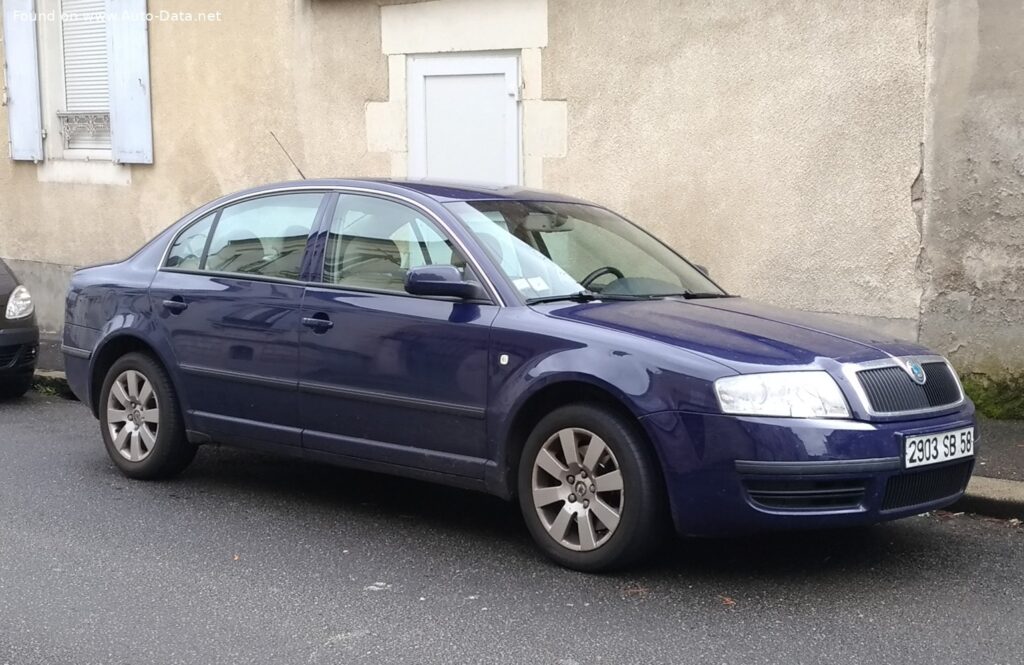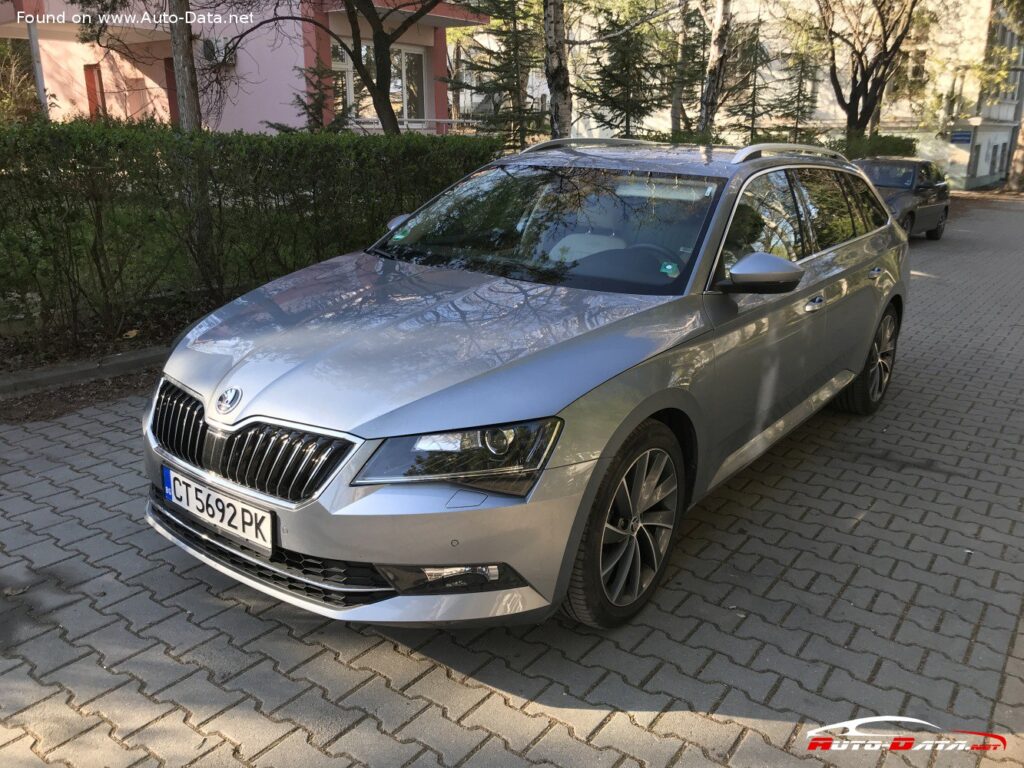
The Skoda Superb III Combi 2.0 TDI (190 Hp) 4×4 6 DSG is a station wagon that was produced between 2015 and 2018. Representing the third generation of the Superb, the Combi (estate) body style offered increased practicality without sacrificing the model’s reputation for spaciousness and value. While Skoda is a Czech manufacturer, the Superb has been a key model within the Volkswagen Group portfolio, primarily marketed in Europe. It aimed to provide a premium experience at a more accessible price point than its German counterparts, competing with vehicles like the Volkswagen Passat Variant, Ford Mondeo Estate, and BMW 3 Series Touring.
Skoda Superb III Combi: Overview and Market Position
The Superb III, launched in 2015, represented a significant step forward for the model, boasting a more modern design, improved technology, and increased interior space. The Combi variant, specifically, targeted families and individuals requiring a versatile vehicle capable of carrying both passengers and substantial cargo. The 2.0 TDI 4×4 6 DSG trim level combined a fuel-efficient diesel engine with all-wheel drive for enhanced traction and a six-speed dual-clutch gearbox (DSG) for smooth and rapid gear changes. This configuration was popular in regions with inclement weather or challenging road conditions.
Engine & Performance
The heart of the Superb III Combi 2.0 TDI 4×4 is a 2.0-liter inline-four cylinder diesel engine, designated EA288 / DFHA. This engine produces 190 horsepower at 3,500-4,000 rpm and a substantial 400 Nm (295.02 lb.-ft.) of torque between 1,750 and 3,250 rpm. The turbocharger and intercooler contribute to both power output and efficiency. The engine’s transverse mounting and all-wheel-drive system provide balanced handling. The six-speed DSG transmission delivers quick and precise shifts, contributing to a 0-100 km/h (0-62 mph) acceleration time of 7.7 seconds and a 0-60 mph time of 7.3 seconds. The vehicle achieves a maximum speed of 228 km/h (141.67 mph). Fuel economy figures, measured using the NEDC standard, range from 5.1 to 5.3 liters per 100 kilometers (46.1 to 44.4 US mpg, or 55.4 to 53.3 UK mpg), with CO2 emissions between 134 and 138 g/km. The engine also incorporates a Start & Stop system and a particulate filter to reduce emissions.
Design & Features
The Superb III Combi is a five-door station wagon with a sleek and modern design. Its long wheelbase (2841 mm / 111.85 in) and generous dimensions (length of 4856 mm / 191.18 in, width of 1864 mm / 73.39 in) contribute to its spacious interior. Key features include a large trunk capacity, ranging from 660 liters (23.31 cu. ft.) with the rear seats up to 1950 liters (68.86 cu. ft.) with them folded down. The vehicle seats five passengers comfortably. Safety features, typical for a vehicle of this class and era, include ABS (Anti-lock Braking System) and a comprehensive airbag system. The Superb III Combi also offered a range of convenience features, including electric power steering, and options for advanced infotainment systems and driver-assistance technologies. The drag coefficient of 0.308 contributes to improved fuel efficiency and reduced wind noise.
Technology and Efficiency
The Superb III Combi 2.0 TDI 4×4 6 DSG incorporates several technologies aimed at enhancing efficiency and driving experience. The DSG transmission optimizes gear selection for both performance and fuel economy. The all-wheel-drive system provides enhanced traction and stability, particularly in adverse weather conditions. The engine’s common rail diesel injection system and turbocharging contribute to its power and efficiency. The inclusion of a particulate filter and Start & Stop system further reduces emissions. The vehicle’s suspension system, featuring independent McPherson struts at the front and an independent multi-link setup at the rear, provides a comfortable ride and responsive handling.
Technical Specifications
| Brand | Skoda |
| Model | Superb |
| Generation | Superb III Combi |
| Type (Engine) | 2.0 TDI (190 Hp) 4×4 6 DSG |
| Start of production | February, 2015 |
| End of production | 2018 |
| Powertrain Architecture | Internal Combustion engine |
| Body type | Station wagon (estate) |
| Seats | 5 |
| Doors | 5 |
| Fuel consumption (economy) – urban (NEDC) | 6.1-6.3 l/100 km (38.6 – 37.3 US mpg, 46.3 – 44.8 UK mpg, 16.4 – 15.9 km/l) |
| Fuel consumption (economy) – extra urban (NEDC) | 4.5-4.7 l/100 km (52.3 – 50 US mpg, 62.8 – 60.1 UK mpg, 22.2 – 21.3 km/l) |
| Fuel consumption (economy) – combined (NEDC) | 5.1-5.3 l/100 km (46.1 – 44.4 US mpg, 55.4 – 53.3 UK mpg, 19.6 – 18.9 km/l) |
| CO2 emissions (NEDC) | 134-138 g/km |
| Fuel Type | Diesel |
| Acceleration 0 – 100 km/h | 7.7 sec |
| Acceleration 0 – 62 mph | 7.7 sec |
| Acceleration 0 – 60 mph | 7.3 sec |
| Maximum speed | 228 km/h (141.67 mph) |
| Emission standard | Euro 6 |
| Weight-to-power ratio | 8.2 kg/Hp, 121.8 Hp/tonne |
| Weight-to-torque ratio | 3.9 kg/Nm, 256.4 Nm/tonne |
| Power | 190 Hp @ 3500-4000 rpm |
| Torque | 400 Nm @ 1750-3250 rpm (295.02 lb.-ft. @ 1750-3250 rpm) |
| Engine layout | Front, Transverse |
| Engine Model/Code | EA288 / DFHA |
| Engine displacement | 1968 cm3 (120.09 cu. in.) |
| Number of cylinders | 4 |
| Engine configuration | Inline |
| Cylinder Bore | 81 mm (3.19 in.) |
| Piston Stroke | 95.5 mm (3.76 in.) |
| Compression ratio | 15.8:1 |
| Number of valves per cylinder | 4 |
| Fuel injection system | Diesel Commonrail |
| Engine aspiration | Turbocharger, Intercooler |
| Valvetrain | DOHC |
| Engine oil capacity | 4.7 l (4.97 US qt | 4.14 UK qt) |
| Coolant | 8 l (8.45 US qt | 7.04 UK qt) |
| Kerb Weight | 1560-1605 kg (3439.21 – 3538.42 lbs.) |
| Max. weight | 2275-2320 kg (5015.52 – 5114.72 lbs.) |
| Max load | 715 kg (1576.31 lbs.) |
| Trunk (boot) space – minimum | 660 l (23.31 cu. ft.) |
| Trunk (boot) space – maximum | 1950 l (68.86 cu. ft.) |
| Fuel tank capacity | 66 l (17.44 US gal | 14.52 UK gal) |
| AdBlue tank | 13 l (3.43 US gal | 2.86 UK gal) |
| Max. roof load | 100 kg (220.46 lbs.) |
| Permitted trailer load with brakes (8%) | 2200 kg (4850.17 lbs.) |
| Permitted trailer load with brakes (12%) | 2200 kg (4850.17 lbs.) |
| Permitted trailer load without brakes | 750 kg (1653.47 lbs.) |
| Permitted towbar download | 90 kg (198.42 lbs.) |
| Length | 4856 mm (191.18 in.) |
| Width | 1864 mm (73.39 in.) |
| Width including mirrors | 2031 mm (79.96 in.) |
| Height | 1477 mm (58.15 in.) |
| Wheelbase | 2841 mm (111.85 in.) |
| Front track | 1584 mm (62.36 in.) |
| Rear (Back) track | 1572 mm (61.89 in.) |
| Front overhang | 897 mm (35.31 in.) |
| Rear overhang | 1118 mm (44.02 in.) |
| Ride height (ground clearance) | 148 mm (5.83 in.) |
| Drag coefficient (Cd) | 0.308 |
| Minimum turning circle (turning diameter) | 11.7 m (38.39 ft.) |
| Drivetrain Architecture | The Internal combustion engine (ICE) drives the front wheels permanently, and the rear wheels are driven through an electrically or mechanically operated clutch if necessary. |
| Drive wheel | All wheel drive (4×4) |
| Number of gears and type of gearbox | 6 gears, automatic transmission DSG |