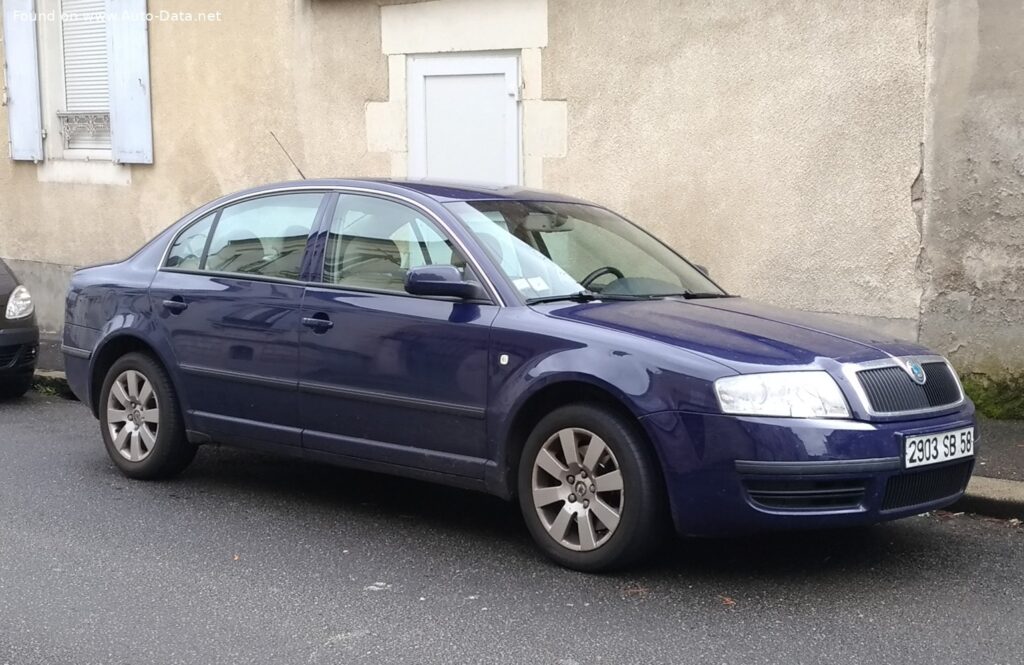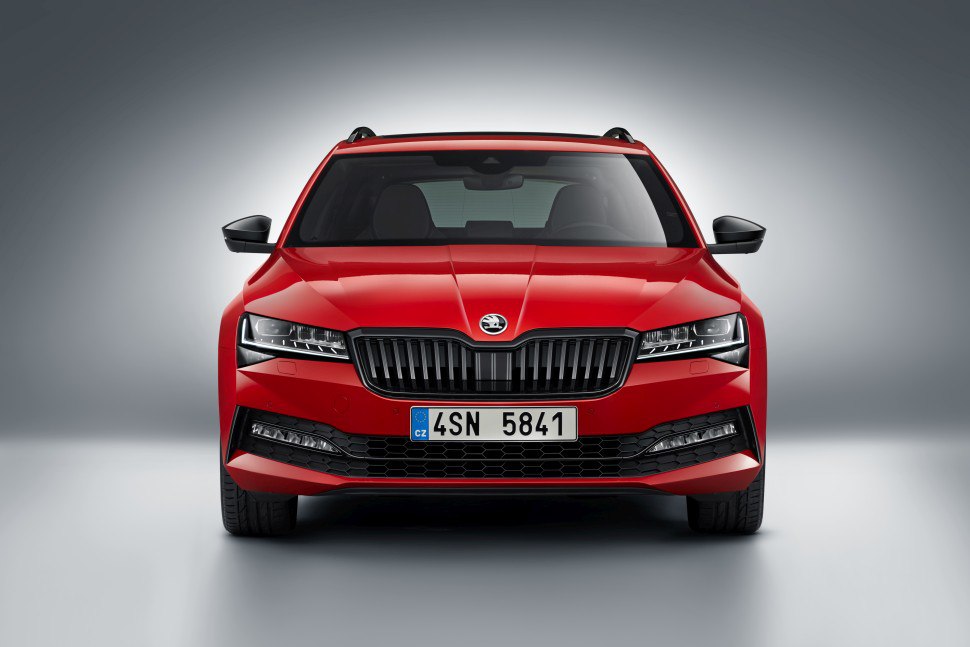
The Skoda Superb III Combi (facelift 2019) 2.0 TDI represents a significant iteration of Skoda’s flagship model, a large family car primarily aimed at the European market. While not officially sold in the United States, the Superb has gained recognition for its spaciousness, practicality, and value proposition within its segment. The “Combi” designation signifies the station wagon (estate) body style, offering enhanced cargo capacity compared to the sedan version. This facelift, introduced in 2019, brought styling updates, technological enhancements, and refined engine options, including the 2.0 TDI diesel engine paired with a dual-clutch gearbox (DSG). The Superb competes with vehicles like the Volkswagen Passat Variant, Ford Mondeo Estate, and BMW 3 Series Touring, offering a compelling alternative with a focus on passenger comfort and generous interior space.
Skoda Superb III Combi (facelift 2019) 2.0 TDI: Overview
The Superb III, launched in 2015, marked a substantial step forward for Skoda in terms of design, technology, and overall quality. The 2019 facelift further refined the model, introducing a more assertive front-end design, updated interior trim, and advanced driver-assistance systems. The 2.0 TDI variant, producing 150 horsepower, was a popular choice in Europe due to its balance of performance and fuel efficiency. The Combi body style, specifically, caters to buyers needing ample cargo space for families or recreational activities. Skoda, as part of the Volkswagen Group, leverages shared platforms and technologies, resulting in a vehicle that offers a premium feel at a competitive price point.
Engine & Performance
The heart of the Superb III Combi 2.0 TDI is a 1.968-liter inline four-cylinder diesel engine, designated EA288 evo / DTSB. This engine delivers a maximum power output of 150 horsepower at 3000-4200 rpm and a substantial 360 Nm (265.52 lb.-ft.) of torque between 1700 and 2750 rpm. The turbocharger and intercooler contribute to both power delivery and efficiency. Power per liter is rated at 76.2 hp/l. The engine is coupled with a 7-speed dual-clutch transmission (DSG), providing smooth and rapid gear changes. This powertrain configuration allows for a 0-100 km/h (0-62 mph) acceleration time of 9.2 seconds, and a 0-60 mph time of 8.7 seconds. The Superb Combi 2.0 TDI achieves a top speed of 212 km/h (131.73 mph). Fuel economy is a key strength, with combined cycle figures ranging from 3.9 to 4.0 l/100 km (60.3 – 58.8 US mpg or 72.4 – 70.6 UK mpg), and CO2 emissions between 102-106 g/km, meeting Euro 6d-Temp DG emission standards. The inclusion of a Start & Stop system and a particulate filter further enhances its environmental credentials.
Design & Features
The Skoda Superb III Combi is a five-door station wagon (estate) designed to accommodate five passengers comfortably. Its exterior styling is characterized by clean lines, a long wheelbase, and a spacious cabin. The 2019 facelift brought subtle but noticeable changes to the front fascia, including a revised grille, headlights, and bumper. The rear of the vehicle features distinctive LED taillights and a practical tailgate design. Inside, the Superb Combi offers a generously sized interior with ample headroom and legroom for all occupants. The key feature is its exceptional cargo capacity. With the rear seats up, the trunk offers 660 liters (23.31 cu. ft.) of space, expanding to a cavernous 2081 liters (73.49 cu. ft.) with the rear seats folded down. Standard and optional features typically include a touchscreen infotainment system, navigation, climate control, parking sensors, and a suite of driver-assistance systems such as adaptive cruise control, lane keeping assist, and automatic emergency braking. The vehicle prioritizes practicality and comfort, making it an ideal choice for families and long-distance travelers.
Technical Specifications
| Brand | Skoda |
| Model | Superb |
| Generation | Superb III Combi (facelift 2019) |
| Type (Engine) | 2.0 TDI (150 Hp) DSG |
| Start of production | 2019 |
| End of production | November, 2020 |
| Powertrain Architecture | Internal Combustion engine |
| Body type | Station wagon (estate) |
| Seats | 5 |
| Doors | 5 |
| Fuel consumption (urban) | 4.3-4.4 l/100 km (54.7 – 53.5 US mpg) |
| Fuel consumption (extra urban) | 3.6-3.8 l/100 km (65.3 – 61.9 US mpg) |
| Fuel consumption (combined) | 3.9-4.0 l/100 km (60.3 – 58.8 US mpg) |
| CO2 emissions | 102-106 g/km |
| Fuel Type | Diesel |
| Acceleration 0 – 100 km/h | 9.2 sec |
| Acceleration 0 – 62 mph | 9.2 sec |
| Acceleration 0 – 60 mph | 8.7 sec |
| Maximum speed | 212 km/h (131.73 mph) |
| Emission standard | Euro 6d-Temp DG |
| Weight-to-power ratio | 10.1 kg/Hp |
| Weight-to-torque ratio | 4.2 kg/Nm |
| Power | 150 Hp @ 3000-4200 rpm |
| Torque | 360 Nm @ 1700-2750 rpm (265.52 lb.-ft.) |
| Engine layout | Front, Transverse |
| Engine Model/Code | EA288 evo / DTSB |
| Engine displacement | 1968 cm3 (120.09 cu. in.) |
| Number of cylinders | 4 |
| Engine configuration | Inline |
| Cylinder Bore | 81 mm (3.19 in.) |
| Piston Stroke | 95.5 mm (3.76 in.) |
| Compression ratio | 16:1 |
| Number of valves per cylinder | 4 |
| Fuel injection system | Diesel Commonrail |
| Engine aspiration | Turbocharger, Intercooler |
| Valvetrain | DOHC |
| Engine oil capacity | 5.5 l (5.81 US qt | 4.84 UK qt) |
| Kerb Weight | 1522 kg (3355.44 lbs.) |
| Max. weight | 2196 kg (4841.35 lbs.) |
| Max load | 674 kg (1485.92 lbs.) |
| Trunk (boot) space – minimum | 660 l (23.31 cu. ft.) |
| Trunk (boot) space – maximum | 2081 l (73.49 cu. ft.) |
| Fuel tank capacity | 66 l (17.44 US gal | 14.52 UK gal) |
| AdBlue tank | 16.3 l (4.31 US gal | 3.59 UK gal) |
| Max. roof load | 100 kg (220.46 lbs.) |
| Permitted trailer load with brakes (12%) | 2000 kg (4409.25 lbs.) |
| Permitted trailer load without brakes | 750 kg (1653.47 lbs.) |
| Permitted towbar download | 90 kg (198.42 lbs.) |
| Length | 4862 mm (191.42 in.) |
| Width | 1864 mm (73.39 in.) |
| Width including mirrors | 2031 mm (79.96 in.) |
| Height | 1477 mm (58.15 in.) |
| Wheelbase | 2841 mm (111.85 in.) |
| Front track | 1585 mm (62.4 in.) |
| Rear track | 1576 mm (62.05 in.) |
| Ride height (ground clearance) | 139 mm (5.47 in.) |
| Drag coefficient (Cd) | 0.305 |
| Minimum turning circle | 11.1 m (36.42 ft.) |
| Drive wheel | Front wheel drive |
| Number of gears | 7 |
| Gearbox type | automatic transmission DSG |
| Front suspension | Independent, type McPherson with coil spring and anti-roll bar |
| Rear suspension | Independent multi-link spring suspension with stabilizer |
| Front brakes | Ventilated discs |
| Rear brakes | Disc |