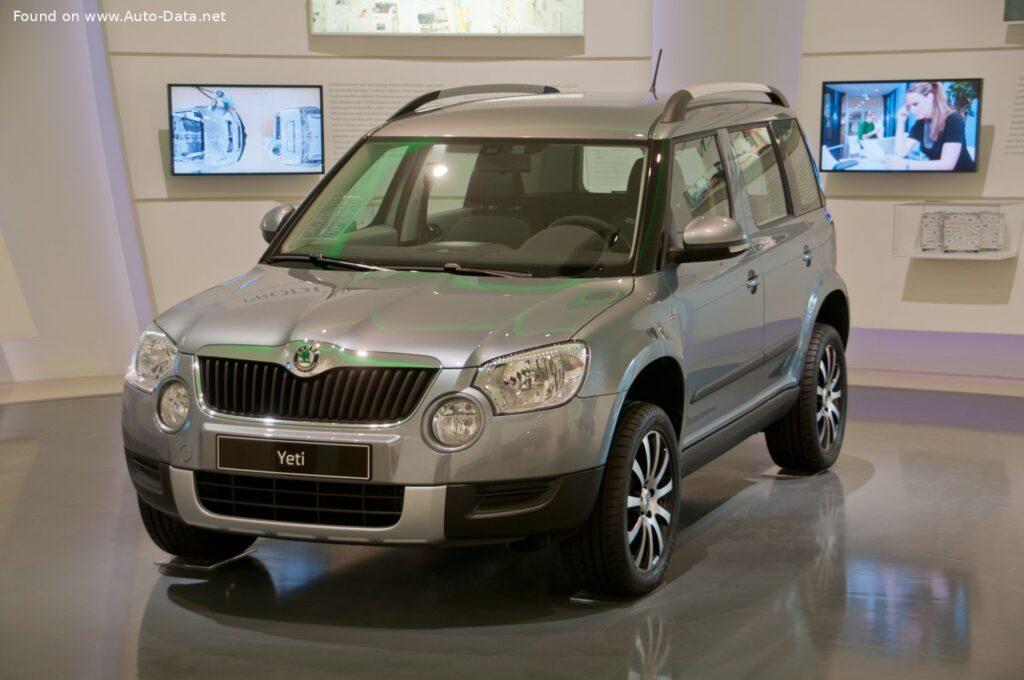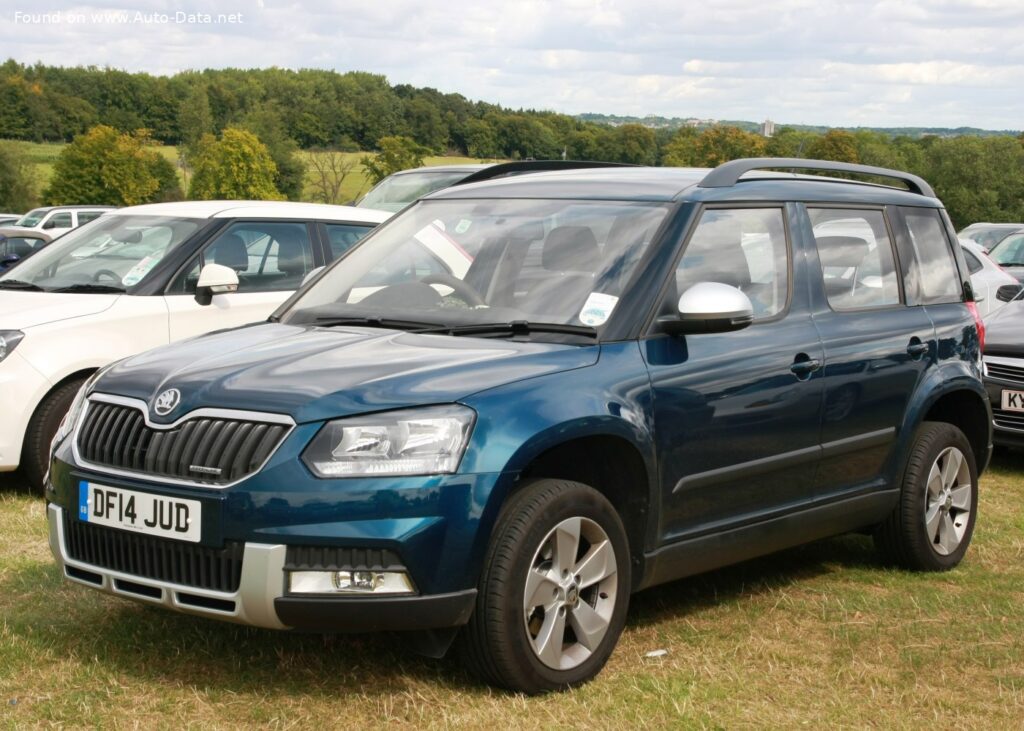
The Skoda Yeti, particularly the facelifted version introduced in 2013, represents a significant offering in the compact SUV segment, though its direct presence in the United States market was limited. Primarily sold in Europe, the Yeti distinguished itself with a blend of practicality, robust build quality, and a surprisingly engaging driving experience. The 2.0 TDI (150 Hp) SCR 4×4 variant, produced from 2015 to 2017, exemplifies Skoda’s commitment to efficient diesel technology and all-wheel-drive capability. This model aimed to provide a versatile vehicle suitable for both urban commuting and more adventurous pursuits.
Skoda Yeti (Facelift 2013) 2.0 TDI SCR 4×4: An Overview
The Yeti, named after the mythical Himalayan creature, was designed to be a rugged and capable vehicle, reflecting its intended use. The 2013 facelift brought styling updates, improved interior materials, and enhanced technology, solidifying its position as a strong competitor against established European rivals like the Nissan Qashqai and Volkswagen Tiguan. The 2.0 TDI SCR 4×4 version specifically targeted buyers seeking a fuel-efficient, all-weather vehicle with ample space and practicality. The “SCR” designation indicates the inclusion of Selective Catalytic Reduction technology, a system designed to reduce nitrogen oxide (NOx) emissions, aligning with increasingly stringent European emission standards.
Engine & Performance
At the heart of the Yeti 2.0 TDI SCR 4×4 lies a 1968 cc (120.09 cu. in.) inline-four cylinder diesel engine. This engine, part of the Volkswagen Group’s EA288 family (specifically the CUUB code), produces 150 horsepower at 3500 rpm and a substantial 340 Nm (250.77 lb.-ft.) of torque between 1750 and 3000 rpm. The turbocharger and intercooler work in tandem to optimize power delivery and efficiency. Power is sent to all four wheels via a six-speed manual transmission, providing confident traction in various conditions. Acceleration from 0 to 100 km/h (0-62 mph) takes 8.9 seconds, while 0-60 mph is achieved in a calculated 8.5 seconds. The vehicle boasts a maximum speed of 195 km/h (121.17 mph). The engine’s design prioritizes fuel economy, achieving combined fuel consumption of 5.1 l/100 km (46.1 US mpg, 55.4 UK mpg), and CO2 emissions of 134 g/km, meeting Euro 6 emission standards.
Design & Features
The Skoda Yeti is a five-door SUV with a distinctive, boxy design that maximizes interior space. Its relatively compact dimensions – 4222 mm (166.22 in.) in length and 1793 mm (70.59 in.) in width – make it easy to maneuver in urban environments. The interior is characterized by its practicality and versatility. The rear seats can be folded, slid, or even removed entirely, creating a flexible cargo area ranging from 415 liters (14.66 cu. ft.) to a substantial 1665 liters (58.8 cu. ft.). The 4×4 system provides enhanced stability and traction, particularly beneficial in inclement weather or on challenging terrain. Standard features included ABS, electric power steering, and a range of safety equipment designed to meet European safety standards. The Yeti’s ride height of 180 mm (7.09 in.) provides adequate ground clearance for light off-road use. Approach, departure, and ramp-over angles of 19°, 26.7°, and 19.6° respectively, further enhance its off-road capability.
Technical Specifications
| Brand | Skoda |
| Model | Yeti |
| Generation | Yeti (facelift 2013) |
| Type (Engine) | 2.0 TDI (150 Hp) SCR 4×4 |
| Start of production | May, 2015 |
| End of production | 2017 |
| Powertrain Architecture | Internal Combustion engine |
| Body type | SUV |
| Seats | 5 |
| Doors | 5 |
| Fuel consumption (urban) | 6 l/100 km (39.2 US mpg, 47.1 UK mpg, 16.7 km/l) |
| Fuel consumption (extra urban) | 4.6 l/100 km (51.1 US mpg, 61.4 UK mpg, 21.7 km/l) |
| Fuel consumption (combined) | 5.1 l/100 km (46.1 US mpg, 55.4 UK mpg, 19.6 km/l) |
| CO2 emissions | 134 g/km |
| Fuel Type | Diesel |
| Acceleration 0 – 100 km/h | 8.9 sec |
| Acceleration 0 – 62 mph | 8.9 sec |
| Acceleration 0 – 60 mph | 8.5 sec |
| Maximum speed | 195 km/h (121.17 mph) |
| Emission standard | Euro 6 |
| Weight-to-power ratio | 9.9 kg/Hp, 100.7 Hp/tonne |
| Weight-to-torque ratio | 4.4 kg/Nm, 228.2 Nm/tonne |
| Power | 150 Hp @ 3500 rpm |
| Torque | 340 Nm @ 1750-3000 rpm (250.77 lb.-ft. @ 1750-3000 rpm) |
| Engine layout | Front, Transverse |
| Engine Model/Code | EA288 / CUUB |
| Engine displacement | 1968 cm3 (120.09 cu. in.) |
| Number of cylinders | 4 |
| Engine configuration | Inline |
| Cylinder Bore | 81 mm (3.19 in.) |
| Piston Stroke | 95.5 mm (3.76 in.) |
| Compression ratio | 16.2:1 |
| Number of valves per cylinder | 4 |
| Fuel injection system | Diesel Commonrail |
| Engine aspiration | Turbocharger, Intercooler |
| Valvetrain | DOHC |
| Engine oil capacity | 4.7 l (4.97 US qt | 4.14 UK qt) |
| Coolant | 8 l (8.45 US qt | 7.04 UK qt) |
| Kerb Weight | 1490 kg (3284.89 lbs.) |
| Max. weight | 2135 kg (4706.87 lbs.) |
| Max load | 645 kg (1421.98 lbs.) |
| Trunk (boot) space – minimum | 415 l (14.66 cu. ft.) |
| Trunk (boot) space – maximum | 1665 l (58.8 cu. ft.) |
| Fuel tank capacity | 60 l (15.85 US gal | 13.2 UK gal) |
| Max. roof load | 100 kg (220.46 lbs.) |
| Permitted trailer load with brakes (12%) | 2100 kg (4629.71 lbs.) |
| Permitted trailer load without brakes | 750 kg (1653.47 lbs.) |
| Permitted towbar download | 85 kg (187.39 lbs.) |
| Length | 4222 mm (166.22 in.) |
| Width | 1793 mm (70.59 in.) |
| Width including mirrors | 1956 mm (77.01 in.) |
| Height | 1691 mm (66.57 in.) |
| Wheelbase | 2578 mm (101.5 in.) |
| Front track | 1541 mm (60.67 in.) |
| Rear (Back) track | 1537 mm (60.51 in.) |
| Front overhang | 877 mm (34.53 in.) |
| Rear overhang | 767 mm (30.2 in.) |
| Ride height (ground clearance) | 180 mm (7.09 in.) |
| Drag coefficient (Cd) | 0.365 |
| Minimum turning circle (turning diameter) | 10.32 m (33.86 ft.) |
| Drive wheel | All wheel drive (4×4) |
| Number of gears and type of gearbox | 6 gears, manual transmission |
| Front suspension | Independent, type McPherson with coil spring and anti-roll bar |
| Rear suspension | Independent multi-link spring suspension with stabilizer |
| Front brakes | Ventilated discs |
| Rear brakes | Disc |
| Assisting systems | ABS (Anti-lock braking system) |
| Steering type | Steering rack and pinion |
| Power steering | Electric Steering |
| Tires size | 215/60 R16; 225/50 R17 |
| Wheel rims size | 16; 17 |