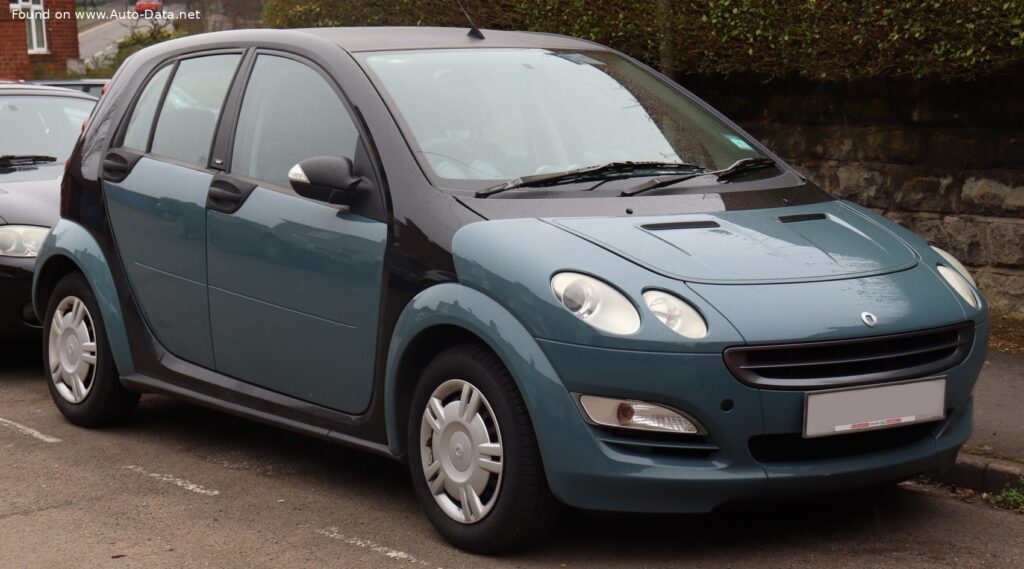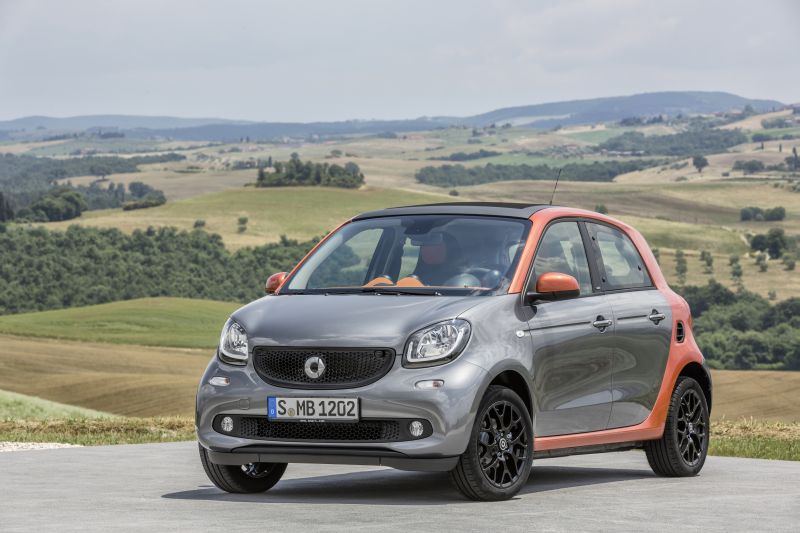
The Smart Forfour II (W453) 1.0 (71 Hp) Automatic, produced between 2014 and 2019, represents a significant evolution in the Smart city car lineage. As the second generation of the Forfour, this model aimed to address criticisms of its predecessor by offering a more practical and refined package. While Smart vehicles were never officially sold in the United States, the Forfour was a key model in European markets, particularly appealing to urban drivers seeking a compact, fuel-efficient, and easily maneuverable vehicle. The W453 generation marked a collaboration with Renault, sharing components and platforms with the Renault Twingo, and represented a departure from the previous Forfour’s platform.
Smart Forfour II (W453): A Detailed Overview
The Forfour II was designed to be a versatile city car, offering seating for four adults within a remarkably small footprint. Its 5-door hatchback configuration prioritized practicality, while its rear-wheel-drive layout, inherited from the Renault Twingo, provided surprisingly agile handling. The 1.0-liter engine, producing 71 horsepower, was geared towards maximizing fuel economy rather than outright performance, making it an attractive option for environmentally conscious drivers and those facing congested urban environments.
Engine & Performance
The heart of the Smart Forfour II 1.0 Automatic is a 999 cc inline three-cylinder petrol engine, designated M 281.920. This naturally aspirated engine delivers 71 horsepower at 6000 rpm and 91 Nm (67.12 lb-ft) of torque at 2850 rpm. While not a powerhouse, the engine provides adequate power for city driving, benefiting from the car’s lightweight construction. The engine’s power-to-weight ratio is 13.7 kg/Hp, or 73.2 Hp/tonne, and the torque-to-weight ratio is 10.7 kg/Nm, or 93.8 Nm/tonne. Power per liter is a respectable 71.1 Hp/l. The engine is paired with a 6-speed automatic transmission, which contributes to ease of use in stop-and-go traffic. Performance figures include a 0-100 km/h (0-62 mph) acceleration time of 16.9 seconds, and a 0-60 mph time of 16.1 seconds. The maximum speed is 151 km/h (93.83 mph). Fuel economy is a key strength, with combined fuel consumption rated at 4.2 l/100 km (56 US mpg, 67.3 UK mpg, 23.8 km/l). CO2 emissions are rated at 96 g/km, meeting Euro 6 emission standards.
Design & Features
The Smart Forfour II (W453) is a compact 5-door hatchback, measuring 3495 mm (137.6 in) in length, 1665 mm (65.55 in) in width, and 1554 mm (61.18 in) in height. Its wheelbase is 2494 mm (98.19 in). The design is characterized by its short overhangs and relatively tall body, maximizing interior space within a small footprint. The rear-wheel-drive layout allowed for a flat floor, enhancing passenger comfort. The interior, while basic, is functional and well-laid-out. Key features include ABS (Anti-lock braking system), electric power steering, and a McPherson strut front suspension with coil springs and an anti-roll bar. The rear suspension utilizes independent coil springs. Brakes are ventilated discs at the front and drums at the rear. Trunk space ranges from 185 liters (6.53 cu ft) with the rear seats up to 975 liters (34.43 cu ft) with the seats folded down. The fuel tank capacity is 28 liters (7.4 US gal, 6.16 UK gal). The kerb weight is 970 kg (2138.48 lbs), with a maximum permissible weight of 1435 kg (3163.63 lbs) and a maximum load capacity of 465 kg (1025.15 lbs).
Technical Specifications
| Brand | Smart |
| Model | Forfour |
| Generation | Forfour II (W453) |
| Type (Engine) | 1.0 (71 Hp) Automatic |
| Start of production | 2014 |
| End of production | 2019 |
| Powertrain Architecture | Internal Combustion engine |
| Body type | Hatchback |
| Seats | 4 |
| Doors | 5 |
| Fuel consumption (urban) | 5 l/100 km (47 US mpg, 56.5 UK mpg, 20 km/l) |
| Fuel consumption (extra urban) | 3.6 l/100 km (65.3 US mpg, 78.5 UK mpg, 27.8 km/l) |
| Fuel consumption (combined) | 4.2 l/100 km (56 US mpg, 67.3 UK mpg, 23.8 km/l) |
| CO2 emissions | 96 g/km |
| Fuel Type | Petrol (Gasoline) |
| Acceleration 0 – 100 km/h | 16.9 sec |
| Acceleration 0 – 62 mph | 16.9 sec |
| Acceleration 0 – 60 mph | 16.1 sec |
| Maximum speed | 151 km/h (93.83 mph) |
| Emission standard | Euro 6 |
| Weight-to-power ratio | 13.7 kg/Hp |
| Weight-to-torque ratio | 10.7 kg/Nm |
| Power | 71 Hp @ 6000 rpm |
| Torque | 91 Nm @ 2850 rpm (67.12 lb.-ft. @ 2850 rpm) |
| Engine layout | Rear, Transverse |
| Engine Model/Code | M 281.920 |
| Engine displacement | 999 cm3 (60.96 cu. in.) |
| Number of cylinders | 3 |
| Engine configuration | Inline |
| Cylinder Bore | 72.2 mm (2.84 in.) |
| Piston Stroke | 81.3 mm (3.2 in.) |
| Compression ratio | 10.5:1 |
| Fuel injection system | Multi-port manifold injection |
| Engine oil capacity | 3.5 l (3.7 US qt | 3.08 UK qt) |
| Coolant | 7.2 l (7.61 US qt | 6.34 UK qt) |
| Kerb Weight | 970 kg (2138.48 lbs.) |
| Max. weight | 1435 kg (3163.63 lbs.) |
| Max load | 465 kg (1025.15 lbs.) |
| Trunk (boot) space – minimum | 185 l (6.53 cu. ft.) |
| Trunk (boot) space – maximum | 975 l (34.43 cu. ft.) |
| Fuel tank capacity | 28 l (7.4 US gal | 6.16 UK gal) |
| Length | 3495 mm (137.6 in.) |
| Width | 1665 mm (65.55 in.) |
| Height | 1554 mm (61.18 in.) |
| Wheelbase | 2494 mm (98.19 in.) |
| Front track | 1467 mm (57.76 in.) |
| Rear (Back) track | 1429 mm (56.26 in.) |
| Minimum turning circle | 8.65 m (28.38 ft.) |
| Drivetrain Architecture | Rear wheel drive |
| Number of gears | 6 |
| Gearbox type | Automatic transmission |
| Front suspension | Independent, type McPherson with coil spring and anti-roll bar |
| Rear suspension | Independent coil spring |
| Front brakes | Ventilated discs |
| Rear brakes | Drum |
| Steering type | Steering rack and pinion |
| Power steering | Electric Steering |
| Tires size | 165/65 R15; 185/60 R15 |
| Wheel rims size | 5.0J x 15; 5.5J x 15 |