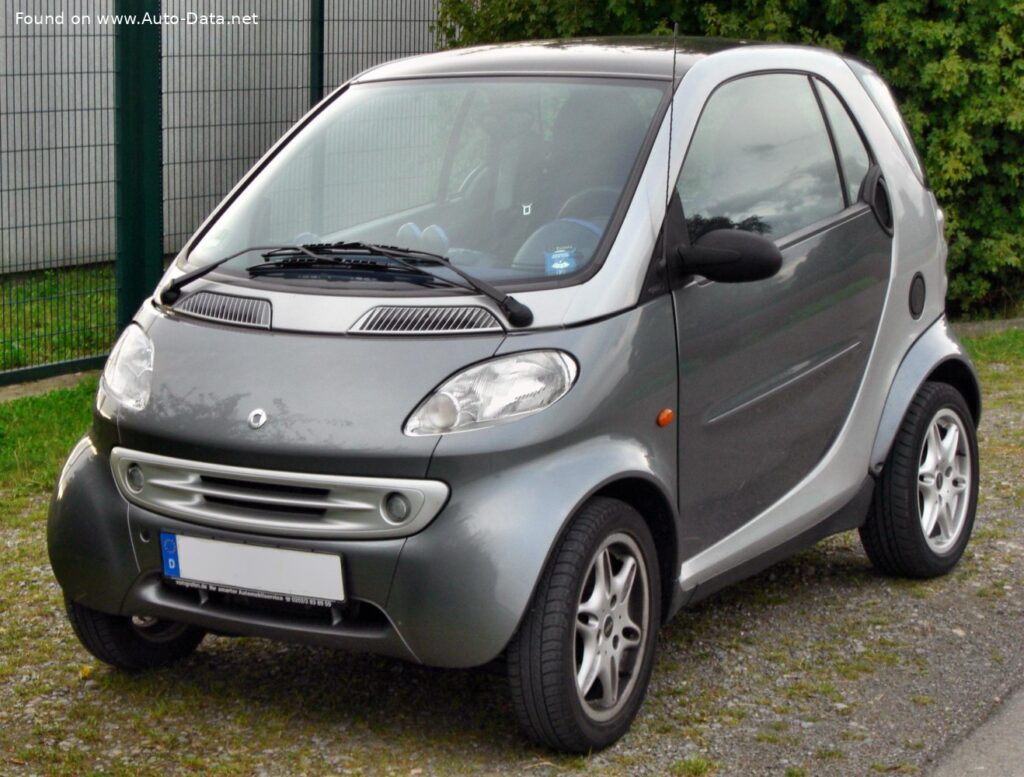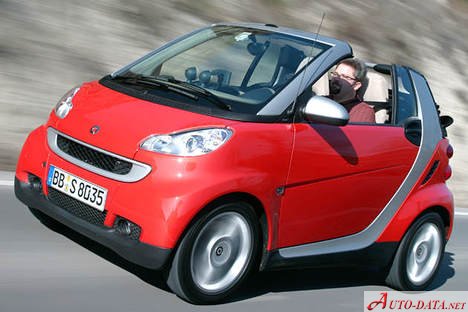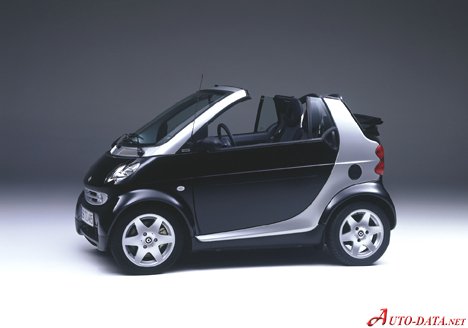
The Smart Fortwo Cabrio (A450) 0.7 i, produced between 1999 and 2007, represents the initial foray into the microcar segment by Smart, a brand then owned by Daimler-Benz. This diminutive two-seater convertible was primarily aimed at the European urban market, offering a solution to congested city streets and parking challenges. While never officially sold in significant numbers in the United States, the first-generation Fortwo Cabrio gained notoriety for its unique design and innovative engineering. It established the Fortwo as a recognizable and often debated vehicle, paving the way for subsequent generations and a broader international presence.
Smart Fortwo Cabrio (A450) 0.7 i: A Detailed Overview
The A450 generation Fortwo Cabrio was a radical departure from conventional automotive design. Its compact size, coupled with a rear-engine, rear-wheel-drive layout, provided a distinctive driving experience. The Cabrio version added an element of open-air enjoyment, appealing to drivers seeking a fun and practical city car. The 0.7 i variant, equipped with a turbocharged three-cylinder engine, offered a balance between fuel efficiency and adequate performance for urban environments.
Engine & Performance
The heart of the Smart Fortwo Cabrio 0.7 i is a 698 cc (42.59 cubic inches) inline three-cylinder engine, designated M 160.920. This engine, despite its small displacement, is turbocharged, allowing it to produce 61 horsepower at 5250 rpm and 95 Nm (70.07 lb-ft) of torque at 2000 rpm. The turbocharger significantly boosts power output, resulting in a power-to-liter ratio of 87.4 hp/l. Power is delivered to the rear wheels via a six-speed automatic transmission. While not designed for rapid acceleration, the Fortwo Cabrio 0.7 i could reach 0-60 mph in approximately 14.7 seconds and achieve a maximum speed of 135 km/h (83.89 mph). Fuel economy is a key strength, with combined fuel consumption rated at 4.7 l/100 km (50 US mpg, 60.1 UK mpg, 21.3 km/l). The weight-to-power ratio of 13.2 kg/Hp and weight-to-torque ratio of 8.5 kg/Nm contribute to its relatively efficient operation.
Design & Features
The Smart Fortwo Cabrio A450 is instantly recognizable by its extremely short length of 2500 mm (98.43 inches) and narrow width of 1515 mm (59.65 inches). The Cabrio body style features a retractable fabric roof, providing an open-air driving experience. The vehicle seats two occupants and has three doors – two for passenger access and one for the engine compartment. The design prioritized maximizing interior space within its minimal footprint. Safety features for the era included ABS (Anti-lock Braking System) and disc brakes on all four wheels. The interior, while basic, was functional and designed to accommodate two adults comfortably. The rear-engine layout necessitated a small front trunk and limited rear storage space. The Fortwo’s unique proportions and playful design made it a popular choice for those seeking a distinctive and practical urban vehicle.
Technical Specifications
| General Information | |
| Brand | Smart |
| Model | Fortwo |
| Generation | Fortwo Cabrio (A450) |
| Type (Engine) | 0.7 i (61 Hp) |
| Start of production | 1999 |
| End of production | 2007 |
| Powertrain Architecture | Internal Combustion engine |
| Body type | Cabriolet |
| Seats | 2 |
| Doors | 3 |
| Performance Specs | |
| Fuel consumption (urban) | 6 l/100 km (39.2 US mpg, 47.1 UK mpg, 16.7 km/l) |
| Fuel consumption (extra urban) | 4 l/100 km (58.8 US mpg, 70.6 UK mpg, 25 km/l) |
| Fuel consumption (combined) | 4.7 l/100 km (50 US mpg, 60.1 UK mpg, 21.3 km/l) |
| Fuel Type | Petrol (Gasoline) |
| Acceleration 0 – 100 km/h | 15.5 sec |
| Acceleration 0 – 62 mph | 15.5 sec |
| Acceleration 0 – 60 mph | 14.7 sec |
| Maximum speed | 135 km/h (83.89 mph) |
| Weight-to-power ratio | 13.2 kg/Hp |
| Weight-to-torque ratio | 8.5 kg/Nm |
| Engine Specs | |
| Power | 61 Hp @ 5250 rpm |
| Power per litre | 87.4 Hp/l |
| Torque | 95 Nm @ 2000 rpm (70.07 lb.-ft. @ 2000 rpm) |
| Engine layout | Rear, Transverse |
| Engine Model/Code | M 160.920 |
| Engine displacement | 698 cm3 (42.59 cu. in.) |
| Number of cylinders | 3 |
| Engine configuration | Inline |
| Cylinder Bore | 66.5 mm (2.62 in.) |
| Piston Stroke | 67 mm (2.64 in.) |
| Compression ratio | 9:1 |
| Number of valves per cylinder | 2 |
| Fuel injection system | Multi-port manifold injection |
| Engine aspiration | Turbocharger |
| Valvetrain | OHC |
| Engine oil capacity | 3.1 l (3.28 US qt | 2.73 UK qt) |
| Coolant | 4.2 l (4.44 US qt | 3.7 UK qt) |
| Space, Volume and Weights | |
| Kerb Weight | 805 kg (1774.72 lbs.) |
| Max. weight | 990 kg (2182.58 lbs.) |
| Max load | 185 kg (407.86 lbs.) |
| Fuel tank capacity | 33 l (8.72 US gal | 7.26 UK gal) |
| Dimensions | |
| Length | 2500 mm (98.43 in.) |
| Width | 1515 mm (59.65 in.) |
| Height | 1549 mm (60.98 in.) |
| Wheelbase | 1812 mm (71.34 in.) |
| Drivetrain, Brakes & Suspension | |
| Drivetrain Architecture | Internal Combustion engine (ICE) drives the rear wheels |
| Drive wheel | Rear wheel drive |
| Number of gears & gearbox type | 6 gears, automatic transmission |
| Front brakes | Disc |
| Rear brakes | Disc |
| Assisting systems | ABS (Anti-lock braking system) |
| Tires size | 145/65 R15; 175/55 R15 |
The Smart Fortwo Cabrio A450 0.7 i, while not a performance car, offered a unique and compelling package for urban drivers. Its compact size, fuel efficiency, and open-air driving experience made it a distinctive vehicle in its segment. It laid the foundation for the Smart brand and its continued focus on innovative and space-saving automotive solutions.