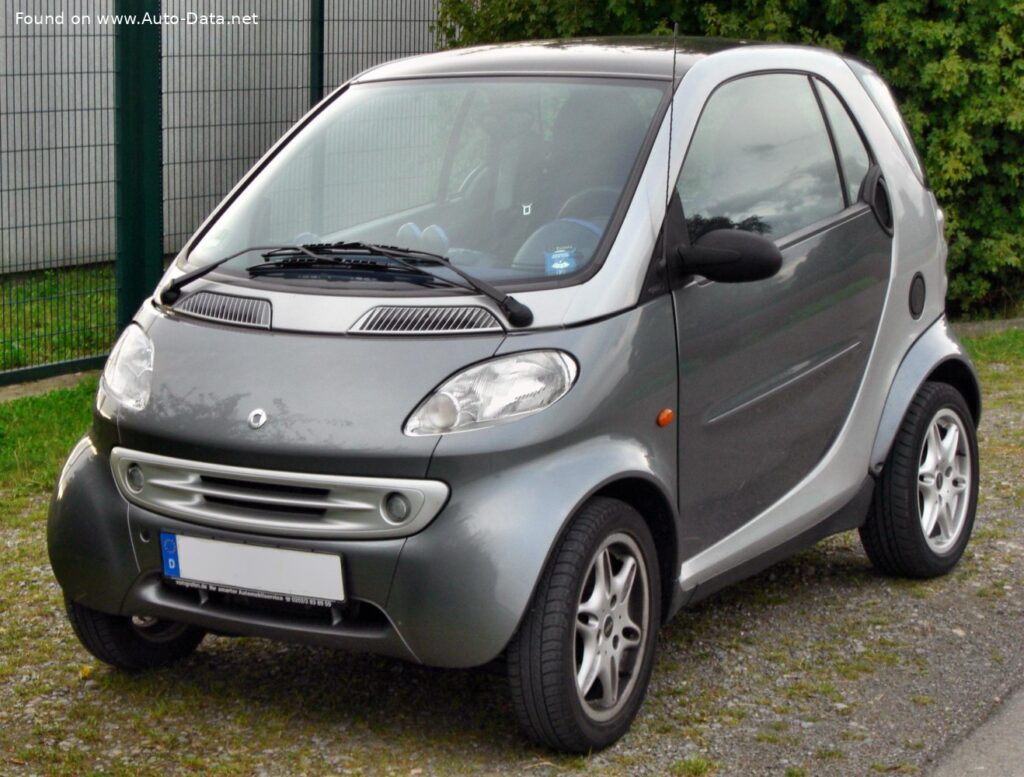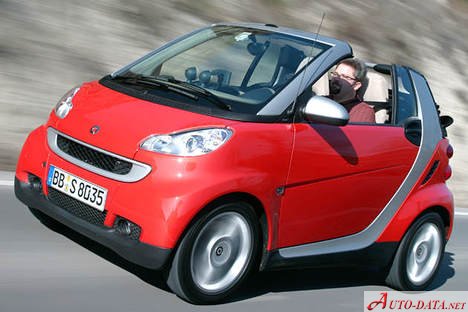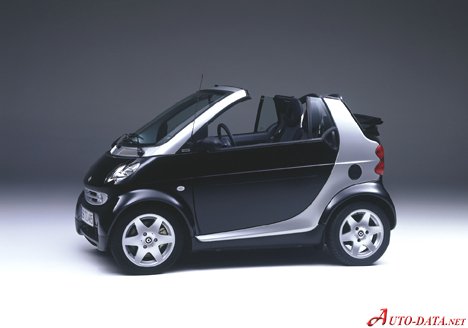
The Smart Fortwo Cabrio (A450) Brabus 0.7i, produced between 2003 and 2007, represents a unique niche within the microcar segment. Primarily sold in Europe, the Fortwo was designed to address urban mobility challenges with its exceptionally small size and efficient engine. The Brabus variant, a performance-enhanced version, offered a slightly more spirited driving experience while retaining the core principles of compact city transportation. While never officially sold in large numbers in the United States due to regulatory hurdles and market preferences, the Smart Fortwo gained a cult following among those seeking an alternative to conventional vehicles.
Smart Fortwo Cabrio (A450) Brabus 0.7i: An Overview
The A450 generation Fortwo Cabrio was the second iteration of the Smart Fortwo, building upon the original City-Coupe’s innovative design. The Cabrio version added open-air enjoyment to the equation, featuring a retractable soft top. The Brabus 0.7i model specifically targeted drivers desiring a bit more performance from the diminutive Fortwo. It was positioned as a premium offering within the Fortwo lineup, boasting a turbocharged engine and sporty styling cues. The vehicle’s appeal lay in its ability to navigate congested city streets with ease, park in tight spaces, and offer a relatively fuel-efficient mode of transportation.
Engine & Performance
The heart of the Smart Fortwo Cabrio Brabus 0.7i is a 698cc inline-three cylinder engine, designated M 160.920. This engine, though small in displacement, is turbocharged and intercooled, allowing it to produce 75 horsepower at 5250 rpm and 110 Nm (81.13 lb.-ft.) of torque at 2200 rpm. This output translates to a power-to-weight ratio of 10.7 kg/Hp and a torque-to-weight ratio of 7.3 kg/Nm. The engine features multi-port fuel injection and an overhead camshaft (OHC) valvetrain with two valves per cylinder. Power is delivered to the rear wheels via a six-speed automatic transmission. Performance figures include a 0-100 km/h (0-62 mph) acceleration time of 12.3 seconds and a 0-60 mph time of 11.7 seconds, with a maximum speed of 150 km/h (93.21 mph). Fuel economy is a strong point, with combined cycle consumption rated at 5.3 l/100 km (44.4 US mpg, 53.3 UK mpg).
Design & Features
The Smart Fortwo Cabrio (A450) is instantly recognizable for its incredibly compact dimensions. Measuring 2500 mm (98.43 in) in length, 1515 mm (59.65 in) in width, and 1549 mm (60.98 in) in height, it’s significantly smaller than most other passenger vehicles. The Cabrio version features a retractable soft top that allows for open-air driving. The Brabus variant typically included unique styling elements such as sporty body kits, alloy wheels (175/50 R16 or 205/45 R16 tires), and interior trim upgrades. Safety features for the era included ABS (Anti-lock Braking System) and disc brakes on all four wheels. The Fortwo’s interior is minimalist, prioritizing functionality and space efficiency. The vehicle seats two passengers and offers limited cargo capacity. The rear-engine, rear-wheel-drive layout contributes to its unique handling characteristics.
Technical Specifications
| Brand | Smart |
| Model | Fortwo |
| Generation | Fortwo Cabrio (A450) |
| Type (Engine) | Brabus 0.7i (75 Hp) |
| Start of production | 2003 |
| End of production | 2007 |
| Powertrain Architecture | Internal Combustion engine |
| Body type | Cabriolet |
| Seats | 2 |
| Doors | 3 |
| Fuel consumption (urban) | 6.5 l/100 km (36.2 US mpg, 43.5 UK mpg) |
| Fuel consumption (extra urban) | 4.6 l/100 km (51.1 US mpg, 61.4 UK mpg) |
| Fuel consumption (combined) | 5.3 l/100 km (44.4 US mpg, 53.3 UK mpg) |
| Fuel Type | Petrol (Gasoline) |
| Acceleration 0 – 100 km/h | 12.3 sec |
| Acceleration 0 – 62 mph | 12.3 sec |
| Acceleration 0 – 60 mph | 11.7 sec |
| Maximum speed | 150 km/h (93.21 mph) |
| Emission standard | Euro 4 |
| Weight-to-power ratio | 10.7 kg/Hp |
| Weight-to-torque ratio | 7.3 kg/Nm |
| Power | 75 Hp @ 5250 rpm |
| Torque | 110 Nm @ 2200 rpm (81.13 lb.-ft. @ 2200 rpm) |
| Engine layout | Rear, Transverse |
| Engine Model/Code | M 160.920 |
| Engine displacement | 698 cm3 (42.59 cu. in.) |
| Number of cylinders | 3 |
| Engine configuration | Inline |
| Cylinder Bore | 66.5 mm (2.62 in.) |
| Piston Stroke | 67 mm (2.64 in.) |
| Compression ratio | 9:1 |
| Number of valves per cylinder | 2 |
| Fuel injection system | Multi-port manifold injection |
| Engine aspiration | Turbocharger, Intercooler |
| Valvetrain | OHC |
| Engine oil capacity | 3.1 l (3.28 US qt | 2.73 UK qt) |
| Coolant | 4.2 l (4.44 US qt | 3.7 UK qt) |
| Kerb Weight | 805 kg (1774.72 lbs.) |
| Max. weight | 990 kg (2182.58 lbs.) |
| Max load | 185 kg (407.86 lbs.) |
| Fuel tank capacity | 33 l (8.72 US gal | 7.26 UK gal) |
| Length | 2500 mm (98.43 in.) |
| Width | 1515 mm (59.65 in.) |
| Height | 1549 mm (60.98 in.) |
| Wheelbase | 1812 mm (71.34 in.) |
| Drivetrain Architecture | Rear wheel drive |
| Number of gears and type of gearbox | 6 gears, automatic transmission |
| Front brakes | Disc |
| Rear brakes | Disc |
| Assisting systems | ABS (Anti-lock braking system) |
| Tires size | 175/50 R16; 205/45 R16 |
The Smart Fortwo Cabrio (A450) Brabus 0.7i remains a distinctive vehicle, representing a bold approach to urban transportation. Its compact size, fuel efficiency, and unique driving experience continue to appeal to a niche market, even years after its production ended. While not a mainstream success in all markets, it cemented Smart’s reputation as an innovator in the microcar segment.