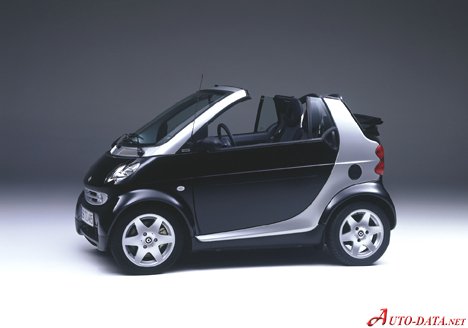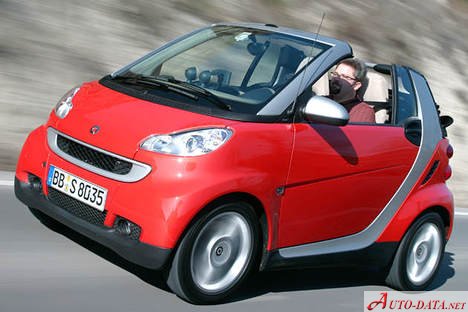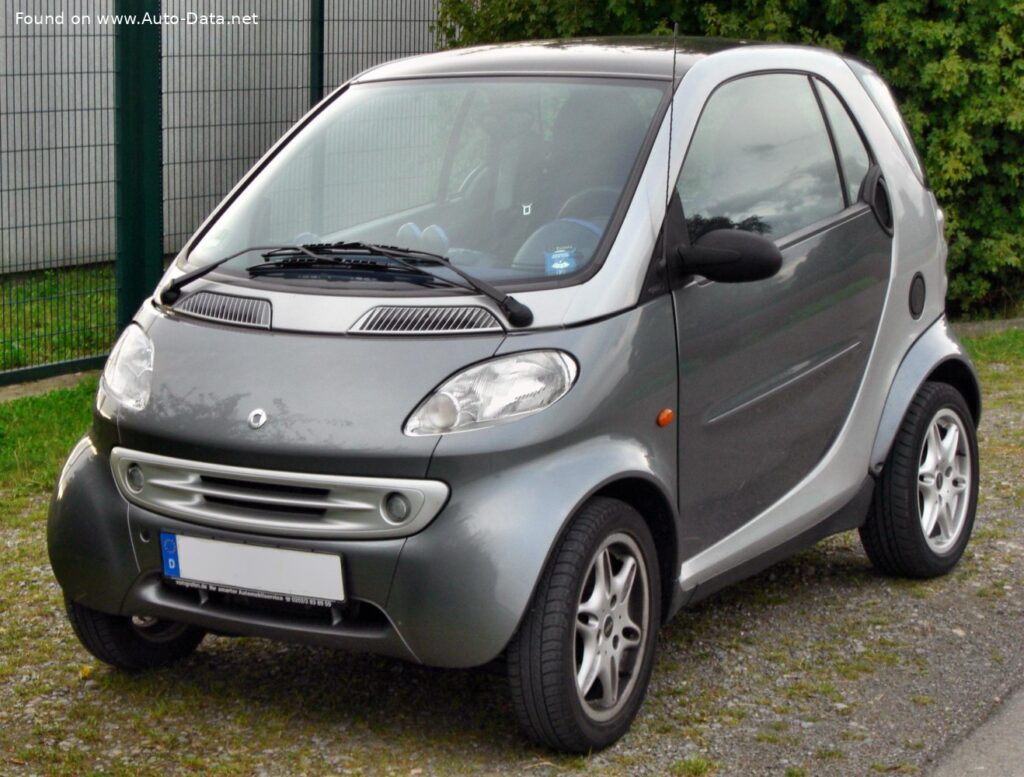
The Smart Fortwo Coupe (C450) 0.6i, produced from 1998 to 2006, represents the initial foray into the microcar segment by the then-new Smart automobile marque. Developed under the ownership of Mercedes-Benz, the Fortwo was conceived as a solution to urban mobility challenges, offering a remarkably compact and fuel-efficient vehicle designed for navigating congested city streets. While not officially sold in the United States during its initial production run, the Fortwo gained significant recognition for its innovative design and engineering, particularly in Europe, where it became a popular choice for city dwellers. The C450 designation refers to the first generation Fortwo Coupe, and the 0.6i variant denotes its 599cc engine. This model laid the foundation for the subsequent generations of the Fortwo, establishing the brand’s identity around compact size and efficient transportation.
Smart Fortwo Coupe (C450) 0.6i: A Detailed Overview
The Smart Fortwo Coupe (C450) 0.6i was a radical departure from conventional automotive design. Its diminutive size – measuring just under 9 feet in length – allowed for easy parking and maneuverability in tight urban environments. The vehicle’s two-seater configuration and three-door layout further emphasized its focus on individual transportation. The C450 was a key component in establishing Smart as a brand focused on innovative solutions for modern urban living. It was a statement about rethinking personal transportation, prioritizing efficiency and practicality over traditional notions of automotive size and power.
Engine & Performance
The heart of the Smart Fortwo Coupe (C450) 0.6i is a 599cc inline three-cylinder gasoline engine, designated M 160.910. This engine produces 45 horsepower at 5250 rpm and 70 Nm (51.63 lb.-ft.) of torque at 3000 rpm. While modest by conventional standards, this power output is sufficient for the vehicle’s lightweight construction. The engine features multi-port manifold fuel injection and an overhead camshaft (OHC) valvetrain with two valves per cylinder. A notable feature, even for its time, was the inclusion of a turbocharger, which helped to boost power and improve efficiency. The engine’s power-to-weight ratio is 17.9 kg/Hp, or 55.9 Hp/tonne, and the torque-to-weight ratio is 11.5 kg/Nm, or 87 Nm/tonne. Power is delivered to the rear wheels via a six-speed automatic transmission. The Fortwo’s top speed is 135 km/h (83.89 mph). Fuel economy is a standout feature, with combined cycle consumption rated at 4.6 l/100 km (51.1 US mpg, 61.4 UK mpg, 21.7 km/l). Urban fuel consumption is 6 l/100 km (39.2 US mpg, 47.1 UK mpg, 16.7 km/l), while extra-urban consumption is 3.9 l/100 km (60.3 US mpg, 72.4 UK mpg, 25.6 km/l).
Design & Features
The Smart Fortwo Coupe (C450) boasts a distinctive design characterized by its short wheelbase and high roofline. The body is a two-door coupe configuration, offering limited but adequate space for two occupants. The vehicle’s compact dimensions are a defining feature, allowing it to be parked in spaces that larger cars cannot access. The C450’s body structure incorporates a high-strength steel safety cell, designed to protect occupants in the event of a collision. Safety features included an Anti-lock Braking System (ABS) as standard equipment. Interior features were minimalist, reflecting the car’s focus on practicality. The dashboard layout is simple and functional, with essential controls readily accessible. The vehicle’s small size necessitates a limited cargo capacity, but the rear engine placement frees up some space for storage. The exterior styling, while unconventional, was intended to be modern and appealing, with rounded edges and a cheerful aesthetic. Tire sizes ranged from 145/65 R15 to 175/55 R15, depending on the trim level.
Technical Specifications
| Brand | Smart |
| Model | Fortwo |
| Generation | Fortwo Coupe (C450) |
| Type (Engine) | 0.6i (45 Hp) |
| Start of production | 1998 |
| End of production | 2006 |
| Powertrain Architecture | Internal Combustion engine |
| Body type | Coupe |
| Seats | 2 |
| Doors | 3 |
| Fuel consumption (urban) | 6 l/100 km (39.2 US mpg, 47.1 UK mpg, 16.7 km/l) |
| Fuel consumption (extra urban) | 3.9 l/100 km (60.3 US mpg, 72.4 UK mpg, 25.6 km/l) |
| Fuel consumption (combined) | 4.6 l/100 km (51.1 US mpg, 61.4 UK mpg, 21.7 km/l) |
| Fuel Type | Petrol (Gasoline) |
| Maximum speed | 135 km/h (83.89 mph) |
| Weight-to-power ratio | 17.9 kg/Hp |
| Weight-to-torque ratio | 11.5 kg/Nm |
| Power | 45 Hp @ 5250 rpm |
| Torque | 70 Nm @ 3000 rpm (51.63 lb.-ft. @ 3000 rpm) |
| Engine layout | Rear, Transverse |
| Engine Model/Code | M 160.910 |
| Engine displacement | 599 cm3 (36.55 cu. in.) |
| Number of cylinders | 3 |
| Engine configuration | Inline |
| Cylinder Bore | 63.5 mm (2.5 in.) |
| Piston Stroke | 63 mm (2.48 in.) |
| Compression ratio | 9.5:1 |
| Number of valves per cylinder | 2 |
| Fuel injection system | Multi-port manifold injection |
| Engine aspiration | Turbocharger |
| Valvetrain | OHC |
| Engine oil capacity | 2.5 l (2.64 US qt | 2.2 UK qt) |
| Coolant | 4.2 l (4.44 US qt | 3.7 UK qt) |
| Kerb Weight | 805 kg (1774.72 lbs.) |
| Max. weight | 990 kg (2182.58 lbs.) |
| Max load | 185 kg (407.86 lbs.) |
| Fuel tank capacity | 33 l (8.72 US gal | 7.26 UK gal) |
| Length | 2500 mm (98.43 in.) |
| Width | 1515 mm (59.65 in.) |
| Height | 1549 mm (60.98 in.) |
| Wheelbase | 1812 mm (71.34 in.) |
| Drivetrain Architecture | Rear wheel drive |
| Number of gears and type of gearbox | 6 gears, automatic transmission |
| Front brakes | Disc |
| Rear brakes | Disc |
| Assisting systems | ABS (Anti-lock braking system) |
| Tires size | 145/65 R15; 175/55 R15 |
The Smart Fortwo Coupe (C450) 0.6i, despite its limited power and size, remains a significant vehicle in automotive history. It demonstrated the viability of microcars as a practical solution for urban transportation and paved the way for future generations of the Fortwo, as well as inspiring other manufacturers to explore similar concepts. Its focus on efficiency, maneuverability, and innovative design continues to resonate with drivers seeking alternatives to traditional automobiles.