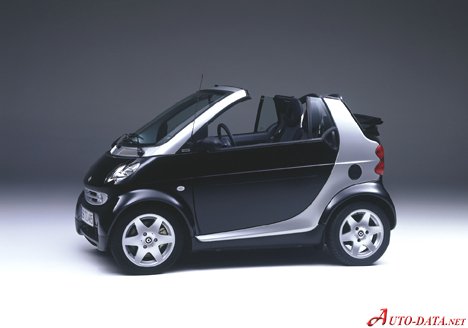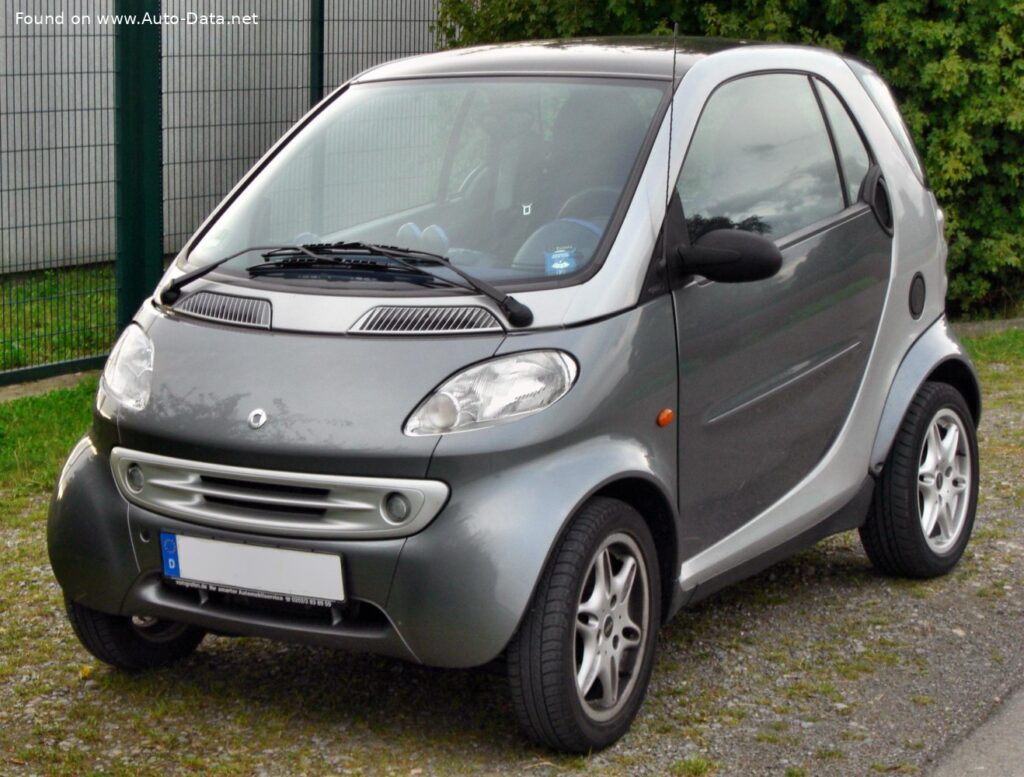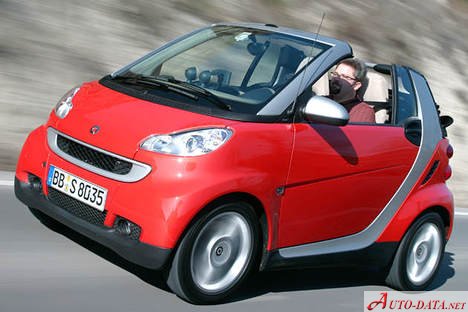
The Smart Fortwo II Cabrio (A451) Brabus 17.6 kWh electric drive represents a unique chapter in the history of the Smart marque, particularly as an early foray into all-electric city vehicles. Produced between 2012 and 2015, this variant of the second-generation Fortwo Cabrio was primarily aimed at the European market, where Smart enjoyed significant popularity as a compact and efficient urban mobility solution. While not officially sold in the United States during this period, it exemplifies the growing trend towards electric vehicles and the innovative engineering that characterized the Smart brand.
Smart Fortwo II Cabrio (A451) Brabus: An Overview
The Fortwo II, launched in 2007, built upon the success of the original Fortwo (City-Coupe) by offering improved safety, refinement, and a wider range of customization options. The Cabrio version, with its retractable soft top, added an element of open-air enjoyment to the already distinctive Smart experience. The Brabus variant, known for its sporty styling and enhanced performance in gasoline-powered models, received an electric powertrain in 2012, marking a significant shift in the vehicle’s character. This electric version was designed to appeal to environmentally conscious consumers seeking a practical and stylish city car.
Engine & Performance
The Smart Fortwo II Cabrio Brabus electric drive is powered by a single electric motor producing 82 horsepower (Hp) and 135 Nm (99.57 lb.-ft.) of torque. This power is delivered to the rear wheels via a single-speed automatic transmission. While not designed for high-speed performance, the electric powertrain provides brisk acceleration for urban driving conditions. The vehicle can accelerate from 0 to 60 mph in approximately 9.7 seconds and has a top speed of 80.78 mph (130 km/h). The powertrain architecture is a Battery Electric Vehicle (BEV), relying entirely on electricity for propulsion.
The vehicle utilizes a 17.6 kWh gross battery capacity, with a usable capacity of 16.7 kWh. This lithium-ion battery pack is located under the floor, contributing to a low center of gravity and enhancing stability. The all-electric range is approximately 90.1 miles (145 km), making it suitable for daily commutes and city errands. Energy consumption is rated at 16.3 kWh per 100 km (26.23 kWh per 100 miles), equating to 128 MPGe and a efficiency of 6.1 km/kWh (3.8 mi/kWh).
Design & Features
The Smart Fortwo II Cabrio retains the iconic two-seat, two-door cabriolet body style that defines the model. Its compact dimensions – measuring 2727 mm (107.36 in.) in length and 1559 mm (61.38 in.) in width – make it exceptionally maneuverable in congested urban environments. The retractable soft top allows for open-air driving, enhancing the overall driving experience. The Brabus trim level adds sporty styling cues, including unique bumpers, side skirts, and alloy wheels.
Safety features include ABS (Anti-lock Braking System), essential for maintaining control during emergency braking. The vehicle’s structure incorporates reinforced safety cells to protect occupants in the event of a collision. While relatively basic by modern standards, these features were considered adequate for a city car of its time. Interior features focus on practicality and ease of use, with a simple dashboard layout and comfortable seating for two. Trunk space ranges from 7.77 to 12.01 cubic feet (220 to 340 liters) depending on the position of the soft top.
Technical Specifications
| General Information | |
| Brand | Smart |
| Model | Fortwo |
| Generation | Fortwo II cabrio (A451) |
| Type (Engine) | Brabus 17.6 kWh (82 Hp) electric drive |
| Start of production | 2012 |
| End of production | 2015 |
| Powertrain Architecture | BEV (Electric Vehicle) |
| Body type | Cabriolet |
| Seats | 2 |
| Doors | 2 |
| Performance Specs | |
| Fuel Type | Electricity |
| Acceleration 0 – 100 km/h | 10.2 sec |
| Acceleration 0 – 62 mph | 10.2 sec |
| Acceleration 0 – 60 mph | 9.7 sec |
| Maximum speed | 130 km/h (80.78 mph) |
| Weight-to-power ratio | 11.5 kg/Hp, 86.8 Hp/tonne |
| Weight-to-torque ratio | 7 kg/Nm, 142.9 Nm/tonne |
| Electric Car Specs | |
| Gross battery capacity | 17.6 kWh |
| Net (usable) battery capacity | 16.7 kWh |
| Battery technology | Lithium-ion (Li-Ion) |
| Battery location | Below the floor |
| All-electric range | 145 km (90.1 mi) |
| Average Energy consumption | 16.3 kWh/100 km (26.23 kWh/100 mi) |
| MPGe | 128 |
| km/kWh | 6.1 |
| mi/kWh | 3.8 |
| Electric motor power | 82 Hp |
| Electric motor Torque | 135 Nm (99.57 lb.-ft.) |
| Electric motor model/code | EM0003 |
| Electric motor location | Rear axle, Transverse |
| System power | 82 Hp |
| System torque | 135 Nm (99.57 lb.-ft.) |
| Space, Volume and Weights | |
| Kerb Weight | 945 kg (2083.37 lbs.) |
| Max. weight | 1150 kg (2535.32 lbs.) |
| Max load | 205 kg (451.95 lbs.) |
| Trunk (boot) space – minimum | 220 l (7.77 cu. ft.) |
| Trunk (boot) space – maximum | 340 l (12.01 cu. ft.) |
| Dimensions | |
| Length | 2727 mm (107.36 in.) |
| Width | 1559 mm (61.38 in.) |
| Height | 1565 mm (61.61 in.) |
| Wheelbase | 1867 mm (73.5 in.) |
| Front track | 1270 mm (50 in.) |
| Rear (Back) track | 1363 mm (53.66 in.) |
| Minimum turning circle | 8.75 m (28.71 ft.) |
| Drivetrain, Brakes & Suspension | |
| Drivetrain Architecture | One electric motor drives the rear wheels. |
| Drive wheel | Rear wheel drive |
| Number of gears | 1, automatic transmission |
| Front suspension | Independent type McPherson |
| Rear suspension | Suspension De-Dion |
| Front brakes | Ventilated discs |
| Rear brakes | Drum |
| Steering type | Steering rack and pinion |
| Power steering | Electric |
| Tires size | Front: 175/55 R16, Rear: 225/35 R17 |