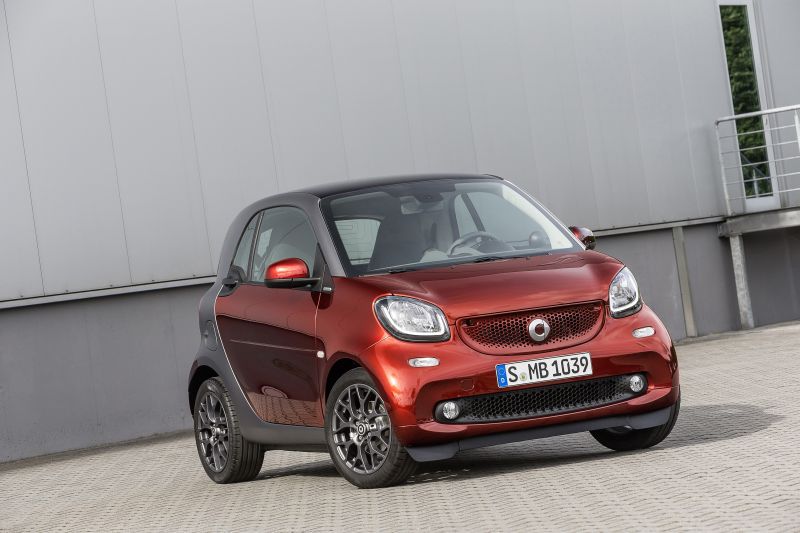
The Smart Fortwo III coupe (C453), produced from 2014 to 2019, represented a significant evolution in the Smart city car lineage. The 1.0-liter (71 hp) variant, equipped with a five-speed manual transmission, served as the entry point into the C453 range. This model aimed to provide an affordable and fuel-efficient urban transportation solution, capitalizing on the Fortwo’s unique size and maneuverability. It was built on the Renault-Smart platform, internally designated as the C453, and shared components with the Renault Twingo V.
The 1.0-Liter 71 hp Fortwo: Positioning and Target Audience
Within the C453 Fortwo lineup, the 1.0-liter 71 hp model occupied the base trim level. It was positioned below the more powerful 0.9-liter turbocharged engine options, which offered increased performance at a higher price point. The target audience for this variant was primarily urban dwellers, first-time car buyers, and individuals seeking a minimalist and economical vehicle for short commutes and city parking. Its compact size and low running costs made it particularly appealing in densely populated areas where parking is a premium.
Powertrain & Engine Architecture
The heart of the 1.0-liter Fortwo is the M 281.920 engine, a naturally aspirated, three-cylinder inline gasoline engine displacing 999 cubic centimeters (60.96 cubic inches). This engine features multi-port fuel injection and a compression ratio of 10.5:1. It produces a maximum power output of 71 horsepower at 6000 rpm and 91 Nm (67.12 lb-ft) of torque at 2850 rpm. The engine’s relatively simple design prioritized fuel efficiency and reliability over outright performance.
The engine is transversely mounted at the rear of the vehicle, driving the rear wheels. This rear-engine, rear-wheel-drive configuration is a defining characteristic of the Smart Fortwo, contributing to its unique handling characteristics and compact dimensions. The engine is paired with a five-speed manual transmission, offering a direct and engaging driving experience. While an automatic transmission was available on other C453 models, the base 1.0-liter version was exclusively offered with the manual gearbox.
Fuel Injection and Valvetrain
The M 281.920 engine utilizes a multi-port fuel injection system, delivering fuel directly into the intake ports. This system provides precise fuel metering and contributes to efficient combustion. The engine also features a single overhead camshaft (SOHC) valvetrain, operating four valves per cylinder. This configuration balances simplicity with adequate airflow for optimal performance.
Driving Characteristics
The 1.0-liter 71 hp Fortwo delivers modest but adequate performance for urban driving. Acceleration from 0 to 60 mph takes approximately 13.7 seconds, and the top speed is limited to 151 km/h (93.83 mph). The engine’s torque peak at 2850 rpm provides sufficient pulling power for navigating city streets and merging into traffic. However, the engine can feel strained when climbing hills or carrying a full passenger load.
The five-speed manual transmission offers a precise and engaging shift feel. The gear ratios are well-suited to city driving, providing ample acceleration in lower gears and comfortable cruising at highway speeds. Compared to the turbocharged variants, the 1.0-liter engine delivers a more linear power delivery, making it predictable and easy to control. The rear-wheel-drive layout contributes to a nimble and responsive handling experience, particularly in tight corners.
Equipment & Trim Levels
The base 1.0-liter Fortwo typically came equipped with a relatively basic level of standard features. These included power windows, central locking, and a basic audio system. Safety features such as ABS (Anti-lock Braking System) and airbags were standard. Interior upholstery was typically cloth, and the dashboard featured a simple, functional design.
Optional extras included air conditioning, a panoramic sunroof, alloy wheels, and a more advanced audio system with Bluetooth connectivity. Higher trim levels offered additional features such as leather upholstery, heated seats, and parking sensors. The overall interior design prioritized functionality and space efficiency, maximizing the use of the limited cabin dimensions.
Chassis & Braking
The C453 Fortwo features an independent suspension system at both the front and rear. The front suspension utilizes McPherson struts with coil springs and an anti-roll bar, while the rear suspension employs independent coil springs. This suspension setup provides a comfortable ride quality and good handling characteristics, considering the vehicle’s short wheelbase.
The braking system consists of ventilated discs at the front and drum brakes at the rear. This configuration provides adequate stopping power for the vehicle’s weight and performance. The electric power steering system offers light and precise steering control, making it easy to maneuver in tight spaces. Tire sizes typically ranged from 165/65 R 15 to 185/60 R 15, depending on the trim level and optional equipment.
Market Reception & Comparison
The 1.0-liter Fortwo received generally positive reviews for its fuel efficiency, maneuverability, and affordability. Critics praised its ability to navigate congested city streets and park in tight spaces. However, some reviewers noted its limited performance and basic interior appointments. Compared to the turbocharged variants, the 1.0-liter model offered a more economical option, but at the expense of acceleration and overall driving enjoyment.
In terms of fuel economy, the 1.0-liter Fortwo achieved combined fuel consumption of 4.1 l/100 km (57.4 US mpg, 68.9 UK mpg), making it one of the most fuel-efficient vehicles on the market. Its CO2 emissions of 93 g/km also placed it in a low tax bracket in many European countries. Reliability was generally good, with the M 281.920 engine proving to be a durable and dependable unit.
Technical Specifications
| Body Type | Coupe, 2 Doors, 2 Seats |
| Fuel Economy (Combined) | 4.1 l/100 km (57.4 US mpg, 68.9 UK mpg) |
| CO2 Emissions | 93 g/km |
| Maximum Speed | 151 km/h (93.83 mph) |
| Acceleration 0-60 mph | 13.7 sec |
| Power | 71 Hp @ 6000 rpm |
| Torque | 91 Nm @ 2850 rpm (67.12 lb.-ft. @ 2850 rpm) |
| Engine Layout | Rear, Transverse |
| Engine Displacement | 999 cm3 (60.96 cu. in.) |
| Number of Cylinders | 3, Inline |
| Cylinder Bore | 72.2 mm (2.84 in.) |
| Piston Stroke | 81.3 mm (3.2 in.) |
| Compression Ratio | 10.5:1 |
| Fuel Injection System | Multi-port manifold injection |
| Engine Oil Capacity | 3.5 l (3.7 US qt | 3.08 UK qt) |
| Coolant Capacity | 6.9 l (7.29 US qt | 6.07 UK qt) |
| Kerb Weight | 815 kg (1796.77 lbs.) |
| Max. Weight | 1150 kg (2535.32 lbs.) |
| Trunk Space (Minimum) | 260 l (9.18 cu. ft.) |
| Trunk Space (Maximum) | 350 l (12.36 cu. ft.) |
| Fuel Tank Capacity | 28 l (7.4 US gal | 6.16 UK gal) |
| Length | 2695 mm (106.1 in.) |
| Width | 1663 mm (65.47 in.) |
| Height | 1555 mm (61.22 in.) |
| Wheelbase | 1873 mm (73.74 in.) |
| Gearbox | 5 gears, manual transmission |
Legacy
The 1.0-liter Fortwo (C453) remains a popular choice in the used car market, particularly for urban commuters and those seeking an affordable and economical vehicle. The M 281.920 engine has proven to be relatively reliable, with proper maintenance. However, potential buyers should be aware of the potential for oil leaks and the importance of regular servicing. The C453 generation Fortwo represents a significant improvement over its predecessors in terms of build quality, safety, and driving dynamics, solidifying its position as a unique and practical city car.