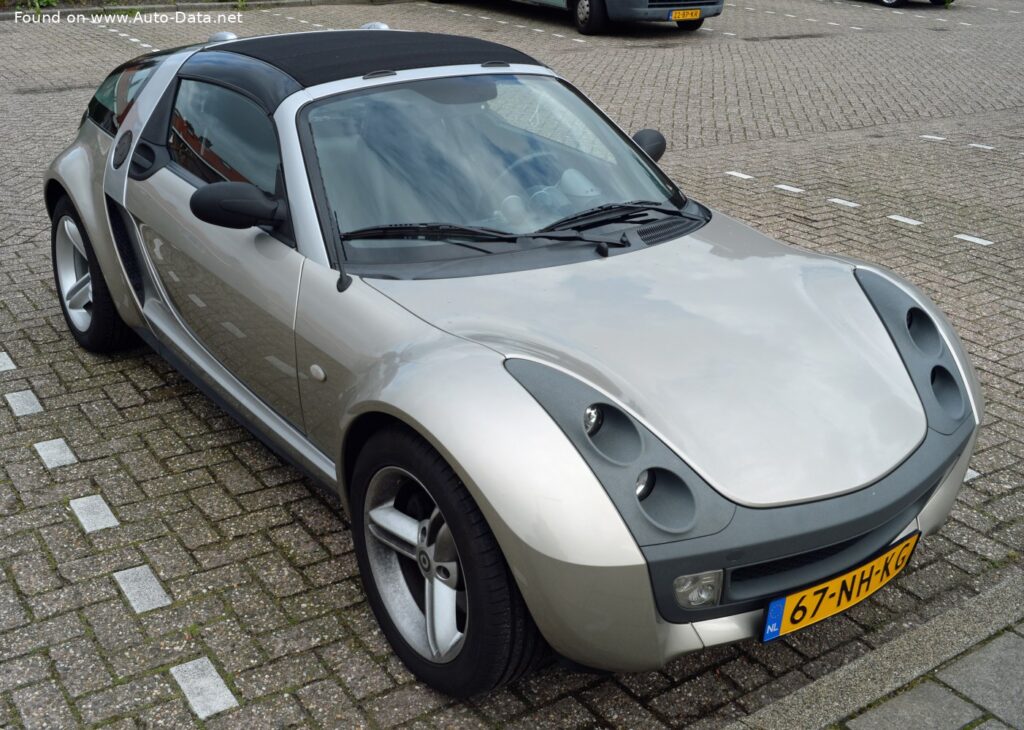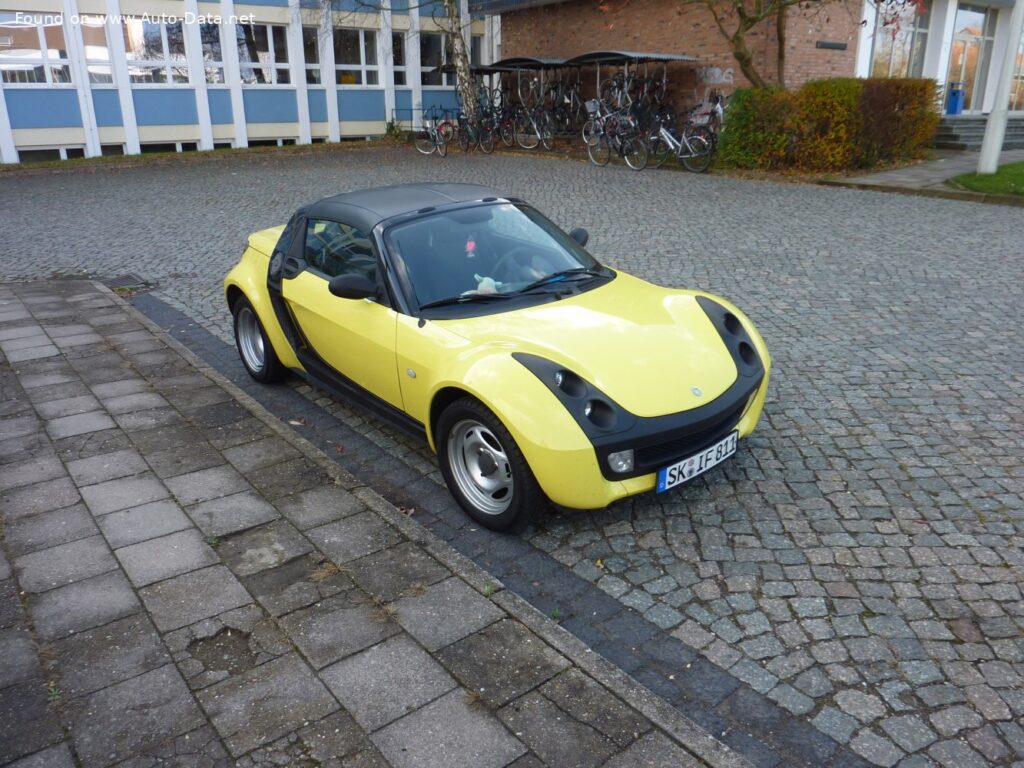
The Smart Roadster cabrio 0.7i, produced between 2004 and 2005, represents a unique and compact offering in the sports car segment. Positioned as the entry-level variant of the first-generation Smart Roadster (platform code W636), it aimed to provide an accessible and fun driving experience within the Smart brand’s innovative and minimalist philosophy. This cabriolet version, with its two-seater configuration and rear-wheel drive layout, distinguished itself from many contemporary small cars and offered a distinctive open-air motoring experience.
Powertrain & Engine Architecture
The heart of the Smart Roadster cabrio 0.7i is the M 160.923 engine, a 698 cc (42.59 cu. in.) inline-three cylinder powerplant. This engine is notable for its compact size and utilization of forced induction. It employs a turbocharger with an intercooler to boost power output to 101 hp at 5250 rpm and 130 Nm (95.88 lb-ft) of torque at 2250 rpm. The engine features multi-port manifold fuel injection and an overhead camshaft (OHC) valvetrain with two valves per cylinder. The compression ratio is set at 9:1. The engine’s oil capacity is 3 liters (3.17 US qt / 2.64 UK qt), and it requires a specific oil specification (details typically found in the owner’s manual). The cooling system holds 4.2 liters (4.44 US qt / 3.7 UK qt) of coolant.
Transmission
While the original content specified a manual transmission, it’s important to note that the 0.7i engine was also available with a 6-speed automated manual transmission (AMT), often marketed as “Softouch” or “Softdrive.” This transmission, while technically an automated manual, lacked a traditional torque converter and operated with a single clutch. It offered a degree of convenience over a traditional manual but wasn’t as smooth or responsive as a conventional automatic. The gear ratios were optimized for both city driving and highway cruising, aiming to maximize fuel efficiency and provide adequate acceleration.
Driving Characteristics
The Smart Roadster cabrio 0.7i, despite its small engine displacement, offered surprisingly engaging driving dynamics. The turbocharger helped to overcome the limitations of the small engine, providing a noticeable boost in power during acceleration. The rear-wheel drive layout contributed to a balanced handling characteristic, making the car feel nimble and responsive in corners. However, the 101 hp output meant that acceleration was not particularly brisk, and overtaking required careful planning. Compared to potential future higher-output versions (which never materialized in production), the 0.7i prioritized fuel economy and ease of driving over outright performance. The automated manual transmission, when equipped, could exhibit some jerkiness during low-speed maneuvers and gear changes, a common characteristic of early AMT systems.
Equipment & Trim Levels
The Smart Roadster cabrio 0.7i was generally equipped with a relatively basic level of standard features, reflecting its entry-level positioning. Standard equipment typically included power steering, disc brakes on the front wheels, and drum brakes on the rear. The interior featured simple, functional design with cloth upholstery. Optional extras included features such as air conditioning, alloy wheels, a panoramic roof, and upgraded audio systems. The dashboard layout was minimalist, focusing on essential information. The cabriolet top was manually operated, adding to the car’s simplicity and affordability.
Chassis & Braking
The Smart Roadster cabrio 0.7i utilized a spring strut suspension system at the front and a De-Dion rear suspension. The De-Dion setup, while relatively simple, contributed to the car’s balanced handling and ride comfort. The front brakes were disc brakes, providing adequate stopping power, while the rear brakes were drum brakes, a cost-saving measure for the entry-level model. The hydraulic steering system offered a direct and responsive feel, enhancing the driving experience. Stabilizer bars were included to reduce body roll during cornering.
Market Reception & Comparison
The Smart Roadster cabrio 0.7i received mixed reviews from automotive critics. While praised for its unique design, compact size, and engaging handling, it was also criticized for its limited power, the sometimes-jerky operation of the automated manual transmission (when equipped), and its relatively high price compared to other small cars. Compared to other trims within the Smart Roadster lineup (none of which were ultimately produced), the 0.7i represented the most affordable and fuel-efficient option. It appealed to buyers seeking a fun and stylish city car with a distinctive personality. Fuel economy was a strong point, with the 0.7i achieving respectable mileage for a sports car. Reliability was generally good, although some owners reported issues with the automated manual transmission and turbocharger.
Technical Specifications
| Engine Model/Code | M 160.923 |
| Engine Displacement | 698 cm3 / 42.59 cu. in. |
| Number of Cylinders | 3 (Inline) |
| Cylinder Bore | 66.5 mm / 2.62 in. |
| Piston Stroke | 67 mm / 2.64 in. |
| Compression Ratio | 9:1 |
| Number of Valves per Cylinder | 2 |
| Fuel Injection System | Multi-port manifold injection |
| Engine Aspiration | Turbocharger, Intercooler |
| Maximum Power | 101 Hp @ 5250 rpm |
| Maximum Torque | 130 Nm @ 2250 rpm / 95.88 lb.-ft. @ 2250 rpm |
| Engine Oil Capacity | 3 l / 3.17 US qt / 2.64 UK qt |
| Coolant Capacity | 4.2 l / 4.44 US qt / 3.7 UK qt |
| Length | 3427 mm / 134.92 in. |
| Width | 1615 mm / 63.58 in. |
| Height | 1192 mm / 46.93 in. |
| Wheelbase | 2360 mm / 92.91 in. |
| Front Track | 1357 mm / 53.43 in. |
| Rear Track | 1392 mm / 54.8 in. |
| Trunk Space (Minimum) | 45 l / 1.59 cu. ft. |
| Trunk Space (Maximum) | 86 l / 3.04 cu. ft. |
| Drivetrain | Rear wheel drive |
| Transmission | 6-speed manual or 6-speed automated manual |
| Front Suspension | Spring Strut |
| Rear Suspension | De-Dion |
| Front Brakes | Disc |
| Rear Brakes | Drum |
Legacy
The Smart Roadster cabrio 0.7i, despite its short production run, has gained a cult following among enthusiasts. The combination of its unique design, rear-wheel drive layout, and compact size makes it a distinctive and enjoyable car to drive. While the automated manual transmission can be a source of maintenance issues, the engine itself is generally considered reliable. On the used car market, well-maintained examples of the 0.7i command a premium, reflecting their rarity and desirability. The Smart Roadster, in general, represents a bold and innovative attempt to create a truly small and engaging sports car, and the 0.7i variant remains a testament to that vision.