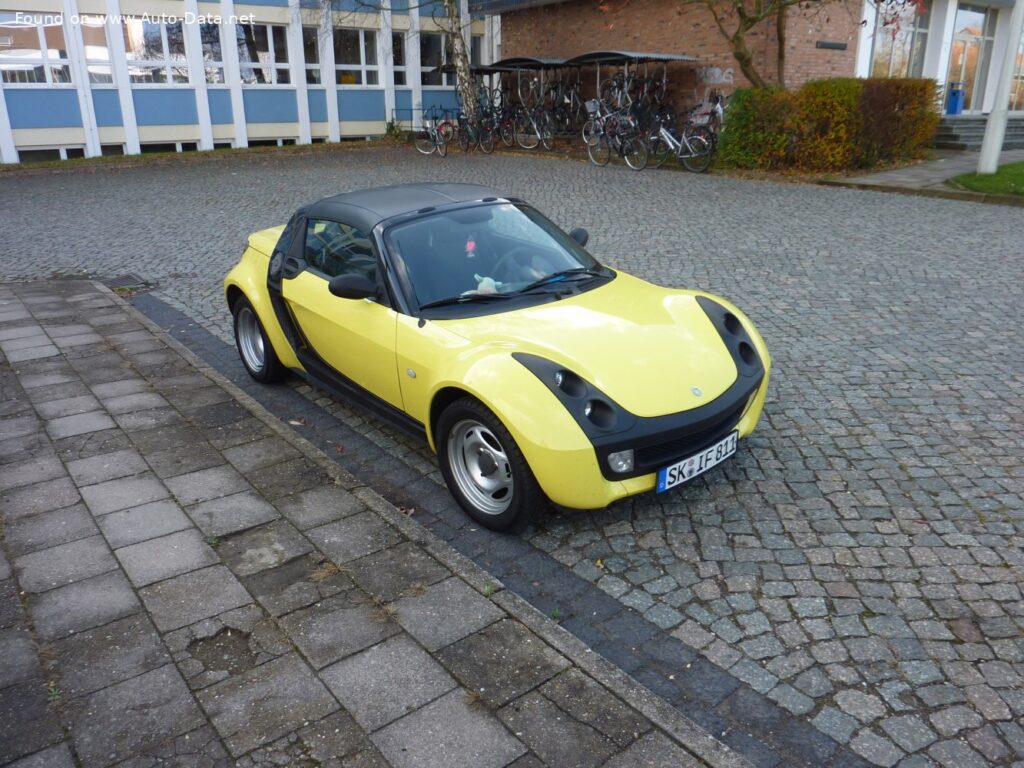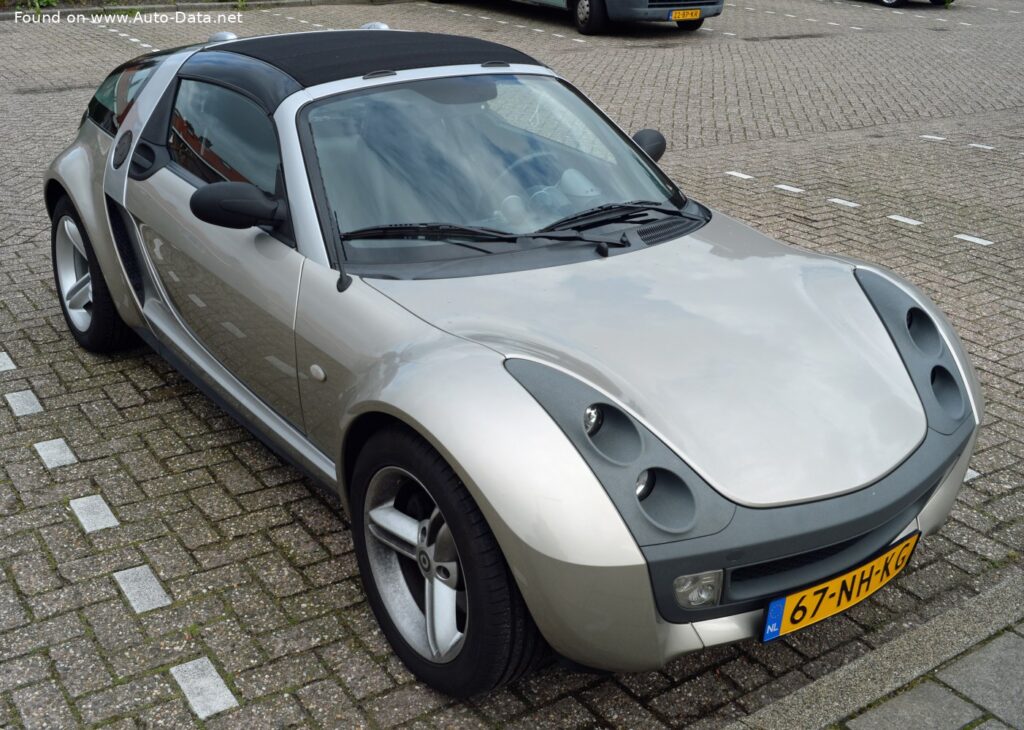
The Smart Roadster coupe Brabus 0.7i, produced from 2004 to 2005, represented the performance-oriented pinnacle of the first-generation (452) Smart Roadster line. Positioned as the premium variant, it offered a significant power upgrade over the standard 61 hp models, appealing to drivers seeking a more engaging and sporty driving experience in the diminutive Smart package. Built on the 452 platform, shared with the convertible Roadster, the Brabus coupe distinguished itself with unique styling cues and a turbocharged engine developed in collaboration with Brabus, a renowned German automotive tuning firm.
Brabus 0.7i Powertrain & Engine Architecture
The heart of the Smart Roadster coupe Brabus 0.7i is the M 160.923 engine, a 698 cc inline-three cylinder powerplant. This engine is significantly different from the naturally aspirated versions found in lower trim levels. The key upgrade is the addition of a turbocharger with an intercooler, boosting output to 101 hp at 5250 rpm and 130 Nm (95.88 lb-ft) of torque at 2250 rpm. This represents a substantial increase in power and torque, transforming the car’s performance characteristics.
The engine utilizes multi-port manifold fuel injection and an overhead camshaft (OHC) valvetrain with two valves per cylinder. The compression ratio is set at 9:1. The turbocharger provides increased air intake, allowing for a more complete combustion process and resulting in the power gains. The engine oil specification requires adherence to Smart’s recommended standards for optimal lubrication and longevity. Cooling is managed with a 4.2 liter (4.44 US qt / 3.7 UK qt) coolant capacity.
Unlike the standard Roadsters which were primarily offered with automated manual transmissions, the Brabus model exclusively came with a traditional 6-speed manual transmission. This was a deliberate choice by Smart and Brabus to enhance driver involvement and provide more precise control over the increased power. The transmission is directly connected to the rear wheels, making the Brabus coupe a rear-wheel drive vehicle – a unique characteristic within the Smart lineup.
Transmission Details
The 6-speed manual transmission in the Brabus model features gear ratios designed to maximize the engine’s power band. First gear is relatively short, providing quick acceleration from a standstill. Higher gears are spaced to optimize fuel efficiency during cruising. The shift linkage is direct and precise, contributing to the sporty feel of the car. The transmission’s robust construction is necessary to handle the increased torque output from the turbocharged engine.
Driving Characteristics
The Smart Roadster coupe Brabus 0.7i delivers a surprisingly engaging driving experience. The turbocharged engine provides a noticeable surge of power, especially in the mid-range. Acceleration from 0 to 60 mph takes approximately 10.4 seconds, and 0 to 100 km/h is achieved in 10.9 seconds. While these figures aren’t groundbreaking, they are significantly improved compared to the standard Roadster. The top speed is electronically limited to 180 km/h (111.85 mph).
The rear-wheel drive configuration contributes to a balanced chassis and predictable handling. The car feels nimble and responsive, particularly on winding roads. The 6-speed manual transmission allows drivers to fully exploit the engine’s power band, providing precise control over acceleration and deceleration. The relatively light weight of the vehicle (815 kg / 1796.77 lbs) further enhances its agility.
Compared to the standard Roadster, the Brabus model feels significantly more powerful and responsive. The manual transmission provides a more direct connection to the engine, while the turbocharged engine delivers a more satisfying driving experience. The Brabus variant caters to enthusiasts who prioritize performance and driving enjoyment over outright practicality.
Equipment & Trim Levels
The Brabus coupe was the most well-equipped variant of the Smart Roadster. Standard features included sport seats, a leather-wrapped steering wheel, and unique Brabus-specific styling elements, both inside and out. Exterior features included a distinctive front spoiler, side skirts, and a rear diffuser. The interior typically featured aluminum trim and Brabus-branded accents.
Optional extras included air conditioning, upgraded audio systems, and various customization options through Brabus. The interior upholstery was typically a combination of leather and fabric, with options for different color schemes. The dashboard layout was similar to other Roadster models, but with Brabus-specific gauges and instrumentation.
Chassis & Braking
The Smart Roadster coupe Brabus 0.7i utilizes a spring strut front suspension and a De-Dion rear suspension. This suspension setup provides a good balance between ride comfort and handling performance. The De-Dion rear suspension helps to minimize body roll and improve stability during cornering.
The braking system consists of disc brakes at the front and drum brakes at the rear. Anti-lock braking system (ABS) is standard. While the braking performance is adequate for the car’s weight and performance, it is not as powerful as some contemporary sports cars. The steering system is a hydraulic rack and pinion setup, providing precise and responsive steering feel. The car rides on 205/50 R15 tires mounted on 6J x 15 inch wheel rims.
Market Reception & Comparison
The Smart Roadster coupe Brabus 0.7i was generally well-received by automotive critics. Reviewers praised its sporty handling, responsive engine, and unique character. However, some criticized its limited practicality and relatively high price compared to other small cars. Fuel economy was a strong point, with combined fuel consumption rated at 5.1 l/100 km (46.1 US mpg / 55.4 UK mpg / 19.6 km/l).
Compared to the standard Roadster, the Brabus model offered a significant performance upgrade, but at a higher cost. The 1.8L gasoline versions of larger cars offered more power, but lacked the Smart’s unique character and agility. The Brabus coupe appealed to a niche market of enthusiasts who appreciated its quirky design and engaging driving experience.
Technical Specifications
| Brand | Smart |
| Model | Roadster Coupe |
| Generation | Roadster Coupe |
| Type (Engine) | Brabus 0.7i (101 Hp) |
| Start of Production | 2004 |
| End of Production | 2005 |
| Powertrain Architecture | Internal Combustion Engine |
| Body Type | Coupe |
| Seats | 2 |
| Doors | 2 |
| Fuel Consumption (Urban) | 6.4 l/100 km (36.8 US mpg / 44.1 UK mpg / 15.6 km/l) |
| Fuel Consumption (Extra Urban) | 4.3 l/100 km (54.7 US mpg / 65.7 UK mpg / 23.3 km/l) |
| Fuel Consumption (Combined) | 5.1 l/100 km (46.1 US mpg / 55.4 UK mpg / 19.6 km/l) |
| Fuel Type | Petrol (Gasoline) |
| Acceleration 0-100 km/h | 10.9 sec |
| Acceleration 0-62 mph | 10.9 sec |
| Acceleration 0-60 mph | 10.4 sec |
| Maximum Speed | 180 km/h (111.85 mph) |
| Weight-to-Power Ratio | 8.1 kg/Hp |
| Weight-to-Torque Ratio | 6.3 kg/Nm |
| Power | 101 Hp @ 5250 rpm |
| Torque | 130 Nm @ 2250 rpm (95.88 lb.-ft. @ 2250 rpm) |
| Engine Model/Code | M 160.923 |
| Engine Displacement | 698 cm3 (42.59 cu. in.) |
| Number of Cylinders | 3 |
| Engine Configuration | Inline |
| Cylinder Bore | 66.5 mm (2.62 in.) |
| Piston Stroke | 67 mm (2.64 in.) |
| Compression Ratio | 9:1 |
| Number of Valves per Cylinder | 2 |
| Fuel Injection System | Multi-port Manifold Injection |
| Engine Aspiration | Turbocharger, Intercooler |
| Valvetrain | OHC |
| Kerb Weight | 815 kg (1796.77 lbs.) |
| Trunk Space (Minimum) | 104 l (3.67 cu. ft.) |
| Trunk Space (Maximum) | 189 l (6.67 cu. ft.) |
| Fuel Tank Capacity | 35 l (9.25 US gal / 7.7 UK gal) |
| Length | 3427 mm (134.92 in.) |
| Width | 1615 mm (63.58 in.) |
| Height | 1207 mm (47.52 in.) |
| Wheelbase | 2360 mm (92.91 in.) |
| Front Track | 1357 mm (53.43 in.) |
| Rear Track | 1382 mm (54.41 in.) |
| Drivetrain | Rear Wheel Drive |
| Number of Gears | 6 |
| Gearbox Type | Manual |
| Front Suspension | Spring Strut |
| Rear Suspension | De-Dion |
| Front Brakes | Disc |
| Rear Brakes | Drum |
| Assisting Systems | ABS |
| Steering Type | Steering Rack and Pinion |
| Power Steering | Hydraulic |
| Tire Size | 205/50 R15 |
| Wheel Rim Size | 6J x 15 |
Legacy
The Smart Roadster coupe Brabus 0.7i remains a sought-after model among Smart enthusiasts. Its limited production numbers and unique performance characteristics contribute to its collectibility. While early examples are now over two decades old, the M 160.923 engine, when properly maintained, has proven to be relatively reliable. Common issues include turbocharger wear and potential oil leaks. Parts availability can be a challenge, but a dedicated community of Smart owners and specialists provides support and resources. Today, the Brabus coupe represents a unique and engaging driving experience, offering a blend of performance, agility, and quirky charm that sets it apart from other small cars.