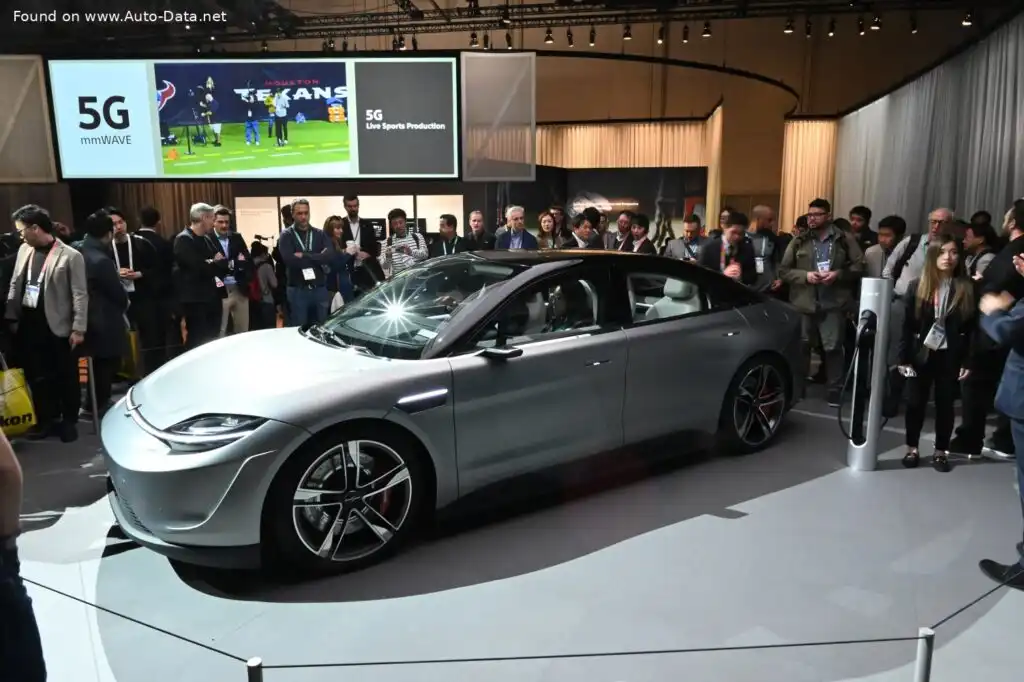
The Sony Vision-S 01, unveiled in January 2020 at the Consumer Electronics Show (CES) in Las Vegas, represents a significant foray by the Japanese electronics giant into the automotive realm. While not initially intended for production, the overwhelmingly positive reception led Sony to explore the feasibility of entering the electric vehicle (EV) market. The Vision-S is a fully electric, all-wheel drive fastback sedan designed to showcase Sony’s expertise in imaging, sensing, audio, and network technologies. It’s positioned as a technology demonstrator, rather than a direct competitor to established automakers, though subsequent developments suggest a potential future production model. The vehicle’s development has progressed to road testing, indicating a serious intent to move beyond the concept stage.
Technical Specifications
| Brand | Sony |
| Model | Vision-S 01 |
| Generation | Vision-S Concept |
| Type | (544 Hp) AWD Electric |
| Start of production | 2020 |
| Powertrain Architecture | BEV (Electric Vehicle) |
| Body type | Sedan, Fastback |
| Seats | 4 |
| Doors | 4 |
| Fuel Type | Electricity |
| Acceleration 0 – 100 km/h | 4.8 sec |
| Acceleration 0 – 62 mph | 4.8 sec |
| Acceleration 0 – 60 mph | 4.6 sec |
| Maximum speed | 240 km/h (149.13 mph) |
| Weight-to-power ratio | 4.3 kg/Hp, 231.5 Hp/tonne |
| Electric motor 1 power | 272 Hp |
| Electric motor 1 location | Front axle, Transverse |
| Electric motor 2 power | 272 Hp |
| Electric motor 2 location | Rear axle, Transverse |
| System power | 544 Hp |
| Kerb Weight | 2350 kg (5180.86 lbs) |
| Length | 4895 mm (192.72 in) |
| Width | 1900 mm (74.8 in) |
| Height | 1450 mm (57.09 in) |
| Wheelbase | 3000 mm (118.11 in) |
| Ride height (ground clearance) | 120-135 mm (4.72 – 5.31 in) |
| Drive wheel | All wheel drive (4×4) |
| Front suspension | Double wishbone |
| Rear suspension | Double wishbone |
| Front brakes | Ventilated discs |
| Rear brakes | Ventilated discs |
| Front tires | 245/40 R21 |
| Rear tires | 275/35 R21 |
| Front wheel rims | 21 |
| Rear wheel rims | 21 |
Powertrain & Engine Architecture
The Sony Vision-S 01 utilizes a dual-motor, all-electric powertrain. Each axle is driven by a 272 horsepower electric motor, combining for a total system output of 544 horsepower. The motors are transversely mounted, contributing to a balanced weight distribution. Specific details regarding the battery chemistry and capacity were initially limited, but later reports indicate a lithium-ion battery pack with a capacity sufficient for a range estimated around 300 miles (483 km). The vehicle employs an 800V charging architecture, enabling rapid charging times – potentially adding significant range with just a short charging session. The powertrain control unit (PCU) is a sophisticated system managing power delivery, regenerative braking, and thermal management of the battery and motors. Sony has emphasized the integration of its own sensor technology and software to optimize energy efficiency and driving performance.
Driving Characteristics
Given its concept and early prototype status, extensive independent road testing has been limited. However, Sony claims a 0-60 mph acceleration time of 4.6 seconds and a top speed of 149 mph (240 km/h). The all-wheel drive system provides excellent traction and stability, particularly in adverse weather conditions. The dual-motor setup allows for torque vectoring, enhancing cornering agility. The 800V architecture contributes to a responsive and powerful driving experience. The vehicle is designed to prioritize a smooth and refined ride, leveraging the inherent characteristics of an electric powertrain. The low center of gravity, due to the battery pack being mounted low in the chassis, further enhances handling stability.
Equipment & Trim Levels
The Vision-S 01 is lavishly equipped, reflecting its role as a technology showcase. The interior features a minimalist design with a focus on digital interfaces. A panoramic touchscreen spans the width of the dashboard, providing access to vehicle controls, infotainment, and connectivity features. Sony’s expertise in audio is evident in the high-fidelity sound system integrated throughout the cabin. The vehicle incorporates advanced driver-assistance systems (ADAS), including autonomous driving capabilities, utilizing a suite of sensors and cameras. The seats are upholstered in sustainable materials, and the interior lighting is customizable. As a concept vehicle, specific trim levels were not defined, but the Vision-S 01 represents a premium and technologically advanced interior experience.
Chassis & Braking
The Vision-S 01 utilizes a lightweight chassis construction, incorporating high-strength steel and aluminum to minimize weight and maximize rigidity. The suspension system employs a double-wishbone configuration at both the front and rear axles, providing a comfortable ride and precise handling. Ventilated disc brakes are fitted on all four wheels, ensuring ample stopping power. The braking system is integrated with the regenerative braking system, capturing energy during deceleration and returning it to the battery. The vehicle’s electronic stability control (ESC) system works in conjunction with the all-wheel drive system to maintain optimal traction and control. The tire size is 245/40 R21 for the front wheels and 275/35 R21 for the rear, contributing to both grip and aesthetic appeal.
Market Reception & Comparison
The Sony Vision-S 01 garnered significant attention from the automotive industry and the public alike. Critics praised its innovative technology, sleek design, and ambitious vision for the future of mobility. While not directly comparable to traditional production vehicles due to its concept status, it positioned Sony as a potential disruptor in the EV market. Compared to other high-performance electric sedans, such as the Tesla Model S or Porsche Taycan, the Vision-S 01 emphasizes Sony’s unique strengths in entertainment, sensing, and connectivity. The 800V charging architecture is a notable advantage, offering faster charging times than many competitors. The vehicle’s focus on autonomous driving capabilities also sets it apart.
Legacy
The Sony Vision-S 01 has had a lasting impact on the automotive landscape, demonstrating the potential for technology companies to enter the EV market. The overwhelmingly positive response to the concept led Sony to establish Sony Mobility Inc. and actively pursue the development of production-ready electric vehicles. The Vision-S 01 served as a catalyst for Sony’s broader automotive ambitions, and its technologies are likely to influence future EV designs. The vehicle’s legacy extends beyond its technical specifications, representing a shift in the automotive industry towards greater integration of technology and entertainment. The ongoing development and testing of the Vision-S platform suggest that Sony is committed to becoming a significant player in the future of electric mobility.