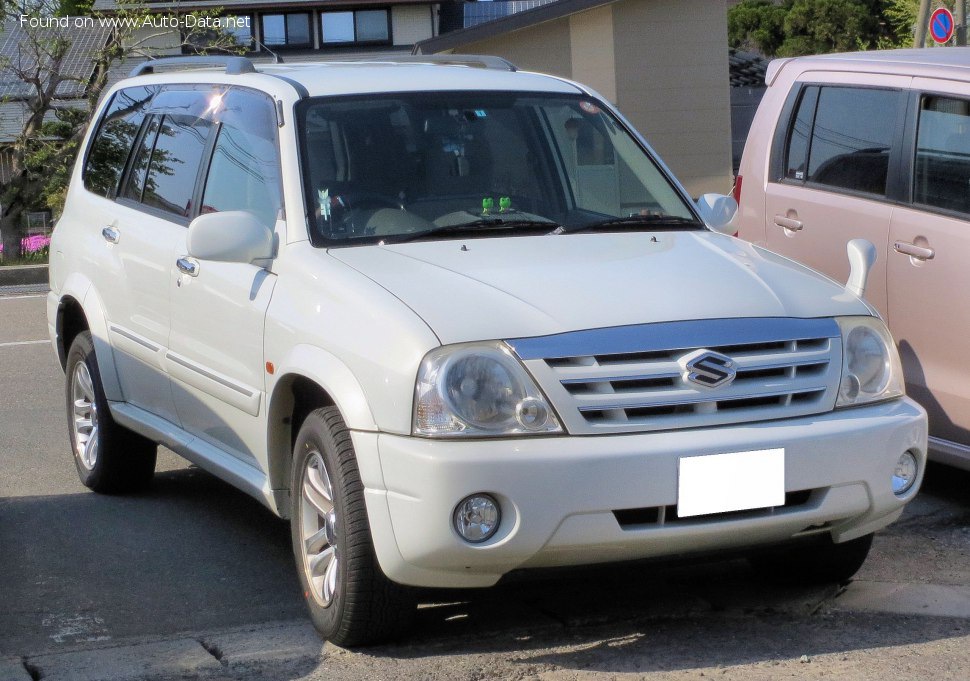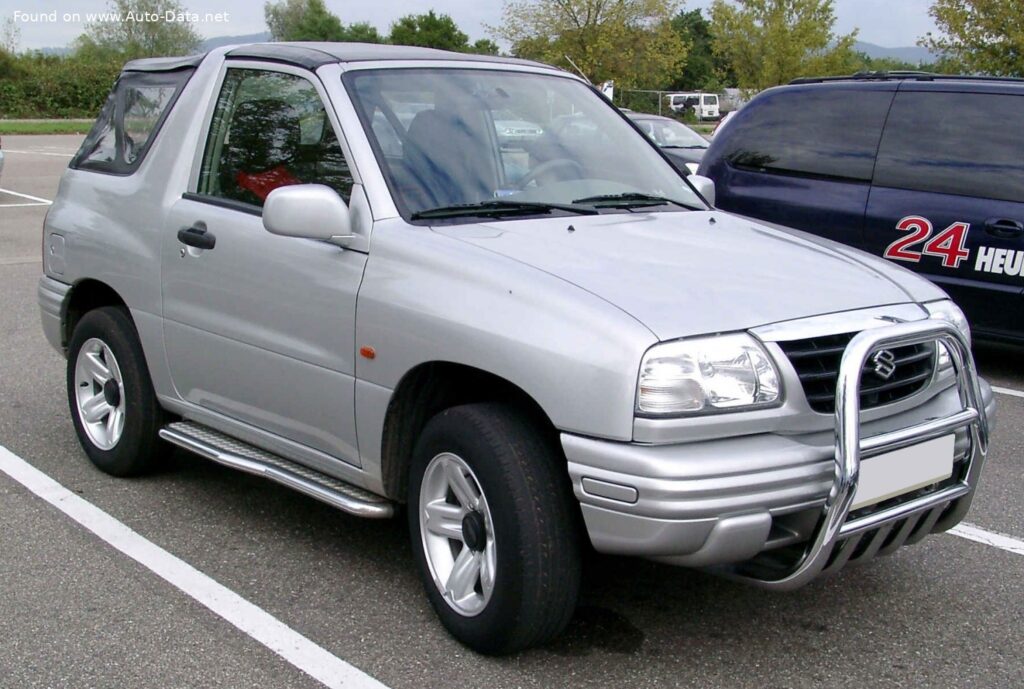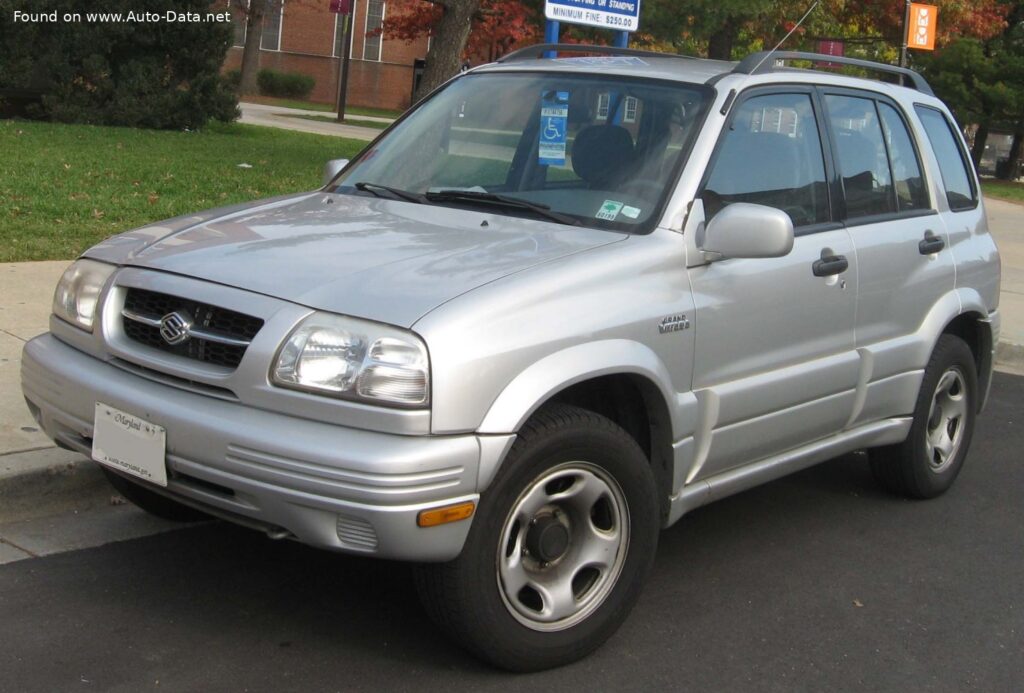
Introduction to the Suzuki Grand Vitara (FT,GT)
The Suzuki Grand Vitara (FT,GT) 1.6 i 16V (5 dr) (107 Hp) represents a pivotal moment in the evolution of the compact sport utility vehicle (SUV) segment. Introduced in 1997, this first-generation Grand Vitara, known internally by its FT or GT chassis codes, built upon Suzuki’s long-standing reputation for producing capable, rugged, and affordable four-wheel-drive vehicles. While the Grand Vitara nameplate was globally recognized, this specific 1.6-liter, five-door variant was particularly popular in markets outside of North America, where smaller, more fuel-efficient engines were often preferred due to taxation and fuel costs. In the United States, larger engine options were more common for the Grand Vitara, but the spirit of a compact, body-on-frame SUV with genuine off-road credentials remained consistent across the model line.
Positioned as a more refined and comfortable successor to the popular Suzuki Sidekick (known as Vitara in many markets), the Grand Vitara aimed to blend the practicality of a family vehicle with the adventurous spirit of a true off-roader. Its production run from 1997 to 2005 saw it compete in an increasingly crowded market, where it distinguished itself with its traditional SUV architecture, including a ladder frame chassis and a robust all-wheel-drive system, at a time when many competitors were shifting towards car-based unibody designs. This particular five-door configuration provided enhanced passenger and cargo capacity, making it a versatile choice for a wide range of consumers seeking a compact yet capable vehicle.
Powertrain and Performance of the Suzuki Grand Vitara (FT,GT) 1.6 i 16V (5 dr) (107 Hp)
At the heart of the Suzuki Grand Vitara (FT,GT) 1.6 i 16V (5 dr) (107 Hp) lies a naturally aspirated 1.6-liter (1590 cm3 or 97.03 cubic inches) inline-four gasoline engine, designated by the G16B code. This powerplant, featuring a single overhead camshaft (OHC) valvetrain with four valves per cylinder, was engineered for reliability and adequate performance within its class. With a compression ratio of 9.5:1 and a multi-port manifold injection system, the engine delivered a respectable 107 horsepower at 6000 rpm. Torque output peaked at 106.21 lb.-ft. (144 Nm) at 4500 rpm, providing sufficient pulling power for daily driving and light off-road excursions. The engine’s layout was front, longitudinal, optimizing weight distribution and allowing for the robust drivetrain components.
Power was transmitted to all four wheels via a conventional 4-speed automatic transmission, a common choice for SUVs of this era, balancing ease of use with durability. The permanent all-wheel-drive (4×4) system underscored the Grand Vitara’s commitment to genuine off-road capability, distinguishing it from many front-wheel-drive-based crossovers that were beginning to dominate the segment. This drivetrain architecture, combined with a kerb weight of 2799.87 lbs (1270 kg), resulted in a weight-to-power ratio of 11.9 kg/Hp (84.3 Hp/tonne) and a weight-to-torque ratio of 8.8 kg/Nm (113.4 Nm/tonne).
In terms of performance, the 1.6-liter Grand Vitara achieved a maximum speed of 86.99 mph (140 km/h), which was competitive for a compact SUV designed more for utility and versatility than outright speed. Fuel economy figures, crucial for its target markets, were estimated at 19.6 US mpg (12 l/100 km) in urban driving conditions and an improved 33.6 US mpg (7 l/100 km) on the highway. These figures reflected a practical balance between the vehicle’s 4×4 capabilities and its everyday running costs, making it an attractive option for consumers prioritizing efficiency and ruggedness.
Design and Features
The Suzuki Grand Vitara (FT,GT) adopted a classic SUV silhouette, characterized by its upright stance, relatively short overhangs, and a boxy, functional design. The five-door body type offered seating for five occupants, with a focus on maximizing interior space within its compact footprint. Measuring 161.02 inches (4090 mm) in length, 66.93 inches (1700 mm) in width, and 66.54 inches (1690 mm) in height, with a wheelbase of 97.64 inches (2480 mm), the Grand Vitara was agile enough for urban environments yet substantial enough for family duties. The front and rear tracks both measured 57.48 inches (1460 mm), contributing to a stable and predictable ride.
Inside, the Grand Vitara provided a practical and durable cabin. The five-door configuration offered a minimum trunk space of 9.11 cubic feet (258 liters), which could be expanded significantly to 38.14 cubic feet (1080 liters) by folding down the rear seats, providing ample cargo capacity for luggage or gear. The fuel tank capacity of 14.79 US gallons (56 liters) ensured a reasonable cruising range.
The chassis and suspension system were designed to handle a variety of road conditions. The front suspension utilized a spring strut setup, while the rear featured coil springs, a combination that provided a good balance between on-road comfort and off-road articulation. Braking duties were handled by ventilated discs at the front and drum brakes at the rear, augmented by an Anti-lock Braking System (ABS) for enhanced safety during emergency stops. The steering system was a hydraulic rack and pinion setup, offering direct feedback and ease of maneuverability, particularly with the assistance of power steering. The vehicle rode on 16-inch wheel rims fitted with 215/65 R16 tires, a common size that offered a good blend of grip and durability for mixed driving conditions. The overall design language emphasized utility and robustness, appealing to buyers who valued function over overt styling trends.
Technical Specifications
| Category | Specification |
|---|---|
| Brand | Suzuki |
| Model | Grand Vitara |
| Generation | Grand Vitara (FT,GT) |
| Type (Engine) | 1.6 i 16V (5 dr) (107 Hp) |
| Start of Production | 1997 year |
| End of Production | 2005 year |
| Powertrain Architecture | Internal Combustion Engine |
| Body type | SUV |
| Seats | 5 |
| Doors | 5 |
| Performance Specs | |
| Fuel Consumption (Urban) | 19.6 US mpg (12 l/100 km) |
| Fuel Consumption (Extra Urban) | 33.6 US mpg (7 l/100 km) |
| Fuel Type | Petrol (Gasoline) |
| Maximum Speed | 86.99 mph (140 km/h) |
| Weight-to-Power Ratio | 11.9 kg/Hp, 84.3 Hp/tonne |
| Weight-to-Torque Ratio | 8.8 kg/Nm, 113.4 Nm/tonne |
| Engine Specs | |
| Power | 107 Hp @ 6000 rpm |
| Power per Liter | 67.3 Hp/l |
| Torque | 106.21 lb.-ft. (144 Nm) @ 4500 rpm |
| Engine Layout | Front, Longitudinal |
| Engine Model/Code | G16B |
| Engine Displacement | 1.6 l (1590 cm3 / 97.03 cu. in.) |
| Number of Cylinders | 4 |
| Engine Configuration | Inline |
| Cylinder Bore | 2.95 in (75 mm) |
| Piston Stroke | 3.54 in (90 mm) |
| Compression Ratio | 9.5:1 |
| Number of Valves per Cylinder | 4 |
| Fuel Injection System | Multi-port manifold injection |
| Engine Aspiration | Naturally aspirated engine |
| Valvetrain | OHC |
| Engine Oil Capacity | 4.44 US qt (4.2 l) |
| Coolant Capacity | 5.6 US qt (5.3 l) |
| Space, Volume and Weights | |
| Kerb Weight | 2799.87 lbs (1270 kg) |
| Trunk (Boot) Space – Minimum | 9.11 cu. ft. (258 l) |
| Trunk (Boot) Space – Maximum | 38.14 cu. ft. (1080 l) |
| Fuel Tank Capacity | 14.79 US gal (56 l) |
| Dimensions | |
| Length | 161.02 in (4090 mm) |
| Width | 66.93 in (1700 mm) |
| Height | 66.54 in (1690 mm) |
| Wheelbase | 97.64 in (2480 mm) |
| Front Track | 57.48 in (1460 mm) |
| Rear (Back) Track | 57.48 in (1460 mm) |
| Drivetrain, Brakes and Suspension Specs | |
| Drive Wheel | All-wheel drive (4×4) |
| Number of Gears and Type of Gearbox | 4 gears, automatic transmission |
| Front Suspension | Spring Strut |
| Rear Suspension | Coil spring |
| Front Brakes | Ventilated discs |
| Rear Brakes | Drum |
| Assisting Systems | ABS (Anti-lock braking system) |
| Steering Type | Steering rack and pinion |
| Power Steering | Hydraulic Steering |
| Tires Size | 215/65 R16 |
| Wheel Rims Size | 16 inch |
Legacy and Market Impact
The Suzuki Grand Vitara (FT,GT) played a significant role in solidifying Suzuki’s presence in the global SUV market, particularly in regions where smaller, more fuel-efficient, yet capable vehicles were in high demand. While the 1.6-liter variant was less common in the North American market, its overall design and engineering ethos were shared across the Grand Vitara lineup sold there. This generation of the Grand Vitara earned a reputation for its robust build quality, reliability, and surprisingly capable off-road performance, especially considering its compact dimensions and affordable price point.
In an era when many competitors, such as the Honda CR-V and Toyota RAV4, were increasingly adopting car-like unibody platforms that prioritized on-road comfort and fuel efficiency, the Grand Vitara maintained a traditional body-on-frame construction. This architectural choice, combined with its all-wheel-drive system and respectable ground clearance, allowed it to tackle rough terrain more effectively than many of its crossover rivals. This made it a popular choice for buyers who needed a vehicle for both urban commuting and occasional adventures off the beaten path, without the larger footprint or higher running costs of a full-size SUV.
The Grand Vitara (FT,GT) faced stiff competition from a diverse range of vehicles. In Europe and Asia, it competed with a wide array of compact SUVs and even smaller city cars with SUV styling cues. In the US, its primary rivals were often the aforementioned CR-V and RAV4, along with the Subaru Forester, all of which offered different interpretations of the compact SUV concept. The Grand Vitara distinguished itself by offering a more rugged, utilitarian approach, appealing to a niche of buyers who valued genuine 4×4 capability in a smaller package. Its strong aftermarket support for off-road modifications further cemented its status among enthusiasts.
The legacy of the first-generation Grand Vitara is one of a dependable, no-nonsense SUV that delivered on its promise of versatility and capability. It helped establish Suzuki as a serious contender in the SUV segment beyond its earlier, smaller 4x4s like the Samurai and Sidekick. The FT/GT generation laid the groundwork for subsequent generations of the Grand Vitara, which continued to evolve, eventually transitioning to a unibody platform to meet changing market demands for more refined on-road manners. However, this first generation remains a testament to Suzuki’s engineering philosophy of building durable and adventure-ready vehicles that punch above their weight class. Its enduring appeal lies in its straightforward mechanicals and its ability to blend everyday practicality with genuine off-road prowess, making it a beloved classic in many markets worldwide.