The Suzuki Grand Vitara (FT,GT) 2.0 HDI (5 dr) (109 Hp): A Global Contender in the Compact SUV Segment
The Suzuki Grand Vitara, specifically the FT/GT generation produced from 2000 to 2005, represented a compelling entry in the rapidly expanding compact SUV market. Renowned for its blend of rugged capability, practical design, and Suzuki’s hallmark reliability, the Grand Vitara established a strong presence across various global markets. Among its diverse powertrain offerings, the Suzuki Grand Vitara (FT,GT) 2.0 HDI (5 dr) (109 Hp) variant stood out, particularly in European and other international regions where diesel engines were highly favored for their fuel efficiency, robust torque delivery, and lower running costs. This specific model masterfully combined Suzuki’s proven expertise in building durable SUVs with a highly regarded European diesel powerplant, offering a versatile and economical package that appealed to a wide range of consumers seeking a vehicle capable of both urban commuting and light off-road adventures.
Debuting at the turn of the millennium, the FT/GT generation of the Grand Vitara evolved from its predecessors by offering increased refinement and a more contemporary aesthetic while retaining its fundamental off-road DNA. The 5-door configuration, in particular, catered to families and individuals requiring greater passenger and cargo capacity, making it a practical choice in a segment increasingly populated by more car-like crossovers. The integration of the 2.0-liter HDI diesel engine further enhanced its appeal, providing a specific solution for markets that valued diesel performance and economy.
Engine & Performance: The Power of the 2.0 HDI in the Suzuki Grand Vitara (FT,GT)
At the heart of the Suzuki Grand Vitara (FT,GT) 2.0 HDI (5 dr) (109 Hp) was its sophisticated 2.0-liter (1997 cm3 or 121.86 cu. in.) common rail diesel engine. This inline-four cylinder unit, identified by the engine code RHW, was a product of the highly successful HDI (High-pressure Direct Injection) technology developed by the PSA Group (Peugeot Citroën). Suzuki strategically licensed this powerplant for its European market offerings, recognizing the strong demand for efficient and torquey diesel options in that region.
This robust engine delivered a respectable 109 horsepower at 4000 rpm, which was a competitive output for a compact SUV of its vintage. However, the true strength of this diesel unit lay in its torque delivery. It produced a substantial 250 Newton-meters (equivalent to 184.39 lb-ft) of torque, critically available from a remarkably low 1750 rpm. This characteristic low-end torque was a significant advantage, providing excellent pulling power for everyday driving, effortless highway cruising, and crucial grunt for navigating challenging terrain during light off-road excursions. Drivers found they could accelerate smoothly and maintain speed without constantly needing to downshift or rev the engine excessively, contributing to a relaxed and confident driving experience.
The engine featured a front-mounted, longitudinal layout, which is common in vehicles designed with a focus on robust four-wheel-drive systems. Its inline-four configuration, combined with a compression ratio of 17.6:1, indicated a design optimized for diesel combustion efficiency. The inclusion of a turbocharger was key to boosting both power and torque, overcoming the natural limitations of a naturally aspirated diesel engine of its size. Furthermore, the common rail fuel injection system was a significant technological advancement for its time, precisely controlling fuel delivery to each cylinder, which not only improved fuel economy but also reduced emissions and refined the engine’s operation, making it smoother and quieter than older diesel technologies. With an engine oil capacity of 4.75 liters (5.02 US qt) and a coolant capacity of 6.5 liters (6.87 US qt), the powertrain was designed for durability and ease of maintenance, reflecting Suzuki’s commitment to reliability.
Design & Features: Practicality Meets Purpose in the Suzuki Grand Vitara (FT,GT)
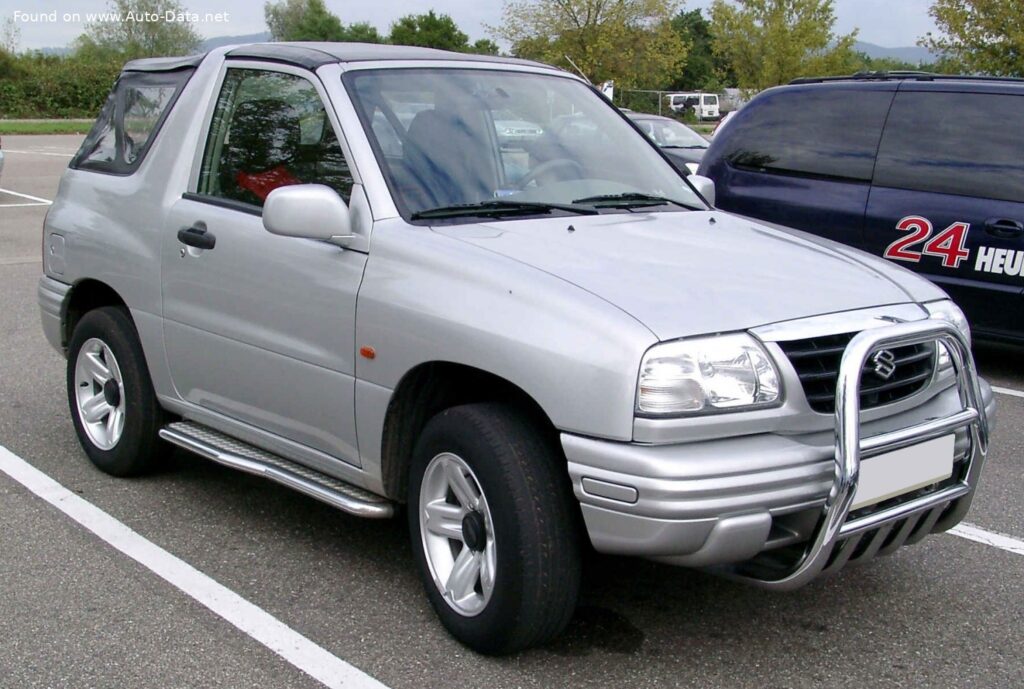
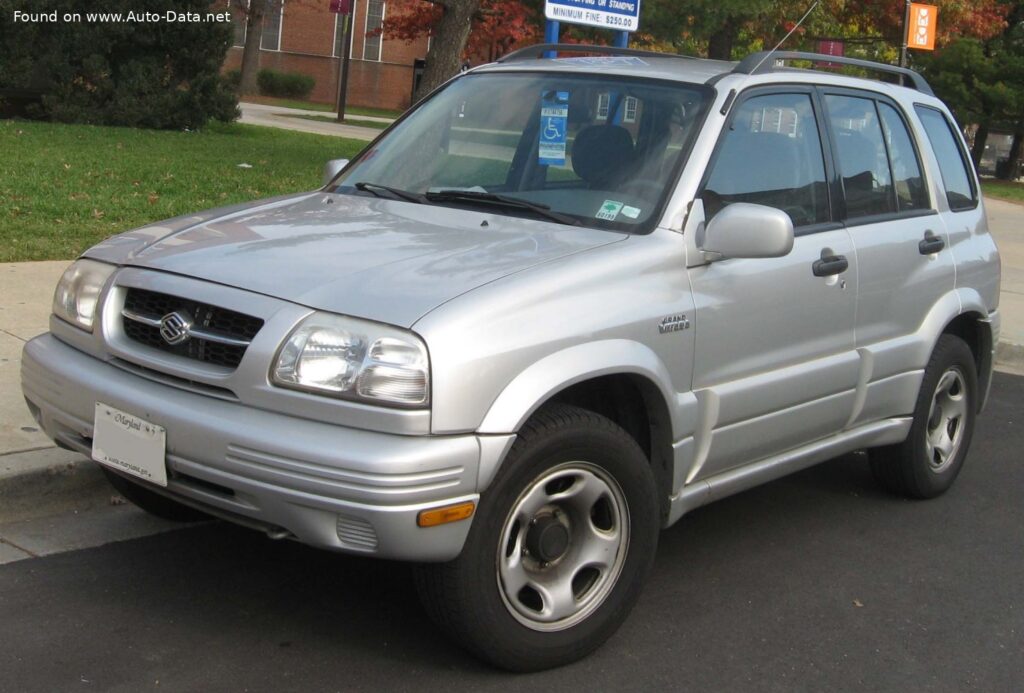
The Suzuki Grand Vitara (FT,GT), particularly in its 5-door SUV configuration, was designed with a clear emphasis on practicality, durability, and a functional aesthetic. Its exterior styling was purposeful, characterized by a relatively upright stance, clean lines, and a sensible approach to utility. The vehicle’s dimensions and design cues hinted at its capabilities beyond paved roads, featuring adequate ground clearance and a robust appearance that distinguished it from the increasingly car-like crossovers emerging during its production years.
The 5-door body type was a cornerstone of its appeal, offering easy access for up to five occupants and a versatile interior. The cabin, while not aspiring to luxury, was built to be durable and ergonomic, prioritizing ease of use and longevity. The layout of controls was straightforward and intuitive, ensuring that drivers could focus on the road. For families or those with active lifestyles, the cargo space was a significant asset. With the rear seats in place, it provided ample room for luggage, groceries, or sports equipment. When the rear seats were folded down, the cargo capacity expanded considerably, transforming the Grand Vitara into a highly capable utility vehicle.
A defining characteristic of the Grand Vitara FT/GT generation was its traditional ladder-frame chassis. This body-on-frame construction, a hallmark of more rugged SUVs, provided superior structural rigidity and off-road durability compared to the unibody construction found in many of its competitors. This design choice contributed to its impressive resilience on rough terrain and enhanced its towing capabilities. While specific advanced safety features were still evolving during this era, the Grand Vitara typically included essential safety equipment like airbags and anti-lock braking systems (ABS), providing a fundamental level of protection. The overall design philosophy was one of reliability and no-nonsense utility, making it a dependable choice for those who valued capability over opulent features.
Technical Specifications
| Category | Specification |
|---|---|
| Brand | Suzuki |
| Model | Grand Vitara |
| Generation | Grand Vitara (FT,GT) |
| Type (Engine) | 2.0 HDI (5 dr) (109 Hp) |
| Start of Production | 2000 year |
| End of Production | 2005 year |
| Powertrain Architecture | Internal Combustion engine |
| Body Type | SUV |
| Seats | 5 |
| Doors | 5 |
| Fuel Type | Diesel |
| Power | 109 Hp @ 4000 rpm |
| Power per Liter | 54.6 Hp/l |
| Torque | 250 Nm (184.39 lb-ft) @ 1750 rpm |
| Engine Layout | Front, Longitudinal |
| Engine Model/Code | RHW |
| Engine Displacement | 1997 cm3 (2.0 l / 121.86 cu. in.) |
| Number of Cylinders | 4 |
| Engine Configuration | Inline |
| Cylinder Bore | 85 mm (3.35 in) |
| Piston Stroke | 88 mm (3.46 in) |
| Compression Ratio | 17.6:1 |
| Number of Valves per Cylinder | 2 |
| Fuel Injection System | Diesel Commonrail |
| Engine Aspiration | Turbocharger |
| Engine Oil Capacity | 4.75 l (5.02 US qt) |
| Coolant Capacity | 6.5 l (6.87 US qt) |
Legacy & Market Impact: The Enduring Appeal of the Suzuki Grand Vitara (FT,GT)
The Suzuki Grand Vitara (FT,GT) 2.0 HDI (5 dr) (109 Hp) carved out a significant and positive legacy in its target markets, particularly across Europe, Asia, and Australia. Its strategic combination of Suzuki’s long-standing reputation for building robust and reliable vehicles with the highly regarded efficiency and performance of the PSA Group’s HDI diesel engine proved to be a winning formula. This variant was especially appealing in regions where fuel prices were a significant consideration and where the torquey nature of a diesel engine was appreciated for both daily driving and occasional heavy-duty use.
In a competitive landscape, the Grand Vitara faced rivals such as the Honda CR-V, Toyota RAV4, Land Rover Freelander, and Nissan X-Trail. While some of these competitors leaned more towards car-like comfort and on-road refinement, the Grand Vitara distinguished itself by retaining a more traditional SUV character, largely due to its body-on-frame construction. This design choice, while potentially sacrificing some ride comfort on smooth pavement, offered superior durability, off-road capability, and often higher towing capacities, appealing to a segment of buyers who needed genuine utility rather than just SUV styling.
The 2.0 HDI variant’s fuel economy was a key selling point, providing a cost-effective alternative to gasoline-powered SUVs, especially for high-mileage drivers. Its robust performance, characterized by strong low-end torque, made it adept at navigating both congested city streets and challenging rural roads. The Grand Vitara’s ability to blend urban practicality with genuine light off-road prowess meant it appealed to a diverse demographic, from young families needing a versatile daily driver to outdoor enthusiasts requiring a dependable vehicle for weekend adventures.
The FT/GT generation, including the 2.0 HDI model, solidified Suzuki’s position as a serious and respected player in the compact SUV segment. It reinforced the brand’s image for offering durable, capable, and value-oriented vehicles that consistently delivered on their promise. Its enduring reputation for reliability means that even today, the Suzuki Grand Vitara (FT,GT) 2.0 HDI remains a respected choice in the used car market for those seeking a practical, no-frills SUV that offers a compelling combination of economy, capability, and long-term dependability.