The Suzuki Grand Vitara (FT,GT): A Capable Compact SUV for the Millennium
The Suzuki Grand Vitara (FT,GT) represents a pivotal era for Suzuki in the global automotive market, particularly within the burgeoning compact SUV segment. Launched in 1997 and produced through 2005, this generation of the Grand Vitara built upon the success of its smaller Vitara/Sidekick predecessor, offering a more refined, spacious, and powerful package designed to appeal to a wider audience seeking versatility without sacrificing true utility. Positioned as a vehicle that could comfortably handle urban commutes during the week and adventurous off-road excursions on the weekend, the Grand Vitara (FT,GT) carved out a distinct niche for itself with its robust construction and dependable powertrain.
In the North American market, where it was simply known as the Grand Vitara, it competed against a growing wave of car-based crossovers. However, the Suzuki Grand Vitara (FT,GT) distinguished itself by retaining a traditional body-on-frame chassis, a feature that provided superior durability and off-road prowess compared to many of its unibody rivals. This design philosophy resonated with consumers who valued genuine all-terrain capability alongside everyday practicality. The 2.0 i 16V (5 dr) (140 Hp) variant, specifically, offered a compelling blend of adequate power, reasonable fuel efficiency, and the spaciousness of a five-door configuration, making it a popular choice for families and outdoor enthusiasts alike.
Engine and Performance: The J20A Powerplant in the Suzuki Grand Vitara (FT,GT)
At the heart of the Suzuki Grand Vitara (FT,GT) 2.0 i 16V (5 dr) (140 Hp) model lies the venerable J20A engine. This 2.0-liter (1995 cm3 or 121.74 cu. in.) inline four-cylinder engine was a key component in defining the vehicle’s character. Engineered for reliability and efficient power delivery, the J20A featured a Double Overhead Camshaft (DOHC) valvetrain with four valves per cylinder, totaling 16 valves. This setup allowed for improved airflow into and out of the combustion chambers, contributing to better performance and fuel economy compared to older two-valve-per-cylinder designs.
The naturally aspirated J20A engine produced a respectable 140 horsepower at 6500 rpm, which, for a compact SUV of its era, provided ample motivation for most driving scenarios. Its power per liter figure of 70.2 horsepower per liter underscored its efficient design. Torque output was equally important for a utility vehicle, and the Grand Vitara delivered 186 Nm (137.19 lb.-ft.) at a relatively accessible 4000 rpm. This healthy torque figure at mid-range engine speeds was crucial for off-road maneuvering, towing light loads, and providing responsive acceleration in daily driving. The engine’s front, longitudinal layout was typical for a body-on-frame vehicle, facilitating the integration of a robust four-wheel-drive system.
Fueling the J20A was a multi-port manifold injection system, a common and reliable method for precise fuel delivery, ensuring efficient combustion and compliance with emissions standards of the time. With a compression ratio of 9.7:1, the engine was designed to run on regular unleaded gasoline, making it an economical choice for owners. The combination of its robust construction, DOHC design, and proven fuel injection system contributed to the Grand Vitara’s reputation for mechanical longevity and straightforward maintenance, qualities highly valued by SUV buyers.
Design and Features: Practicality Meets Ruggedness
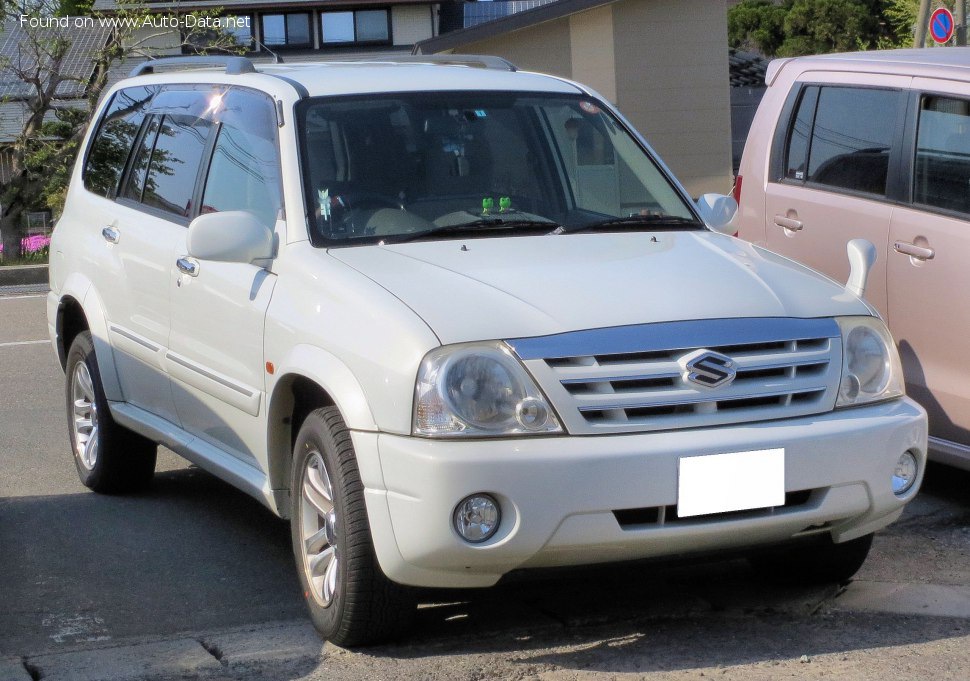
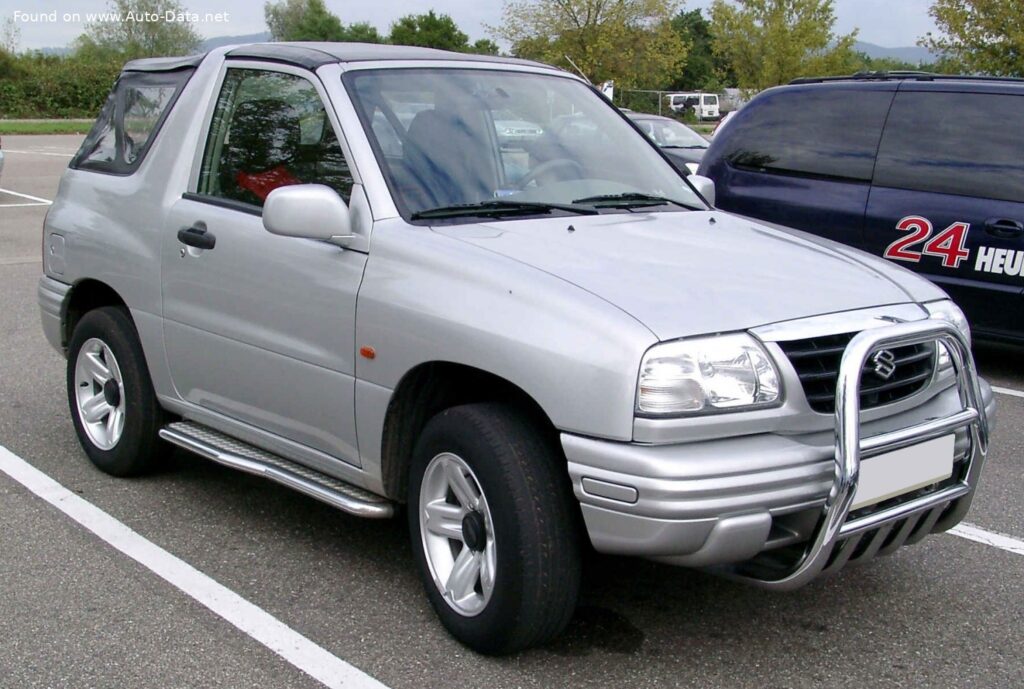
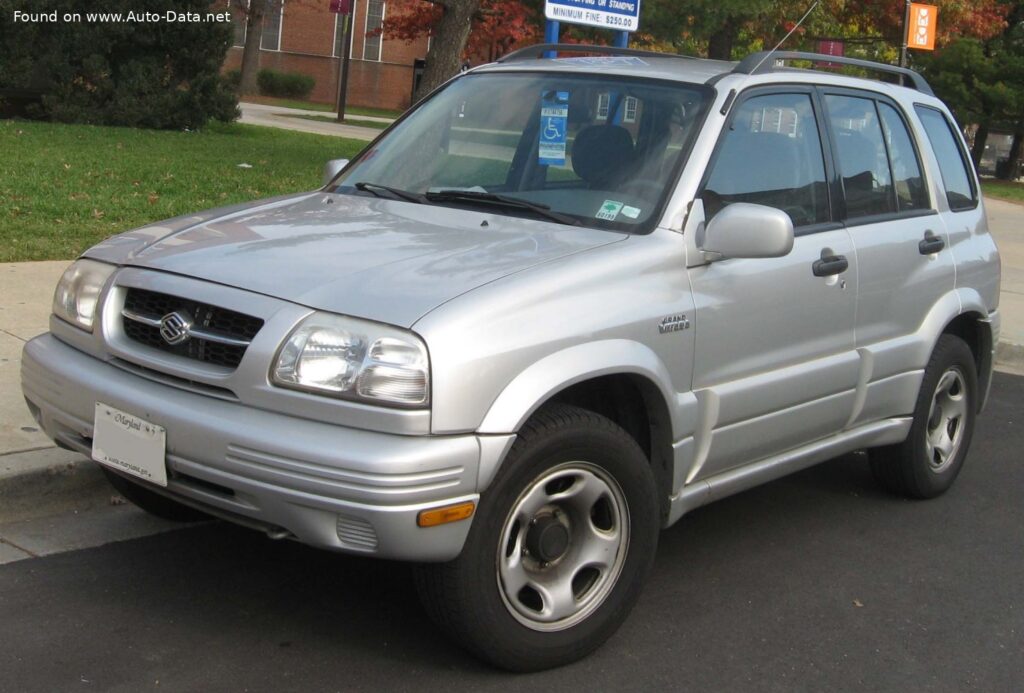
The Suzuki Grand Vitara (FT,GT) 2.0 i 16V (5 dr) (140 Hp) embraced a design philosophy that blended practical utility with a sense of rugged adventure. Its five-door SUV body type offered a versatile and spacious interior, capable of accommodating five occupants comfortably. The exterior styling was characterized by its clean lines, prominent grille, and practical dimensions, making it maneuverable in city traffic while still projecting an image of capability. Unlike many of its soft-roader competitors, the Grand Vitara’s body-on-frame construction, a direct descendant of traditional truck design, provided a solid foundation for its off-road aspirations. This architecture contributed to its impressive durability and ability to withstand challenging terrain.
Inside, the Grand Vitara prioritized functionality and ease of use. The cabin was designed with durable materials, intended to withstand the rigors of an active lifestyle. Seating for five was standard, with a rear bench seat that often featured a split-folding design to expand cargo capacity when needed. The five-door configuration provided excellent access to both the front and rear seats, as well as a generously sized cargo area, further enhancing its appeal as a family vehicle or an adventure companion. Features for the era, while not extravagant by today’s standards, included essential conveniences like air conditioning, power windows, and an AM/FM stereo, often with a CD player. Safety features, typical for the late 1990s and early 2000s, included dual front airbags and anti-lock brakes on higher trims, reflecting the evolving safety standards of the automotive industry.
Perhaps one of the most significant design aspects was its drivetrain architecture, specifically its internal combustion engine driving a robust four-wheel-drive system (often part-time 4WD with a low-range transfer case). This mechanical setup, combined with decent ground clearance, allowed the Grand Vitara to tackle challenging dirt roads, moderate trails, and snowy conditions with confidence, distinguishing it from many of its more road-biased rivals. The exterior design, with its relatively short overhangs and upright stance, further hinted at its off-road potential, appealing to buyers who desired more than just a suburban cruiser.
Technical Specifications
| Category | Specification |
|---|---|
| General Information | |
| Brand | Suzuki |
| Model | Grand Vitara |
| Generation | Grand Vitara (FT,GT) |
| Engine Type | 2.0 i 16V (5 dr) (140 Hp) |
| Start of Production | 1997 year |
| End of Production | 2005 year |
| Powertrain Architecture | Internal Combustion Engine |
| Body type | SUV |
| Seats | 5 |
| Doors | 5 |
| Engine Specifications | |
| Fuel Type | Petrol (Gasoline) |
| Engine Layout | Front, Longitudinal |
| Engine Model/Code | J20A |
| Engine Displacement | 1995 cm3 (121.74 cu. in.) |
| Number of Cylinders | 4 |
| Engine Configuration | Inline |
| Cylinder Bore | 84 mm (3.31 in.) |
| Piston Stroke | 90 mm (3.54 in.) |
| Compression Ratio | 9.7:1 |
| Number of Valves per Cylinder | 4 |
| Fuel Injection System | Multi-port manifold injection |
| Engine Aspiration | Naturally aspirated engine |
| Valvetrain | DOHC |
| Performance Specifications | |
| Power | 140 Hp @ 6500 rpm |
| Power per Liter | 70.2 Hp/l |
| Torque | 186 Nm (137.19 lb.-ft.) @ 4000 rpm |
| Capacities | |
| Engine Oil Capacity | 5.2 l (5.49 US qt) |
| Coolant Capacity | 6.5 l (6.87 US qt) |
Legacy and Market Impact
The Suzuki Grand Vitara (FT,GT) carved out a significant legacy for Suzuki, particularly in the competitive compact SUV market during its production run from 1997 to 2005. Its primary impact stemmed from its unique positioning: it offered the compact dimensions and relative fuel efficiency sought by urban buyers, yet retained the rugged, body-on-frame construction and genuine four-wheel-drive capability that many of its segment rivals began to abandon in favor of more car-like unibody platforms. This duality made it a compelling choice for consumers who valued true off-road potential without needing the sheer size or expense of a larger, more traditional SUV.
In the North American market, the Grand Vitara competed against a diverse array of vehicles. Its direct competitors included unibody crossovers like the Honda CR-V and Toyota RAV4, which emphasized on-road comfort and fuel economy, as well as more rugged offerings such as the Jeep Cherokee Sport (XJ generation) and later the Jeep Liberty. The Grand Vitara distinguished itself by offering a robust platform that could genuinely handle trails, a trait often lacking in its Japanese crossover rivals, while still being more refined and comfortable than the aging Cherokee. Its reputation for reliability and durability, inherited from Suzuki’s long history of building tough small vehicles, further solidified its standing among buyers.
The Grand Vitara (FT,GT) contributed significantly to Suzuki’s image as a manufacturer of capable and value-oriented SUVs. It demonstrated that a compact vehicle could still possess serious off-road chops, appealing to a segment of the market that felt underserved by increasingly hybridized and road-focused crossovers. While Suzuki’s overall market share in the U.S. remained modest, models like the Grand Vitara helped to define the brand’s identity as a purveyor of practical, no-nonsense vehicles with a strong emphasis on utility and adventure. Its success paved the way for future generations of the Vitara and Grand Vitara, continuing Suzuki’s commitment to the SUV segment, even as the market continued its shift towards more car-like designs. Today, the FT/GT generation is remembered fondly by enthusiasts for its honest approach to SUV design and its enduring capability.