As an international automotive expert, I present a detailed analysis of the Suzuki Grand Vitara (FT,GT) 2.0 TD (5 dr) (87 Hp), a significant vehicle in the compact SUV segment, particularly outside the North American market.
The Suzuki Grand Vitara (FT,GT): A Global Compact SUV Pioneer
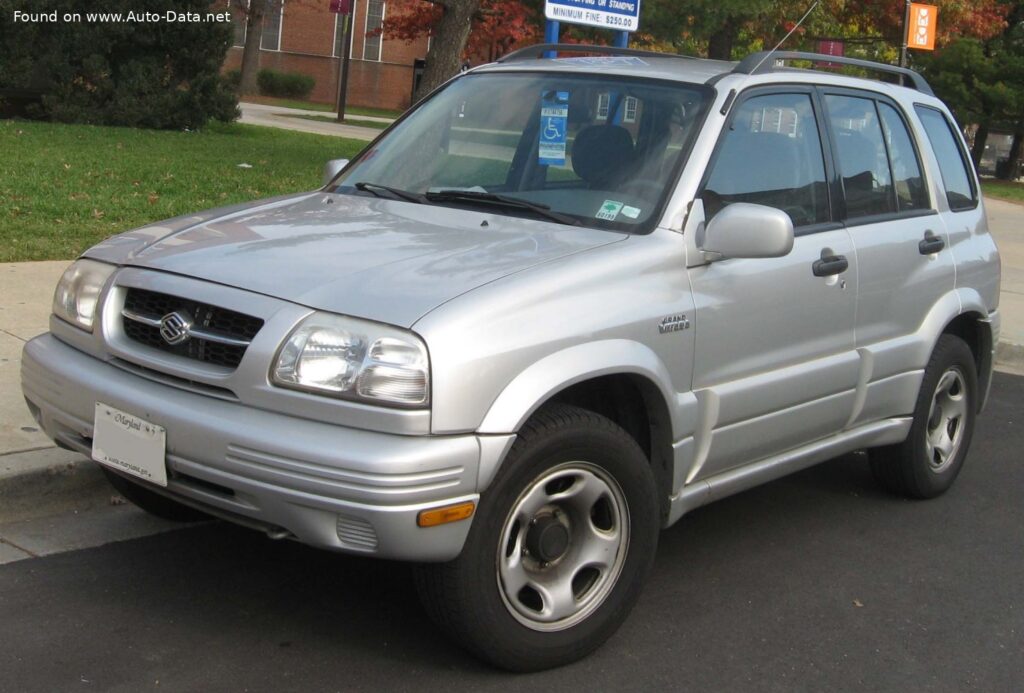
The first-generation Suzuki Grand Vitara (FT,GT), introduced in 1998, marked a pivotal evolution for Suzuki in the burgeoning compact SUV segment. Building upon the success of its smaller predecessor, the Suzuki Vitara (known as Sidekick in North America), the Grand Vitara offered a more refined, spacious, and capable package. While gasoline engines were common globally, the 2.0 TD (Turbo Diesel) variant, specifically the 5-door model producing 87 horsepower, was particularly relevant and popular in European and Asian markets where diesel power offered a compelling blend of fuel efficiency and torque for both urban driving and light off-road excursions. This generation, with its FT/GT chassis code, was produced until 2003, establishing a reputation for rugged reliability and genuine off-road prowess in a market increasingly leaning towards “soft-roaders.”
Unlike many of its contemporaries that adopted unibody construction, the Grand Vitara retained a traditional body-on-frame chassis, a testament to its commitment to durability and off-road capability. This structural choice, combined with a capable four-wheel-drive system and a robust diesel engine, positioned the Grand Vitara as a serious contender for buyers seeking a versatile vehicle that could handle challenging terrain while still being practical for daily use. Its design philosophy aimed to bridge the gap between utilitarian off-roaders and more comfort-oriented family vehicles, carving out a niche for itself as a practical, no-nonsense SUV.
Engine & Performance: The Diesel Heart of the Grand Vitara (FT,GT)
The heart of this particular Suzuki Grand Vitara (FT,GT) variant was its 2.0-liter (1998 cm³ or 121.93 cu. in.) RFM code turbo diesel engine. This inline four-cylinder powerplant, configured longitudinally in the front, was designed for durability and torque delivery rather than outright speed. It generated a modest 87 horsepower at 4000 rpm, but its strength lay in its torque output: a healthy 159.31 lb.-ft. (216 Nm) available at a low 2000 rpm. This low-end torque was crucial for off-road driving, providing the necessary grunt to navigate uneven terrain or pull through challenging conditions.
The engine utilized a precombustion chamber injection system, a common diesel technology of its era, and was boosted by a turbocharger to enhance power and efficiency. With a high compression ratio of 20.9:1, typical for diesel engines, it was designed for efficient fuel combustion. Power was transmitted to an all-wheel-drive (4×4) system via a robust 5-speed manual transmission, offering the driver direct control and engagement, particularly important for off-road enthusiasts. While not a speed demon, the Grand Vitara 2.0 TD could accelerate from 0 to 60 mph in 18.8 seconds and reach a top speed of 88.23 mph (142 km/h). These figures, though modest by modern standards, were perfectly adequate for its intended purpose as a utility-focused SUV.
Fuel economy was a strong suit for the diesel Grand Vitara. It achieved an estimated 25 US mpg in urban driving and an impressive 34.1 US mpg on the highway, making it a cost-effective choice for many drivers, especially in regions with higher fuel prices or where diesel was more affordable. Its 17.44 US gallon (66-liter) fuel tank provided a substantial cruising range, further enhancing its practicality for long journeys or remote adventures.
Design & Features: Practicality Meets Utility
The Suzuki Grand Vitara (FT,GT) featured a functional and unpretentious design, characteristic of Suzuki’s utilitarian approach. The 5-door SUV body style provided seating for five occupants and offered a good balance between passenger comfort and cargo capacity. Its exterior dimensions – 165.16 inches in length, 70.08 inches in width, and 66.34 inches in height – made it a compact yet substantial vehicle, easily maneuverable in urban environments but with a commanding presence. The 97.64-inch wheelbase contributed to a stable ride and reasonable interior space.
Inside, the Grand Vitara prioritized durability and ease of use. While not luxurious, the cabin was designed to withstand the rigors of daily use and outdoor activities. Cargo space was versatile, with a minimum trunk volume of 9.11 cubic feet (258 liters) that could expand significantly to 38.14 cubic feet (1080 liters) with the rear seats folded down, making it highly practical for hauling gear, groceries, or luggage. The vehicle’s high stance and relatively short overhangs were indicative of its off-road aspirations, providing good approach and departure angles.
In terms of chassis and suspension, the Grand Vitara employed a spring strut setup for the front suspension and coil springs at the rear, a configuration that balanced on-road comfort with off-road articulation. Braking duties were handled by ventilated discs at the front and traditional drum brakes at the rear, supplemented by an Anti-lock Braking System (ABS) for improved safety during emergency stops. The hydraulic power-assisted rack and pinion steering system offered predictable handling and feedback, while 195/80 R15 tires on 15-inch wheel rims provided a good compromise between on-road grip and off-road traction.
Technical Specifications: Suzuki Grand Vitara (FT,GT) 2.0 TD (5 dr) (87 Hp)
| Category | Specification | Value |
|---|---|---|
| General Information | Brand | Suzuki |
| Model | Grand Vitara | |
| Generation | Grand Vitara (FT,GT) | |
| Engine Type | 2.0 TD (5 dr) (87 Hp) | |
| Production Start | 1998 year | |
| Production End | 2003 year | |
| Powertrain Architecture | Internal Combustion engine | |
| Body Type | SUV | |
| Seats | 5 | |
| Doors | 5 | |
| Performance Specs | Fuel Consumption (Urban) | 9.4 l/100 km (25 US mpg) |
| Fuel Consumption (Extra Urban) | 6.9 l/100 km (34.1 US mpg) | |
| Fuel Type | Diesel | |
| Acceleration 0-60 mph | 18.8 seconds | |
| Maximum Speed | 88.23 mph (142 km/h) | |
| Weight-to-Power Ratio | 16 kg/Hp, 62.4 Hp/tonne | |
| Weight-to-Torque Ratio | 6.5 kg/Nm, 154.8 Nm/tonne | |
| Engine Specs | Power | 87 Hp @ 4000 rpm |
| Power per Liter | 43.5 Hp/l | |
| Torque | 159.31 lb.-ft. (216 Nm) @ 2000 rpm | |
| Engine Layout | Front, Longitudinal | |
| Engine Model/Code | RFM | |
| Engine Displacement | 1998 cm³ (121.93 cu. in.) | |
| Number of Cylinders | 4 | |
| Engine Configuration | Inline | |
| Cylinder Bore | 86 mm (3.39 in.) | |
| Piston Stroke | 86 mm (3.39 in.) | |
| Compression Ratio | 20.9:1 | |
| Valves per Cylinder | 2 | |
| Fuel Injection System | Precombustion chamber injection | |
| Engine Aspiration | Turbocharger | |
| Engine Oil Capacity | 5.5 l (5.81 US qt) | |
| Engine Oil Specification | Not specified | |
| Coolant Capacity | 6.5 l (6.87 US qt) | |
| Space, Volume & Weights | Kerb Weight | 3075.45 lbs. (1395 kg) |
| Maximum Weight | 4299.01 lbs. (1950 kg) | |
| Maximum Load | 1223.57 lbs. (555 kg) | |
| Trunk Space (Minimum) | 9.11 cu. ft. (258 l) | |
| Trunk Space (Maximum) | 38.14 cu. ft. (1080 l) | |
| Fuel Tank Capacity | 17.44 US gal (66 l) | |
| Dimensions | Length | 165.16 in. (4195 mm) |
| Width | 70.08 in. (1780 mm) | |
| Height | 66.34 in. (1685 mm) | |
| Wheelbase | 97.64 in. (2480 mm) | |
| Front Track | 59.06 in. (1500 mm) | |
| Rear Track | 59.06 in. (1500 mm) | |
| Drivetrain, Brakes & Suspension | Drive Wheel | All-wheel drive (4×4) |
| Gearbox | 5 gears, manual transmission | |
| Front Suspension | Spring Strut | |
| Rear Suspension | Coil spring | |
| Front Brakes | Ventilated discs | |
| Rear Brakes | Drum | |
| Assisting Systems | ABS (Anti-lock braking system) | |
| Steering Type | Steering rack and pinion | |
| Power Steering | Hydraulic Steering | |
| Tires Size | 195/80 R15 | |
| Wheel Rims Size | 15 inches |
Legacy & Market Impact of the Suzuki Grand Vitara (FT,GT)
The first-generation Suzuki Grand Vitara (FT,GT), particularly its diesel variants, carved out a significant niche for itself in markets outside North America. In Europe, Australia, and parts of Asia, where diesel fuel was often preferred for its economy and torque characteristics, the 2.0 TD model was a popular choice. It competed against rivals such as the first-generation Toyota RAV4, Honda CR-V, and Mitsubishi Pajero Pinin (also known as Montero iO), but often distinguished itself with its more robust, body-on-frame construction and genuine off-road credentials, which appealed to a segment of buyers who needed more than just a city-focused crossover.
Its reputation was built on reliability, affordability, and a surprising level of capability when the pavement ended. The Grand Vitara was often praised for its nimble handling off-road, thanks to its relatively compact dimensions, and its durable powertrain. While some competitors leaned into a more car-like driving experience, the Grand Vitara retained a more traditional SUV feel, making it a favorite among those who valued ruggedness and utility over ultimate on-road refinement.
The Grand Vitara’s impact was instrumental in solidifying Suzuki’s position as a serious player in the global SUV market, moving beyond the smaller, more basic Vitara/Sidekick. It demonstrated Suzuki’s ability to produce a vehicle that could blend everyday practicality with genuine off-road capability, all while maintaining a competitive price point. Even today, these first-generation models are sought after in some markets as reliable and capable used vehicles for those seeking an affordable 4×4. Its legacy continues to influence Suzuki’s approach to SUVs, emphasizing a blend of compact size, efficiency, and surprising capability that remains a hallmark of the brand.