The Suzuki Grand Vitara (FT,GT) 2.0 TD Intercooler (3 dr) (92 Hp): A Compact Global Off-Roader
The Suzuki Grand Vitara (FT,GT) 2.0 TD Intercooler (3 dr) (92 Hp) represents a significant chapter in the history of compact SUVs, particularly for markets outside of North America where diesel powertrains and smaller, more agile off-roaders held considerable appeal. Launched in 1998 as a direct successor to the popular Vitara/Sidekick, the first-generation Grand Vitara, internally designated FT or GT, aimed to blend the traditional ruggedness and off-road capability Suzuki was renowned for with enhanced comfort, safety, and on-road refinement. This specific 3-door diesel variant, produced from 1998 to 2005, carved a niche for itself as a practical and economical four-wheel-drive vehicle in Europe, Asia, and other international markets where fuel efficiency and robust construction were paramount. While gasoline-powered Grand Vitaras were available in the United States, this diesel iteration was a staple for consumers seeking a durable, go-anywhere utility vehicle with lower running costs.
The Grand Vitara (FT,GT) marked a strategic evolution for Suzuki, moving beyond the bare-bones utility of its predecessors. It retained a body-on-frame chassis, a testament to its serious off-road intentions, but introduced a more contemporary design and a broader range of engine options. The 3-door configuration, with its shorter wheelbase, emphasized agility and a sportier aesthetic, appealing to a demographic that valued both urban maneuverability and weekend adventure capability. Its market positioning was clear: a reliable, affordable, and highly capable compact SUV that could tackle diverse terrains without compromising daily usability.
Engine & Performance of the Suzuki Grand Vitara (FT,GT)
At the heart of this particular Suzuki Grand Vitara (FT,GT) 2.0 TD Intercooler (3 dr) (92 Hp) model lies a robust 2.0-liter (1998 cm3 or 121.93 cu. in.) inline-four diesel engine, identified by the engine code RHZ. This powerplant was designed for durability and efficiency, key attributes for the markets it served. Equipped with a turbocharger and an intercooler, the engine generated a respectable 92 horsepower at 4000 rpm, which, while not a figure to win drag races, was more than adequate for its intended purpose. More critically, it produced a healthy 166.69 lb-ft (226 Nm) of torque at a low 2000 rpm. This strong low-end torque was crucial for off-road performance, allowing the vehicle to climb steep inclines and navigate challenging terrain with confidence, minimizing the need for constant gear changes.
Power was delivered to all four wheels via a durable 5-speed manual transmission, a common and preferred choice in many international markets for its direct engagement and reliability. The powertrain architecture featured a front, longitudinal engine layout, optimizing weight distribution and allowing for a robust all-wheel-drive (4×4) system. This setup provided genuine off-road capability, distinguishing the Grand Vitara from many car-based crossover SUVs that were beginning to emerge.
Performance figures for the 2.0 TD Intercooler variant reflected its utilitarian focus. It could reach a maximum speed of 93.21 mph (150 km/h), adequate for highway cruising but not built for high-speed sprints. Fuel efficiency was a significant selling point, with urban consumption rated at 23.5 US mpg (10 l/100 km) and an impressive extra-urban figure of 39.2 US mpg (6 l/100 km). These numbers underscored the diesel engine’s economy, making it an attractive option for budget-conscious buyers and those facing higher fuel prices. With a 14.79 US gallon (56 l) fuel tank, the Grand Vitara offered a decent cruising range, further enhancing its practicality for long journeys or remote expeditions. The vehicle’s weight-to-power ratio stood at 13 kg/Hp (76.7 Hp/tonne), and its weight-to-torque ratio was 5.3 kg/Nm (188.3 Nm/tonne), indicating a well-balanced setup for both on-road utility and off-road grunt.
Design & Features of the Grand Vitara (FT,GT)
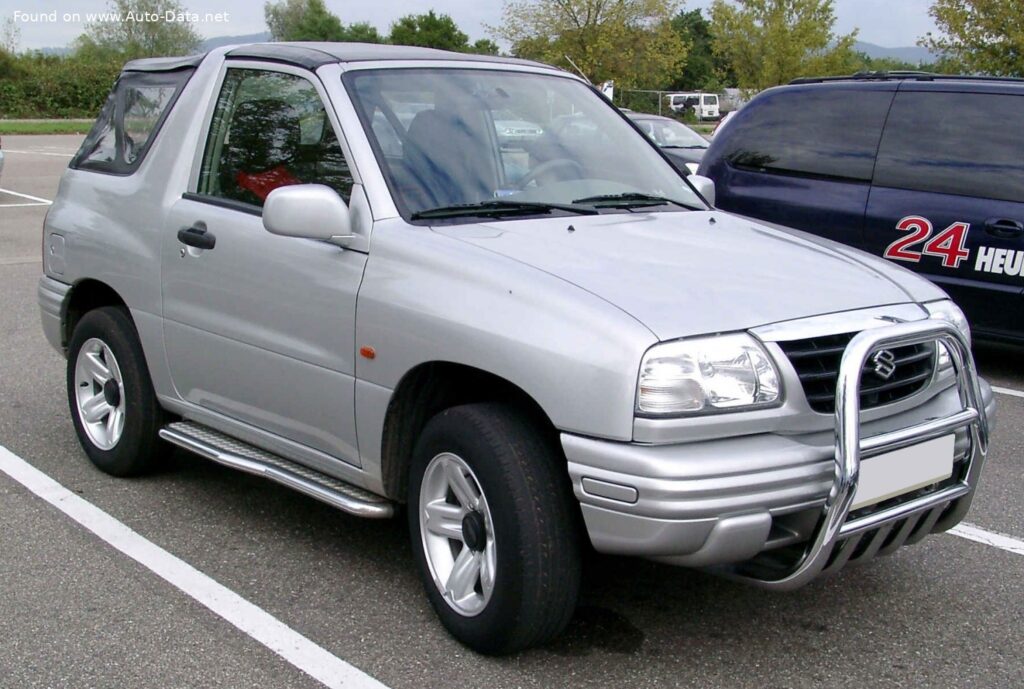
The 1998-2005 Suzuki Grand Vitara (FT,GT) 2.0 TD Intercooler (3 dr) presented a compact yet purposeful SUV design. Its 3-door body type, measuring 150 inches (3810 mm) in length, 66.93 inches (1700 mm) in width, and 66.54 inches (1690 mm) in height, offered excellent maneuverability in tight urban spaces and on narrow off-road trails. The short wheelbase of 86.61 inches (2200 mm) contributed significantly to its impressive turning circle of 30.84 feet (9.4 m), making it surprisingly agile for an SUV.
The exterior styling was a blend of rugged utility and contemporary aesthetics for its time. Flared wheel arches, a prominent grille, and a spare tire mounted on the rear door gave it a distinctive off-road persona. Despite its compact dimensions, the interior was designed to accommodate four occupants comfortably. While specific luxury features were minimal, the focus was on practicality and durability. The trunk space offered a minimum of 9.11 cu. ft. (258 l), expandable to a more generous 29.24 cu. ft. (828 l) with the rear seats folded, providing ample room for luggage or adventure gear.
In terms of chassis and safety, the Grand Vitara (FT,GT) was built with robustness in mind. The front suspension utilized spring struts, while the rear featured coil springs, providing a balance between on-road comfort and off-road articulation. Braking duties were handled by ventilated discs at the front and drum brakes at the rear, supplemented by an Anti-lock Braking System (ABS), which was a significant safety feature for vehicles of this era. Steering was a rack and pinion system with hydraulic power steering, offering a direct feel and ease of maneuverability. These features underscored Suzuki’s commitment to providing a capable and relatively safe vehicle, even in its compact off-road segment.
Technical Specifications: Suzuki Grand Vitara (FT,GT) 2.0 TD Intercooler (3 dr) (92 Hp)
| Category | Specification | Value |
|---|---|---|
| General Information | Brand | Suzuki |
| Model | Grand Vitara | |
| Generation | Grand Vitara (FT,GT) | |
| Engine Type | 2.0 TD Intercooler (3 dr) (92 Hp) | |
| Production Start | 1998 year | |
| Production End | 2005 year | |
| Powertrain Architecture | Internal Combustion Engine | |
| Body Type | SUV | |
| Seats | 4 | |
| Doors | 3 | |
| Performance Specs | Fuel Consumption (Urban) | 23.5 US mpg (10 l/100 km) |
| Fuel Consumption (Extra Urban) | 39.2 US mpg (6 l/100 km) | |
| Fuel Type | Diesel | |
| Maximum Speed | 93.21 mph (150 km/h) | |
| Weight-to-Power Ratio | 13 kg/Hp, 76.7 Hp/tonne | |
| Weight-to-Torque Ratio | 5.3 kg/Nm, 188.3 Nm/tonne | |
| Engine Specs | Power | 92 Hp @ 4000 rpm |
| Power per Liter | 46 Hp/l | |
| Torque | 166.69 lb-ft (226 Nm) @ 2000 rpm | |
| Engine Layout | Front, Longitudinal | |
| Engine Model/Code | RHZ | |
| Engine Displacement | 2.0 l (1998 cm3 / 121.93 cu. in.) | |
| Number of Cylinders | 4 | |
| Engine Configuration | Inline | |
| Cylinder Bore | 3.39 in (86 mm) | |
| Piston Stroke | 3.39 in (86 mm) | |
| Compression Ratio | 20.9:1 | |
| Valves per Cylinder | 2 | |
| Fuel Injection System | Precombustion chamber injection | |
| Engine Aspiration | Turbocharger, Intercooler | |
| Valvetrain | OHC | |
| Engine Oil Capacity | 4.76 US qt (4.5 l) | |
| Engine Oil Specification | Not specified in data | |
| Coolant Capacity | 9.72 US qt (9.2 l) | |
| Space, Volume & Weights | Kerb Weight | 2645.55 lbs (1200 kg) |
| Trunk (boot) Space – Minimum | 9.11 cu. ft. (258 l) | |
| Trunk (boot) Space – Maximum | 29.24 cu. ft. (828 l) | |
| Fuel Tank Capacity | 14.79 US gal (56 l) | |
| Dimensions | Length | 150 in (3810 mm) |
| Width | 66.93 in (1700 mm) | |
| Height | 66.54 in (1690 mm) | |
| Wheelbase | 86.61 in (2200 mm) | |
| Front Track | 57.48 in (1460 mm) | |
| Rear Track | 57.48 in (1460 mm) | |
| Minimum Turning Circle | 30.84 ft (9.4 m) | |
| Drivetrain, Brakes & Suspension | Drive Wheel | All-wheel drive (4×4) |
| Gearbox Type | 5 gears, manual transmission | |
| Front Suspension | Spring Strut | |
| Rear Suspension | Coil spring | |
| Front Brakes | Ventilated discs | |
| Rear Brakes | Drum | |
| Assisting Systems | ABS (Anti-lock Braking System) | |
| Steering Type | Steering rack and pinion | |
| Power Steering | Hydraulic Steering |
Legacy & Market Impact of the Suzuki Grand Vitara (FT,GT)
The Suzuki Grand Vitara (FT,GT) 2.0 TD Intercooler (3 dr) (92 Hp) left a notable legacy, particularly in the European and Asian markets where it was primarily sold. It solidified Suzuki’s reputation as a manufacturer of capable, reliable, and affordable four-wheel-drive vehicles. In an era when many manufacturers were transitioning towards softer, car-based crossovers, the Grand Vitara remained true to its roots with a body-on-frame construction and a proper 4×4 system, appealing to enthusiasts and practical users who needed genuine off-road ability.
Its compact dimensions and efficient diesel engine made it a popular choice in regions with high fuel prices and congested urban environments. The 3-door variant, in particular, was favored for its agility and sportier appeal compared to its 5-door sibling. It competed effectively against a range of rivals, from more premium offerings like the Land Rover Freelander to other compact SUVs such as the Toyota RAV4 and Honda CR-V, though the latter two often focused more on on-road dynamics and gasoline powertrains. The Grand Vitara’s unique selling proposition was its blend of ruggedness, economy, and relatively low purchase and running costs.
The car’s robust build quality and mechanical simplicity contributed to its longevity and strong resale value in many markets. It was often seen as a workhorse, serving diverse roles from daily commuter to light commercial vehicle or a reliable companion for outdoor adventures. The inclusion of an intercooled turbo-diesel engine was a forward-thinking move for its time, providing a balance of power and efficiency that resonated with a broad customer base.
Ultimately, the Suzuki Grand Vitara (FT,GT) 2.0 TD Intercooler (3 dr) (92 Hp) played a crucial role in bridging the gap between utilitarian off-roaders and more refined compact SUVs. It demonstrated that a vehicle could be both practical and adventurous, without being overly complex or expensive. Its success paved the way for future generations of the Grand Vitara and reinforced Suzuki’s position as a niche but highly respected player in the global 4×4 segment, particularly for those who sought genuine capability in a compact package. Its impact continues to be felt in its enduring presence on roads and trails around the world, a testament to its thoughtful engineering and enduring appeal.