The Suzuki Grand Vitara (FT,GT): A Compact SUV with Rugged Ambition
The Suzuki Grand Vitara (FT,GT), specifically the 2.5 i V6 (144 Hp) variant, represents a pivotal model in Suzuki’s history as a global automaker known for its small, capable 4×4 vehicles. Launched in 1999 as the successor to the popular Vitara/Sidekick, the first-generation Grand Vitara, identified by its FT and GT chassis codes, aimed to combine the maneuverability and efficiency of a compact SUV with the genuine off-road prowess traditionally associated with larger, more rugged utility vehicles. This particular V6-powered model, produced from 1999 to 2005, offered a compelling blend of power, refinement, and Suzuki’s renowned four-wheel-drive capability, positioning it as a versatile option in an increasingly competitive segment. It catered to drivers seeking a daily commuter that could also confidently tackle challenging terrains, embodying Suzuki’s “Way of Life!” philosophy.
Engine and Performance of the Suzuki Grand Vitara (FT,GT) 2.5 i V6
Under the hood, the Suzuki Grand Vitara (FT,GT) 2.5 i V6 variant was equipped with a sophisticated H25A engine, a naturally aspirated 2.5-liter (2495 cm3) V6 powerplant. This engine was a significant step up from the four-cylinder options typically found in compact SUVs of the era, providing a more refined driving experience and enhanced performance. With a power output of 144 horsepower delivered at 6200 rpm and a healthy 153.41 lb.-ft. of torque peaking at 3500 rpm, the Grand Vitara offered respectable acceleration for its class. It could sprint from 0 to 60 mph in a calculated 10.4 seconds, with a top speed of 96.31 mph, making it perfectly adequate for highway cruising and merging.
The engine’s configuration as a front, longitudinal V-engine with a Double Overhead Camshaft (DOHC) valvetrain and four valves per cylinder (24 total) contributed to its smooth operation and efficient power delivery. Fuel was supplied via a multi-port manifold injection system, ensuring precise fuel metering. Power was channeled through a robust 5-speed manual transmission to an all-wheel-drive (4×4) system, which was a hallmark of Suzuki’s off-road heritage. Unlike many emerging “soft-roaders” of the time, the Grand Vitara typically featured a traditional part-time 4×4 system with a low-range transfer case, offering genuine off-road capability that distinguished it from its peers.
Despite its robust V6 engine and 4×4 system, the Grand Vitara aimed for reasonable fuel economy for its class. Official figures indicated an urban consumption of 19.4 US mpg and a more efficient 30.2 US mpg on extra-urban cycles, which were competitive for a V6-powered compact SUV with true off-road credentials. The 17.44 US gallon fuel tank provided a decent cruising range, making it suitable for both daily commutes and longer adventure trips.
Design and Features: Practicality Meets Ruggedness
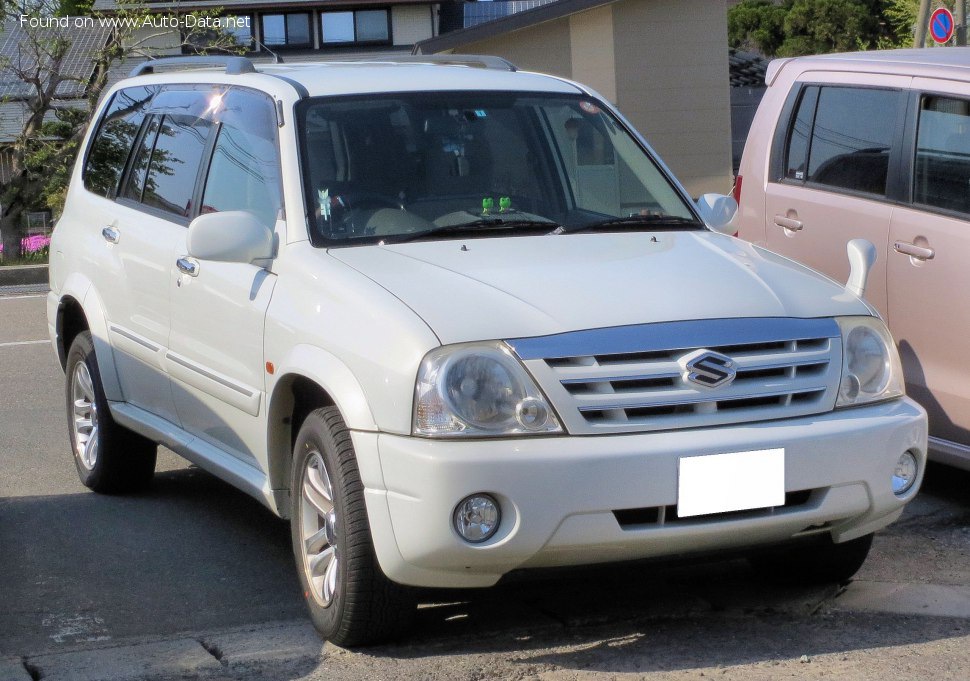
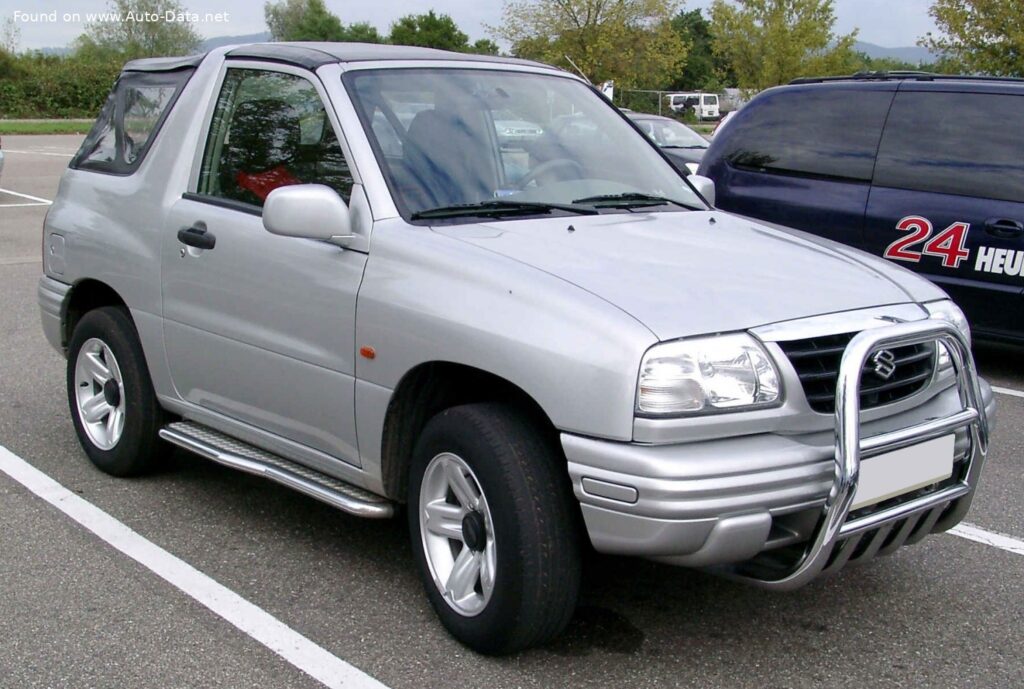
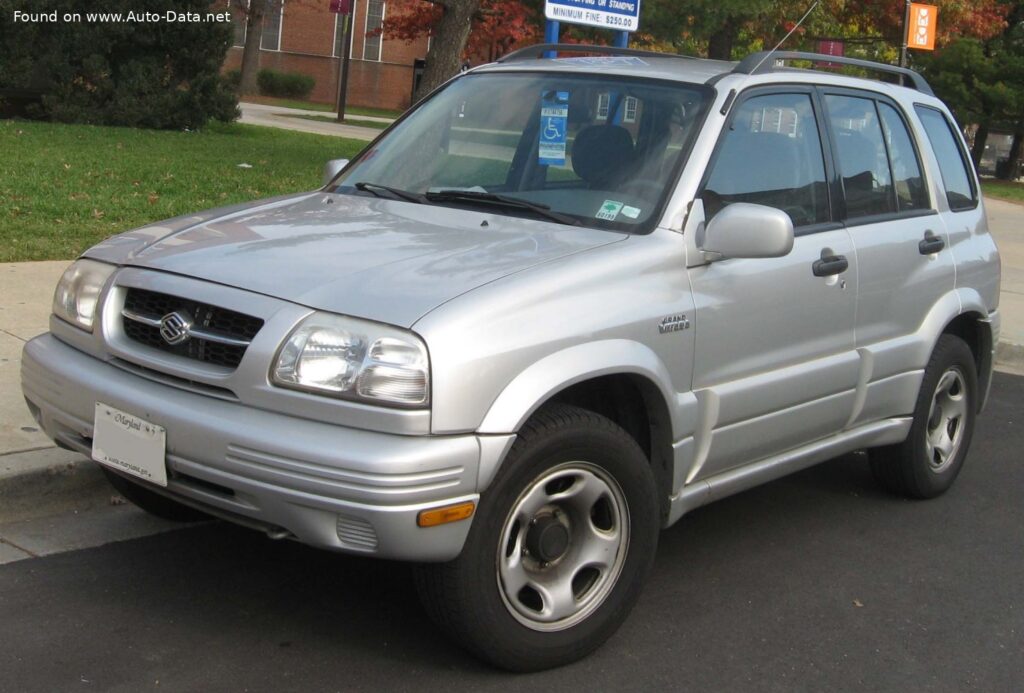
The first-generation Suzuki Grand Vitara (FT,GT) adopted a design language that blended traditional SUV ruggedness with a more contemporary aesthetic for the late 1990s and early 2000s. As a 5-door, 5-seat SUV, it presented a practical and versatile package. Its dimensions – a length of 165.16 inches, width of 70.08 inches, and height of 66.34 inches, coupled with a wheelbase of 97.64 inches – made it compact enough for urban maneuverability yet spacious enough for five occupants and their gear. The relatively short wheelbase also contributed to its agility off-road.
The exterior design featured a purposeful stance, characterized by its prominent grille, clear headlamps, and functional body cladding. The Grand Vitara retained a body-on-frame construction, a significant engineering choice that provided superior durability and rigidity for off-road applications, setting it apart from the unibody construction increasingly adopted by many of its crossover rivals. This structural integrity, combined with its capable 4×4 system, made it a favored choice for those venturing beyond paved roads.
Inside, the Grand Vitara offered a straightforward and ergonomic cabin. While not luxurious, the interior was designed for durability and functionality, featuring robust materials and intuitive controls. Seating for five was comfortable for a compact SUV, and the rear seats could be folded to expand the cargo capacity significantly. The minimum trunk space of 9.11 cubic feet expanded to a generous 38.14 cubic feet with the rear seats stowed, making it highly adaptable for carrying luggage, groceries, or outdoor equipment.
Suspension components included a Spring Strut setup at the front and a Coil Spring arrangement at the rear, providing a balance between on-road comfort and off-road articulation. Braking duties were handled by ventilated discs at the front and solid discs at the rear, augmented by an Anti-lock Braking System (ABS) for enhanced safety and control during emergency stops. The hydraulic rack and pinion steering system offered direct feedback and ease of maneuverability, complemented by 215/65 R16 tires mounted on 16-inch wheel rims, providing a good balance of grip and ride comfort.
Technical Specifications
| Category | Specification |
|---|---|
| General Information | |
| Brand | Suzuki |
| Model | Grand Vitara |
| Generation | Grand Vitara (FT,GT) |
| Engine Type | 2.5 i V6 (144 Hp) |
| Production Start | 1999 |
| Production End | 2005 |
| Powertrain Architecture | Internal Combustion Engine |
| Body Type | SUV |
| Seats | 5 |
| Doors | 5 |
| Performance Specifications | |
| Fuel Consumption (Urban) | 12.1 l/100 km (19.4 US mpg) |
| Fuel Consumption (Extra Urban) | 7.8 l/100 km (30.2 US mpg) |
| Fuel Type | Petrol (Gasoline) |
| Acceleration 0-60 mph | 10.4 sec |
| Maximum Speed | 155 km/h (96.31 mph) |
| Weight-to-Power Ratio | 9.8 kg/Hp (102.5 Hp/tonne) |
| Weight-to-Torque Ratio | 6.8 kg/Nm (148 Nm/tonne) |
| Engine Specifications | |
| Power | 144 Hp @ 6200 rpm |
| Torque | 208 Nm (153.41 lb.-ft.) @ 3500 rpm |
| Engine Layout | Front, Longitudinal |
| Engine Model/Code | H25A |
| Engine Displacement | 2495 cm3 (2.5 Liters / 152.25 cu. in.) |
| Number of Cylinders | 6 |
| Engine Configuration | V-engine |
| Cylinder Bore | 84 mm (3.31 in.) |
| Piston Stroke | 75 mm (2.95 in.) |
| Compression Ratio | 9.5:1 |
| Valves per Cylinder | 4 |
| Fuel Injection System | Multi-port manifold injection |
| Engine Aspiration | Naturally aspirated engine |
| Valvetrain | DOHC |
| Engine Oil Capacity | 5.5 l (5.81 US qt) |
| Coolant Capacity | 8 l (8.45 US qt) |
| Dimensions, Volume, and Weights | |
| Kerb Weight | 1405 kg (3097.49 lbs.) |
| Maximum Weight | 1950 kg (4299.01 lbs.) |
| Maximum Load | 545 kg (1201.52 lbs.) |
| Trunk Space (Minimum) | 258 l (9.11 cu. ft.) |
| Trunk Space (Maximum) | 1080 l (38.14 cu. ft.) |
| Fuel Tank Capacity | 66 l (17.44 US gal) |
| Length | 4195 mm (165.16 in.) |
| Width | 1780 mm (70.08 in.) |
| Height | 1685 mm (66.34 in.) |
| Wheelbase | 2480 mm (97.64 in.) |
| Front Track | 1500 mm (59.06 in.) |
| Rear Track | 1500 mm (59.06 in.) |
| Minimum Turning Circle | 9.4 m (30.84 ft.) |
| Drivetrain, Brakes, and Suspension | |
| Drive Wheel | All-wheel drive (4×4) |
| Gearbox Type | 5 gears, Manual Transmission |
| Front Suspension | Spring Strut |
| Rear Suspension | Coil Spring |
| Front Brakes | Ventilated discs |
| Rear Brakes | Disc |
| Assisting Systems | ABS (Anti-lock braking system) |
| Steering Type | Steering rack and pinion |
| Power Steering | Hydraulic Steering |
| Tires Size | 215/65 R16 |
| Wheel Rims Size | 16 inches |
Legacy and Market Impact
The Suzuki Grand Vitara (FT,GT) 2.5 i V6 carved out a distinct niche in the burgeoning compact SUV market during its production run from 1999 to 2005. At a time when many competitors were transitioning towards more car-like, unibody crossover designs focused purely on on-road comfort (such as the Toyota RAV4 and Honda CR-V), the Grand Vitara steadfastly maintained its rugged, body-on-frame construction and a sophisticated 4×4 system, often including a low-range transfer case. This commitment to genuine off-road capability positioned it as a more serious contender for adventurous drivers or those living in areas with challenging weather or unpaved roads.
Its primary competitors in the North American market included vehicles like the Toyota RAV4, Honda CR-V, Nissan Xterra, and the Kia Sportage. While the RAV4 and CR-V excelled in refinement and fuel economy, the Grand Vitara offered a compelling alternative with its more powerful V6 engine option and superior off-road chops, particularly in the 2.5 i V6 trim. The Nissan Xterra was perhaps its closest rival in terms of rugged design and off-road focus, but the Grand Vitara often presented a more compact and perhaps more fuel-efficient package.
The Grand Vitara built upon Suzuki’s long-standing reputation for producing reliable, durable, and affordable 4×4 vehicles, a heritage stretching back to the iconic LJ and SJ series. It was praised for its robust mechanicals, ease of maintenance, and strong value proposition. Owners appreciated its blend of everyday usability and weekend warrior potential. While it might not have garnered the same sales volumes as some of its more mainstream crossover rivals, it cultivated a loyal following among enthusiasts who valued its authentic SUV character.
Historically, the first-generation Grand Vitara played a crucial role in bridging the gap between traditional, truck-based SUVs and the emerging wave of car-based crossovers. It demonstrated that a compact vehicle could offer both reasonable on-road manners and legitimate off-road capability. Its legacy includes cementing Suzuki’s position as a niche but highly respected player in the 4×4 segment, influencing subsequent generations of the Grand Vitara and showcasing the brand’s engineering prowess in creating versatile and robust utility vehicles for a global audience. Today, these models are often sought after in the used market by those looking for an affordable, capable, and reliable compact SUV with a touch of classic off-road charm.