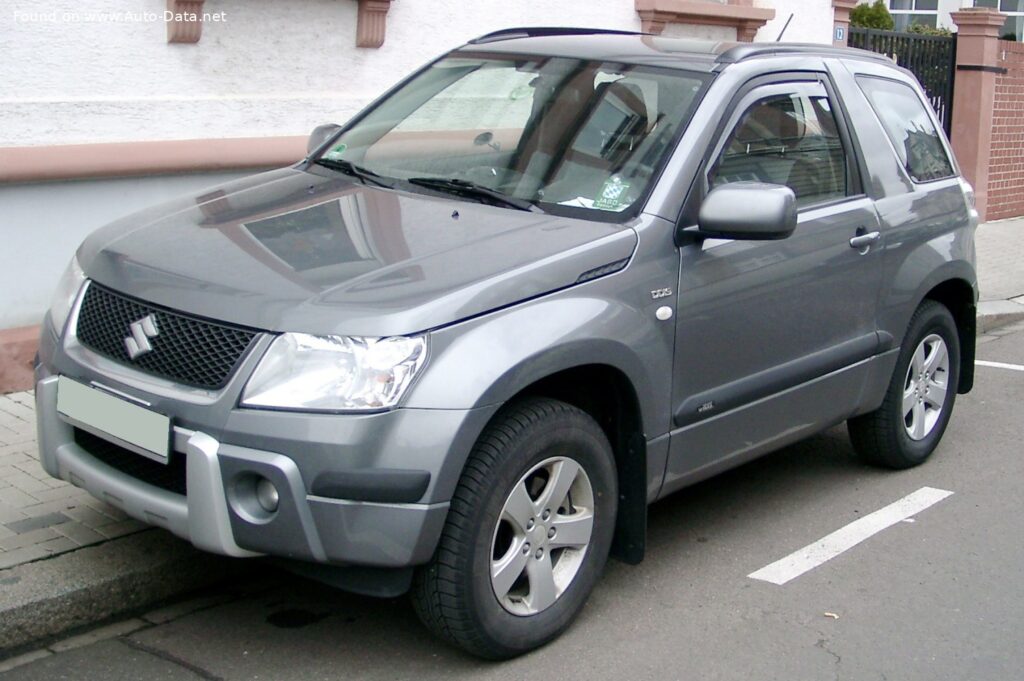
The Suzuki Grand Vitara II 3 Door 1.6 i 16V (107 Hp): A Compact Off-Roader for the Global Market
The Suzuki Grand Vitara II 3 Door 1.6 i 16V (107 Hp), produced between 2005 and 2008, represented a significant evolution for Suzuki’s popular compact SUV line. While the Grand Vitara nameplate was familiar to American consumers, this specific 3-door, 1.6-liter variant was primarily targeted at European, Asian, and other international markets where fuel efficiency, compact dimensions, and genuine off-road capability in a smaller package were highly valued. It carved out a niche as a rugged, yet practical, five-seater SUV, offering a blend of urban maneuverability and surprising capability away from paved roads, embodying Suzuki’s long-standing heritage in robust four-wheel-drive vehicles.
The second-generation Grand Vitara moved away from the more traditional body-on-frame construction of its predecessors, adopting a unique integrated ladder frame within a unibody structure. This engineering choice aimed to combine the rigidity and off-road prowess of a traditional SUV with the improved on-road comfort and handling characteristic of modern crossovers. The 3-door variant, in particular, emphasized sportiness and agility, catering to buyers seeking a more compact and nimble vehicle without sacrificing the utility and adventurous spirit inherent in the Grand Vitara name.
Engine and Performance of the Suzuki Grand Vitara II 3 Door
Under the hood of the Suzuki Grand Vitara II 3 Door 1.6 i 16V (107 Hp) lay Suzuki’s M16A engine, a 1.6-liter (1586 cm3 or 96.78 cu. in.) naturally aspirated inline-four gasoline unit. This powerplant featured a Double Overhead Camshaft (DOHC) valvetrain with 16 valves, ensuring efficient air intake and exhaust. Fuel delivery was managed by a multi-port manifold injection system, a reliable and well-proven technology for the era. With a compression ratio of 10.5:1, the engine was designed for a balance of power output and fuel efficiency using standard petrol (gasoline).
The M16A engine generated a respectable 107 horsepower at 5600 rpm, which for a compact SUV of its size and intended markets, provided adequate thrust. Torque output stood at 106.95 lb.-ft. (145 Nm) available at 4000 rpm, delivering sufficient pulling power for both on-road driving and light off-road excursions. Power was channeled through a 5-speed manual transmission, offering drivers direct control over the vehicle’s dynamics and contributing to the overall engagement.
Performance figures for the 1.6-liter 3-door Grand Vitara were modest but competitive within its segment. It could accelerate from 0 to 60 mph in a calculated 12.7 seconds, with 0 to 100 km/h achieved in 13.4 seconds. The maximum speed was rated at 99.42 mph (160 km/h). Fuel economy was a strong suit for this variant, with a combined rating of 27 US mpg (8.7 l/100 km). Urban driving yielded approximately 22.2 US mpg (10.6 l/100 km), while extra-urban cruising improved to an estimated 30.9 US mpg (7.6 l/100 km). These figures underscored its role as an economical choice for daily commuting and weekend adventures in regions where fuel costs were a significant consideration.
The powertrain architecture featured a front, transverse engine layout combined with a sophisticated all-wheel-drive (4×4) system. This setup provided enhanced traction and stability, making the Grand Vitara II a capable companion in various weather conditions and on challenging terrains. The weight-to-power ratio of 13.5 kg/Hp (74 Hp/tonne) and weight-to-torque ratio of 10 kg/Nm (100.3 Nm/tonne) further illustrate the balanced engineering for its class.
Design and Features: A Rugged Aesthetic with Practicality
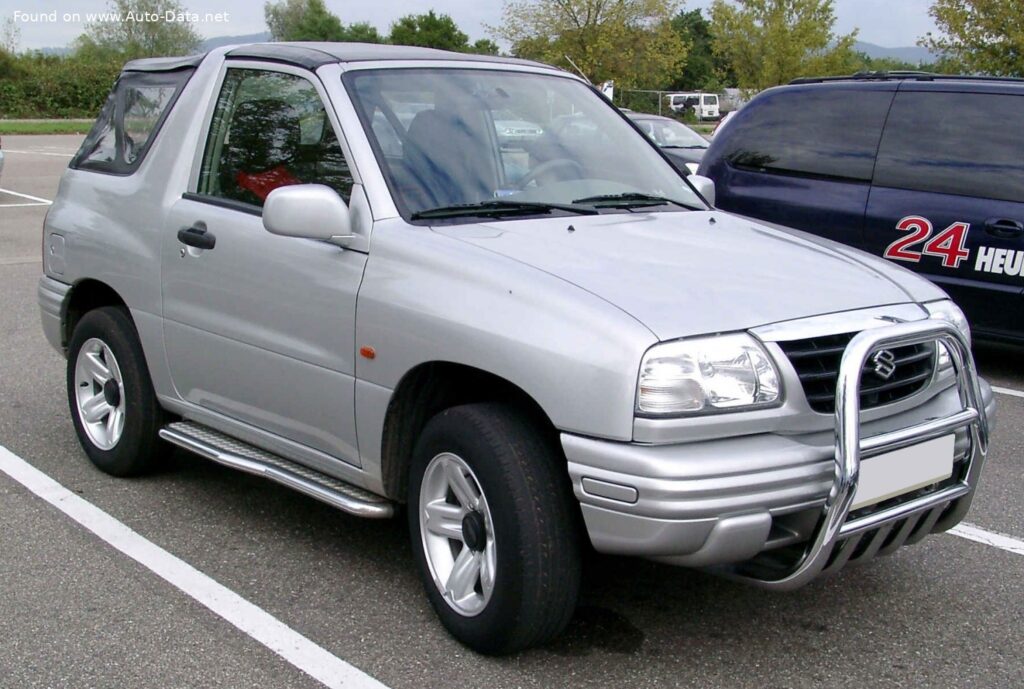
The design of the Grand Vitara II 3 Door was unmistakably SUV, blending a compact footprint with a sturdy, purposeful stance. Measuring 157.68 inches in length, 71.26 inches in width, and 66.73 inches in height, it was a relatively small vehicle, making it agile in city traffic and easier to park. The short 96.06-inch wheelbase contributed to its maneuverability and off-road breakover angle. Despite its compact exterior, the vehicle offered seating for five occupants, though the rear seats in the 3-door configuration were best suited for shorter journeys or children.
The exterior styling featured bold wheel arches, a prominent grille, and a rear-mounted spare tire, all classic cues of a true SUV. The 3-door body type accentuated its sporty character and offered a distinct alternative to the more common 5-door versions. Inside, the cabin was designed with practicality and durability in mind, reflecting its intended use. While not luxurious, the materials were hard-wearing, and the layout was ergonomic, with controls easily accessible.
For its time, the Grand Vitara II incorporated essential safety and driving aid features, most notably an Anti-lock Braking System (ABS) as standard. The braking system comprised ventilated discs at the front for effective stopping power, complemented by drum brakes at the rear. The suspension system was designed to handle varied terrain, featuring a robust spring strut setup at the front and coil springs at the rear, providing a comfortable ride on pavement while maintaining capability off-road. Steering was managed by a responsive rack and pinion system. The vehicle rode on 225/65 R17 tires, mounted on 17-inch wheel rims, providing a good balance of grip and ride comfort.
Practicality was further enhanced by a versatile cargo area. The trunk space ranged from 14.06 cu. ft. (398 liters) with all seats in place, expanding to a generous 26.77 cu. ft. (758 liters) when the rear seats were folded, allowing for ample luggage or equipment storage. A 14.53 US gallon (55-liter) fuel tank provided a decent cruising range. With a curb weight of 3185.68 lbs (1445 kg) and a maximum permissible weight of 3968.32 lbs (1800 kg), the Grand Vitara II 3 Door was built to be robust and capable of handling its rated load capacity of 782.64 lbs (355 kg).
Technical Specifications
| Category | Specification | US Equivalent (where applicable) |
|---|---|---|
| Brand | Suzuki | |
| Model | Grand Vitara | |
| Generation | Grand Vitara II 3 Door | |
| Type (Engine) | 1.6 i 16V (107 Hp) | |
| Production Start | 2005 year | |
| Production End | 2008 year | |
| Powertrain Architecture | Internal Combustion engine | |
| Body type | SUV | |
| Seats | 5 | |
| Doors | 3 | |
| Performance Specs | ||
| Fuel consumption (urban) | 10.6 l/100 km | 22.2 US mpg |
| Fuel consumption (extra urban) | 7.6 l/100 km | 30.9 US mpg |
| Fuel consumption (combined) | 8.7 l/100 km | 27 US mpg |
| Fuel Type | Petrol (Gasoline) | |
| Acceleration 0-60 mph | 12.7 sec | |
| Acceleration 0-100 km/h | 13.4 sec | |
| Maximum speed | 160 km/h | 99.42 mph |
| Weight-to-power ratio | 13.5 kg/Hp | |
| Weight-to-torque ratio | 10 kg/Nm | |
| Engine Specs | ||
| Power | 107 Hp @ 5600 rpm | |
| Power per liter | 67.5 Hp/l | |
| Torque | 145 Nm @ 4000 rpm | 106.95 lb.-ft. @ 4000 rpm |
| Engine layout | Front, Transverse | |
| Engine Model/Code | M16A | |
| Engine displacement | 1586 cm3 | 96.78 cu. in. |
| Number of cylinders | 4 | |
| Engine configuration | Inline | |
| Cylinder Bore | 78 mm | 3.07 in. |
| Piston Stroke | 83 mm | 3.27 in. |
| Compression ratio | 10.5:1 | |
| Number of valves per cylinder | 4 | |
| Fuel injection system | Multi-port manifold injection | |
| Engine aspiration | Naturally aspirated engine | |
| Valvetrain | DOHC | |
| Engine oil capacity | 4.5 l | 4.76 US qt |
| Coolant capacity | 6.9 l | 7.29 US qt |
| Space, Volume and Weights | ||
| Kerb Weight | 1445 kg | 3185.68 lbs. |
| Max. weight | 1800 kg | 3968.32 lbs. |
| Max load | 355 kg | 782.64 lbs. |
| Trunk (boot) space – minimum | 398 l | 14.06 cu. ft. |
| Trunk (boot) space – maximum | 758 l | 26.77 cu. ft. |
| Fuel tank capacity | 55 l | 14.53 US gal |
| Dimensions | ||
| Length | 4005 mm | 157.68 in. |
| Width | 1810 mm | 71.26 in. |
| Height | 1695 mm | 66.73 in. |
| Wheelbase | 2440 mm | 96.06 in. |
| Front track | 1540 mm | 60.63 in. |
| Rear (Back) track | 1570 mm | 61.81 in. |
| Drivetrain, Brakes and Suspension Specs | ||
| Drive wheel | All wheel drive (4×4) | |
| Number of gears and type of gearbox | 5 gears, manual transmission | |
| Front suspension | Spring Strut | |
| Rear suspension | Coil spring | |
| Front brakes | Ventilated discs | |
| Rear brakes | Drum | |
| Assisting systems | ABS (Anti-lock braking system) | |
| Steering type | Steering rack and pinion | |
| Tires size | 225/65 R17 | |
| Wheel rims size | 17 | |
Legacy and Market Impact
The Suzuki Grand Vitara II 3 Door 1.6 i 16V (107 Hp), while a niche model from a global perspective, played a crucial role in Suzuki’s strategy for markets outside North America. In regions like Europe, Australia, and parts of Asia, where a combination of smaller engines, robust construction, and legitimate off-road capability was highly sought after, this Grand Vitara variant found its audience. It stood apart from the burgeoning crossover segment by offering a more substantial four-wheel-drive system, including a low-range transfer case in some configurations (though not specified for this particular 1.6L variant, the platform supported it), which gave it an edge over many soft-roaders.
Its primary competitors in these markets included vehicles like the shorter wheelbase Toyota RAV4, the Land Rover Freelander (original generation), and later, compact SUVs from Hyundai and Kia. However, the Grand Vitara often offered a more traditional SUV feel and greater off-road resilience than many of its rivals, a testament to Suzuki’s deep-rooted expertise in 4×4 vehicles, dating back to models like the Samurai and the original Vitara/Sidekick. The integrated ladder frame construction, a unique selling proposition for this generation, provided a rigidity and robustness that many unibody competitors lacked, without fully sacrificing the on-road refinement of a modern vehicle.
The reputation of the Grand Vitara II, including the 3-door variant, was built on its reliability, durability, and value for money. It was often chosen by buyers who needed a dependable vehicle capable of handling diverse conditions, from urban commutes to unpaved country roads and light trails. The 1.6-liter engine, while not a powerhouse, was renowned for its efficiency and longevity, contributing to lower running costs which was a significant factor for many international consumers.
Historically, the Grand Vitara II cemented Suzuki’s position as a serious player in the compact SUV segment, particularly for those who valued genuine off-road credentials over sheer on-road performance or luxury. The 3-door model, in particular, represented a more adventurous and youthful spirit, appealing to individuals or smaller families who appreciated its compact dimensions and distinctive styling. While Suzuki eventually exited the North American market for passenger vehicles, the Grand Vitara continued its legacy globally, evolving with subsequent generations and retaining its core identity of offering capable, reliable, and practical SUVs. The 2005-2008 Grand Vitara II 3 Door 1.6 i 16V stands as a testament to Suzuki’s engineering prowess in delivering a compact, efficient, and genuinely capable utility vehicle for its time and target markets.