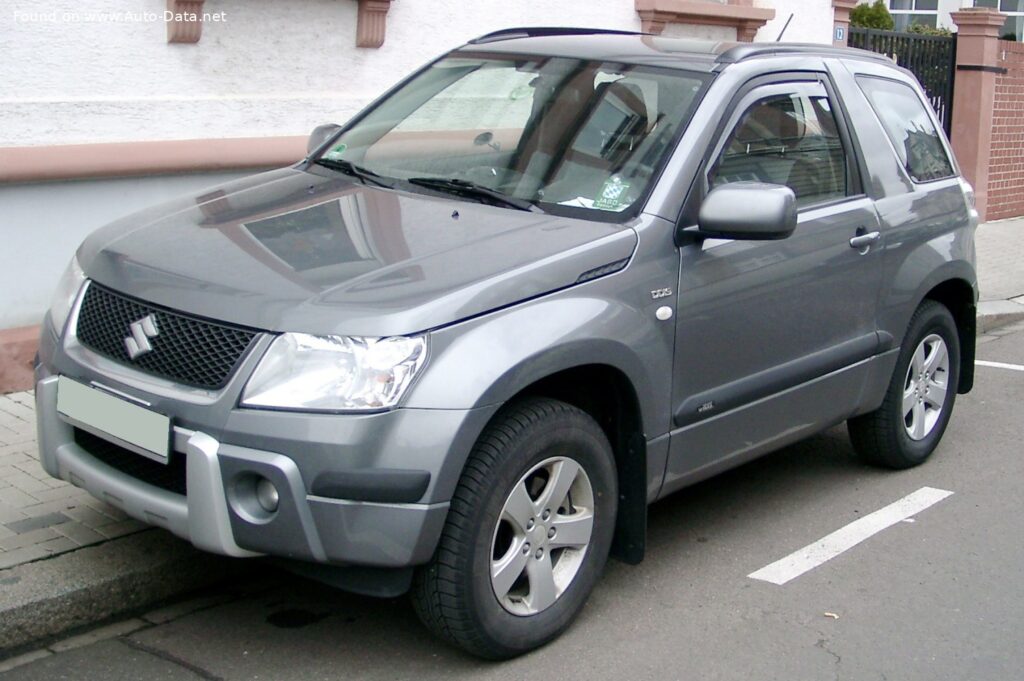
The Suzuki Grand Vitara II 3 Door 2.4 VVT (163 Hp): A Compact Off-Roader for the Global Market
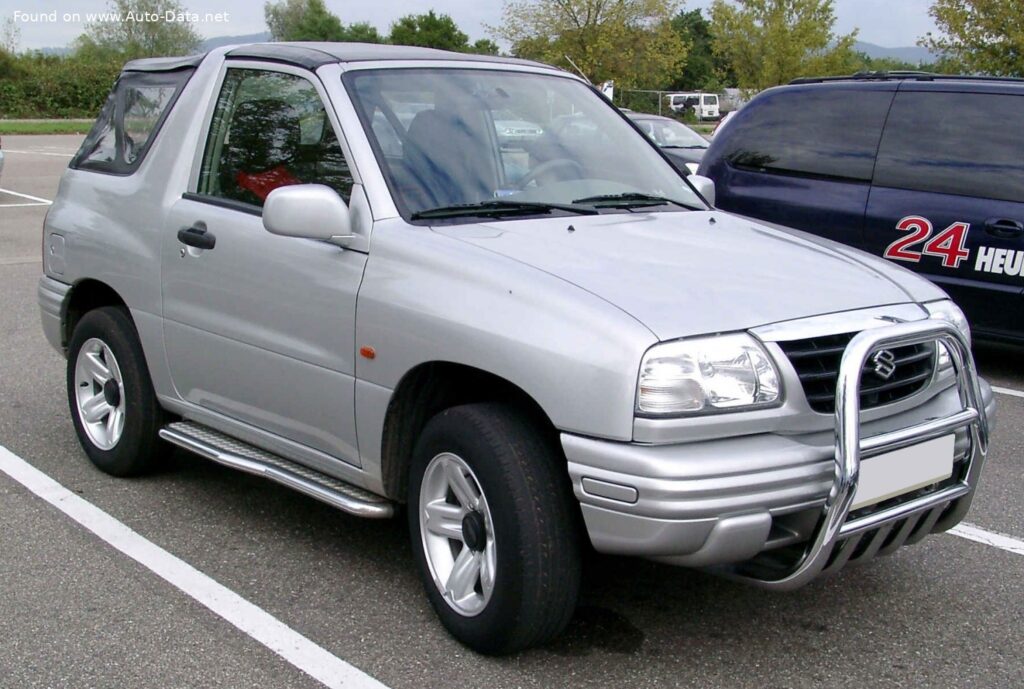
The Suzuki Grand Vitara II 3 Door 2.4 VVT, produced between 2005 and 2008, represents a significant evolution in Suzuki’s lineage of compact sport utility vehicles. As part of the second generation of the Grand Vitara, this particular variant distinguished itself with its more compact three-door body style, catering to a market segment that valued both urban maneuverability and genuine off-road capability. While the five-door Grand Vitara had a more pronounced presence in the North American market, the three-door model, especially with the potent 2.4-liter VVT engine, found strong appeal in European, Asian, and Oceanic markets where smaller, yet robust, 4x4s were highly sought after. This generation marked a shift towards a more integrated ladder-frame chassis, offering a blend of car-like refinement on pavement and the rugged durability expected of a traditional SUV.
The Suzuki Grand Vitara II 3 Door, with its 2.4-liter engine, was positioned as a versatile vehicle, capable of handling daily commutes with relative ease while also being prepared for more adventurous excursions. Its design reflected a growing trend in the mid-2000s for SUVs that were less truck-like but still retained their utility. Suzuki, a brand with a strong heritage in building capable small 4x4s, leveraged its expertise to create a vehicle that was both practical and engaging, embodying a spirit of exploration in a compact package.
Engine and Performance of the Suzuki Grand Vitara II 3 Door
At the heart of this particular Grand Vitara II 3 Door model was the J24B engine, a naturally aspirated 2.4-liter inline-four gasoline unit equipped with Variable Valve Timing (VVT). This powertrain was engineered to deliver a balanced combination of power and efficiency for its class and era. It produced a respectable 163 horsepower at 6000 rpm, providing ample thrust for highway cruising and light off-road scenarios. Torque output stood at 165.95 lb-ft (225 Nm) at 3800 rpm, ensuring good low-end grunt, which is crucial for off-road driving and urban acceleration.
Mated to a 5-speed manual transmission, the 2.4 VVT engine allowed the Grand Vitara II 3 Door to accelerate from 0 to 60 mph in a calculated 11.1 seconds, with a maximum speed of 114.95 mph (185 km/h). These figures were competitive for a compact SUV of its time, especially one equipped with a full-time all-wheel-drive system. Fuel economy, a significant consideration for many buyers, was rated at a combined 26.1 US mpg (9 l/100 km), with urban consumption at 20.6 US mpg and extra-urban at 30.9 US mpg. This blend of performance and economy made it an attractive option for a diverse range of consumers.
Design and Features: The Suzuki Grand Vitara II 3 Door
The design of the Suzuki Grand Vitara II 3 Door was characterized by its bold, yet compact, SUV styling. Measuring 157.68 inches in length, 71.26 inches in width, and 66.73 inches in height, with a wheelbase of 96.06 inches, it presented a muscular stance despite its relatively small footprint. The three-door configuration gave it a sportier, more agile appearance compared to its five-door sibling, emphasizing its adventurous character.
The body type was a traditional SUV, offering a higher driving position and a robust build. It accommodated five occupants, though rear-seat access in the three-door model was naturally more constrained. Key features for this generation included a permanent all-wheel-drive (4×4) system, which was a hallmark of the Grand Vitara’s capability. This system, combined with independent suspension (Spring Strut front, Coil spring rear) and a ground clearance suitable for its class, ensured confident handling both on and off the pavement. Braking performance was handled by ventilated discs at the front and disc brakes at the rear, supplemented by an Anti-lock Braking System (ABS) for enhanced safety and control. The vehicle rode on 225/65 R17 tires, mounted on 17-inch wheel rims, providing a good balance of grip and ride comfort. The steering system utilized a rack and pinion setup, offering direct and responsive feedback.
Technical Specifications
| Category | Specification | Value |
|---|---|---|
| General Information | ||
| Brand | Suzuki | |
| Model | Grand Vitara | |
| Generation | Grand Vitara II 3 Door | |
| Type (Engine) | 2.4 VVT (163 Hp) | |
| Start of production | 2005 year | |
| End of production | 2008 year | |
| Powertrain Architecture | Internal Combustion engine | |
| Body type | SUV | |
| Seats | 5 | |
| Doors | 3 | |
| Performance Specs | ||
| Fuel consumption (economy) – urban | 20.6 US mpg (11.4 l/100 km) | |
| Fuel consumption (economy) – extra urban | 30.9 US mpg (7.6 l/100 km) | |
| Fuel consumption (economy) – combined | 26.1 US mpg (9 l/100 km) | |
| Fuel Type | Petrol (Gasoline) | |
| Acceleration 0 – 60 mph | 11.1 sec | |
| Acceleration 0 – 100 km/h | 11.7 sec | |
| Maximum speed | 114.95 mph (185 km/h) | |
| Weight-to-power ratio | 8.9 kg/Hp, 112.8 Hp/tonne | |
| Weight-to-torque ratio | 6.4 kg/Nm, 155.7 Nm/tonne | |
| Engine Specs | ||
| Power | 163 Hp @ 6000 rpm | |
| Power per liter | 68.1 Hp/l | |
| Torque | 165.95 lb.-ft. (225 Nm) @ 3800 rpm | |
| Engine layout | Front, Longitudinal | |
| Engine Model/Code | J24B | |
| Engine displacement | 2393 cm3 (146.03 cu. in.) | |
| Number of cylinders | 4 | |
| Engine configuration | Inline | |
| Cylinder Bore | 3.62 in. (92 mm) | |
| Piston Stroke | 3.54 in. (90 mm) | |
| Compression ratio | 9.5:1 | |
| Number of valves per cylinder | 4 | |
| Fuel injection system | Multi-port manifold injection | |
| Engine aspiration | Naturally aspirated engine | |
| Valvetrain | DOHC | |
| Engine oil capacity | 5.07 US qt (4.8 l) | |
| Coolant | 7.71 US qt (7.3 l) | |
| Space, Volume and Weights | ||
| Kerb Weight | 3185.68 lbs. (1445 kg) | |
| Max. weight | 3968.32 lbs. (1800 kg) | |
| Max load | 782.64 lbs. (355 kg) | |
| Fuel tank capacity | 14.53 US gal (55 l) | |
| Dimensions | ||
| Length | 157.68 in. (4005 mm) | |
| Width | 71.26 in. (1810 mm) | |
| Height | 66.73 in. (1695 mm) | |
| Wheelbase | 96.06 in. (2440 mm) | |
| Front track | 60.63 in. (1540 mm) | |
| Rear (Back) track | 61.81 in. (1570 mm) | |
| Drivetrain, Brakes and Suspension Specs | ||
| Drive wheel | All wheel drive (4×4) | |
| Number of gears and type of gearbox | 5 gears, manual transmission | |
| Front suspension | Spring Strut | |
| Rear suspension | Coil spring | |
| Front brakes | Ventilated discs | |
| Rear brakes | Disc | |
| Assisting systems | ABS (Anti-lock braking system) | |
| Steering type | Steering rack and pinion | |
| Tires size | 225/65 R17 | |
| Wheel rims size | 17 | |
Legacy and Market Impact of the Suzuki Grand Vitara II 3 Door
The Suzuki Grand Vitara II 3 Door 2.4 VVT carved out a distinct niche in the highly competitive compact SUV market of the mid-2000s. While many competitors were moving towards softer, more car-like unibody constructions with front-wheel-drive biased all-wheel-drive systems, the Grand Vitara retained a more robust engineering approach, offering genuine off-road capability that few rivals could match in its size class. Its integrated ladder-frame chassis provided a stiffer, more durable platform, appealing to buyers who occasionally ventured off paved roads or lived in regions with challenging terrain.
In markets outside the US, particularly in Europe, Australia, and parts of Asia, the three-door Grand Vitara was a popular choice for its blend of compact dimensions, fuel efficiency (for an AWD SUV), and dependable performance. It competed with models like the Toyota RAV4, Honda CR-V, and Nissan X-Trail, but often appealed to a slightly different buyer—one who valued the Suzuki’s more rugged character and proven 4×4 heritage. Its relatively simple, yet effective, mechanicals contributed to a reputation for reliability and low running costs, further enhancing its appeal.
The Grand Vitara II 3 Door, especially with the 2.4-liter engine, solidified Suzuki’s position as a serious contender in the compact SUV segment, demonstrating that a vehicle could be both practical for urban life and capable in challenging environments. Its legacy is one of a no-nonsense, honest SUV that delivered on its promise of versatility and durability, continuing the tradition of Suzuki’s long-standing success in the 4×4 market. Even after its production run ended in 2008 for this specific variant, the Grand Vitara name continued to be associated with robust, value-oriented SUVs, a testament to the strong foundation laid by models like the Grand Vitara II 3 Door 2.4 VVT.