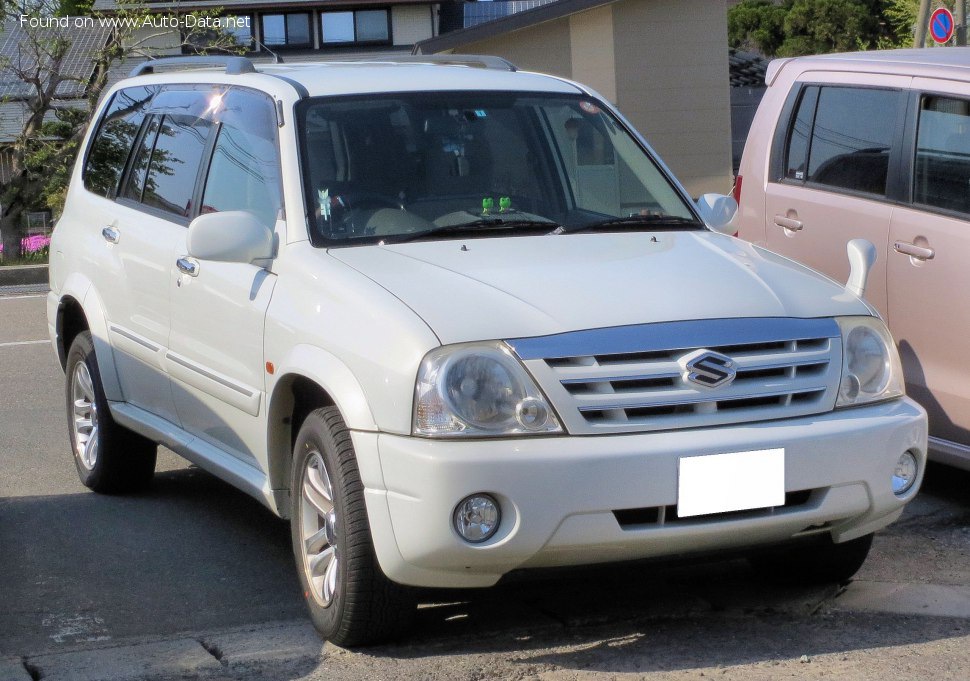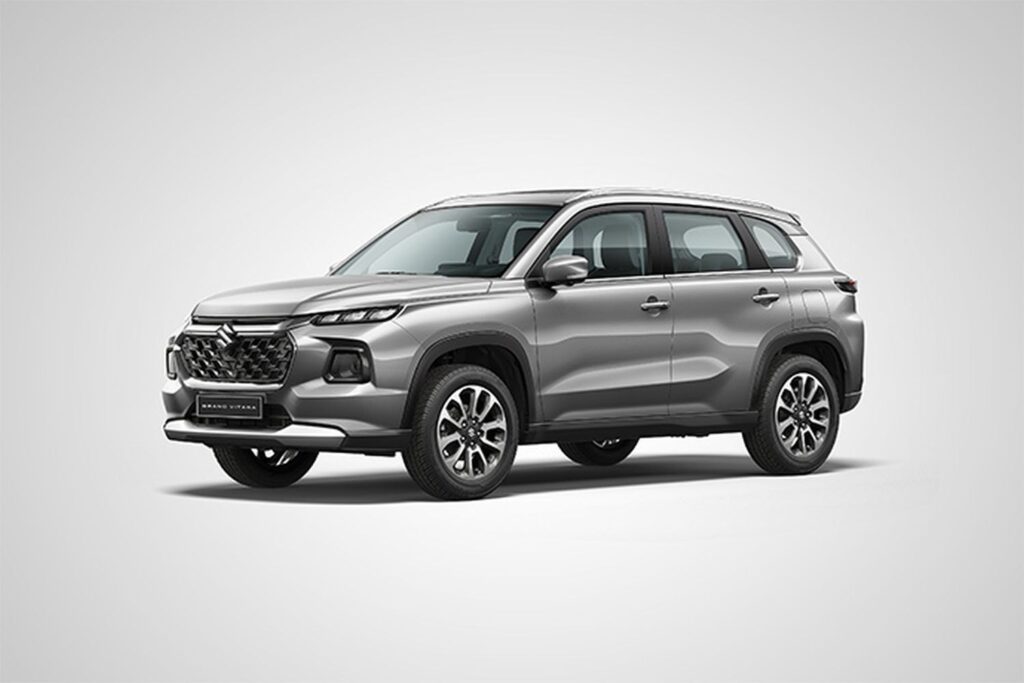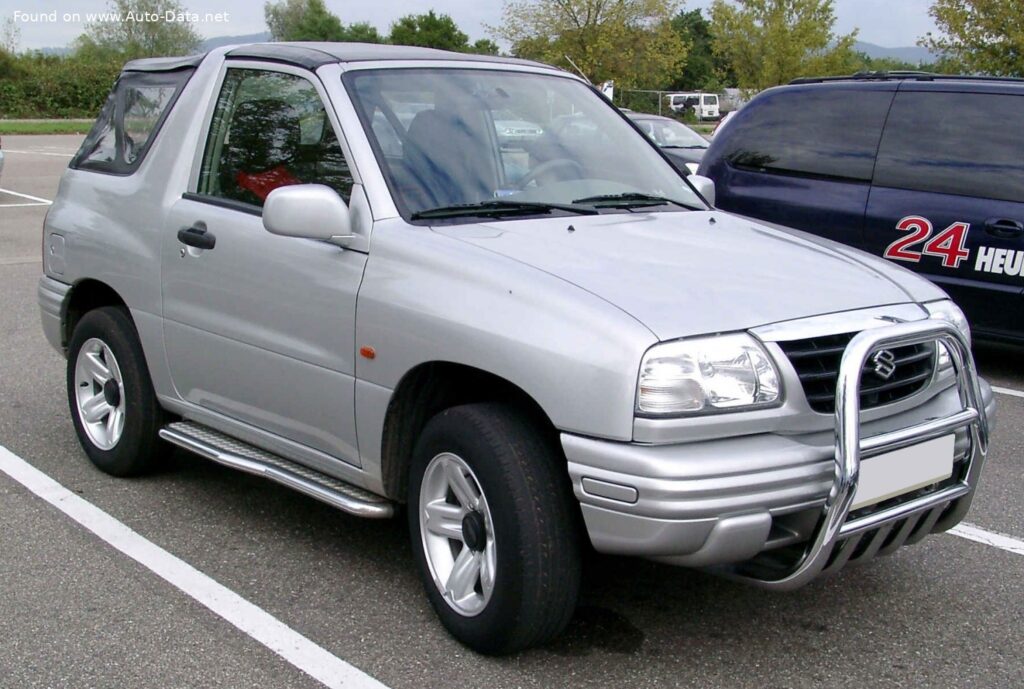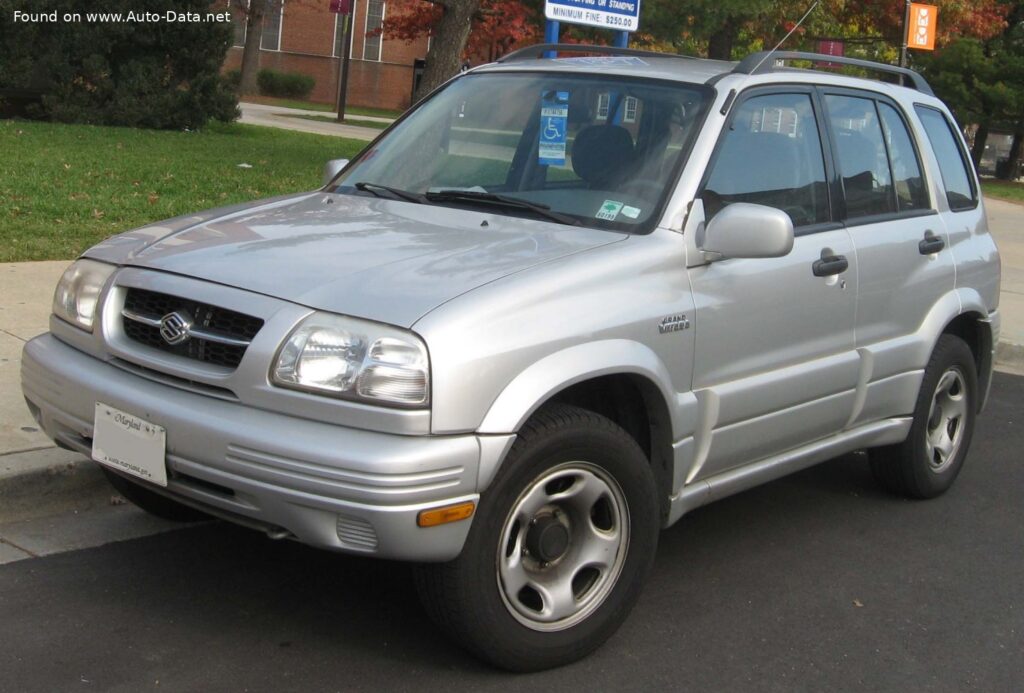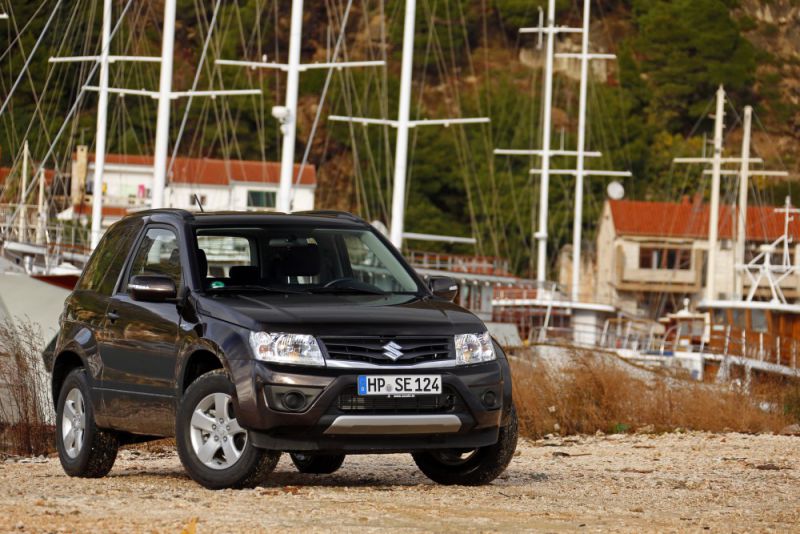
Introduction to the Suzuki Grand Vitara II (Facelift 2012) 3 Door
The Suzuki Grand Vitara, known for its rugged capability and compact dimensions, received a significant refresh in 2012, marking an evolution of its second generation. This particular iteration, the Suzuki Grand Vitara II (facelift 2012) 3 Door with the 1.6-liter engine, represented a key offering in Suzuki’s global lineup, particularly in markets outside the United States where smaller, more agile SUVs with genuine off-road prowess were highly valued. While the larger, five-door Grand Vitara had a presence in North America, this three-door variant was primarily tailored for European, Asian, and Australian markets, appealing to consumers seeking a blend of urban maneuverability and legitimate all-wheel-drive capability.
Produced from 2012 until 2015, this facelifted model retained the core characteristics that made the Grand Vitara a respected nameplate: a robust body-on-frame (or integrated ladder frame) construction for durability, a capable 4×4 drivetrain, and a practical, no-nonsense approach to motoring. The 2012 refresh brought updated styling cues and minor enhancements to keep it competitive within its segment, which included rivals like the Toyota RAV4 (in its more compact forms), Honda CR-V, and various European compact SUVs, though few offered the same level of dedicated off-road hardware in such a small package.
Engine and Performance of the Suzuki Grand Vitara II (Facelift 2012) 3 Door
At the heart of this specific Suzuki Grand Vitara II (facelift 2012) 3 Door was a reliable 1.6-liter (1586 cm3 or 96.78 cubic inches) M16A inline-four gasoline engine. This naturally aspirated powerplant delivered a respectable 106 horsepower at 5900 rpm, paired with 107 lb.-ft. (145 Nm) of torque peaking at 4100 rpm. The engine’s design featured a DOHC (Double Overhead Camshaft) valvetrain with VVT-i (Variable Valve Timing intelligence), a technology aimed at optimizing valve timing for improved power delivery across the rev range and enhanced fuel efficiency. With a compression ratio of 10.5:1 and multi-port manifold injection, the M16A was designed for smooth operation and durability.
Power was delivered to all four wheels via a permanent 4×4 system, managed by a 5-speed manual transmission. This combination underscored the vehicle’s focus on utility and off-road capability, providing drivers with direct control over gear selection, crucial for challenging terrain. While not a powerhouse, the 1.6-liter engine provided adequate performance for daily driving and light off-roading. It enabled the Grand Vitara 3 Door to accelerate from 0 to 60 mph in a measured 13.7 seconds, with a top speed of approximately 99 mph (160 km/h).
Fuel economy figures for this model were rated at an estimated 28.7 US mpg (8.2 l/100 km) combined. Urban driving saw consumption around 23.3 US mpg (10.1 l/100 km), while highway driving improved to approximately 33.1 US mpg (7.1 l/100 km). These figures, combined with CO2 emissions of 189 g/km, placed it within the Euro 5 emissions standard, reflecting its compliance with European environmental regulations of the era. The 14.53 US gallon (55-liter) fuel tank provided a decent cruising range for its class.
Design and Features
The Suzuki Grand Vitara II (facelift 2012) 3 Door retained its distinctive compact SUV silhouette, characterized by its three-door body style and relatively short wheelbase. Measuring 158.86 inches (4035 mm) in length, 71.26 inches (1810 mm) in width, and 66.73 inches (1695 mm) in height, it presented a nimble footprint ideal for both congested city streets and narrow trails. The 96.06-inch (2440 mm) wheelbase contributed to its agility and tight turning circle of 33.46 feet (10.2 meters).
Visually, the 2012 facelift introduced subtle but effective changes, including a revised front grille, updated bumper designs, and new alloy wheel options, giving it a fresher, more modern appearance without straying from its utilitarian roots. The body-on-frame construction (or integrated ladder frame design, often referred to as a unibody with an integrated frame) provided a robust platform, enhancing its durability and off-road prowess. A generous ground clearance of 8.07 inches (205 mm) further aided its ability to tackle uneven terrain.
Inside, the Grand Vitara 3 Door was designed for practicality, offering seating for four occupants. While the rear cargo space was compact at 6.5 cubic feet (184 liters) with all seats in place, it could expand to a more useful 18.22 cubic feet (516 liters) with the rear seats folded, demonstrating its versatility for hauling gear. Features included an independent McPherson strut front suspension with coil springs and an anti-roll bar, complemented by an independent multi-link rear suspension, providing a balance of on-road comfort and off-road articulation. Braking was handled by ventilated discs at the front and drum brakes at the rear, supported by an Anti-lock Braking System (ABS) for enhanced safety. The vehicle rolled on 225/70 R16 tires fitted to 6.5J x 16-inch alloy wheels.
Technical Specifications
| Category | Specification | US Equivalent |
|---|---|---|
| General Information | ||
| Brand | Suzuki | |
| Model | Grand Vitara | |
| Generation | Grand Vitara II (facelift 2012) 3 Door | |
| Type (Engine) | 1.6 (106 Hp) 4×4 | |
| Start of production | 2012 year | |
| End of production | 2015 year | |
| Powertrain Architecture | Internal Combustion engine | |
| Body type | SUV | |
| Seats | 4 | |
| Doors | 3 | |
| Performance Specs | ||
| Fuel consumption (economy) – urban | 10.1 l/100 km | 23.3 US mpg |
| Fuel consumption (economy) – extra urban | 7.1 l/100 km | 33.1 US mpg |
| Fuel consumption (economy) – combined | 8.2 l/100 km | 28.7 US mpg |
| CO2 emissions | 189 g/km | |
| Fuel Type | Petrol (Gasoline) | |
| Acceleration 0 – 60 mph | 13.7 sec | |
| Maximum speed | 160 km/h | 99.42 mph |
| Emission standard | Euro 5 | |
| Weight-to-power ratio | 14 kg/Hp | 71.5 Hp/tonne |
| Weight-to-torque ratio | 10.2 kg/Nm | 97.8 Nm/tonne |
| Engine Specs | ||
| Power | 106 Hp @ 5900 rpm. | |
| Power per liter | 66.8 Hp/l | |
| Torque | 145 Nm @ 4100 rpm. | 106.95 lb.-ft. @ 4100 rpm. |
| Engine layout | Front, Longitudinal | |
| Engine Model/Code | M16A | |
| Engine displacement | 1586 cm3 | 96.78 cu. in. |
| Number of cylinders | 4 | |
| Engine configuration | Inline | |
| Cylinder Bore | 78 mm | 3.07 in. |
| Piston Stroke | 83 mm | 3.27 in. |
| Compression ratio | 10.5:1 | |
| Number of valves per cylinder | 4 | |
| Fuel injection system | Multi-port manifold injection | |
| Engine aspiration | Naturally aspirated engine | |
| Valvetrain | DOHC – VVT-i | |
| Engine oil capacity | 4.6 l | 4.86 US qt |
| Coolant | 6.9 l | 7.29 US qt |
| Space, Volume and Weights | ||
| Kerb Weight | 1482 kg | 3267.25 lbs. |
| Max. weight | 1830 kg | 4034.46 lbs. |
| Max load | 348 kg | 767.21 lbs. |
| Trunk (boot) space – minimum | 184 l | 6.5 cu. ft. |
| Trunk (boot) space – maximum | 516 l | 18.22 cu. ft. |
| Fuel tank capacity | 55 l | 14.53 US gal |
| Dimensions | ||
| Length | 4035 mm | 158.86 in. |
| Width | 1810 mm | 71.26 in. |
| Height | 1695 mm | 66.73 in. |
| Wheelbase | 2440 mm | 96.06 in. |
| Front track | 1540 mm | 60.63 in. |
| Rear (Back) track | 1570 mm | 61.81 in. |
| Ride height (ground clearance) | 205 mm | 8.07 in. |
| Minimum turning circle (turning diameter) | 10.2 m | 33.46 ft. |
| Drivetrain, Brakes and Suspension Specs | ||
| Drive wheel | All wheel drive (4×4) | |
| Number of gears and type of gearbox | 5 gears, manual transmission | |
| Front suspension | Independent, type McPherson with coil spring and anti-roll bar | |
| Rear suspension | Independent multi-link suspension | |
| Front brakes | Ventilated discs | |
| Rear brakes | Drum | |
| Assisting systems | ABS (Anti-lock braking system) | |
| Steering type | Steering rack and pinion | |
| Tires size | 225/70 R16 102S | |
| Wheel rims size | 6.5J x 16 |
Legacy and Market Impact
The Suzuki Grand Vitara II (facelift 2012) 3 Door, particularly in its 1.6-liter 4×4 configuration, carved out a unique niche in the global automotive landscape. In an era where many compact SUVs were transitioning to more road-biased, front-wheel-drive-based platforms, the Grand Vitara steadfastly maintained its commitment to genuine off-road capability. Its robust construction and permanent 4×4 system differentiated it from many of its soft-roader competitors, making it a favorite among those who needed a vehicle capable of more than just navigating gravel roads.
In its primary markets, the Grand Vitara competed with a diverse range of vehicles. In Europe, it contended with smaller SUVs like the Dacia Duster and certain variants of the Nissan Juke, though few matched its rugged underpinnings. In Australia and parts of Asia, it faced off against more mainstream offerings like the Mitsubishi ASX, Subaru Forester, and even the entry-level variants of the Toyota RAV4. However, the Grand Vitara’s unique selling proposition was its blend of compact dimensions, affordability, and surprisingly capable off-road performance, often outperforming rivals in challenging conditions.
Its reputation was built on reliability and a straightforward, no-frills approach to motoring. While it may not have boasted the latest in infotainment or luxury features, its mechanical resilience and proven drivetrain were highly valued. The 3-door variant, in particular, appealed to a demographic looking for a more adventurous and maneuverable vehicle, often serving as a capable weekend warrior or a practical daily driver for those living in areas with less developed road infrastructure.
As Suzuki shifted its global strategy and consumer preferences leaned further towards more refined, car-like crossovers, the Grand Vitara nameplate eventually saw a change in direction. However, the second-generation model, especially its 2012 facelifted iteration, stands as a testament to Suzuki’s heritage in building small, capable 4x4s. It represents a significant chapter in the evolution of the compact SUV, reminding us that genuine off-road ability can indeed come in a smaller, more accessible package. Its legacy is one of practicality, durability, and a steadfast commitment to adventure, characteristics that continue to define the Suzuki brand in many parts of the world.