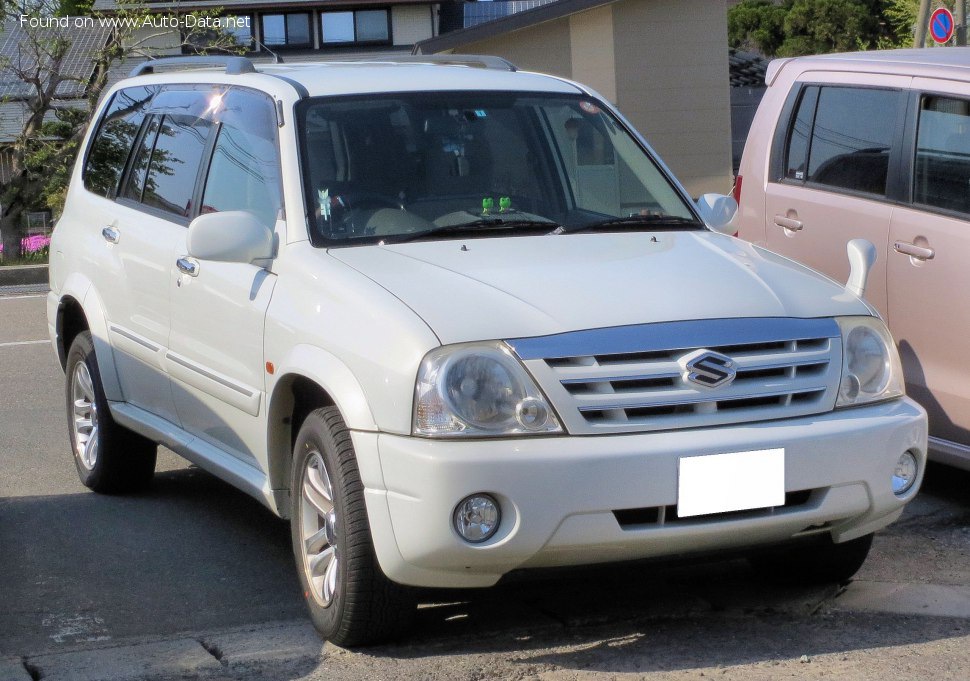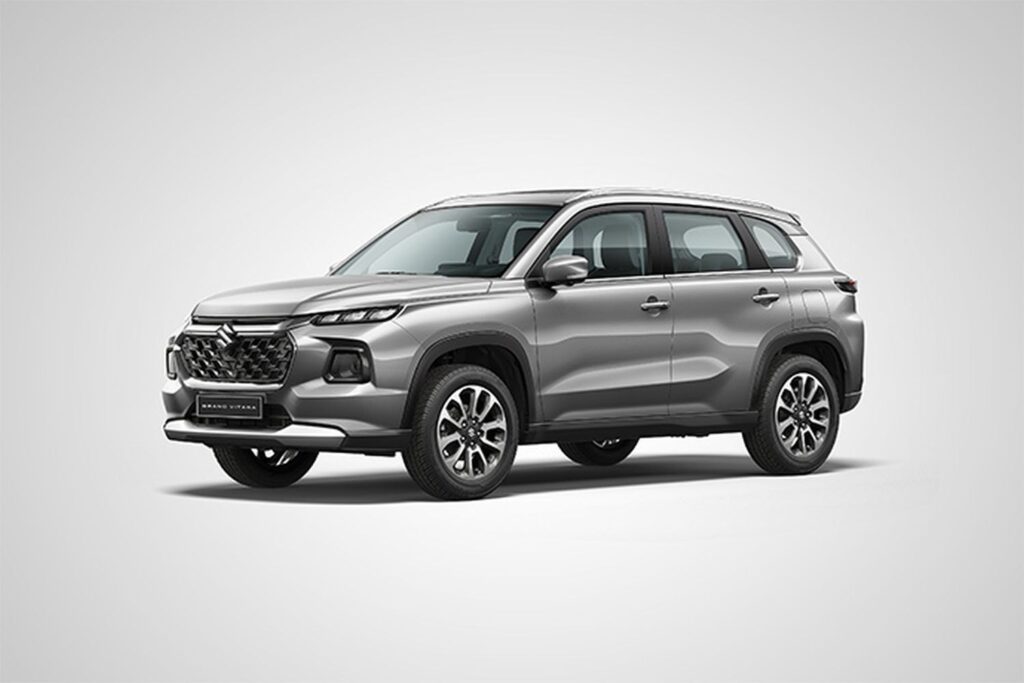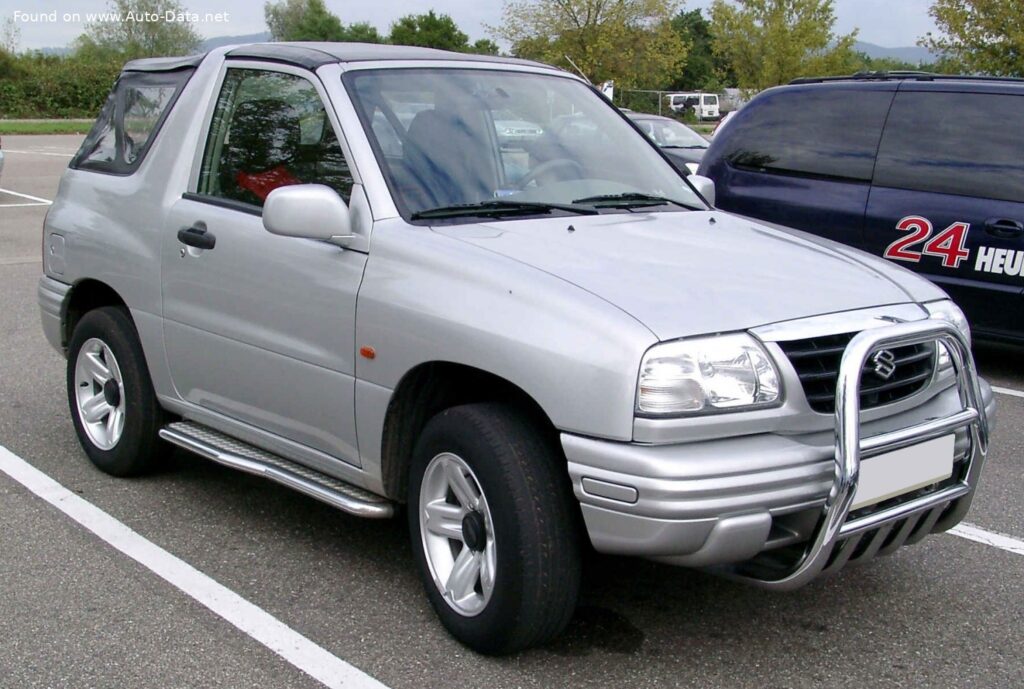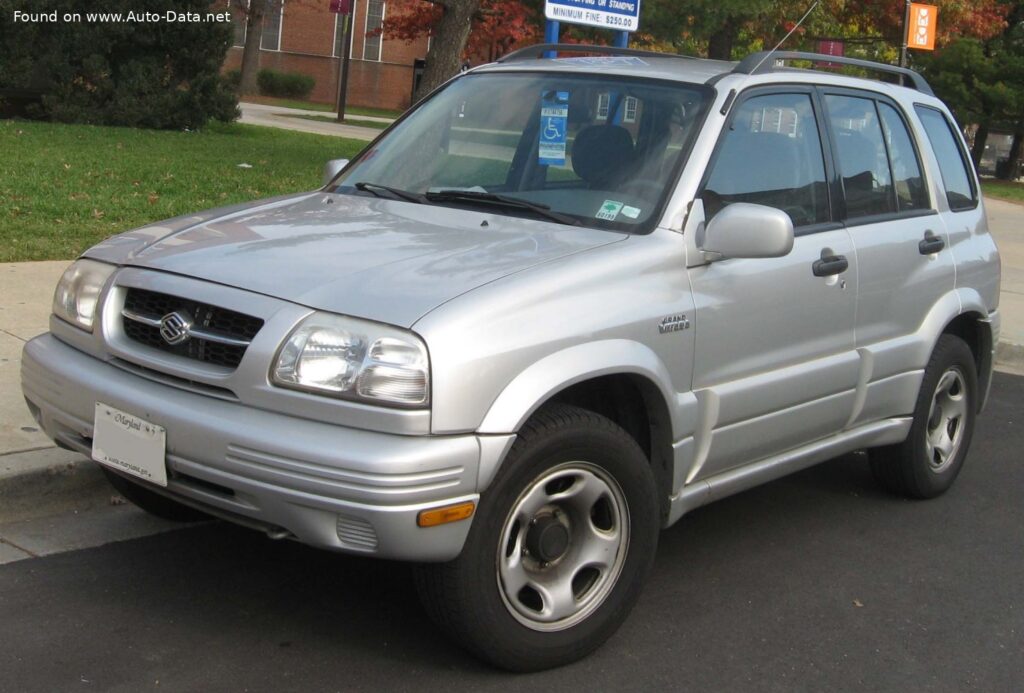
The Suzuki Grand Vitara II (facelift 2008) 3 Door 2.4 (166 Hp) AWD Automatic: A Compact Off-Roader’s Enduring Appeal
The Suzuki Grand Vitara, particularly its second generation (JT series) which debuted in 2005, represented a significant evolution for the Japanese automaker’s compact SUV line. The model underwent a notable facelift in September 2008, introducing refinements in styling, powertrain options, and interior amenities. This article focuses on the specific variant: the Suzuki Grand Vitara II (facelift 2008) 3 Door 2.4 (166 Hp) AWD Automatic. Positioned as a rugged yet compact sport utility vehicle, the 3-door Grand Vitara carved out a unique niche in markets primarily outside North America, offering a compelling blend of genuine off-road capability, practical dimensions, and Suzuki’s renowned reliability. While larger 5-door variants of the Grand Vitara were sold in the United States, this particular 3-door iteration with the 2.4-liter engine was predominantly aimed at European, Asian, and Oceanic markets, where its smaller footprint and robust construction were highly valued for navigating both urban environments and challenging terrains.
Engine and Performance of the Suzuki Grand Vitara II (facelift 2008) 3 Door
At the heart of this particular Suzuki Grand Vitara II (facelift 2008) 3 Door model lies the J24B engine, a 2.4-liter (2393 cm3 or 146.03 cu. in.) naturally aspirated inline-four gasoline unit. This powerplant was designed to deliver a balance of usable power for daily driving and sufficient torque for off-road excursions. With a compression ratio of 10:1 and featuring a multi-port manifold injection system and Variable Valve Timing (VVT), the J24B engine produced a respectable 166 horsepower at 6000 rpm. Torque output peaked at 225 Nm (165.95 lb.-ft.) at 3800 rpm, providing a strong mid-range pull essential for both acceleration and climbing.
Power was routed through a conventional 4-speed automatic transmission, a reliable if somewhat dated choice for the era, which emphasized durability over outright efficiency or rapid shifts. This transmission was paired with Suzuki’s robust permanent All-Wheel Drive (AWD) system, ensuring constant power delivery to all four wheels. This drivetrain architecture was a key differentiator, setting the Grand Vitara apart from many contemporary compact SUVs that had adopted simpler, front-wheel-drive biased systems. Performance figures for this variant included an acceleration from 0 to 60 mph in a calculated 10.9 seconds (0-100 km/h in 11.5 seconds) and a top speed of 105.63 mph (170 km/h). Fuel economy, while not segment-leading due to its AWD system and traditional automatic transmission, was practical for its class: 25 US mpg combined (9.4 l/100 km), with urban consumption at 19.8 US mpg (11.9 l/100 km) and extra-urban at 29.4 US mpg (8.0 l/100 km). The vehicle met Euro 4 emission standards.
Design and Features
The 2008 facelift brought subtle yet effective updates to the Grand Vitara’s exterior and interior. The 3-door body type, measuring 163.39 inches (4150 mm) in length, 73.62 inches (1870 mm) in width, and 66.73 inches (1695 mm) in height, offered a more agile and maneuverable package compared to its 5-door sibling. Its compact dimensions, combined with a relatively short wheelbase of 96.06 inches (2440 mm) and a generous ground clearance of 8.07 inches (205 mm), made it particularly adept at navigating tight trails and urban spaces alike. The exterior design maintained a rugged aesthetic, with prominent wheel arches and a spare tire mounted on the tailgate, signaling its off-road intentions.
Inside, the 3-door Grand Vitara provided seating for four occupants. Despite its compact exterior, the interior was designed for practicality, offering a respectable minimum trunk space of 18.22 cu. ft. (516 liters), expandable to 34.04 cu. ft. (964 liters) with the rear seats folded. The vehicle featured an independent McPherson strut front suspension and an independent multi-link rear suspension, a setup that provided a comfortable ride on paved roads while still offering good articulation for off-road use. Braking was handled by ventilated discs at both the front and rear, complemented by an Anti-lock Braking System (ABS) for enhanced safety. Steering was a rack and pinion system with electric power steering, contributing to ease of maneuverability. The vehicle rode on 16-inch wheels, with tire options including 215/70 R16 99H, 225/70 R16 102S, and 225/70 R16 101H, balancing grip and ride comfort.
Technical Specifications
| Category | Specification |
|---|---|
| General Information | |
| Brand | Suzuki |
| Model | Grand Vitara |
| Generation | Grand Vitara II (facelift 2008) 3 Door |
| Type | 2.4 (166 Hp) AWD Automatic |
| Production Start | September, 2008 |
| Production End | May, 2010 |
| Powertrain Architecture | Internal Combustion Engine |
| Body Type | SUV |
| Seats | 4 |
| Doors | 3 |
| Performance Specs | |
| Fuel Consumption (Urban, NEDC) | 11.9 l/100 km (19.8 US mpg) |
| Fuel Consumption (Extra Urban, NEDC) | 8.0 l/100 km (29.4 US mpg) |
| Fuel Consumption (Combined, NEDC) | 9.4 l/100 km (25 US mpg) |
| CO2 Emissions (NEDC) | 219 g/km |
| Fuel Type | Petrol (Gasoline) |
| Acceleration 0 – 60 mph | 10.9 sec |
| Acceleration 0 – 62 mph (0-100 km/h) | 11.5 sec |
| Maximum Speed | 105.63 mph (170 km/h) |
| Emission Standard | Euro 4 |
| Weight-to-Power Ratio | 8.8 kg/Hp (113.8 Hp/tonne) |
| Weight-to-Torque Ratio | 6.5 kg/Nm (154.2 Nm/tonne) |
| Engine Specs | |
| Power | 166 Hp @ 6000 rpm |
| Power per liter | 69.4 Hp/l |
| Torque | 225 Nm (165.95 lb.-ft.) @ 3800 rpm |
| Engine Layout | Front, Longitudinal |
| Engine Model/Code | J24B |
| Engine Displacement | 2393 cm3 (146.03 cu. in.) |
| Number of Cylinders | 4 |
| Engine Configuration | Inline |
| Cylinder Bore | 92 mm (3.62 in.) |
| Piston Stroke | 90 mm (3.54 in.) |
| Compression Ratio | 10:1 |
| Valves per Cylinder | 4 |
| Fuel Injection System | Multi-port manifold injection |
| Engine Aspiration | Naturally aspirated engine |
| Valvetrain | VVT |
| Engine Oil Capacity | 4.8 l (5.07 US qt) |
| Coolant Capacity | 7.3 l (7.71 US qt) |
| Space, Volume, and Weights | |
| Kerb Weight | 1459-1539 kg (3216.54 – 3392.91 lbs.) |
| Max. Weight (GVWR) | 1890 kg (4166.74 lbs.) |
| Max Load | 351-431 kg (773.82 – 950.19 lbs.) |
| Trunk Space (Minimum) | 516 l (18.22 cu. ft.) |
| Trunk Space (Maximum) | 964 l (34.04 cu. ft.) |
| Fuel Tank Capacity | 55 l (14.53 US gal) |
| Permitted Trailer Load with Brakes (12%) | 1600 kg (3527.4 lbs.) |
| Permitted Trailer Load without Brakes | 550 kg (1212.54 lbs.) |
| Permitted Towbar Download | 85 kg (187.39 lbs.) |
| Dimensions | |
| Length | 4150 mm (163.39 in.) |
| Width | 1870 mm (73.62 in.) |
| Height | 1695 mm (66.73 in.) |
| Wheelbase | 2440 mm (96.06 in.) |
| Front Track | 1540 mm (60.63 in.) |
| Rear Track | 1570 mm (61.81 in.) |
| Ride Height (Ground Clearance) | 205 mm (8.07 in.) |
| Minimum Turning Circle | 10.2 m (33.46 ft.) |
| Drivetrain, Brakes, and Suspension | |
| Drivetrain Architecture | Permanent All-Wheel Drive (4×4) |
| Drive Wheel | All-wheel drive (4×4) |
| Number of Gears and Type | 4 gears, automatic transmission |
| Front Suspension | Independent type McPherson |
| Rear Suspension | Independent multi-link suspension |
| Front Brakes | Ventilated discs |
| Rear Brakes | Ventilated discs |
| Assisting Systems | ABS (Anti-lock braking system) |
| Steering Type | Steering rack and pinion |
| Power Steering | Electric Steering |
| Tires Size | 215/70 R16 99H; 225/70 R16 102S; 225/70 R16 101H |
| Wheel Rims Size | 6.5J x 16 |
Legacy and Market Impact
The Suzuki Grand Vitara II (facelift 2008) 3 Door, particularly with its 2.4-liter engine and permanent AWD, solidified Suzuki’s reputation as a purveyor of capable and robust compact SUVs. In markets like Europe, Australia, and parts of Asia, where space efficiency and genuine off-road credentials are often highly prized, the 3-door Grand Vitara found a loyal following. It competed in a segment that included vehicles like the Toyota RAV4 (though the RAV4 was increasingly car-like), Honda CR-V, and various European offerings, but often distinguished itself with a more traditional SUV chassis and a drivetrain designed for more serious off-road work.
Unlike many “soft-roaders” or crossovers that prioritize on-road comfort and fuel economy, the Grand Vitara retained a body-on-frame-like integrated ladder frame and a robust full-time AWD system with a low-range transfer case (in some markets/configurations, though not explicitly detailed for this specific trim, the architecture itself was capable), giving it a distinct advantage when the pavement ended. Its reliability, durability, and relatively low running costs made it a popular choice for adventurers, families needing a versatile vehicle, and those living in areas with challenging road conditions. While it may not have achieved the sales volumes of its more road-biased competitors, its impact was significant in demonstrating that a compact SUV could still offer authentic utility and ruggedness without sacrificing too much in terms of everyday usability. The 2008 facelift helped keep the model competitive during its production run, ensuring it remained a relevant option for consumers seeking a no-nonsense, go-anywhere vehicle.