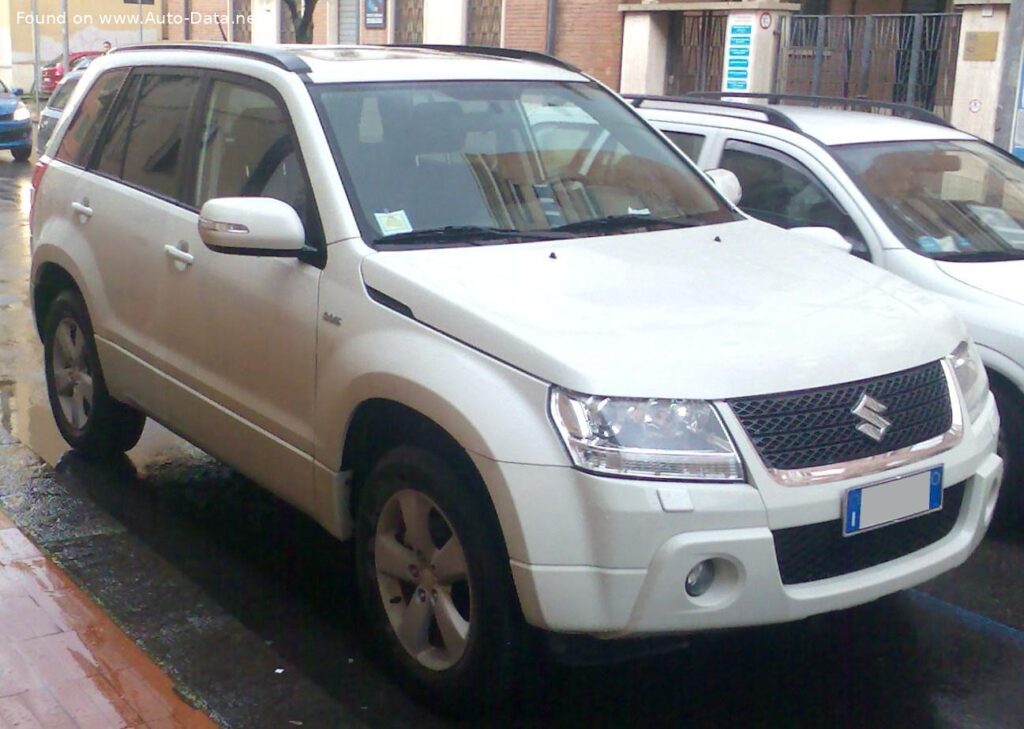
Suzuki Grand Vitara II (facelift 2008) 5 Door 1.9 DDiS (129 Hp) AWD: A Global Performer
The Suzuki Grand Vitara, known for its blend of rugged off-road capability and on-road comfort, represented a significant offering in the compact SUV segment for many markets outside the United States. The second generation, specifically the Suzuki Grand Vitara II (facelift 2008) 5 Door 1.9 DDiS (129 Hp) AWD, built upon this reputation, delivering a practical and robust vehicle for families and adventurers alike. Produced from May 2010 to December 2012, this particular variant, with its 1.9-liter DDiS diesel engine and permanent all-wheel drive, was a key player in European and Asian markets, where diesel powerplants were highly valued for their fuel efficiency and torque characteristics. While the Grand Vitara was sold in the U.S. with gasoline engines, this diesel iteration highlights Suzuki’s tailored approach to different global automotive landscapes, offering a compelling package for consumers prioritizing economy and durability.
Engine & Performance: The 1.9 DDiS Powertrain in the Suzuki Grand Vitara II (facelift 2008) 5 Door 1.9 DDiS (129 Hp) AWD
At the heart of this Grand Vitara variant was the F9Q engine, a 1.9-liter (114.11 cubic inches) inline four-cylinder turbo-diesel unit. This powertrain was engineered to deliver a balance of power and efficiency, especially crucial in regions where fuel costs and emissions regulations were significant considerations. It produced a respectable 129 horsepower at 4000 rpm, which, coupled with its robust torque output, provided ample motivation for the compact SUV. The engine’s peak torque of 221.27 lb.-ft. was available across a broad range from 1750 to 2500 rpm, a characteristic of diesel engines that translates into strong pulling power and effortless cruising, particularly beneficial for towing or off-road excursions.
The 1.9 DDiS engine featured a common rail fuel injection system, ensuring precise fuel delivery and combustion efficiency. This was complemented by a turbocharger and intercooler, which boosted air intake to enhance power output and overall performance. With a compression ratio of 17:1, the engine was designed for the inherent efficiency of diesel combustion. Furthermore, to meet the stringent Euro 5 emission standards prevalent during its production years, the vehicle was equipped with a particulate filter, reducing harmful emissions.
Power was delivered to all four wheels via a permanent all-wheel-drive (AWD) system, paired with a 5-speed manual transmission. This drivetrain architecture provided continuous traction and enhanced stability, whether navigating challenging terrain or adverse weather conditions. While not built for outright speed, the Grand Vitara II 1.9 DDiS achieved a 0-60 mph acceleration in a calculated 12.5 seconds and reached a maximum speed of 105.63 mph, which was competitive for a diesel SUV of its class and era. Its combined fuel economy was rated at an impressive 34.6 US mpg (6.8 l/100 km), reflecting the efficiency gains of its diesel powertrain and underscoring its appeal in fuel-conscious markets.
Design & Features: Blending Ruggedness with Practicality
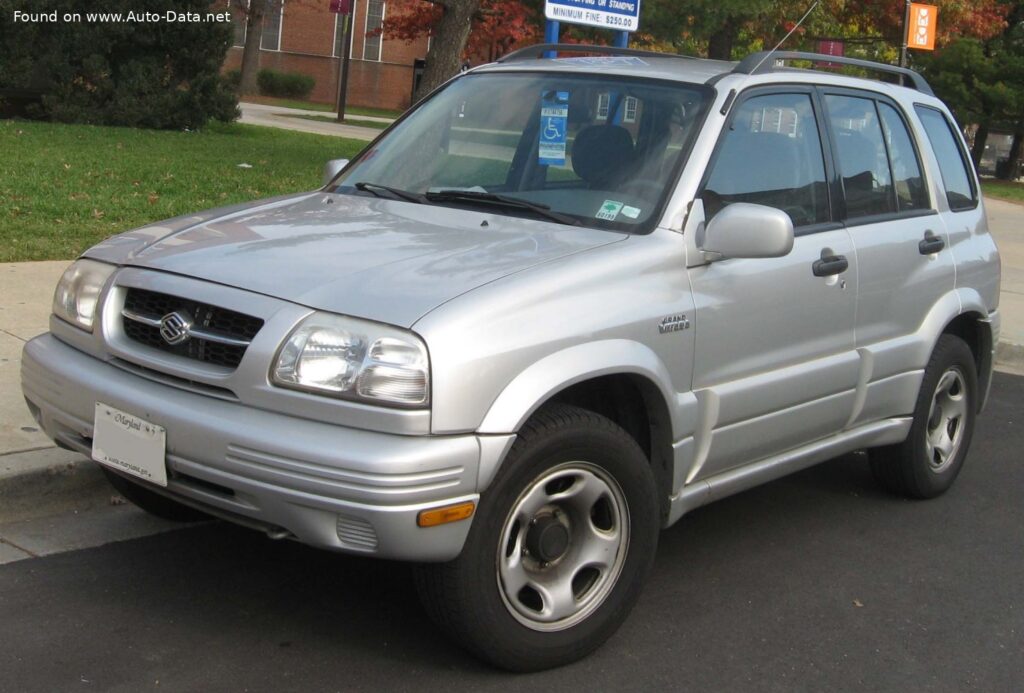
The Suzuki Grand Vitara II, particularly after its 2008 facelift, presented a more refined yet still unmistakably rugged exterior design. As a 5-door SUV, it offered practical access for passengers and cargo. Its dimensions – 180.12 inches in length, 74.02 inches in width, and 66.73 inches in height – provided a substantial road presence without being overly cumbersome. The 103.94-inch wheelbase contributed to a stable ride, while a ground clearance of 8.07 inches affirmed its off-road credentials, allowing it to tackle uneven surfaces with confidence.
Inside, the Grand Vitara II was designed to comfortably accommodate five occupants, offering a spacious cabin for its class. The cargo area was particularly versatile, with a minimum trunk space of 26.77 cubic feet (758 liters) that could expand significantly to 48.95 cubic feet (1386 liters) with the rear seats folded down, making it highly practical for hauling luggage, sports equipment, or groceries.
From a chassis perspective, the Grand Vitara II featured an independent McPherson strut front suspension and an independent multi-link rear suspension, a setup that aimed to balance on-road comfort with off-road articulation. Braking duties were handled by ventilated discs at both the front and rear, coupled with an Anti-lock Braking System (ABS) for enhanced safety and control during emergency braking. The vehicle utilized a steering rack and pinion system with electric power steering, providing responsive and light steering feel for urban maneuvers and highway driving. Various tire and wheel options, ranging from 16-inch to 18-inch, were available, allowing for customization based on driving preferences and aesthetic considerations. These features collectively underlined the Grand Vitara’s dual personality as both a capable daily driver and an adventurous utility vehicle.
Technical Specifications: Suzuki Grand Vitara II (facelift 2008) 5 Door 1.9 DDiS (129 Hp) AWD
| Category | Specification | US Equivalent (if applicable) |
|---|---|---|
| General Information | ||
| Brand | Suzuki | |
| Model | Grand Vitara | |
| Generation | Grand Vitara II (facelift 2008) 5 Door | |
| Type (Engine) | 1.9 DDiS (129 Hp) AWD | |
| Start of Production | May, 2010 | |
| End of Production | December, 2012 | |
| Powertrain Architecture | Internal Combustion Engine | |
| Body type | SUV | |
| Seats | 5 | |
| Doors | 5 | |
| Performance Specs | ||
| Fuel consumption (economy) – urban (NEDC) | 8.1 l/100 km | 29 US mpg |
| Fuel consumption (economy) – extra urban (NEDC) | 6.0 l/100 km | 39.2 US mpg |
| Fuel consumption (economy) – combined (NEDC) | 6.8 l/100 km | 34.6 US mpg |
| CO2 emissions (NEDC) | 179 g/km | |
| Fuel Type | Diesel | |
| Acceleration 0 – 60 mph | 12.5 sec | |
| Maximum speed | 170 km/h | 105.63 mph |
| Emission standard | Euro 5 | |
| Weight-to-power ratio | 12.8 kg/Hp | 78 Hp/tonne |
| Weight-to-torque ratio | 5.5 kg/Nm | 181.4 Nm/tonne |
| Engine Specs | ||
| Power | 129 Hp @ 4000 rpm | |
| Power per liter | 69 Hp/l | |
| Torque | 300 Nm @ 1750-2500 rpm | 221.27 lb.-ft. @ 1750-2500 rpm |
| Engine layout | Front, Longitudinal | |
| Engine Model/Code | F9Q | |
| Engine displacement | 1870 cm3 | 114.11 cu. in. |
| Number of cylinders | 4 | |
| Engine configuration | Inline | |
| Cylinder Bore | 80 mm | 3.15 in. |
| Piston Stroke | 93 mm | 3.66 in. |
| Compression ratio | 17:1 | |
| Number of valves per cylinder | 2 | |
| Fuel injection system | Diesel Commonrail | |
| Engine aspiration | Turbocharger, Intercooler | |
| Engine oil capacity | 5.1 l | 5.39 US qt |
| Engine systems | Particulate filter | |
| Space, Volume and Weights | ||
| Kerb Weight | 1654-1722 kg | 3646.45 – 3796.36 lbs. |
| Max. weight | 2170 kg | 4784.03 lbs. |
| Max load | 448-516 kg | 987.67 – 1137.59 lbs. |
| Trunk (boot) space – minimum | 758 l | 26.77 cu. ft. |
| Trunk (boot) space – maximum | 1386 l | 48.95 cu. ft. |
| Fuel tank capacity | 66 l | 17.44 US gal |
| Permitted trailer load with brakes (12%) | 2000 kg | 4409.25 lbs. |
| Permitted trailer load without brakes | 750 kg | 1653.47 lbs. |
| Permitted towbar download | 85 kg | 187.39 lbs. |
| Dimensions | ||
| Length | 4575 mm | 180.12 in. |
| Width | 1880 mm | 74.02 in. |
| Height | 1695 mm | 66.73 in. |
| Wheelbase | 2640 mm | 103.94 in. |
| Front track | 1540 mm | 60.63 in. |
| Rear (Back) track | 1570 mm | 61.81 in. |
| Ride height (ground clearance) | 205 mm | 8.07 in. |
| Minimum turning circle (turning diameter) | 11 m | 36.09 ft. |
| Drivetrain, Brakes and Suspension Specs | ||
| Drivetrain Architecture | Internal combustion engine (ICE) drives permanently the four wheels of the vehicle. | |
| Drive wheel | All wheel drive (4×4) | |
| Number of gears and type of gearbox | 5 gears, manual transmission | |
| Front suspension | Independent type McPherson | |
| Rear suspension | Independent multi-link suspension | |
| Front brakes | Ventilated discs | |
| Rear brakes | Ventilated discs | |
| Assisting systems | ABS (Anti-lock braking system) | |
| Steering type | Steering rack and pinion | |
| Power steering | Electric Steering | |
| Tires size | 215/70 R16 99H; 225/70 R16 102S; 225/65 R17 101H; 225/60 R18 100H | |
| Wheel rims size | 6.5J x 16; 6.5J x 17; 7.0J x 18 | |
Legacy & Market Impact of the Suzuki Grand Vitara II (facelift 2008) 5 Door 1.9 DDiS (129 Hp) AWD
The Suzuki Grand Vitara has historically occupied a unique niche in the global automotive market, particularly in its second generation. It was one of the few compact SUVs that genuinely offered robust off-road capabilities, thanks to its permanent all-wheel-drive system and sturdy chassis, distinguishing it from many car-based crossovers that prioritized on-road comfort exclusively. In markets like Europe and parts of Asia, the Suzuki Grand Vitara II (facelift 2008) 5 Door 1.9 DDiS (129 Hp) AWD was particularly well-received. The diesel engine, with its excellent fuel economy and strong torque, made it a practical choice for long-distance travel, towing, and navigating varied terrains, including mountainous regions where diesel power is often preferred.
Competitors in its primary markets included a diverse range of vehicles. On one hand, it faced rivals from more road-biased compact SUVs such as the Nissan Qashqai (known as Rogue Sport in the U.S.), Toyota RAV4, and Honda CR-V, which often offered more refined interiors and a softer ride. On the other hand, its off-road prowess placed it in contention with vehicles like the Subaru Forester, which also offered capable AWD, or even smaller, more rugged offerings from brands like Land Rover in certain segments. However, the Grand Vitara often stood out for its compelling combination of price point, reliability, and genuine off-road credentials, offering a “best of both worlds” proposition for many buyers.
The 2008 facelift and the continued availability of the 1.9 DDiS engine ensured the Grand Vitara remained competitive and relevant through its production run until 2012. Its legacy is one of a dependable, no-nonsense SUV that delivered on its promise of versatility. While Suzuki eventually withdrew from the U.S. market, the Grand Vitara remains a testament to the brand’s engineering philosophy: building vehicles that are durable, capable, and offer strong value. The diesel variants, though never officially imported to the U.S., played a crucial role in cementing the Grand Vitara’s reputation as a go-anywhere, do-anything vehicle in its most prominent global markets. Its impact can still be seen in the used car market, where these models are sought after for their longevity and robust construction, embodying a practical approach to adventure and daily utility.