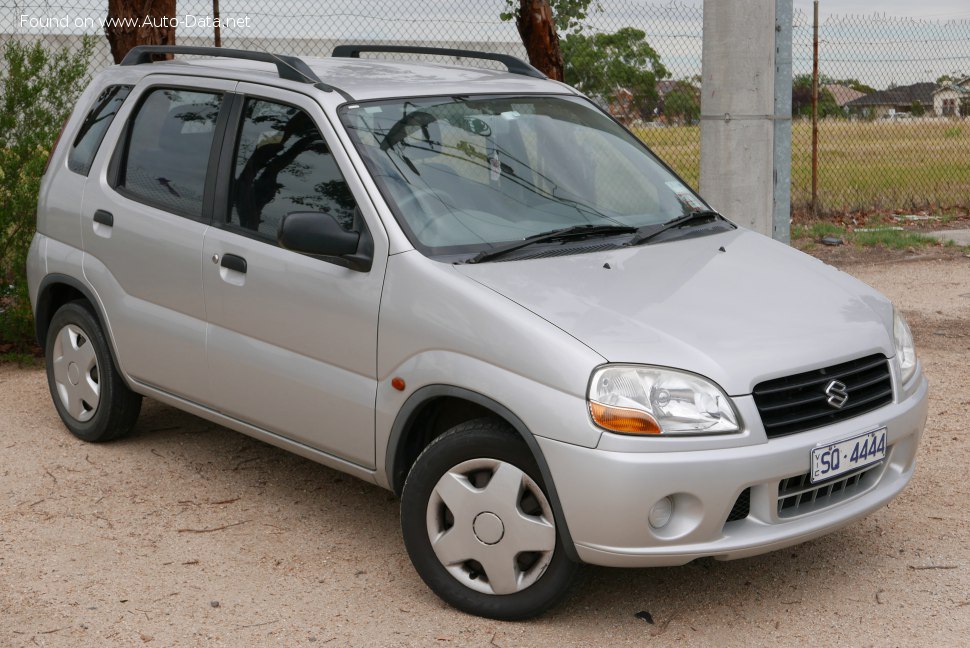
The Suzuki Ignis Hatchback I FH: A Global Compact Crossover Pioneer
The Suzuki Ignis Hatchback I FH 1.3 i GLS (5 dr) (68 Hp) represents a significant entry in the compact automotive segment, particularly within markets outside of North America. Produced between 2001 and 2003, this first-generation Ignis model carved out a niche for itself as a versatile, go-anywhere small car, blending the practicality of a hatchback with the rugged appeal and slightly elevated stance of a mini-crossover. While never officially sold in the United States, the Ignis played a crucial role in Suzuki’s global strategy, offering an affordable and robust option for urban dwellers and those navigating varied road conditions across Europe, Asia, and Australia.
Positioned as a practical and economical vehicle, the Ignis I FH aimed to deliver maximum utility within a compact footprint. Its design ethos was geared towards functionality and durability, traits highly valued in the diverse markets it served. This particular variant, the 1.3 i GLS, featured a modest yet capable powertrain, making it a popular choice for its balance of performance, efficiency, and everyday usability. The Ignis’s unique character, with its distinctive styling and slightly raised ground clearance, foreshadowed the later boom in compact crossover vehicles, demonstrating Suzuki’s foresight in identifying evolving consumer preferences for multi-purpose vehicles that could handle more than just paved city streets.
Engine and Performance: The Heart of the Suzuki Ignis Hatchback I FH 1.3 i GLS (5 dr) (68 Hp)
Under the hood of the Suzuki Ignis Hatchback I FH 1.3 i GLS (5 dr) (68 Hp) lies a robust and reliable 1.3-liter (1299 cm3 or 79.27 cu. in.) M13A inline-four gasoline engine. This naturally aspirated powerplant was engineered for efficiency and dependable performance, perfectly suited to the vehicle’s intended urban and light-duty rural applications. With a compression ratio of 9.5:1 and two valves per cylinder, the engine delivered a peak output of 68 horsepower at 6000 rpm, complemented by 73.02 lb.-ft. of torque at a relatively low 3500 rpm. This torque characteristic ensured ample pulling power for city driving and manageable acceleration, despite its modest horsepower rating, making it agile in congested traffic.
Power was delivered to the front wheels via a smooth-shifting 5-speed manual transmission, a common and cost-effective choice for vehicles in this segment known for its driver engagement and efficiency. This drivetrain architecture, combined with the Ignis’s remarkably lightweight construction (a kerb weight of just 1818.81 lbs), contributed significantly to