The Suzuki Ignis I FH 1.3 i 16V (3 dr) (83 Hp): A Compact Crossover Pioneer
The Suzuki Ignis, particularly the first generation (chassis code FH) produced between 2000 and 2003, represented Suzuki’s innovative foray into the burgeoning compact crossover segment. This specific variant, the Suzuki Ignis I FH 1.3 i 16V (3 dr) (83 Hp), was a pivotal model in Suzuki’s global strategy, finding strong traction in European and Asian markets where demand for versatile, fuel-efficient, and compact vehicles was rapidly growing. While never officially sold in the United States, the Ignis I FH embodied a design philosophy that skillfully blended the practicality and nimble footprint of a subcompact hatchback with the elevated driving position and rugged aesthetics often associated with a sport utility vehicle. This unique proposition made it an appealing choice for urban dwellers and those seeking a vehicle capable of light-duty adventuring beyond the tarmac. Its introduction marked a significant moment for Suzuki, showcasing their expertise in small-car engineering and their foresight in anticipating market trends towards more multi-purpose vehicles. It effectively bridged the gap between conventional hatchbacks and more robust SUVs, offering a compelling package of affordability, efficiency, and surprising versatility.
Powertrain and Driving Dynamics of the Suzuki Ignis I FH
At the heart of the Suzuki Ignis I FH 1.3 i 16V (3 dr) (83 Hp) was its M13A engine, a robust and well-regarded 1.3-liter (1328 cm³) naturally aspirated inline-four gasoline unit. This 16-valve engine was engineered for a balance of efficiency and reliability, delivering a respectable 83 horsepower at 5500 rpm. Torque output stood at 81.13 lb.-ft. (110 Nm), available at a relatively low 3500 rpm, which provided accessible power for both city driving and highway cruising without excessive strain on the engine. Power was efficiently channeled to the front wheels via a smooth-shifting 5-speed manual transmission, a common and highly reliable setup for vehicles in this class during the early 2000s. The drivetrain architecture, with its front-wheel-drive configuration, emphasized fuel economy and ease of maintenance, making it an ideal choice for its target demographic.
Performance figures for the Ignis I FH 1.3 i 16V were competitive for its segment. It could accelerate from 0 to 60 mph in an estimated 13.8 seconds, with a maximum speed of 99.42 mph (160 km/h). While not designed as a performance vehicle, these numbers underscored its design as a practical and economical urban transporter. Fuel economy was a strong suit, with a combined rating of 36.8 US mpg (6.4 l/100 km), making it an attractive option for budget-conscious consumers in markets where fuel prices were a significant consideration. The engine’s multi-port manifold injection system ensured precise and efficient fuel delivery, contributing significantly to its overall parsimony and lower emissions for its era. The lightweight construction, with a curb weight of just 2006.21 lbs (910 kg), also played a crucial role in its agile performance and commendable fuel efficiency.
Exterior and Interior Design Philosophy
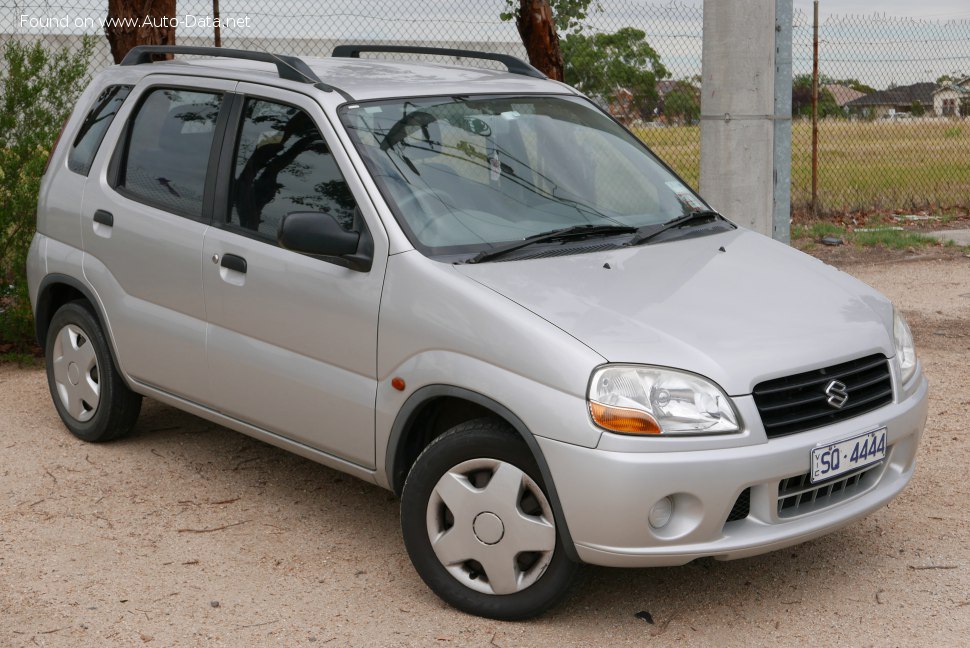
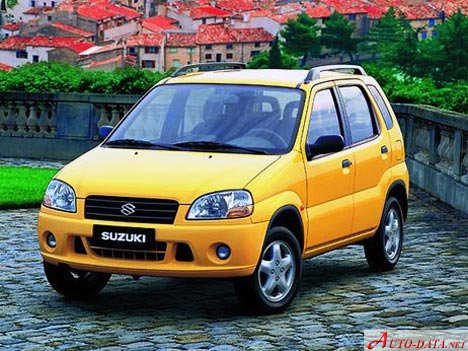
The design of the Suzuki Ignis I FH 1.3 i 16V (3 dr) (83 Hp) was characterized by its distinctive blend of hatchback utility and an SUV-like stance. This particular variant featured a 3-door hatchback body, providing a compact footprint ideal for navigating crowded city streets and tight parking spaces. Despite its diminutive exterior dimensions—measuring 142.32 inches in length, 62.8 inches in width, and 60.63 inches in height—the Ignis offered seating for five occupants, a testament to Suzuki’s clever packaging and efficient use of interior space. The wheelbase of 92.91 inches contributed to its agile handling and a commendable minimum turning circle of 32.15 feet, enhancing its urban maneuverability.
Key exterior features included a relatively high ground clearance for its class, which, combined with its short overhangs, gave it a more adventurous appearance and allowed for easier traversal over minor obstacles or uneven terrain. This design choice gave the Ignis a unique visual identity that stood out from more conventional hatchbacks. The interior, while functional and straightforward, prioritized practicality and durability, utilizing hard-wearing materials suitable for everyday use. Cargo capacity was versatile, ranging from 6.39 cubic feet (181 liters) with all seats in place to a more substantial 14.8 cubic feet (419 liters) when the rear seats were folded, making it suitable for grocery runs, shopping trips, or carrying gear for weekend activities.
In terms of chassis and safety, the Ignis I FH was equipped with a front wishbone suspension and a rear coil spring setup, providing a comfortable yet stable ride that could absorb urban imperfections. Braking duties were handled by front disc brakes and rear drum brakes, a common and cost-effective configuration for compact vehicles of its time, augmented by an Anti-lock Braking System (ABS) for enhanced stopping control under various road conditions. The steering system utilized a precise rack and pinion setup with hydraulic power steering, offering a direct feel and ease of maneuverability at low speeds. Standard tire size was 165/70 R14 on 14-inch wheel rims, balancing ride comfort with adequate grip for its intended use.
Technical Specifications: Suzuki Ignis I FH 1.3 i 16V (3 dr) (83 Hp)
| Category | Specification | US/Imperial Equivalent |
|---|---|---|
General Information |
||
| Brand | Suzuki | |
| Model | Ignis | |
| Generation | Ignis I FH | |
| Type (Engine) | 1.3 i 16V (3 dr) (83 Hp) | |
| Start of Production | 2000 year | |
| End of Production | 2003 year | |
| Powertrain Architecture | Internal Combustion engine | |
| Body Type | Hatchback | |
| Seats | 5 | |
| Doors | 3 | |
Performance Specs |
||
| Fuel Consumption (Urban) | 9.5 l/100 km | 24.8 US mpg |
| Fuel Consumption (Extra Urban) | 5.2 l/100 km | 45.2 US mpg |
| Fuel Consumption (Combined) | 6.4 l/100 km | 36.8 US mpg |
| Fuel Type | Petrol (Gasoline) | |
| Acceleration 0-60 mph | 13.8 sec | |
| Maximum Speed | 160 km/h | 99.42 mph |
| Weight-to-Power Ratio | 11 kg/Hp | 91.2 Hp/tonne |
| Weight-to-Torque Ratio | 8.3 kg/Nm | 120.9 Nm/tonne |
Engine Specs |
||
| Power | 83 Hp @ 5500 rpm | |
| Power per liter | 62.5 Hp/l | |
| Torque | 110 Nm @ 3500 rpm | 81.13 lb.-ft. @ 3500 rpm |
| Engine Layout | Front, Transverse | |
| Engine Model/Code | M13A | |
| Engine Displacement | 1328 cm³ | 81.04 cu. in. |
| Number of Cylinders | 4 | |
| Engine Configuration | Inline | |
| Cylinder Bore | 78 mm | 3.07 in. |
| Piston Stroke | 69.5 mm | 2.74 in. |
| Compression Ratio | 9.5:1 | |
| Number of Valves per Cylinder | 4 | |
| Fuel Injection System | Multi-port manifold injection | |
| Engine Aspiration | Naturally aspirated engine | |
| Engine Oil Capacity | 3.8 l | 4.02 US qt |
| Coolant Capacity | 5.6 l | 5.92 US qt |
Space, Volume and Weights |
||
| Curb Weight | 910 kg | 2006.21 lbs. |
| Max. Weight | 1430 kg | 3152.61 lbs. |
| Max Load | 520 kg | 1146.4 lbs. |
| Trunk (Boot) Space – Minimum | 181 l | 6.39 cu. ft. |
| Trunk (Boot) Space – Maximum | 419 l | 14.8 cu. ft. |
| Fuel Tank Capacity | 41 l | 10.83 US gal |
Dimensions |
||
| Length | 3615 mm | 142.32 in. |
| Width | 1595 mm | 62.8 in. |
| Height | 1540 mm | 60.63 in. |
| Wheelbase | 2360 mm | 92.91 in. |
| Front Track | 1405 mm | 55.31 in. |
| Rear (Back) Track | 1385 mm | 54.53 in. |
| Minimum Turning Circle | 9.8 m | 32.15 ft. |
Drivetrain, Brakes and Suspension Specs |
||
| Drivetrain Architecture | Front-wheel drive. Internal Combustion engine. | |
| Drive Wheel | Front wheel drive | |
| Number of Gears and Type of Gearbox | 5 gears, manual transmission | |
| Front Suspension | Wishbone | |
| Rear Suspension | Coil spring | |
| Front Brakes | Disc | |
| Rear Brakes | Drum | |
| Assisting Systems | ABS (Anti-lock braking system) | |
| Steering Type | Steering rack and pinion | |
| Power Steering | Hydraulic Steering | |