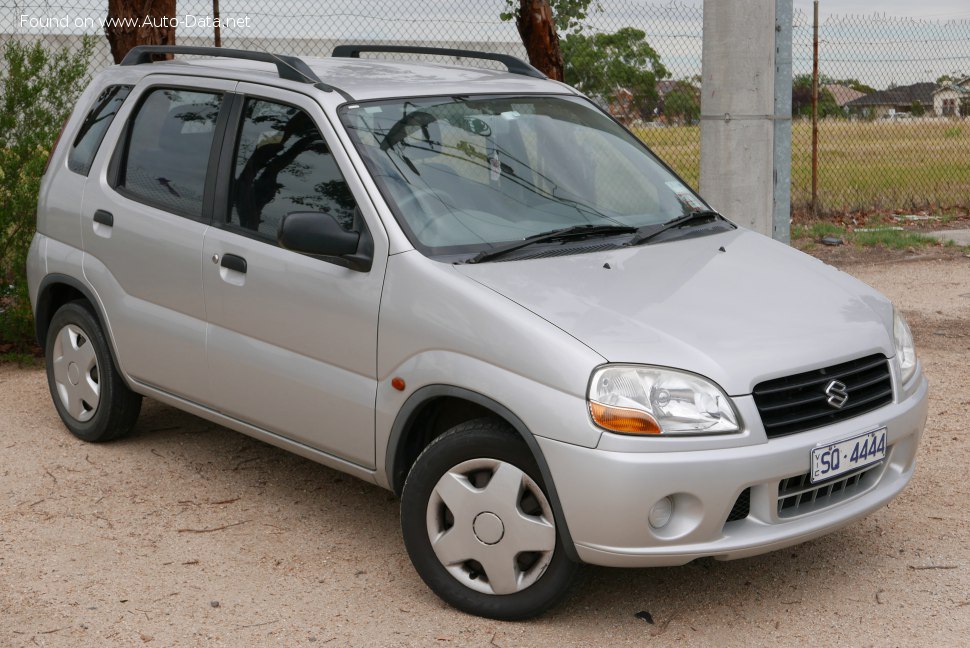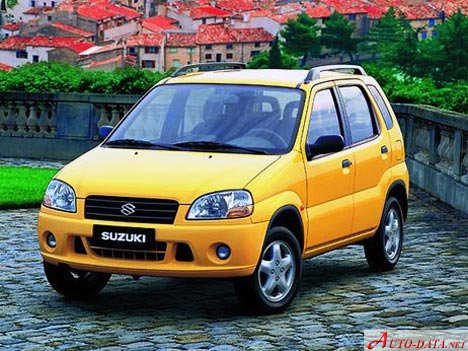
The Suzuki Ignis I FH 1.3 i 16V (83 Hp): A Global Compact Contender
The Suzuki Ignis I FH, specifically the 1.3 i 16V (83 Hp) variant, represents a significant entry in the compact car segment during its production run from 2000 to 2003. Launched as a subcompact car or mini SUV, depending on the market and trim level, the first-generation Ignis was a testament to Suzuki’s expertise in creating small, practical, and often surprisingly capable vehicles. While not widely sold in the United States, the Ignis I FH found its niche primarily in European and Asian markets, where its compact dimensions, elevated driving position, and economical operation resonated with urban dwellers and those seeking versatile transportation.
This particular iteration, with its 1.3-liter, 16-valve engine, was positioned as a sensible choice for consumers prioritizing fuel efficiency and maneuverability without sacrificing a decent level of performance for its class. The Ignis I FH, known in some markets as the Suzuki Swift (second generation) or Chevrolet Cruze (in Japan), showcased Suzuki’s global strategy of offering a versatile platform under different badges to suit regional preferences and market demands. Its design blended elements of a traditional hatchback with a slightly raised stance, hinting at the burgeoning crossover trend that would dominate the automotive landscape in subsequent decades.
Engine and Performance: The Heart of the Suzuki Ignis I FH 1.3 i 16V (83 Hp)
At the core of the Suzuki Ignis I FH 1.3 i 16V (83 Hp) lies a robust and efficient M13A engine, a naturally aspirated inline four-cylinder unit positioned transversely at the front of the vehicle. This 1.3-liter (1328 cubic centimeters or 81.04 cubic inches) powerplant was designed for a balance of urban agility and reasonable highway capability. With a multi-port manifold injection system and a 16-valve cylinder head (four valves per cylinder), the engine delivered a respectable 83 horsepower at 5500 rpm. This power output, combined with a compression ratio of 9.5:1, allowed for responsive acceleration within its class.
Torque figures for this engine stood at 110 Nm (81.13 lb.-ft.) available at a relatively low 3500 rpm, which contributed significantly to its drivability in city traffic. The early peak torque meant that the driver didn’t have to constantly rev the engine to access its pulling power, making for a less strenuous driving experience. Paired exclusively with a 5-speed manual transmission, the Ignis I FH offered direct control over its power delivery. This drivetrain architecture, powering the front wheels, was a conventional and cost-effective setup for a vehicle in this segment, emphasizing practicality and reliability.
In terms of outright performance, the Ignis 1.3 i 16V was competitive for its time and segment. It could accelerate from 0 to 60 mph in approximately 13.8 seconds, with a top speed of 99.42 mph (160 km/h). While these figures might not suggest a sports car, they were more than adequate for daily commuting and occasional longer journeys. Fuel economy was a strong suit, with a combined rating of 36.8 US mpg (6.4 l/100 km), highlighting its economical nature – a critical factor for its target markets.
Design and Features: Practicality Meets Compact Versatility
The design philosophy behind the first-generation Suzuki Ignis was centered around maximizing interior space within a compact footprint, while also offering a slightly more commanding driving position than a typical hatchback. Its body type is classified as a 5-door hatchback, offering seating for five occupants. The exterior dimensions – a length of 142.32 inches (3615 mm), a width of 62.8 inches (1595 mm), and a height of 60.63 inches (1540 mm) – underscore its city-friendly proportions. The relatively tall stance, combined with a wheelbase of 92.91 inches (2360 mm), contributed to a surprisingly spacious cabin for its size.
Inside, the Ignis was designed with an emphasis on utility and straightforward ergonomics. While specific luxury features were not its primary focus, it offered all the essentials for comfortable everyday use. The elevated seating position provided good visibility, a feature often appreciated by drivers, especially in congested urban environments. The trunk space was practical, ranging from 6.39 cubic feet (181 liters) with all seats up, expanding to a more substantial 14.8 cubic feet (419 liters) when the rear seats were folded, allowing for flexible cargo carrying capabilities. The 41-liter (10.83 US gallon) fuel tank provided a decent cruising range given its impressive fuel efficiency.
Safety features for the era included an Anti-lock Braking System (ABS), which was becoming standard on many vehicles by the early 2000s, enhancing braking stability. The vehicle was equipped with disc brakes at the front and drum brakes at the rear, a common and effective setup for a car of its weight and performance. The steering system utilized a hydraulic rack and pinion setup, providing direct feedback to the driver. The suspension comprised a wishbone setup at the front and coil springs at the rear, tuned for a comfortable ride quality that could handle varied road conditions prevalent in its primary markets.
Technical Specifications: Suzuki Ignis I FH 1.3 i 16V (83 Hp)
| Category | Specification |
|---|---|
| General Information | |
| Brand | Suzuki |
| Model | Ignis |
| Generation | Ignis I FH |
| Type (Engine) | 1.3 i 16V (83 Hp) |
| Production Start | 2000 year |
| Production End | 2003 year |
| Powertrain Architecture | Internal Combustion engine |
| Body Type | Hatchback |
| Seats | 5 |
| Doors | 5 |
| Performance Specs | |
| Fuel Consumption (Urban) | 8.5 l/100 km (27.7 US mpg) |
| Fuel Consumption (Extra Urban) | 5.2 l/100 km (45.2 US mpg) |
| Fuel Consumption (Combined) | 6.4 l/100 km (36.8 US mpg) |
| Fuel Type | Petrol (Gasoline) |
| Acceleration 0 – 60 mph | 13.8 sec |
| Acceleration 0 – 100 km/h | 14.5 sec |
| Maximum Speed | 160 km/h (99.42 mph) |
| Weight-to-Power Ratio | 11.4 kg/Hp (87.8 Hp/tonne) |
| Weight-to-Torque Ratio | 8.6 kg/Nm (116.4 Nm/tonne) |
| Engine Specs | |
| Power | 83 Hp @ 5500 rpm |
| Power per Liter | 62.5 Hp/l |
| Torque | 110 Nm @ 3500 rpm (81.13 lb.-ft. @ 3500 rpm) |
| Engine Layout | Front, Transverse |
| Engine Model/Code | M13A |
| Engine Displacement | 1328 cm³ (81.04 cu. in.) |
| Number of Cylinders | 4 |
| Engine Configuration | Inline |
| Cylinder Bore | 78 mm (3.07 in.) |
| Piston Stroke | 69.5 mm (2.74 in.) |
| Compression Ratio | 9.5:1 |
| Valves per Cylinder | 4 |
| Fuel Injection System | Multi-port manifold injection |
| Engine Aspiration | Naturally aspirated |
| Engine Oil Capacity | 3.8 l (4.02 US qt) |
| Engine Oil Specification | Not specified |
| Coolant Capacity | 5.6 l (5.92 US qt) |
| Space, Volume and Weights | |
| Kerb Weight | 945 kg (2083.37 lbs) |
| Max. Weight | 1430 kg (3152.61 lbs) |
| Max Load | 485 kg (1069.24 lbs) |
| Trunk Space (Minimum) | 181 l (6.39 cu. ft.) |
| Trunk Space (Maximum) | 419 l (14.8 cu. ft.) |
| Fuel Tank Capacity | 41 l (10.83 US gal) |
| Dimensions | |
| Length | 3615 mm (142.32 in.) |
| Width | 1595 mm (62.8 in.) |
| Height | 1540 mm (60.63 in.) |
| Wheelbase | 2360 mm (92.91 in.) |
| Front Track | 1405 mm (55.31 in.) |
| Rear Track | 1385 mm (54.53 in.) |
| Minimum Turning Circle | 9.8 m (32.15 ft.) |
| Drivetrain, Brakes and Suspension | |
| Drivetrain Architecture | Front-wheel drive (Internal Combustion Engine drives front wheels) |
| Drive Wheel | Front wheel drive |
| Number of Gears / Gearbox Type | 5 gears, manual transmission |
| Front Suspension | Wishbone |
| Rear Suspension | Coil spring |
| Front Brakes | Disc |
| Rear Brakes | Drum |
| Assisting Systems | ABS (Anti-lock braking system) |
| Steering Type | Steering rack and pinion |
| Power Steering | Hydraulic Steering |
| Tires Size | 165/70 R14 |
| Wheel Rims Size | 14 inches |
Legacy and Market Impact of the Suzuki Ignis I FH
The Suzuki Ignis I FH, particularly the 1.3 i 16V (83 Hp) model, carved out a notable legacy in its target markets as a reliable, economical, and highly practical compact car. Its slightly elevated ride height and rugged styling cues, especially in some markets where it was offered with all-wheel drive, positioned it as an early pioneer in the burgeoning compact crossover segment, even if its primary role was that of a conventional hatchback.
In Europe and Asia, the Ignis competed with a wide array of compact hatchbacks and city cars, including models like the Fiat Punto, Renault Clio, Toyota Yaris, and Honda Jazz (Fit in the US). What set the Ignis apart was often its blend of Suzuki’s reputation for mechanical robustness, its efficient powertrain, and its surprisingly generous interior volume for its exterior dimensions. Its compact turning circle of 32.15 feet (9.8 meters) made it exceptionally agile in urban environments, a significant advantage in crowded European and Asian cities.
The Ignis I FH contributed to Suzuki’s image as a manufacturer of dependable small cars and SUVs. It demonstrated Suzuki’s ability to adapt to evolving consumer preferences for vehicles that offered more versatility than traditional sedans or hatchbacks. While it never achieved widespread recognition in the North American market due to Suzuki’s focused strategy on SUVs and larger vehicles during that period, its influence can be seen in the global shift towards compact, high-riding vehicles that prioritize practicality and fuel efficiency.
Its success laid groundwork for future Suzuki compact offerings and reinforced the brand’s position as a specialist in small, efficient, and often adventurous vehicles. The Ignis nameplate itself would be revived for a second generation, continuing the legacy of a compact vehicle designed for urban life and beyond, carrying forward the spirit of the original Ignis I FH that proved its mettle in diverse international markets.