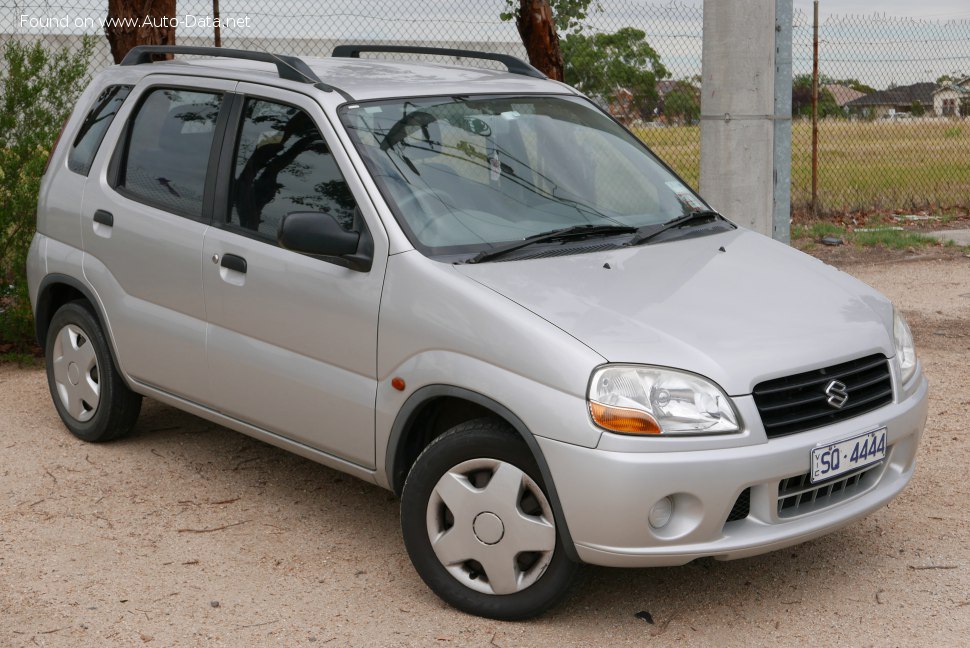
Introduction to the Suzuki Ignis I FH 1.3 i 16V
The Suzuki Ignis I FH 1.3 i 16V represents the first generation of Suzuki’s foray into the subcompact segment, produced between 2000 and 2003. While the Ignis nameplate might be more familiar to American audiences in its later, more crossover-oriented iterations or via its Chevrolet Cruze twin, this particular variant, the Ignis I FH, was predominantly a market player in Europe and Asia. It carved out a niche as a practical, economical, and surprisingly versatile small car, often praised for its compact dimensions, relatively high seating position for its class, and Suzuki’s reputation for reliability. This specific model, powered by a 1.3-liter, 16-valve engine delivering 86 horsepower, was designed to navigate congested urban environments with ease while offering sufficient capability for intercity travel. Its sedan body style, while less common for the Ignis nameplate globally, catered to specific market demands for a traditional three-box design in a compact footprint.
Engine and Performance of the Suzuki Ignis I FH
At the heart of the Suzuki Ignis I FH 1.3 i 16V lies the M13A engine, a naturally aspirated 1.3-liter (1328 cm³ or 81.04 cu. in.) inline-four gasoline unit. This powerplant, featuring a DOHC (Double Overhead Camshaft) valvetrain and multi-port manifold injection, was engineered for efficiency and dependable performance within its class. It produces a modest but respectable 86 horsepower at 6000 rpm, translating to a power-per-liter output of 64.8 Hp/l. Torque figures stand at 118 Nm (87.03 lb.-ft.) delivered at a relatively low 3400 rpm, which aids in urban drivability and provides adequate pull from lower speeds.
Power is sent to the front wheels via a 4-speed automatic transmission, a common offering for compact cars of its era aimed at convenience. This setup allows the Ignis I FH to accelerate from 0 to 60 mph in a calculated 12.8 seconds (0-100 km/h in 13.5 seconds), with a top speed of 102.53 mph (165 km/h). These figures position it as a competent performer for daily commuting rather than a speed demon. Fuel economy was a key selling point for the Ignis. It achieved an impressive 50 US mpg (4.7 l/100 km) on the extra-urban cycle and 31.8 US mpg (7.4 l/100 km) in urban driving, making it a very economical choice for its target demographic. The 40-liter (10.57 US gallon) fuel tank provided a decent range for a vehicle of its size.
Design and Features of the Suzuki Ignis I FH
The first-generation Suzuki Ignis I FH, particularly in its sedan configuration, presented a functional and unpretentious design. Measuring 142.32 inches (3615 mm) in length, 62.99 inches (1600 mm) in width, and 60.63 inches (1540 mm) in height, it was a genuinely compact vehicle, ideal for navigating tight city streets and parking in constrained spaces. The wheelbase stretched 93.11 inches (2365 mm), contributing to its maneuverability. Despite its compact exterior, the interior was designed to maximize space, offering seating for five occupants.
The body type, specified as a 4-door sedan, differentiated it from the more common hatchback or SUV-like Ignis models seen in other markets. This traditional three-box design offered a separate trunk compartment, providing 10.42 cu. ft. (295 liters) of minimum cargo space, which was practical for groceries or small luggage. Key features for its time included a hydraulic power steering system with a rack and pinion setup, ensuring light and responsive steering. Safety provisions included an ABS (Anti-lock Braking System), a significant feature for a compact car in the early 2000s, enhancing braking performance and control. The vehicle rode on 165/70 R14 tires with 14-inch wheel rims, a common specification for economical subcompacts, balancing ride comfort with cost-effectiveness. The suspension system utilized coil springs for both front and rear axles, providing a relatively comfortable ride for its class. Braking was handled by ventilated discs at the front and drum brakes at the rear.
Technical Specifications
| Category | Specification | US Equivalent / Notes |
|---|---|---|
| General Information | ||
| Brand | Suzuki | |
| Model | Ignis | |
| Generation | Ignis I FH | |
| Type (Engine) | 1.3 i 16V (86 Hp) | |
| Production Start | 2000 year | |
| Production End | 2003 year | |
| Powertrain Architecture | Internal Combustion engine | |
| Body type | Sedan | 4 Doors, 5 Seats |
| Performance Specs | ||
| Fuel Consumption (Urban) | 7.4 l/100 km | 31.8 US mpg |
| Fuel Consumption (Extra Urban) | 4.7 l/100 km | 50 US mpg |
| Fuel Type | Petrol (Gasoline) | |
| Acceleration 0-60 mph | 12.8 sec | Calculated by Auto-Data.net |
| Acceleration 0-100 km/h | 13.5 sec | |
| Maximum Speed | 165 km/h | 102.53 mph |
| Weight-to-Power Ratio | 9.8 kg/Hp | 101.8 Hp/tonne |
| Weight-to-Torque Ratio | 7.2 kg/Nm | 139.6 Nm/tonne |
| Engine Specs | ||
| Power | 86 Hp @ 6000 rpm | |
| Power per liter | 64.8 Hp/l | |
| Torque | 118 Nm @ 3400 rpm | 87.03 lb.-ft. @ 3400 rpm |
| Engine Layout | Front, Transverse | |
| Engine Model/Code | M13A | |
| Engine Displacement | 1328 cm³ | 1.3 Liters / 81.04 cu. in. |
| Number of Cylinders | 4 | Inline configuration |
| Cylinder Bore | 78 mm | 3.07 in. |
| Piston Stroke | 69.5 mm | 2.74 in. |
| Compression Ratio | 9.5:1 | |
| Valves per Cylinder | 4 | |
| Fuel Injection System | Multi-port manifold injection | |
| Engine Aspiration | Naturally aspirated engine | |
| Valvetrain | DOHC | |
| Engine Oil Capacity | 3.8 l | 4.02 US qt |
| Engine Oil Specification | Not specified in data | |
| Coolant Capacity | 5.6 l | 5.92 US qt |
| Space, Volume and Weights | ||
| Kerb Weight | 845 kg | 1862.91 lbs. |
| Max. Weight | 1340 kg | 2954.19 lbs. |
| Max Load | 495 kg | 1091.29 lbs. |
| Trunk (Boot) Space – Minimum | 295 l | 10.42 cu. ft. |
| Fuel Tank Capacity | 40 l | 10.57 US gal |
| Dimensions | ||
| Length | 3615 mm | 142.32 in. |
| Width | 1600 mm | 62.99 in. |
| Height | 1540 mm | 60.63 in. |
| Wheelbase | 2365 mm | 93.11 in. |
| Front Track | 1405 mm | 55.31 in. |
| Rear (Back) Track | 1385 mm | 54.53 in. |
| Drivetrain, Brakes and Suspension | ||
| Drivetrain Architecture | ICE drives front wheels | Front-wheel drive |
| Drive Wheel | Front wheel drive | |
| Gearbox Type | 4 gears, automatic transmission | |
| Front Suspension | Coil spring | |
| Rear Suspension | Coil spring | |
| Front Brakes | Ventilated discs | |
| Rear Brakes | Drum | |
| Assisting Systems | ABS (Anti-lock braking system) | |
| Steering Type | Steering rack and pinion | |
| Power Steering | Hydraulic Steering | |
| Tires Size | 165/70 R14 | |
| Wheel Rims Size | 14 inch |
Legacy and Market Impact of the Suzuki Ignis I FH
The first-generation Suzuki Ignis I FH, particularly the 1.3 i 16V sedan variant, played a significant role in Suzuki’s global strategy for compact and subcompact vehicles, especially in markets where small, fuel-efficient cars were highly valued. While not directly sold in this specific sedan guise in the United States, its mechanical underpinnings and design ethos reflect Suzuki’s strengths in producing reliable, no-frills transportation. In Europe and various Asian markets, the Ignis I FH competed against a host of established players in the B-segment, such as the Opel Corsa, Ford Fiesta, Volkswagen Polo, Toyota Yaris, and Honda Jazz/Fit. Its unique selling propositions included its compact dimensions, decent interior space for its class, and Suzuki’s reputation for durability and low running costs.
The sedan body style, while less common for the Ignis nameplate which later evolved into a more crossover-like hatchback, addressed specific consumer preferences in certain regions for a traditional trunk. This allowed it to appeal to a broader demographic than just hatchback buyers. Its lightweight construction (kerb weight of only 1862.91 lbs. or 845 kg) combined with the efficient 1.3-liter engine contributed to its excellent fuel economy, a critical factor for buyers in its segment. The inclusion of features like ABS, even in a compact car of its time, underscored Suzuki’s commitment to offering essential safety alongside affordability.
The Ignis I FH’s legacy is rooted in its role as a practical, unpretentious, and economical workhorse. It paved the way for future generations of the Ignis, which would further explore the compact crossover concept, and solidified Suzuki’s position as a manufacturer capable of delivering robust and efficient small cars. For many owners, it was a reliable daily driver, offering low maintenance and predictable performance. Its impact was less about groundbreaking technology and more about providing accessible, dependable mobility in a compact and efficient package, a philosophy that continues to resonate in global automotive markets.