The Suzuki Ignis I FH 1.5 i 16V Sport: A Compact Performer
The Suzuki Ignis I FH 1.5 i 16V Sport (109 Hp) represents a spirited and somewhat niche offering from the Japanese automaker, Suzuki, during the early 2000s. Produced for a brief but impactful period between 2002 and 2003, this particular variant of the first-generation Ignis was designed to inject a dose of performance and excitement into the often utilitarian subcompact hatchback segment. While the Ignis lineage itself has seen various iterations and market roles globally, including a more crossover-oriented reinterpretation in later years, the I FH generation stood out for its compact dimensions, robust build, and in this specific “Sport” trim, its surprising dynamic capabilities.
Primarily aimed at European and Asian markets where small, agile, and fuel-efficient vehicles are highly valued, the Ignis I FH 1.5 i 16V Sport never officially graced American showrooms. Nevertheless, its engineering and performance metrics resonate with universal automotive principles, showcasing Suzuki’s expertise in crafting lightweight, engaging vehicles. This article delves into the technical prowess, design philosophy, and market impact of a vehicle that, despite its modest footprint, carved out a distinct identity as a pocket rocket in its class.
Powertrain and Dynamic Characteristics of the Suzuki Ignis I FH 1.5 i 16V Sport
At the heart of the Suzuki Ignis I FH 1.5 i 16V Sport is a naturally aspirated 1.5-liter (1490 cm3 or 90.93 cu. in.) inline-four engine, designated as the M15A. This powerplant was engineered for responsiveness and efficiency, boasting a high compression ratio of 11:1 and a multi-port manifold injection system. With four valves per cylinder, the engine was capable of producing a respectable 109 horsepower at a brisk 6500 rpm, translating to a power output of 73.2 horsepower per liter. Peak torque arrived at 4000 rpm, delivering 103.26 lb.-ft., providing ample mid-range pull for its lightweight chassis.
These figures, when paired with the Ignis Sport’s remarkably low kerb weight of just 2061.32 pounds (935 kg), resulted in an impressive weight-to-power ratio of 8.6 kg/Hp (116.6 Hp/tonne). This allowed the Ignis Sport to sprint from 0 to 60 mph in a swift 8.5 seconds, and achieve a top speed of 114.95 mph (185 km/h). Such performance placed it firmly in “warm hatch” territory, challenging more established players in the segment.
Power was delivered to the front wheels via a precise 5-speed manual transmission, a choice that underscored its sporty intentions and offered an engaging driving experience. The combination of a rev-happy engine, a light chassis, and a direct manual gearbox made the Ignis Sport a genuinely fun car to drive, particularly on winding roads or in urban environments where its agility could be fully exploited. Fuel economy figures were also competitive for the era, with an extra-urban consumption of 40.6 US mpg (5.8 l/100 km) and urban consumption of 26.4 US mpg (8.9 l/100 km), reflecting Suzuki’s commitment to balanced engineering.
Exterior Design and Interior Amenities
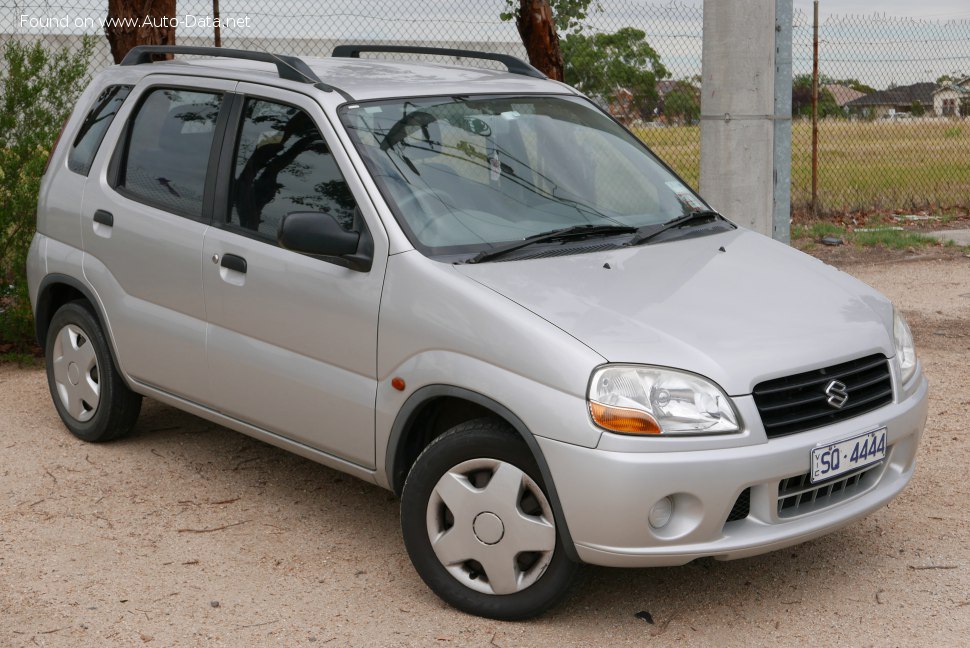
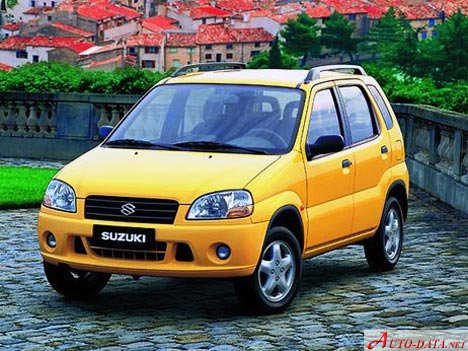
The Suzuki Ignis I FH 1.5 i 16V Sport adopted a distinctive 5-door hatchback body style, offering a blend of compact maneuverability and surprising interior practicality. Measuring 142.52 inches (3620 mm) in length, 64.96 inches (1650 mm) in width, and 60.04 inches (1525 mm) in height, the Ignis Sport maintained a compact footprint ideal for congested European and Asian cities. Its wheelbase of 92.91 inches (2360 mm) contributed to its nimble handling characteristics.
Visually, the “Sport” variant distinguished itself from the standard Ignis with a more aggressive stance, often featuring unique aerodynamic elements, deeper bumpers, and side skirts. The 15-inch wheel rims, shod with 185/55 R15 tires, not only enhanced its sporty appearance but also provided improved grip and handling. Braking performance was equally important for a performance-oriented model, and the Ignis Sport was equipped with disc brakes at both the front and rear, complemented by an Anti-lock Braking System (ABS) for enhanced safety and control during aggressive driving or emergency stops.
Inside, the Ignis Sport provided seating for five occupants. While the interior design was undoubtedly functional and robust, typical of Suzuki vehicles of that era, the “Sport” trim likely included specific accents such as bolstered seats, unique trim finishes, and a sportier instrument cluster to enhance the driving ambiance. Despite its compact exterior, the hatchback body style offered considerable versatility, with a minimum trunk space of 8.33 cu. ft. (236 liters) that could expand to a generous 35.39 cu. ft. (1002 liters) with the rear seats folded, making it practical for daily use and weekend excursions. The steering system utilized a rack and pinion setup, ensuring direct feedback and precise control.
Comprehensive Technical Specifications
| Feature | Specification |
|---|---|
| Brand | Suzuki |
| Model | Ignis |
| Generation | Ignis I FH |
| Engine Type | 1.5 i 16V Sport (109 Hp) |
| Production Start | 2002 year |
| Production End | 2003 year |
| Powertrain Architecture | Internal Combustion Engine |
| Body type | Hatchback |
| Seats | 5 |
| Doors | 5 |
| Fuel Consumption (Urban) | 8.9 l/100 km (26.4 US mpg) |
| Fuel Consumption (Extra Urban) | 5.8 l/100 km (40.6 US mpg) |
| Fuel Type | Petrol (Gasoline) |
| Acceleration 0 – 60 mph | 8.5 seconds |
| Maximum Speed | 114.95 mph (185 km/h) |
| Weight-to-power ratio | 8.6 kg/Hp, 116.6 Hp/tonne |
| Weight-to-torque ratio | 6.7 kg/Nm, 149.7 Nm/tonne |
| Power | 109 Hp @ 6500 rpm |
| Power per liter | 73.2 Hp/l |
| Torque | 103.26 lb.-ft. (140 Nm) @ 4000 rpm |
| Engine layout | Front, Transverse |
| Engine Model/Code | M15A |
| Engine displacement | 1.5 liters (1490 cm3 / 90.93 cu. in.) |
| Number of cylinders | 4 |
| Engine configuration | Inline |
| Cylinder Bore | 3.07 in. (78 mm) |
| Piston Stroke | 3.07 in. (78 mm) |
| Compression ratio | 11:1 |
| Number of valves per cylinder | 4 |
| Fuel injection system | Multi-port manifold injection |
| Engine aspiration | Naturally aspirated engine |
| Engine oil capacity | 4.1 l (4.33 US qt) |
| Coolant capacity | 4.98 l (5.26 US qt) |
| Kerb Weight | 2061.32 lbs (935 kg) |
| Max. weight | 3152.61 lbs (1430 kg) |
| Max load | 1091.29 lbs (495 kg) |
| Trunk (boot) space – minimum | 8.33 cu. ft. (236 l) |
| Trunk (boot) space – maximum | 35.39 cu. ft. (1002 l) |
| Fuel tank capacity | 10.83 US gal (41 l) |
| Length | 142.52 in. (3620 mm) |
| Width | 64.96 in. (1650 mm) |
| Height | 60.04 in. (1525 mm) |
| Wheelbase | 92.91 in. (2360 mm) |
| Front track | 55.91 in. (1420 mm) |
| Rear (Back) track | 55.31 in. (1405 mm) |
| Drivetrain Architecture | Front-wheel drive (ICE drives front wheels) |
| Drive wheel | Front wheel drive |
| Number of gears and type of gearbox | 5 gears, manual transmission |
| Front suspension | Spring Strut |
| Rear suspension | Spring Strut |
| Front brakes | Disc |
| Rear brakes | Disc |
| Assisting systems | ABS (Anti-lock braking system) |
| Steering type | Steering rack and pinion |
| Tires size | 185/55 R15 |
| Wheel rims size | 15 inches |
Legacy and Market Placement of the Suzuki Ignis I FH 1.5 i 16V Sport
The Suzuki Ignis I FH 1.5 i 16V Sport, despite its relatively short production run for this specific variant, left a memorable mark in the compact performance segment, particularly in markets like Europe and Japan. It competed against a range of small, sporty hatchbacks that were gaining popularity in the early 2000s, such as the Ford Fiesta ST (in its various generations), Renault Clio Sport, Toyota Yaris TS, and even some variants of the Honda Jazz (Fit in the US). What set the Ignis Sport apart was its unique blend of a slightly taller, almost mini-SUV-like stance (a precursor to the modern compact crossover trend) combined with genuine hot-hatch performance.
Suzuki’s reputation for building reliable, robust, and often quirky small vehicles was further solidified by the Ignis Sport. It demonstrated that the brand could deliver an engaging driving experience without resorting to large engines or complex technologies, relying instead on a well-balanced chassis, a rev-happy engine, and minimal weight. This approach resonated with enthusiasts looking for an affordable and fun-to-drive car that could also serve as a practical daily driver.
The Ignis Sport’s impact wasn’t just about its raw performance; it was also about its character. It developed a cult following among those who appreciated its underdog status and its ability to surprise larger, more expensive vehicles on twisty roads. Its limited availability and specific market focus meant it remained a somewhat rare sight, adding to its appeal among collectors and enthusiasts today.
In essence, the Suzuki Ignis I FH 1.5 i 16V Sport was more than just a quick subcompact; it was a testament to Suzuki’s engineering philosophy of creating lightweight, efficient, and enjoyable vehicles. It served as an early example of how a compact car could offer both practicality and genuine driving thrills, influencing subsequent designs and proving that performance could come in small, unassuming packages. Its legacy continues to be celebrated by those who value pure, unadulterated driving fun in a compact form factor.