The Suzuki Ignis I MH: A Compact Crossover Pioneer (2003-2008)
The Suzuki Ignis I MH, produced from 2003 to 2008, represents a significant chapter in Suzuki’s history of creating practical, compact, and often adventurous vehicles. While not a mainstream offering in the North American market, the Ignis carved out a notable niche in Europe, Asia, and Australia, particularly for its blend of hatchback practicality with a hint of SUV-like ground clearance and styling. The first generation, identified by its MH chassis code, was a testament to Suzuki’s expertise in small car engineering, offering a versatile and economical package. This particular variant, the 1.3 DDiS (70 Hp), was a diesel-powered option aimed squarely at European consumers seeking exceptional fuel efficiency and robust low-end torque in a compact footprint.
Positioned in the burgeoning segment of subcompact crossovers and tall-boy hatchbacks, the Ignis I MH was designed to be a nimble urban commuter capable of handling light rural duties. Its design cues hinted at a more rugged persona than a typical hatchback, foreshadowing the widespread popularity of compact SUVs that would follow. The 1.3 DDiS model, with its advanced common rail diesel technology for the time, underscored a commitment to efficiency and performance tailored to the specific demands of its primary markets, where diesel engines were a common and favored choice for their economy and longevity.
Engine & Performance: The Efficient 1.3 DDiS Powertrain
At the heart of this particular Suzuki Ignis I MH variant was the 1.3-liter (1248 cm3 or 76.16 cu. in.) DDiS (Direct Diesel Injection System) inline-four engine, an engineering collaboration that saw widespread use across several compact vehicles of the era. This unit, designated with the Z13DT engine code, was a modern common rail diesel powerplant, complete with a turbocharger and intercooler, designed to deliver a balance of power and exceptional fuel economy. It produced a modest but effective 70 horsepower at 4000 rpm, a figure that, while not groundbreaking on paper, was more than adequate for the vehicle’s compact size and intended use.
More impressive than the horsepower was the torque output: 170 Nm (125.39 lb.-ft.) available at a low 1750 rpm. This characteristic low-end torque was a significant advantage for urban driving, allowing for quick acceleration from a standstill and effortless cruising. Paired with a 5-speed manual transmission driving the front wheels, the Ignis 1.3 DDiS offered a responsive and engaging driving experience. Its acceleration from 0 to 60 mph was achieved in a respectable 14.3 seconds, with a top speed of 96.31 mph (155 km/h). These figures positioned it as a competent performer within its class, prioritizing practicality over outright speed.
Fuel efficiency was a major selling point for the 1.3 DDiS. The urban fuel consumption was rated at 6.2 liters per 100 km (37.9 US mpg), while extra-urban driving saw figures as low as 4.4 liters per 100 km (53.5 US mpg). This outstanding economy, combined with a 10.3 US gallon (39-liter) fuel tank, provided an impressive driving range, making it an attractive option for budget-conscious buyers and those covering long distances. The engine’s robust design, with a compression ratio of 18:1 and 4 valves per cylinder, ensured durability and efficient combustion, further cementing its reputation as a reliable workhorse.
Design & Features: Practicality Meets Compact Utility
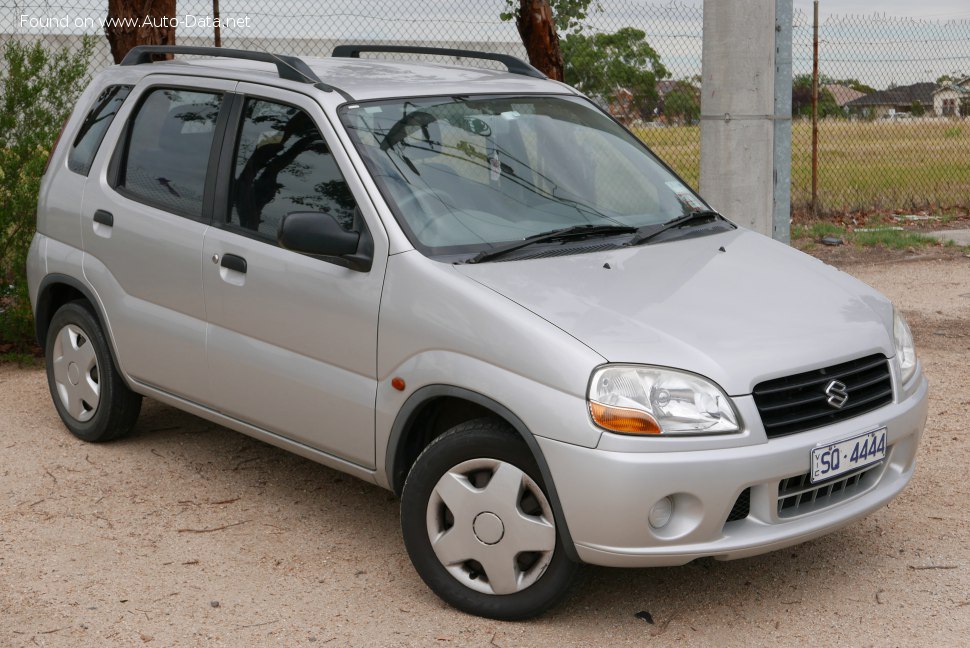
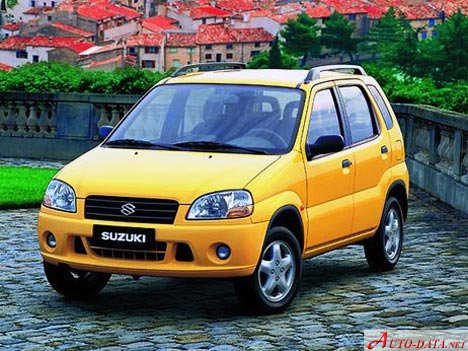
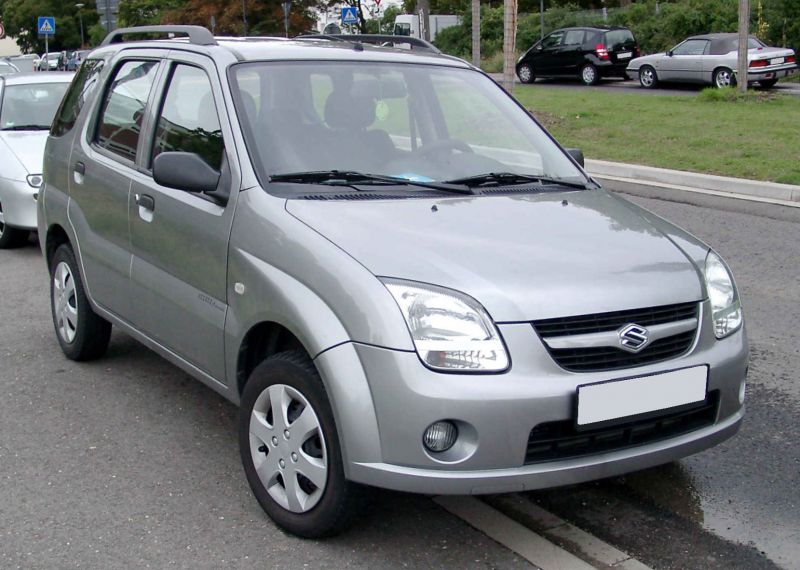
The Suzuki Ignis I MH adopted a distinctive 5-door hatchback body style, characterized by its relatively tall stance and compact dimensions. Measuring 148.43 inches (3770 mm) in length, 63.19 inches (1605 mm) in width, and 61.61 inches (1565 mm) in height, the Ignis was designed for maneuverability in congested city environments. Its 92.91-inch (2360 mm) wheelbase contributed to a surprisingly stable ride for a vehicle of its size, while a generous ground clearance (implied by its crossover aspirations) allowed it to tackle uneven roads with confidence.
Inside, the Ignis was designed with practicality in mind. It offered seating for five occupants, though the rear bench was more comfortable for two adults. The tall roofline translated into ample headroom, a significant advantage for taller passengers. Cargo versatility was another strong suit, with a minimum trunk space of 8.33 cu. ft. (236 liters), expandable to a substantial 35.39 cu. ft. (1002 liters) with the rear seats folded down. This flexibility made the Ignis a capable hauler for groceries, luggage, or even small pieces of furniture.
Standard features for the era included a functional and easy-to-use interior layout. While luxury amenities were not its focus, the Ignis provided essentials for comfortable daily driving. Safety was addressed with the inclusion of ABS (Anti-lock Braking System), a crucial active safety feature that helped prevent wheel lock-up during hard braking. The vehicle utilized disc brakes at the front and drum brakes at the rear, a common setup for compact cars of its time, providing adequate stopping power. The steering rack and pinion system offered direct and predictable handling, making it an agile urban companion. It rode on 165/70 R14 tires, fitted to 14-inch wheel rims, a combination that prioritized ride comfort and affordability.
Technical Specifications: Suzuki Ignis I MH 1.3 DDiS (70 Hp)
| Category | Specification | US Equivalent |
|---|---|---|
| General Information | ||
| Brand | Suzuki | |
| Model | Ignis | |
| Generation | Ignis I MH | |
| Type (Engine) | 1.3 DDiS (70 Hp) | |
| Production Start | 2003 | |
| Production End | 2008 | |
| Powertrain Architecture | Internal Combustion Engine | |
| Body Type | Hatchback | |
| Seats | 5 | |
| Doors | 5 | |
| Performance Specs | ||
| Fuel Consumption (Urban) | 6.2 l/100 km | 37.9 US mpg |
| Fuel Consumption (Extra Urban) | 4.4 l/100 km | 53.5 US mpg |
| Fuel Type | Diesel | |
| Acceleration 0-60 mph | 14.3 sec | |
| Maximum Speed | 155 km/h | 96.31 mph |
| Weight-to-Power Ratio | 14.6 kg/Hp | |
| Weight-to-Torque Ratio | 6 kg/Nm | |
| Engine Specs | ||
| Power | 70 Hp @ 4000 rpm | |
| Power per Liter | 56.1 Hp/l | |
| Torque | 170 Nm @ 1750 rpm | 125.39 lb.-ft. @ 1750 rpm |
| Engine Layout | Front, Transverse | |
| Engine Model/Code | Z13DT | |
| Engine Displacement | 1248 cm3 | 76.16 cu. in. |
| Number of Cylinders | 4 | |
| Engine Configuration | Inline | |
| Cylinder Bore | 69.6 mm | 2.74 in. |
| Piston Stroke | 82 mm | 3.23 in. |
| Compression Ratio | 18:1 | |
| Valves per Cylinder | 4 | |
| Fuel Injection System | Diesel Commonrail | |
| Engine Aspiration | Turbocharger, Intercooler | |
| Engine Oil Capacity | 4.1 l | 4.33 US qt |
| Coolant Capacity | 4.6 l | 4.86 US qt |
| Space, Volume and Weights | ||
| Kerb Weight | 1025 kg | 2259.74 lbs. |
| Max. Weight (GVWR) | 1480 kg | 3262.84 lbs. |
| Max Load | 455 kg | 1003.1 lbs. |
| Trunk Space (Min) | 236 l | 8.33 cu. ft. |
| Trunk Space (Max) | 1002 l | 35.39 cu. ft. |
| Fuel Tank Capacity | 39 l | 10.3 US gal |
| Dimensions | ||
| Length | 3770 mm | 148.43 in. |
| Width | 1605 mm | 63.19 in. |
| Height | 1565 mm | 61.61 in. |
| Wheelbase | 2360 mm | 92.91 in. |
| Front Track | 1420 mm | 55.91 in. |
| Rear Track | 1419 mm | 55.87 in. |
| Drivetrain, Brakes and Suspension | ||
| Drivetrain Architecture | Front-wheel drive (ICE drives front wheels) | |
| Drive Wheel | Front-wheel drive | |
| Gearbox | 5 gears, manual transmission | |
| Front Suspension | Spring Strut | |
| Rear Suspension | Spring Strut | |
| Front Brakes | Disc | |
| Rear Brakes | Drum | |
| Assisting Systems | ABS (Anti-lock braking system) | |
| Steering Type | Steering rack and pinion | |
| Tires Size | 165/70 R14 | |
| Wheel Rims Size | 14 inch |
Legacy & Market Impact of the Suzuki Ignis I MH
The Suzuki Ignis I MH, particularly the 1.3 DDiS variant, played a crucial role in Suzuki’s global strategy during the early to mid-2000s. While it never officially graced American showrooms, its impact was significant in markets where compact, fuel-efficient vehicles with a touch of ruggedness were highly valued. In Europe, it competed against a diverse array of subcompact hatchbacks and nascent mini-crossovers such as the Fiat Panda, Toyota Yaris, Nissan Micra, and even smaller offerings from Volkswagen and Renault. Its relatively high seating position and slightly elevated ground clearance gave it an edge for buyers seeking more utility than a traditional hatchback without the bulk or cost of a full-sized SUV.
The 1.3 DDiS engine was a particularly strong selling point in countries with favorable diesel taxation or high fuel prices. Its impressive fuel economy and robust torque delivery made it a popular choice for both urban commuters and those who frequently traveled longer distances. The Ignis gained a reputation for reliability, affordability, and practical interior packaging, hallmarks of the Suzuki brand. It was often praised for its nimble handling and ease of parking, attributes crucial for city driving.
The first-generation Ignis also served as a precursor to Suzuki’s later successes in the compact SUV and crossover segments, paving the way for models like the SX4 and the subsequent generations of the Ignis itself, which continued to evolve the compact, high-riding hatchback concept. Its design, though polarizing to some, was undeniably functional and distinctive, setting it apart from more conventional rivals. The Suzuki Ignis I MH 1.3 DDiS (70 Hp) ultimately solidified Suzuki’s position as a purveyor of clever, value-oriented compact vehicles that understood and catered to specific market needs, even if those needs were primarily outside the United States.