The Suzuki Ignis I MH 1.3 i 16V (93 Hp): A Global Compact Crossover’s Role
The Suzuki Ignis I MH 1.3 i 16V (93 Hp) represents the first generation of Suzuki’s compact car, which adopted a distinct mini-SUV or crossover aesthetic well before the segment became a global phenomenon. Produced from 2003 to 2008, this particular variant, identified by its MH chassis code and a 1.3-liter, 16-valve engine, solidified the Ignis’s reputation as a practical, economical, and surprisingly capable vehicle in its primary markets. While not extensively marketed in the United States, where Suzuki’s automotive presence was more focused on larger SUVs and sedans at the time, the Ignis I MH played a significant role in Europe, Asia, and Oceania, where its compact dimensions, elevated driving position, and robust Suzuki engineering resonated with consumers seeking versatility in urban and light-off-road environments. It was an early pioneer in blending the practicality of a hatchback with the rugged appeal and higher ground clearance of an SUV, offering a compelling package for its target demographic.
Engine and Performance of the Suzuki Ignis I MH
Under the hood, the Suzuki Ignis I MH 1.3 i 16V variant featured the M13A engine, a naturally aspirated inline-four gasoline (petrol) unit designed for efficiency and reliable performance. With an engine displacement of 1328 cm³ (81.04 cubic inches), this powerplant was equipped with a Double Overhead Camshaft (DOHC) valvetrain and four valves per cylinder, optimizing airflow and combustion. The multi-port manifold injection system ensured precise fuel delivery, contributing to its respectable output and fuel economy figures for its class.
The M13A engine generated a peak power of 93 horsepower (Hp) at 6000 rpm, delivering a power-per-liter ratio of 70 Hp/l, which was competitive for a naturally aspirated engine of its size during that era. Torque output stood at 118 Nm (87.03 lb.-ft.) at 4100 rpm, providing adequate pulling power for city driving and highway cruising. This power was channeled to the front wheels via a 5-speed manual transmission, a common and reliable setup for compact cars of its time.
In terms of performance, the Ignis I MH 1.3 i 16V was a sprightly performer for its segment. It could accelerate from 0 to 60 mph in a calculated 10.5 seconds (0-100 km/h in 11.1 seconds), making it agile enough for daily commutes and merging into traffic. Its maximum speed reached 99.42 mph (160 km/h), demonstrating its capability on open roads. The vehicle’s lightweight construction, with a curb weight of just 2105.41 lbs (955 kg), contributed significantly to its performance metrics, resulting in a favorable weight-to-power ratio of 10.3 kg/Hp (97.4 Hp/tonne).
Fuel efficiency was a key selling point for the Ignis. The urban fuel consumption was rated at 8.3 liters per 100 km (28.3 US mpg), while extra-urban driving yielded an impressive 5.5 liters per 100 km (42.8 US mpg). These figures underscored its economic appeal, especially in markets where fuel prices were a significant concern for consumers.
Design and Features
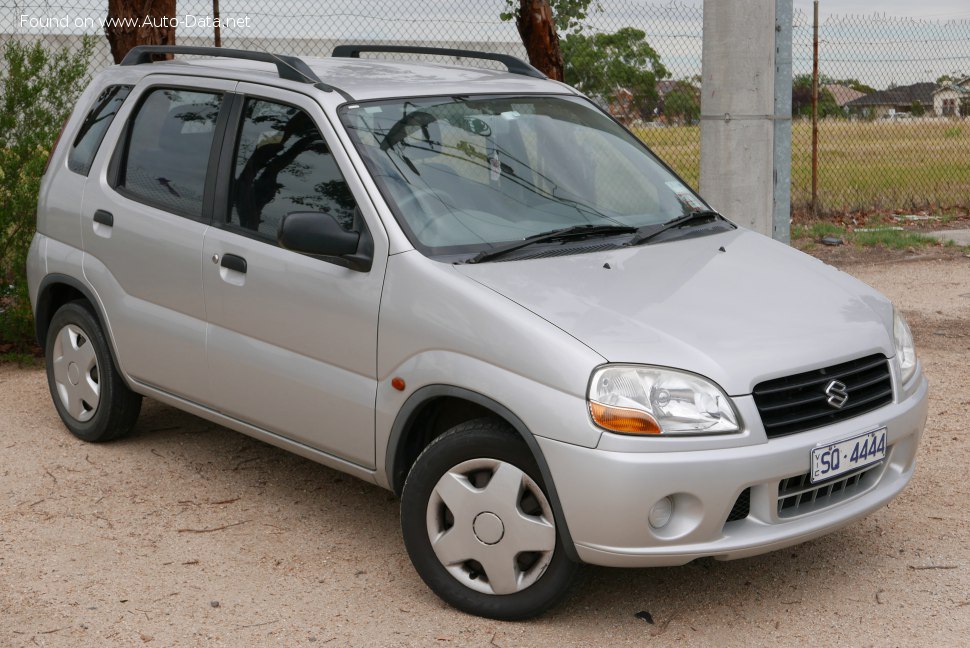
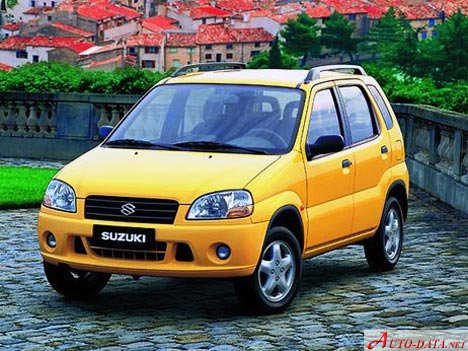
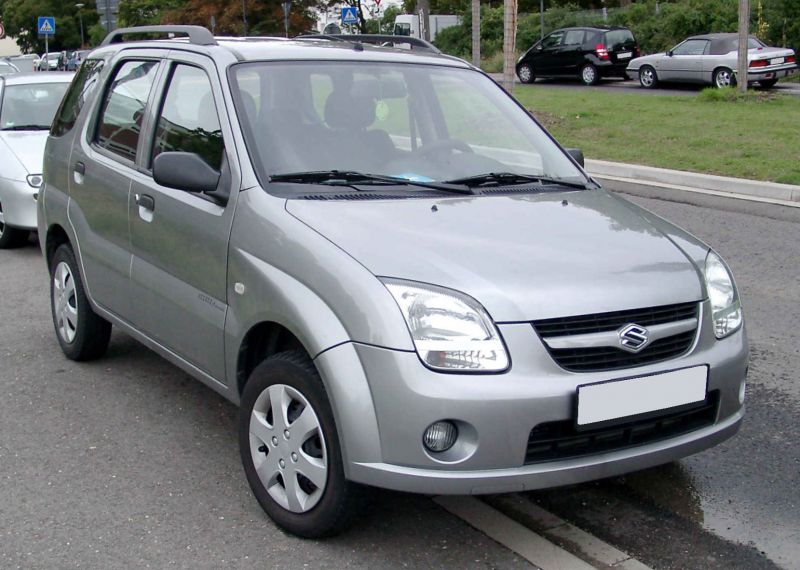
The Suzuki Ignis I MH adopted a distinctive 5-door hatchback body type, but its design language leaned heavily into a compact SUV aesthetic. Its relatively tall stance, robust wheel arches, and higher ground clearance gave it a more rugged appearance compared to traditional hatchbacks. This design choice was deliberate, aiming to offer the practicality of a small car with the perceived durability and versatility of a larger utility vehicle, making it an early entrant into the burgeoning crossover segment.
Measuring 148.43 inches (3770 mm) in length, 63.19 inches (1605 mm) in width, and 61.61 inches (1565 mm) in height, the Ignis I MH was remarkably compact, making it ideal for navigating crowded city streets and tight parking spaces. Despite its small footprint, a wheelbase of 92.91 inches (2360 mm) allowed for a surprisingly spacious interior for five occupants. The elevated seating position provided excellent visibility, a characteristic often associated with SUVs, enhancing driver confidence in various traffic conditions.
The interior of the Ignis was designed with practicality in mind. It offered flexible cargo space, with a minimum trunk capacity of 8.33 cubic feet (236 liters) that could expand significantly to 35.39 cubic feet (1002 liters) with the rear seats folded down. This adaptability made it suitable for a range of uses, from daily errands to weekend getaways requiring more luggage capacity.
In terms of features and safety, the Ignis I MH 1.3 i 16V was equipped with essential systems for its time. Front disc brakes and rear drum brakes provided reliable stopping power, complemented by an Anti-lock Braking System (ABS) for enhanced control during emergency braking. The steering system utilized a rack and pinion setup, offering direct and responsive handling. The vehicle rode on 165/70 R14 tires, mounted on 14-inch wheel rims, providing a balance of comfort and grip.
Technical Specifications: Suzuki Ignis I MH 1.3 i 16V (93 Hp)
| Category | Specification | US Equivalent / Notes |
|---|---|---|
| General Information | ||
| Brand | Suzuki | |
| Model | Ignis | |
| Generation | Ignis I MH | |
| Type (Engine) | 1.3 i 16V (93 Hp) | |
| Start of Production | 2003 year | |
| End of Production | 2008 year | |
| Powertrain Architecture | Internal Combustion engine | |
| Body type | Hatchback | 5 Doors, 5 Seats |
| Performance Specs | ||
| Fuel consumption (economy) – urban | 8.3 l/100 km | 28.3 US mpg |
| Fuel consumption (economy) – extra urban | 5.5 l/100 km | 42.8 US mpg |
| Fuel Type | Petrol (Gasoline) | |
| Acceleration 0 – 60 mph | 10.5 sec | Calculated by Auto-Data.net |
| Acceleration 0 – 100 km/h | 11.1 sec | |
| Maximum speed | 160 km/h | 99.42 mph |
| Weight-to-power ratio | 10.3 kg/Hp | 97.4 Hp/tonne |
| Weight-to-torque ratio | 8.1 kg/Nm | 123.6 Nm/tonne |
| Engine Specs | ||
| Power | 93 Hp @ 6000 rpm. | |
| Power per liter | 70 Hp/l | |
| Torque | 118 Nm @ 4100 rpm. | 87.03 lb.-ft. @ 4100 rpm. |
| Engine layout | Front, Transverse | |
| Engine Model/Code | M13A | |
| Engine displacement | 1328 cm³ | 81.04 cu. in. |
| Number of cylinders | 4 | |
| Engine configuration | Inline | |
| Cylinder Bore | 78 mm | 3.07 in. |
| Piston Stroke | 69.5 mm | 2.74 in. |
| Compression ratio | 9.5:1 | |
| Number of valves per cylinder | 4 | |
| Fuel injection system | Multi-port manifold injection | |
| Engine aspiration | Naturally aspirated engine | |
| Valvetrain | DOHC | |
| Engine oil capacity | 4.1 l | 4.33 US qt |
| Engine oil specification | Information not provided | |
| Coolant | 5.6 l | 5.92 US qt |
| Space, Volume and Weights | ||
| Kerb Weight | 955 kg | 2105.41 lbs. |
| Max. weight (Gross Vehicle Weight) | 1470 kg | 3240.8 lbs. |
| Max load | 515 kg | 1135.38 lbs. |
| Trunk (boot) space – minimum | 236 l | 8.33 cu. ft. |
| Trunk (boot) space – maximum | 1002 l | 35.39 cu. ft. |
| Fuel tank capacity | 41 l | 10.83 US gal |
| Dimensions | ||
| Length | 3770 mm | 148.43 in. |
| Width | 1605 mm | 63.19 in. |
| Height | 1565 mm | 61.61 in. |
| Wheelbase | 2360 mm | 92.91 in. |
| Front track | 1420 mm | 55.91 in. |
| Rear (Back) track | 1419 mm | 55.87 in. |
| Drivetrain, Brakes and Suspension Specs | ||
| Drivetrain Architecture | Internal combustion engine drives the front wheels. | Front Wheel Drive (FWD) |
| Drive wheel | Front wheel drive | |
| Number of gears and type of gearbox | 5 gears, manual transmission | |
| Front suspension | Spring Strut | |
| Rear suspension | Spring Strut | |
| Front brakes | Disc | |
| Rear brakes | Drum | |
| Assisting systems | ABS (Anti-lock braking system) | |
| Steering type | Steering rack and pinion | |
| Tires size | 165/70 R14 | |
| Wheel rims size | 14 | |
Legacy and Market Impact
The Suzuki Ignis I MH, particularly the 1.3 i 16V variant, carved out a significant niche in its primary markets, which predominantly included Europe, Japan, and other Asian and Oceanic countries. Its blend of compact dimensions, economical operation, and a rugged, elevated stance made it an attractive option for a diverse range of buyers. In Europe, it competed against other small hatchbacks and early compact crossovers, such as the Fiat Panda 4×4, Toyota Yaris, and even some smaller offerings from brands like Hyundai and Kia. Its unique selling proposition was its genuine, albeit light-duty, all-terrain capability in some markets (though this specific 1.3L variant is front-wheel drive, other Ignis models offered AWD), combined with Suzuki’s renowned reliability in small vehicle manufacturing.
For Suzuki, the Ignis I MH represented an important evolution in their small car lineup. It demonstrated the brand’s ability to innovate and anticipate market trends, effectively bridging the gap between traditional hatchbacks and the emerging SUV segment. It appealed to urban dwellers who desired a vehicle that could handle rough city roads or occasional unpaved tracks without the bulk or fuel consumption of a full-sized SUV. Its practical five-door configuration and versatile interior space made it a sensible choice for small families or individuals needing flexible cargo solutions.
The Ignis was also praised for its ease of driving, thanks to its light steering, good visibility, and compact turning circle. Its simple yet effective mechanicals contributed to lower maintenance costs, further enhancing its appeal to budget-conscious consumers. While it wasn’t a performance powerhouse, its peppy 1.3-liter engine provided sufficient power for its intended use, making it an enjoyable and efficient daily driver.
Over its production run from 2003 to 2008, the Ignis I MH established itself as a reliable and value-for-money option. Its legacy is one of a pioneering compact crossover, setting the stage for future generations of small SUVs and urban utility vehicles. It underscored Suzuki’s expertise in building robust, practical, and efficient small cars that could withstand diverse driving conditions, solidifying its reputation in international markets as a specialist in compact and 4×4 vehicles.