Suzuki Ignis I MH 1.5 i 16V (99 Hp): A Compact Crossover Pioneer
The Suzuki Ignis I MH 1.5 i 16V (99 Hp) represents a significant entry in the subcompact segment, particularly within its primary markets in Europe and Asia. Produced from 2003 to 2008, the first-generation Ignis (designated MH) was Suzuki’s answer to the growing demand for versatile, small vehicles that offered a blend of hatchback practicality with a hint of SUV-like ruggedness and elevated driving position. While not officially sold in the United States under the Suzuki brand, the Ignis platform was utilized in various forms globally, including as the Chevrolet Cruze in Japan and the Subaru Justy in some European markets, highlighting its robust and adaptable architecture. This particular variant, powered by a 1.5-liter, 16-valve engine, was positioned as a capable and economical option for drivers seeking efficiency and maneuverability without sacrificing interior space.
The Ignis I MH carved out a niche for itself as a practical urban dweller capable of handling light off-road excursions, especially in its all-wheel-drive configurations (though this specific model is front-wheel drive). Its compact dimensions made it ideal for congested city streets, while its relatively spacious interior and respectable cargo capacity offered surprising utility for a vehicle of its size. Suzuki, a brand renowned for its expertise in small cars and SUVs, leveraged its engineering prowess to deliver a vehicle that was both reliable and surprisingly engaging to drive, embodying the brand’s philosophy of “Way of Life!” through accessible and fun-to-drive automobiles.
Engine and Performance of the Suzuki Ignis I MH
At the heart of the Suzuki Ignis I MH 1.5 i 16V (99 Hp) lies the M15A engine, a naturally aspirated, inline four-cylinder gasoline (petrol) unit. This powerplant, displacing 1490 cubic centimeters (approximately 1.5 liters or 90.93 cubic inches), was engineered for a balance of efficiency and responsive performance suitable for its class. The engine utilizes a Double Overhead Camshaft (DOHC) valvetrain with 16 valves (four per cylinder), optimizing airflow for improved power output and fuel economy. Fuel delivery is handled by a multi-port manifold injection system, ensuring precise fuel metering.
The M15A engine generates a peak output of 99 horsepower (Hp) at 5900 revolutions per minute (rpm). Torque stands at 98.1 lb.-ft. (133 Nm) delivered at 4100 rpm. This power band provides ample motivation for the lightweight Ignis, which boasts an impressive weight-to-power ratio of 9.7 kg/Hp (103.1 Hp/tonne). Power is sent to the front wheels via a five-speed manual transmission, a common and reliable setup for compact cars of this era, offering direct driver engagement and allowing for optimal control over the engine’s power delivery.
In terms of performance, the Ignis I MH 1.5 i 16V demonstrates brisk acceleration for its segment, completing the 0 to 60 mph sprint in a respectable 9.9 seconds. Its top speed is rated at 105.63 mph (170 km/h), making it perfectly capable for highway cruising in its intended markets. Fuel economy was a strong selling point for the Ignis, with urban consumption estimated at 27 US mpg (8.7 l/100 km) and extra-urban consumption at an impressive 42.8 US mpg (5.5 l/100 km). These figures underscore the vehicle’s design philosophy centered on economical daily operation, a crucial factor for consumers in Europe and Asia.
Design and Features
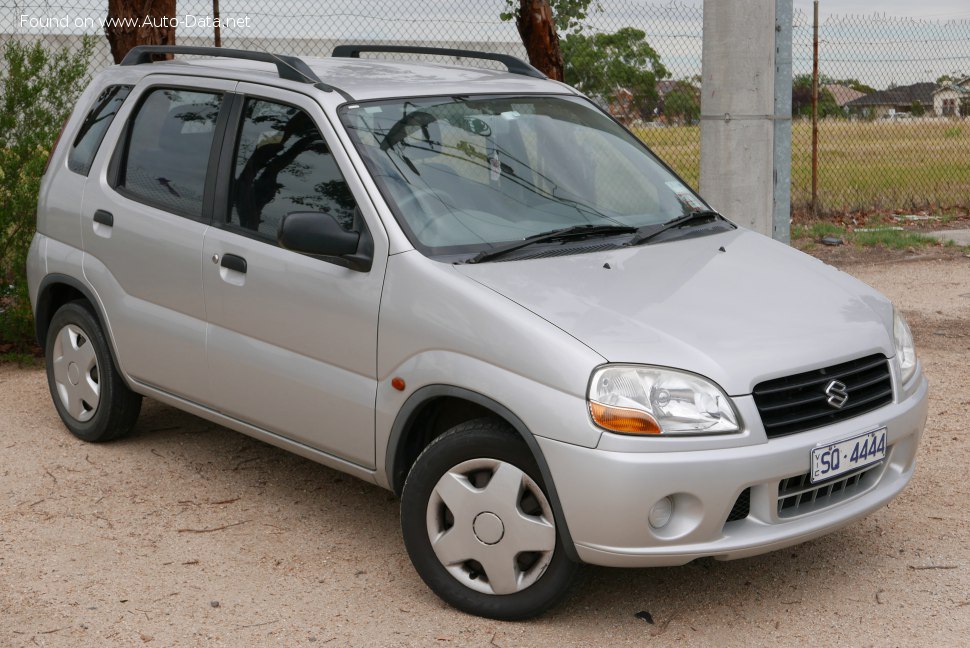
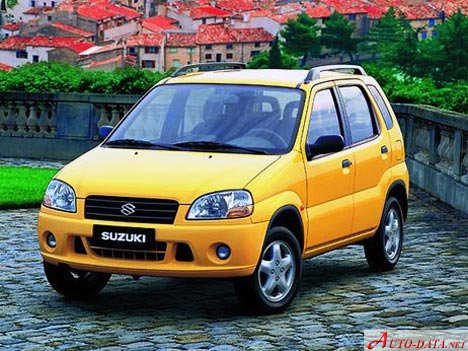
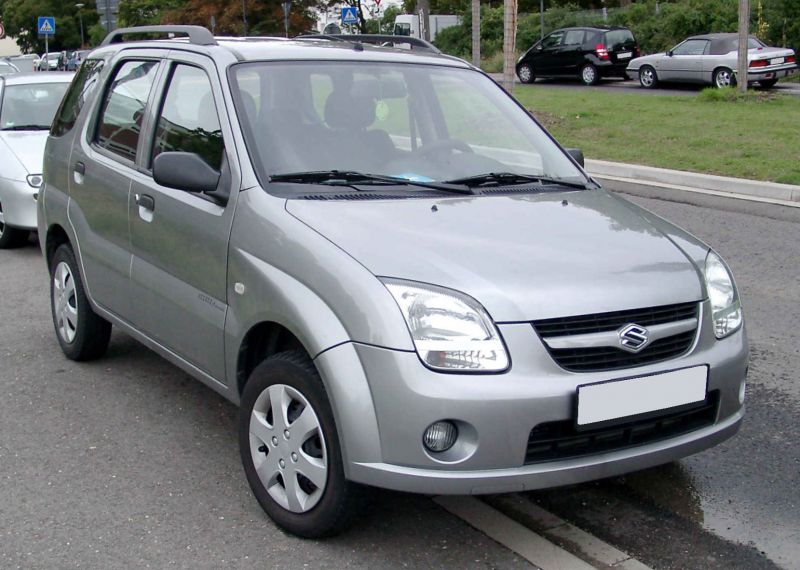
The Suzuki Ignis I MH adopted a distinctive design language that blended traditional hatchback practicality with a rugged, elevated stance, foreshadowing the modern compact crossover trend. Its five-door hatchback body style provided easy access to both front and rear seating, accommodating up to five occupants comfortably. The design was characterized by a relatively tall body, prominent wheel arches, and a short overhang, giving it a sturdy and adventurous appearance despite its urban-friendly dimensions.
Measuring 148.43 inches (3770 mm) in length, 63.19 inches (1605 mm) in width, and 61.61 inches (1565 mm) in height, with a wheelbase of 92.91 inches (2360 mm), the Ignis was compact yet intelligently packaged. This allowed for excellent maneuverability in tight spaces and urban environments. Inside, the cabin was designed for practicality and durability, featuring straightforward controls and robust materials. Despite its compact exterior, the Ignis offered a surprisingly versatile cargo area. The minimum trunk space was 8.33 cubic feet (236 liters), which could expand significantly to 35.39 cubic feet (1002 liters) with the rear seats folded down, making it highly adaptable for various hauling needs, from groceries to weekend gear.
Underneath, the Ignis employed a dependable suspension setup with spring struts at both the front and rear, providing a comfortable ride and stable handling characteristics. Braking duties were handled by disc brakes at the front and drum brakes at the rear, complemented by an Anti-lock Braking System (ABS) for enhanced safety during emergency stops. The steering system was a responsive rack-and-pinion type, contributing to the Ignis’s agile feel. The vehicle rode on 165/70 R14 tires mounted on 14-inch wheel rims, a practical choice that balanced ride comfort, grip, and replacement cost. The overall design and feature set emphasized practicality, economy, and a touch of adventurous spirit, making it a well-rounded offering in its segment.
Technical Specifications
| Category | Specification |
|---|---|
| Brand | Suzuki |
| Model | Ignis |
| Generation | Ignis I MH |
| Type (Engine) | 1.5 i 16V (99 Hp) |
| Production Start | 2003 |
| Production End | 2008 |
| Powertrain Architecture | Internal Combustion Engine |
| Body Type | Hatchback |
| Seats | 5 |
| Doors | 5 |
| Performance Specs | |
| Fuel Consumption (Urban) | 27 US mpg (8.7 l/100 km) |
| Fuel Consumption (Extra Urban) | 42.8 US mpg (5.5 l/100 km) |
| Fuel Type | Petrol (Gasoline) |
| Acceleration 0 – 60 mph | 9.9 sec |
| Maximum Speed | 105.63 mph (170 km/h) |
| Weight-to-Power Ratio | 9.7 kg/Hp, 103.1 Hp/tonne |
| Weight-to-Torque Ratio | 7.2 kg/Nm, 138.5 Nm/tonne |
| Engine Specs | |
| Power | 99 Hp @ 5900 rpm |
| Power per Liter | 66.4 Hp/l |
| Torque | 98.1 lb.-ft. (133 Nm) @ 4100 rpm |
| Engine Layout | Front, Transverse |
| Engine Model/Code | M15A |
| Engine Displacement | 1.5 Liters (1490 cm3 / 90.93 cu. in.) |
| Number of Cylinders | 4 |
| Engine Configuration | Inline |
| Cylinder Bore | 3.07 in. (78 mm) |
| Piston Stroke | 3.07 in. (78 mm) |
| Compression Ratio | 9.5:1 |
| Valves per Cylinder | 4 |
| Fuel Injection System | Multi-port manifold injection |
| Engine Aspiration | Naturally aspirated |
| Valvetrain | DOHC |
| Engine Oil Capacity | 4.33 US qt (4.1 l) |
| Coolant Capacity | 5.92 US qt (5.6 l) |
| Space, Volume and Weights | |
| Kerb Weight | 2116.44 lbs. (960 kg) |
| Max. Weight | 3240.8 lbs. (1470 kg) |
| Max Load | 1124.36 lbs. (510 kg) |
| Trunk (Boot) Space – Minimum | 8.33 cu. ft. (236 l) |
| Trunk (Boot) Space – Maximum | 35.39 cu. ft. (1002 l) |
| Fuel Tank Capacity | 10.83 US gal (41 l) |
| Dimensions | |
| Length | 148.43 in. (3770 mm) |
| Width | 63.19 in. (1605 mm) |
| Height | 61.61 in. (1565 mm) |
| Wheelbase | 92.91 in. (2360 mm) |
| Front Track | 55.91 in. (1420 mm) |
| Rear Track | 55.87 in. (1419 mm) |
| Drivetrain, Brakes and Suspension Specs | |
| Drivetrain Architecture | Front-wheel drive (ICE drives front wheels) |
| Drive Wheel | Front wheel drive |
| Number of Gears and Type | 5 gears, manual transmission |
| Front Suspension | Spring Strut |
| Rear Suspension | Spring Strut |
| Front Brakes | Disc |
| Rear Brakes | Drum |
| Assisting Systems | ABS (Anti-lock braking system) |
| Steering Type | Steering rack and pinion |
| Tires Size | 165/70 R14 |
| Wheel Rims Size | 14 inches |
Legacy and Market Impact
The Suzuki Ignis I MH, particularly the 1.5 i 16V (99 Hp) variant, left a notable legacy in the compact car segment, especially in markets where small, versatile, and economical vehicles are highly valued. Its reputation was built on Suzuki’s long-standing tradition of reliability, durability, and a pragmatic approach to vehicle design. The Ignis was often praised for its robust build quality and its ability to handle varied road conditions, attributes that resonated well with buyers seeking a dependable daily driver.
In its primary European and Asian markets, the Ignis competed against a diverse range of vehicles. Its direct competitors included other subcompact hatchbacks like the Ford Fiesta, Volkswagen Polo, and Toyota Yaris, but its slightly elevated ride height and more rugged styling also placed it in contention with emerging compact crossovers and mini-SUVs such as the Fiat Panda 4×4 or even the Daihatsu Terios. The Ignis stood out by offering a unique blend of urban maneuverability, surprising interior space, and a hint of off-road readiness (especially in its AWD variants), all wrapped in an affordable package.
Historically, the Suzuki Ignis I MH is significant as one of the early pioneers of the “mini-SUV” or compact crossover trend that would explode in popularity in subsequent decades. While it wasn’t a true SUV in the traditional sense, its design cues and practical approach to a higher driving position and versatile interior foreshadowed the market’s shift towards these types of vehicles. Its platform versatility was further demonstrated by its rebadged versions, such as the Chevrolet Cruze in Japan and the Subaru Justy in Europe, showcasing its solid engineering and adaptability. The success of the first-generation Ignis laid the groundwork for future Suzuki models and reinforced the brand’s position as a leader in small, efficient, and capable vehicles. Its commitment to delivering practical, no-nonsense transportation with a touch of character ensured its place in automotive history as a clever and influential design.