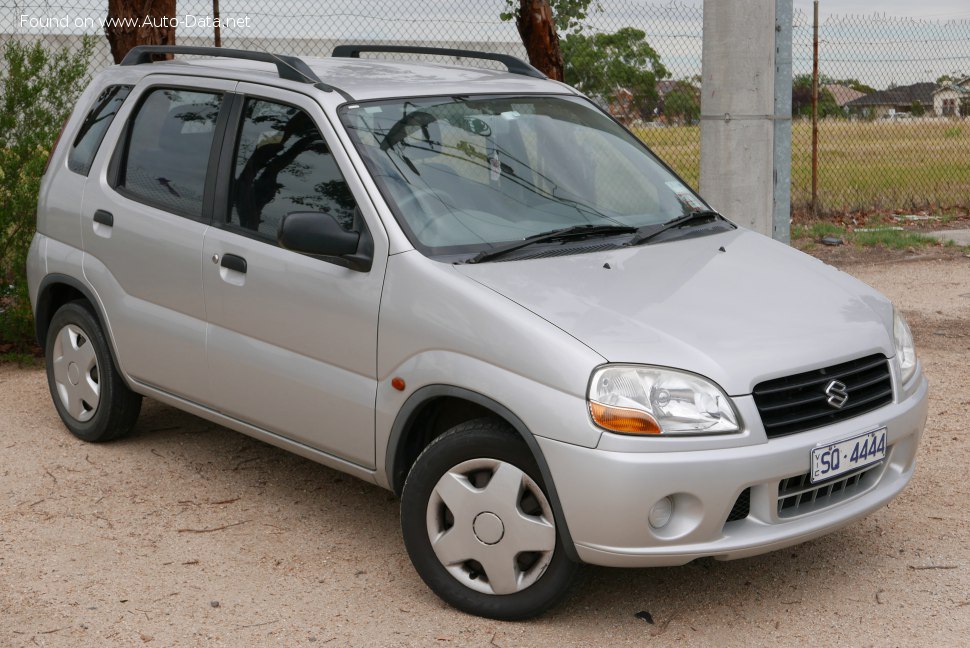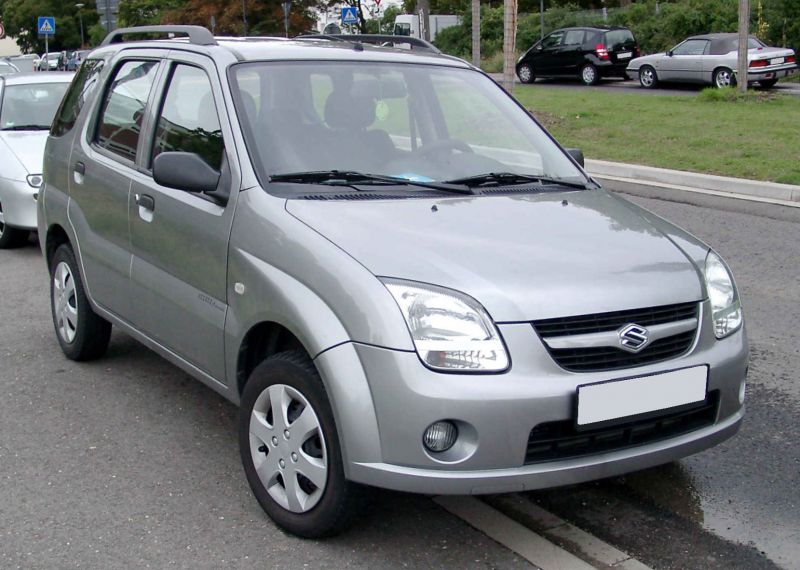
Suzuki Ignis I MH 1.5 i 16V (99 Hp) 4WD: A Compact Crossover with All-Wheel Drive Aptitude
The Suzuki Ignis I MH, specifically the 1.5 i 16V (99 Hp) 4WD variant produced from 2003 to 2008, represents a distinctive entry in the compact vehicle segment. Often characterized as a mini-SUV or a ruggedized supermini, this generation of the Ignis carved out a niche for itself in markets primarily outside of the United States, including Europe, Asia, and Australia. It offered a compelling blend of compact dimensions, practical utility, and the added capability of all-wheel drive, a feature uncommon for vehicles of its size and price point. The Ignis I MH was designed to navigate both urban environments with ease and tackle light off-road conditions or adverse weather, thanks to its elevated stance and robust drivetrain architecture. Its production run spanned five years, during which it solidified its reputation as a reliable and versatile contender in the burgeoning crossover market.
Engine and Performance of the Suzuki Ignis I MH
At the heart of the Suzuki Ignis I MH 1.5 i 16V (99 Hp) 4WD is Suzuki’s M15A engine, a naturally aspirated 1.5-liter (1490 cm³ or 90.93 cu. in.) inline-four gasoline powerplant. This DOHC (Double Overhead Camshaft) engine, featuring 16 valves (four per cylinder), was engineered for a balance of efficiency and responsive performance within its class. It delivered a respectable 99 horsepower at 5900 rpm, providing ample thrust for a vehicle weighing just over 2,200 pounds (1015 kg) curb weight. The power-to-liter ratio stood at 66.4 Hp/l, indicating a well-tuned engine for its displacement.
Torque output was rated at 98.1 lb.-ft. (133 Nm) at 4100 rpm, which, when combined with its relatively light weight, contributed to a lively driving experience. The Ignis I MH could accelerate from 0 to 60 mph in a calculated 10.5 seconds, and from 0 to 62 mph (0-100 km/h) in 11 seconds. Its maximum speed reached 102.53 mph (165 km/h), making it perfectly capable of highway cruising, though its primary domain was likely more varied terrain. The engine utilized a multi-port manifold injection system and a compression ratio of 9.5:1, typical for its era, ensuring efficient fuel delivery and combustion.
A key differentiator for this particular Ignis variant was its all-wheel drive (4×4) powertrain architecture, paired with a smooth-shifting 5-speed manual transmission. This combination provided enhanced traction and stability, particularly beneficial in slippery conditions or on unpaved roads, greatly expanding the vehicle’s utility beyond that of a standard front-wheel-drive hatchback. Fuel economy figures for the 1.5L 4WD model were competitive for its time and capability, with an urban consumption of 25.8 US mpg (9.1 l/100 km) and an extra-urban consumption of 38.6 US mpg (6.1 l/100 km) on gasoline, offering a practical balance between performance and running costs.
Design and Features
The Suzuki Ignis I MH adopted a distinctive 5-door hatchback body style, characterized by its tall, boxy profile and relatively short overhangs, giving it a purposeful and robust appearance. Its design hinted at its crossover aspirations, offering more ground clearance and a commanding driving position compared to conventional hatchbacks. The exterior dimensions were compact, with a length of 148.43 inches (3770 mm), a width of 63.19 inches (1605 mm), and a height of 61.61 inches (1565 mm). A wheelbase of 92.91 inches (2360 mm) contributed to its nimble maneuverability in urban settings.
Inside, the Ignis I MH was designed with practicality in mind, offering seating for five occupants. Despite its compact exterior, the tall roofline and clever packaging provided a surprisingly airy cabin and decent headroom. Cargo capacity was flexible, with a minimum trunk space of 8.33 cu. ft. (236 liters) that could expand significantly to 35.39 cu. ft. (1002 liters) with the rear seats folded down, making it a versatile companion for shopping, hauling gear, or weekend adventures. The fuel tank capacity was 10.83 US gallons (41 liters), providing a reasonable cruising range.
Underneath, the Ignis featured a straightforward yet effective chassis setup. Both the front and rear suspensions employed a Spring Strut design, offering a comfortable ride and dependable handling. Braking duties were handled by disc brakes at the front and drum brakes at the rear, augmented by an Anti-lock Braking System (ABS) for improved safety during emergency stops. Steering was managed by a rack and pinion system, providing direct and predictable feedback. The vehicle rode on 165/70 R14 tires, fitted on 14-inch wheel rims, a practical choice that balanced ride comfort with durability for varied road conditions.
Technical Specifications
| Category | Specification |
|---|---|
| Brand | Suzuki |
| Model | Ignis |
| Generation | Ignis I MH |
| Type (Engine) | 1.5 i 16V (99 Hp) 4WD |
| Start of Production | 2003 year |
| End of Production | 2008 year |
| Powertrain Architecture | Internal Combustion engine |
| Body type | Hatchback |
| Seats | 5 |
| Doors | 5 |
| Performance Specs | |
| Fuel consumption (economy) – urban | 9.1 l/100 km (25.8 US mpg) |
| Fuel consumption (economy) – extra urban | 6.1 l/100 km (38.6 US mpg) |
| Fuel Type | Petrol (Gasoline) |
| Acceleration 0 – 60 mph | 10.5 sec |
| Acceleration 0 – 62 mph (0 – 100 km/h) | 11 sec |
| Maximum speed | 102.53 mph (165 km/h) |
| Weight-to-power ratio | 10.3 kg/Hp (97.5 Hp/tonne) |
| Weight-to-torque ratio | 7.6 kg/Nm (131 Nm/tonne) |
| Engine Specs | |
| Power | 99 Hp @ 5900 rpm |
| Power per liter | 66.4 Hp/l |
| Torque | 98.1 lb.-ft. (133 Nm) @ 4100 rpm |
| Engine layout | Front, Transverse |
| Engine Model/Code | M15A |
| Engine displacement | 1.5 l (1490 cm³, 90.93 cu. in.) |
| Number of cylinders | 4 |
| Engine configuration | Inline |
| Cylinder Bore | 3.07 in. (78 mm) |
| Piston Stroke | 3.07 in. (78 mm) |
| Compression ratio | 9.5:1 |
| Number of valves per cylinder | 4 |
| Fuel injection system | Multi-port manifold injection |
| Engine aspiration | Naturally aspirated engine |
| Valvetrain | DOHC |
| Engine oil capacity | 4.1 l (4.33 US qt) |
| Coolant | 5.6 l (5.92 US qt) |
| Space, Volume and Weights | |
| Kerb Weight | 2237.69 lbs. (1015 kg) |
| Max. weight | 3262.84 lbs. (1480 kg) |
| Max load | 1025.15 lbs. (465 kg) |
| Trunk (boot) space – minimum | 8.33 cu. ft. (236 l) |
| Trunk (boot) space – maximum | 35.39 cu. ft. (1002 l) |
| Fuel tank capacity | 10.83 US gal (41 l) |
| Dimensions | |
| Length | 148.43 in. (3770 mm) |
| Width | 63.19 in. (1605 mm) |
| Height | 61.61 in. (1565 mm) |
| Wheelbase | 92.91 in. (2360 mm) |
| Front track | 55.91 in. (1420 mm) |
| Rear (Back) track | 55.87 in. (1419 mm) |
| Drivetrain, Brakes and Suspension Specs | |
| Drive wheel | All-wheel drive (4×4) |
| Number of gears and type of gearbox | 5 gears, manual transmission |
| Front suspension | Spring Strut |
| Rear suspension | Spring Strut |
| Front brakes | Disc |
| Rear brakes | Drum |
| Assisting systems | ABS (Anti-lock braking system) |
| Steering type | Steering rack and pinion |
| Tires size | 165/70 R14 |
| Wheel rims size | 14 |
Legacy and Market Impact
The Suzuki Ignis I MH, particularly its 1.5 i 16V (99 Hp) 4WD iteration, left a notable mark in its primary markets by demonstrating that a compact and affordable vehicle could also offer genuine all-wheel-drive capability. While Suzuki had a presence in the United States, the Ignis I MH was not widely sold there, instead finding its strongest footing in regions like Europe, Australia, and parts of Asia where demand for versatile, small crossovers was growing. In these markets, the Ignis competed against a diverse array of vehicles, ranging from more conventional superminis like the Ford Fiesta or Volkswagen Polo to other early compact SUVs or rugged hatchbacks such as the Fiat Panda 4×4 or certain variants of the Toyota Yaris Verso.
Its reputation was built on several key pillars: reliability, affordability, and surprising go-anywhere capability for its size. The 4WD system, coupled with its relatively light weight and compact dimensions, allowed the Ignis to handle snowy roads, muddy tracks, or uneven terrain with a confidence that belied its outward appearance. This made it an attractive option for buyers living in rural areas, those who frequently encountered challenging weather conditions, or urban dwellers seeking a vehicle with an adventurous spirit and practical utility. Its elevated driving position also appealed to many, offering better visibility and easier ingress/egress than lower-slung hatchbacks.
The Ignis I MH played a significant role in popularizing the concept of the “mini-SUV” or “urban crossover” long before the segment exploded globally. It proved that consumers valued the robust styling, higher ground clearance, and optional all-wheel drive of larger SUVs, but in a more manageable, fuel-efficient, and budget-friendly package. Its legacy is one of a practical, no-nonsense vehicle that punched above its weight, offering a unique combination of attributes that few competitors could match at its price point. It laid groundwork for future compact crossovers and cemented Suzuki’s reputation as a purveyor of capable and robust small vehicles.