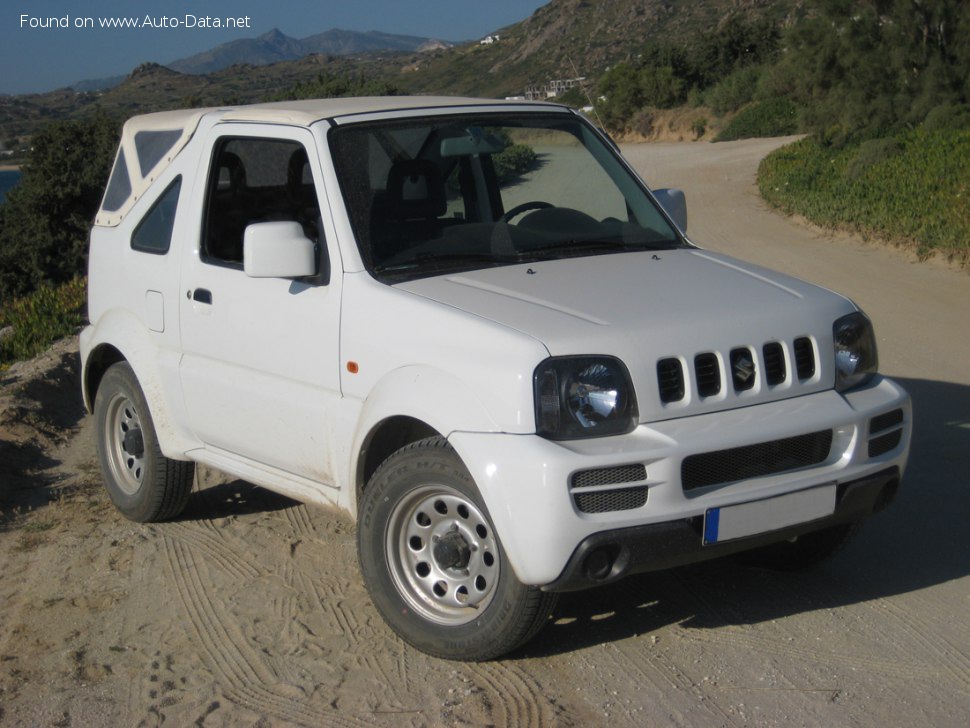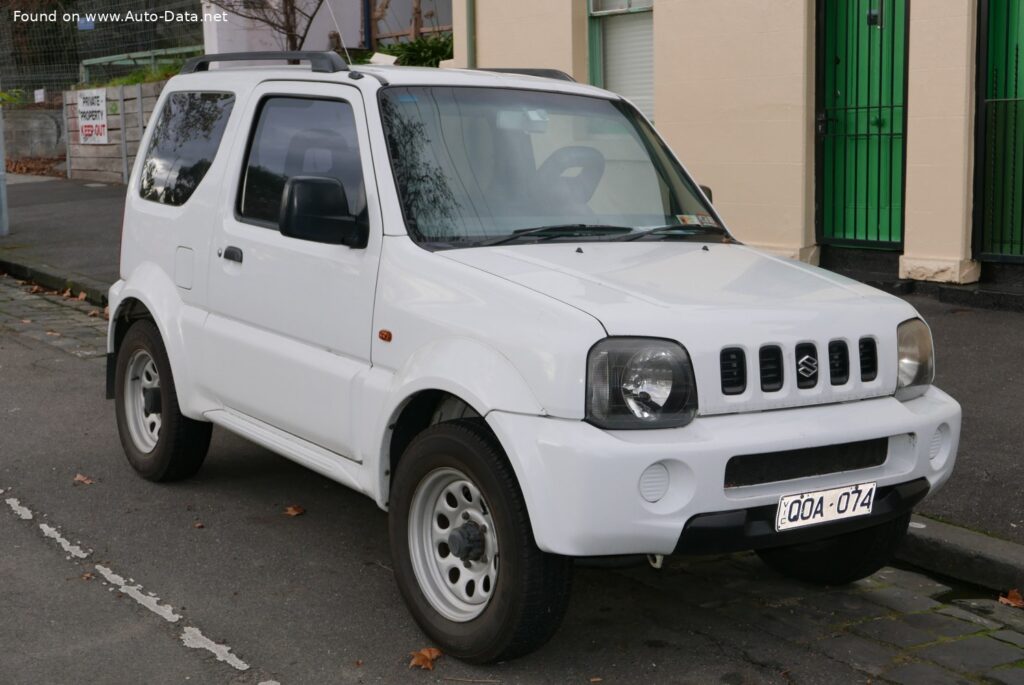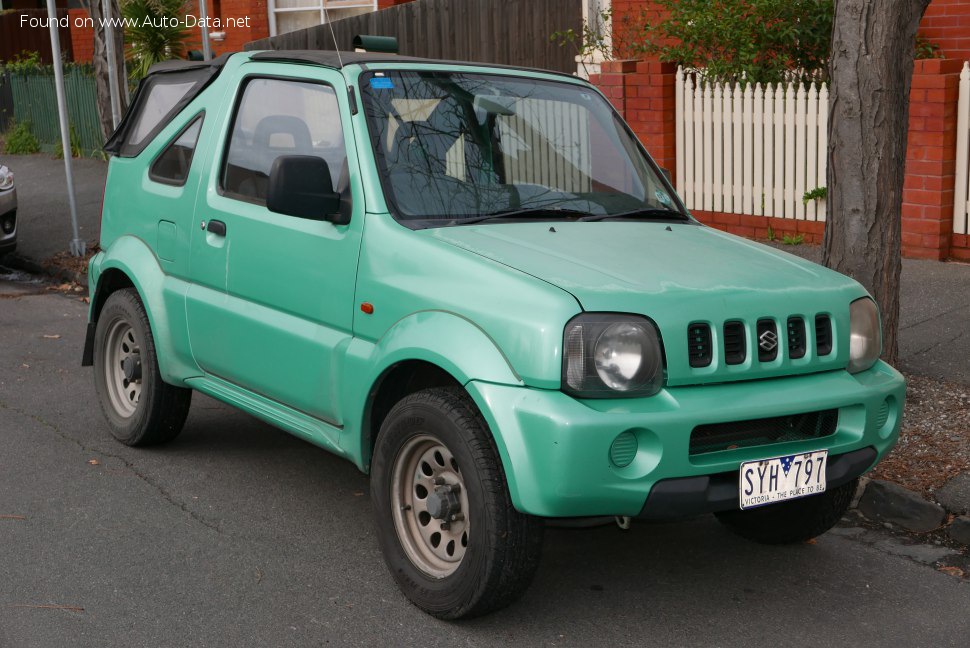
The Suzuki Jimny Cabrio III 1.3 i 16V (80 Hp): A Compact Off-Road Icon
The Suzuki Jimny Cabrio III 1.3 i 16V (80 Hp) represents a significant iteration of Suzuki’s long-standing tradition of producing compact, highly capable off-road vehicles. Introduced in 1998, the third-generation Jimny (chassis code JB33/JB43, with the Cabrio variant being a particularly distinctive offering) continued the legacy of its predecessors, the LJ and SJ series (known as Samurai in the U.S.), by combining diminutive dimensions with serious go-anywhere capability. This particular model, produced between 1998 and 2000, featured a 1.3-liter, 16-valve engine and a convertible body style, catering to a niche market seeking open-air driving combined with rugged utility. While the Jimny nameplate itself has a global presence, this generation, especially in its Cabrio form, found particular success in European and Asian markets where its compact size and efficiency were highly valued. It stood out as one of the few genuine ladder-frame, four-wheel-drive vehicles available in its segment, offering a compelling alternative to more road-biased compact SUVs.
Engine and Performance: The Heart of the Suzuki Jimny Cabrio III
Powering the Suzuki Jimny Cabrio III was a robust and reliable 1.3-liter (1298 cm³ or 79.21 cu. in.) G13BB inline-four engine. This naturally aspirated unit featured a multi-port manifold injection system and an OHC (Overhead Camshaft) valvetrain with four valves per cylinder, optimizing both efficiency and power delivery. It produced a respectable 80 horsepower at 6000 rpm, translating to a power-per-liter figure of 61.6 horsepower per liter, which was quite competitive for a small off-road engine of its time. Torque output stood at 104 Nm (76.71 lb.-ft.) at 4500 rpm, providing sufficient pulling power for challenging terrains and city driving alike.
The engine’s front, longitudinal layout contributed to a balanced weight distribution, crucial for off-road stability. Mated to a 5-speed manual transmission, the powertrain delivered power to all four wheels via a selectable all-wheel-drive (4×4) system. This combination, along with the Jimny’s lightweight construction, allowed for a maximum speed of 140 km/h (86.99 mph). Despite its off-road focus, the Jimny Cabrio III offered reasonable fuel economy for its class, with a combined cycle rating of 7.5 liters per 100 km (31.4 US mpg). Urban consumption was rated at 9.4 liters per 100 km (25 US mpg), while extra-urban driving could achieve 6.4 liters per 100 km (36.8 US mpg), showcasing its versatility for both adventure and daily commuting. The engine’s simplicity and proven design contributed to its reputation for durability and ease of maintenance, a hallmark of Suzuki’s compact vehicles.
Design and Features: Form Meets Function in the Jimny Cabrio III
The design of the Suzuki Jimny Cabrio III was a deliberate blend of rugged utility and compact charm. As an off-road vehicle with a distinctive cabriolet body type, it offered a unique proposition in the market. Its three-door configuration and surprisingly spacious (for its size) five-seat layout made it practical for small families or groups of adventurers. The overall dimensions were remarkably compact: 3625 mm (142.72 in.) in length, 1600 mm (62.99 in.) in width, and 1665 mm (65.55 in.) in height, with a wheelbase of 2250 mm (88.58 in.). These tight dimensions, combined with short front and rear overhangs, were instrumental in giving the Jimny its exceptional approach and departure angles, critical for navigating difficult off-road obstacles. A minimum turning circle of 9.8 meters (32.15 ft.) further enhanced its maneuverability in tight trails or congested urban environments.
Underneath its charming exterior, the Jimny Cabrio III featured a robust ladder-frame chassis, a fundamental component of its off-road prowess. The suspension system consisted of a wishbone setup at the front and coil springs at the rear, providing a balance between ride comfort and articulation. Braking duties were handled by disc brakes at the front and drum brakes at the rear, augmented by an Anti-lock Braking System (ABS), a significant safety feature for its time, especially in a vehicle designed for varied terrains. Steering was managed by a hydraulic rack and pinion system, offering direct feedback and ease of control. The vehicle rode on 205/70 R15 tires mounted on 15-inch wheel rims, providing a good balance of grip and ride compliance. The convertible top added to its appeal, allowing drivers and passengers to enjoy an open-air experience while exploring scenic routes or tackling trails. The cargo space, ranging from 85 liters (3 cu. ft.) with all seats up to a generous 620 liters (21.9 cu. ft.) with the rear seats folded, offered practical utility for gear and luggage.
Technical Specifications
| Category | Specification |
|---|---|
| Brand | Suzuki |
| Model | Jimny Cabrio III |
| Type (Engine) | 1.3 i 16V (80 Hp) |
| Production Start | 1998 |
| Production End | 2000 |
| Powertrain Architecture | Internal Combustion Engine |
| Body Type | Off-road vehicle, Cabriolet |
| Seats | 5 |
| Doors | 3 |
| Performance Specs | |
| Fuel Consumption (Urban) | 9.4 l/100 km (25 US mpg) |
| Fuel Consumption (Extra Urban) | 6.4 l/100 km (36.8 US mpg) |
| Fuel Consumption (Combined) | 7.5 l/100 km (31.4 US mpg) |
| Fuel Type | Petrol (Gasoline) |
| Maximum Speed | 140 km/h (86.99 mph) |
| Engine Specs | |
| Power | 80 Hp @ 6000 rpm |
| Power per Liter | 61.6 Hp/l |
| Torque | 104 Nm (76.71 lb.-ft.) @ 4500 rpm |
| Engine Layout | Front, Longitudinal |
| Engine Model/Code | G13BB |
| Engine Displacement | 1298 cm³ (1.3 liters / 79.21 cu. in.) |
| Number of Cylinders | 4 |
| Engine Configuration | Inline |
| Cylinder Bore | 74 mm (2.91 in.) |
| Piston Stroke | 75.5 mm (2.97 in.) |
| Compression Ratio | 9.5:1 |
| Valves per Cylinder | 4 |
| Fuel Injection System | Multi-port manifold injection |
| Engine Aspiration | Naturally aspirated |
| Valvetrain | OHC |
| Engine Oil Capacity | 3.7 l (3.91 US qt) |
| Coolant Capacity | 4.5 l (4.76 US qt) |
| Space, Volume and Weights | |
| Max. Weight (Gross Vehicle Weight) | 1420 kg (3130.56 lbs.) |
| Trunk Space (Minimum) | 85 l (3 cu. ft.) |
| Trunk Space (Maximum) | 620 l (21.9 cu. ft.) |
| Fuel Tank Capacity | 40 l (10.57 US gal) |
| Dimensions | |
| Length | 3625 mm (142.72 in.) |
| Width | 1600 mm (62.99 in.) |
| Height | 1665 mm (65.55 in.) |
| Wheelbase | 2250 mm (88.58 in.) |
| Front Track | 1355 mm (53.35 in.) |
| Rear Track | 1365 mm (53.74 in.) |
| Minimum Turning Circle | 9.8 m (32.15 ft.) |
| Drivetrain, Brakes and Suspension Specs | |
| Drive Wheel | All-wheel drive (4×4) |
| Gearbox Type | 5-speed manual transmission |
| Front Suspension | Wishbone |
| Rear Suspension | Coil spring |
| Front Brakes | Disc |
| Rear Brakes | Drum |
| Assisting Systems | ABS (Anti-lock braking system) |
| Steering Type | Steering rack and pinion |
| Power Steering | Hydraulic Steering |
| Tires Size | 205/70 R15 |
| Wheel Rims Size | 15 inches |
Legacy and Market Impact of the Suzuki Jimny Cabrio III
The Suzuki Jimny Cabrio III 1.3 i 16V (80 Hp), like the entire third generation of Jimny, carved out a unique and enduring legacy in the automotive world. It solidified Suzuki’s reputation as a master of compact, capable off-roaders, a niche that few manufacturers dared to enter with such dedication. In its primary markets, particularly Europe, Japan, and Australia, the Jimny was celebrated for its rugged simplicity, exceptional reliability, and genuine off-road credentials. It was often affectionately referred to as a “mini G-Wagen” or “Japanese Jeep,” highlighting its ability to tackle terrain far more challenging than its size would suggest.
Competitors in its segment were scarce. While some small SUVs like the Daihatsu Terios or early iterations of the Toyota RAV4 existed, they often prioritized on-road comfort and car-like handling over dedicated off-road capability. The Jimny, with its ladder frame chassis, live axles, and robust 4×4 system, remained true to the traditional SUV formula, making it a favorite among off-road enthusiasts, farmers, and those living in rural areas where its all-terrain prowess was a necessity rather than a luxury. The Cabrio variant further enhanced its appeal, offering a taste of open-air adventure that was rare in the small SUV category.
The Jimny’s historical significance lies in its unwavering commitment to a proven, if increasingly uncommon, engineering philosophy. It demonstrated that a vehicle didn’t need massive engines or complex electronics to be highly effective off-road. Its relatively low running costs, combined with its legendary durability, ensured a loyal following. Even after the third generation concluded its production run, the Jimny’s influence continued, culminating in the highly anticipated and critically acclaimed fourth-generation model, which debuted in 2018, proving that the demand for a genuine, no-nonsense compact off-roader remains strong. The Suzuki Jimny Cabrio III 1.3 i 16V (80 Hp) stands as a testament to Suzuki’s vision and engineering integrity, a small but mighty vehicle that left a considerable footprint on the global automotive landscape.