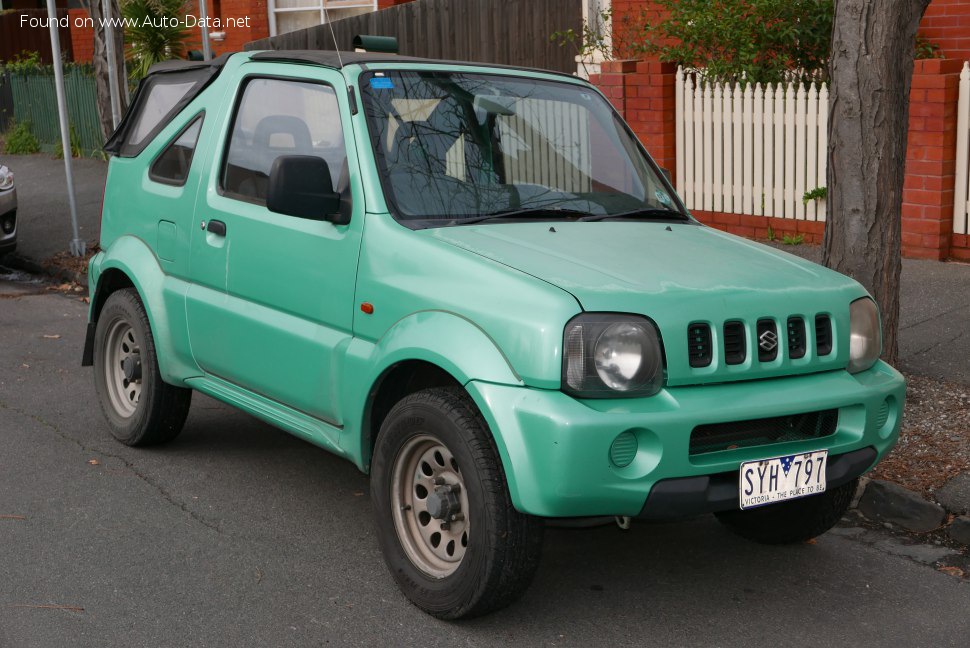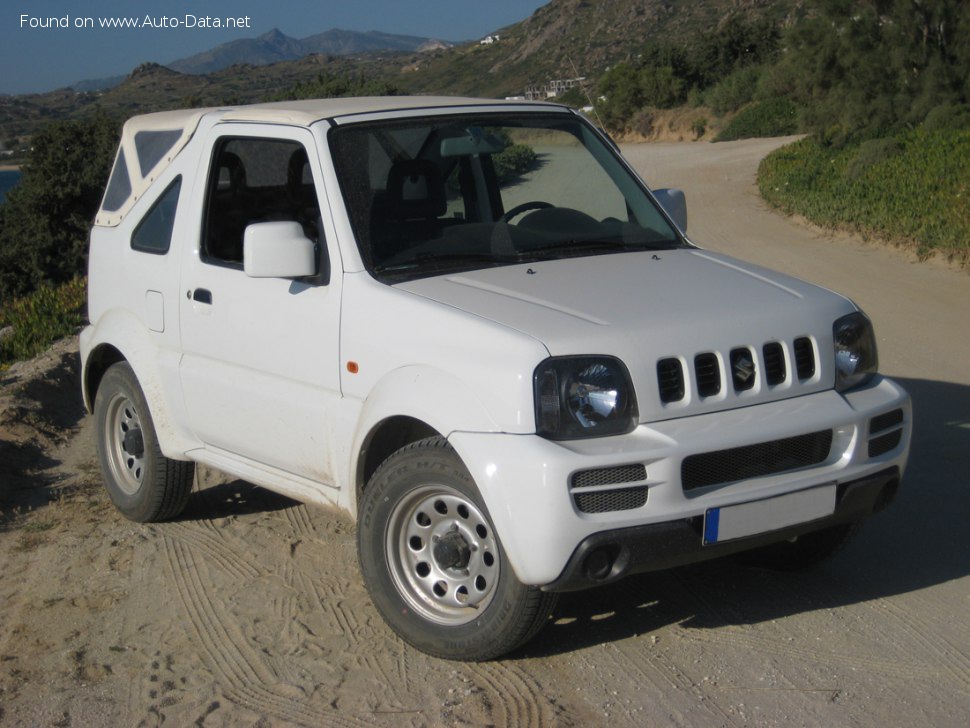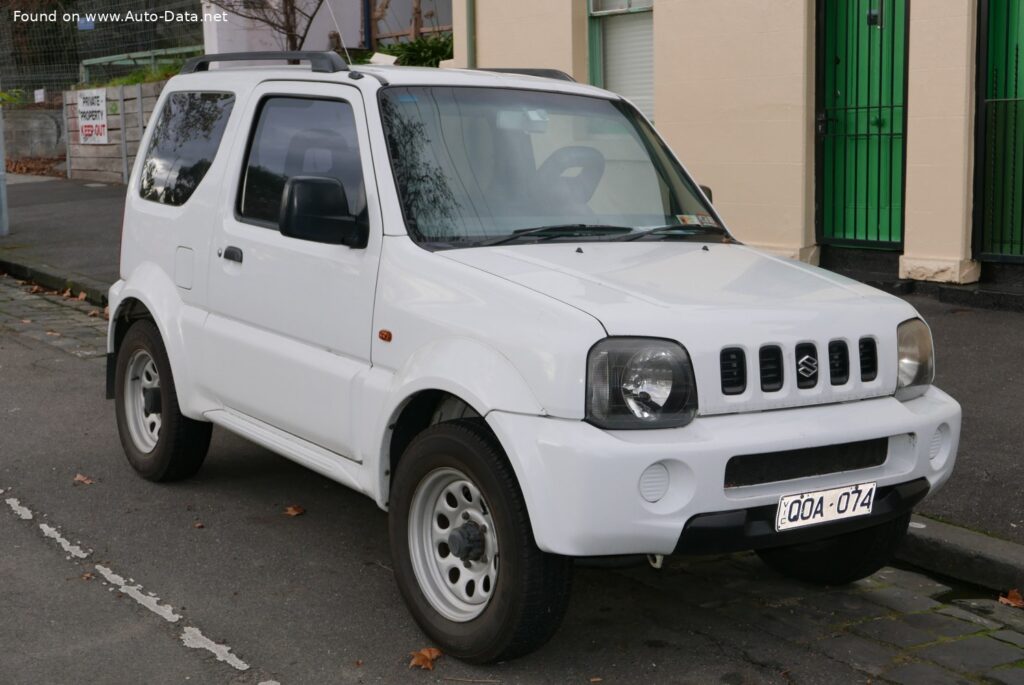
Suzuki Jimny III 0.7 i 12V Turbo (64 Hp) Automatic: A Detailed Overview
The Suzuki Jimny, a name synonymous with compact, rugged off-road capability, represents a unique niche in the global automotive landscape. The third generation, known as the Suzuki Jimny III, built upon its predecessors’ reputation for robust simplicity and go-anywhere prowess. Produced from 1998 to 2018, this generation saw various powertrain configurations tailored for different international markets. The specific variant under review, the Suzuki Jimny III 0.7 i 12V Turbo (64 Hp) Automatic, manufactured between 2000 and 2005, is a prime example of a ‘Kei car’ compliant model designed primarily for the Japanese domestic market (JDM). These regulations dictate strict limits on engine displacement and vehicle dimensions, leading to a highly specialized engineering approach. This particular model combines a diminutive turbocharged engine with a traditional body-on-frame chassis and a sophisticated all-wheel-drive system, offering impressive off-road performance despite its modest dimensions and power output. Its role in its primary market was to provide an affordable, highly maneuverable, and exceptionally capable vehicle for both urban environments and challenging terrains, all while adhering to stringent domestic taxation and size constraints.
Engine and Performance of the Suzuki Jimny III 0.7 i 12V Turbo (64 Hp) Automatic
At the heart of this specific Suzuki Jimny III variant lies the K6A engine, a compact yet potent 0.7-liter (658 cm3 or 40.15 cubic inches) inline three-cylinder unit. This engine is a masterpiece of small-displacement engineering, particularly for its time. Featuring a DOHC (Double Overhead Camshaft) valvetrain with 4 valves per cylinder, it was designed for efficiency and responsiveness. The inclusion of a turbocharger was crucial in extracting meaningful performance from such a small displacement, allowing the engine to produce 64 horsepower at a relatively high 6500 rpm. Torque output stands at 106 Nm (78.18 lb.-ft.) available at 3500 rpm, providing a respectable amount of pulling power for its size. The engine’s compression ratio is 8.4:1, optimized for turbocharged operation, and it utilizes a multi-port manifold injection system for precise fuel delivery.
Power is channeled through a 4-speed automatic transmission, a choice that prioritizes ease of driving in congested urban settings while still offering smooth power delivery for off-road excursions. The powertrain architecture is a traditional internal combustion engine, mounted longitudinally at the front, driving all four wheels (4×4). This setup provides the robust drivetrain necessary for serious off-roading. With a curb weight of just 2050.3 lbs (930 kg), the Jimny achieves a power-to-weight ratio of 14.5 kg/Hp (68.8 Hp/tonne) and a torque-to-weight ratio of 8.8 kg/Nm (114 Nm/tonne), which, while not sports car territory, is highly effective for its intended purpose. The maximum speed is rated at 77.67 mph (125 km/h). Fuel economy figures are notable, with an urban consumption of 8 liters/100 km (29.4 US mpg) and an impressive extra-urban consumption of 4 liters/100 km (58.8 US mpg), thanks to its lightweight design and efficient engine.
Design and Features
The Suzuki Jimny III is unmistakably an off-road vehicle, characterized by its boxy, functional design. This specific variant features a 3-door body type, offering seating for four occupants. Its compact dimensions are a key aspect of its Kei car compliance: a length of 133.66 inches (3395 mm), a width of 58.07 inches (1475 mm), and a height of 65.35 inches (1660 mm). These proportions contribute to its exceptional maneuverability and small turning circle of 31.5 feet (9.6 m), making it adept at navigating tight trails and crowded city streets alike. The design emphasizes practicality over luxury, with a focus on durability and ease of maintenance.
Underneath its rugged exterior, the Jimny III utilizes a robust ladder frame chassis, a design principle traditionally found in larger, more heavy-duty SUVs. This construction provides superior torsional rigidity and durability for off-road use. The suspension system comprises a wishbone setup at the front and coil springs at the rear, a configuration that balances on-road comfort with off-road articulation. Braking is handled by disc brakes at the front and drum brakes at the rear, augmented by an Anti-lock Braking System (ABS) for enhanced safety. Steering is a rack and pinion type with hydraulic power steering, providing direct feedback and assisting in low-speed maneuvers. The vehicle rides on 175/80 R16 tires, offering a good balance of on-road grip and off-road traction.
Despite its compact size, the Jimny III offers practical utility. The trunk space ranges from a minimum of 3 cubic feet (85 liters) with all seats in place, expanding to a maximum of 21.9 cubic feet (620 liters) when the rear seats are folded, demonstrating surprising versatility for cargo. The fuel tank capacity is 10.57 US gallons (40 liters), providing a decent range given its fuel efficiency.
Technical Specifications
| Category | Specification |
|---|---|
| General Information | |
| Brand | Suzuki |
| Model | Jimny |
| Generation | Jimny III |
| Type (Engine) | 0.7 i 12V Turbo (64 Hp) Automatic |
| Start of Production | 2000 year |
| End of Production | 2005 year |
| Powertrain Architecture | Internal Combustion engine |
| Body type | Off-road vehicle |
| Seats | 4 |
| Doors | 3 |
| Performance Specs | |
| Fuel consumption (economy) – urban | 8 l/100 km (29.4 US mpg) |
| Fuel consumption (economy) – extra urban | 4 l/100 km (58.8 US mpg) |
| Fuel Type | Petrol (Gasoline) |
| Maximum speed | 125 km/h (77.67 mph) |
| Weight-to-power ratio | 14.5 kg/Hp (68.8 Hp/tonne) |
| Weight-to-torque ratio | 8.8 kg/Nm (114 Nm/tonne) |
| Engine Specs | |
| Power | 64 Hp @ 6500 rpm |
| Power per liter | 97.3 Hp/l |
| Torque | 106 Nm @ 3500 rpm (78.18 lb.-ft. @ 3500 rpm) |
| Engine layout | Front, Longitudinal |
| Engine Model/Code | K6A |
| Engine displacement | 658 cm3 (0.7 l, 40.15 cu. in.) |
| Number of cylinders | 3 |
| Engine configuration | Inline |
| Cylinder Bore | 68 mm (2.68 in.) |
| Piston Stroke | 60.4 mm (2.38 in.) |
| Compression ratio | 8.4:1 |
| Number of valves per cylinder | 4 |
| Fuel injection system | Multi-port manifold injection |
| Engine aspiration | Turbocharger |
| Valvetrain | DOHC |
| Engine oil capacity | 3 l (3.17 US qt) |
| Coolant capacity | 4 l (4.23 US qt) |
| Space, Volume and Weights | |
| Kerb Weight | 930 kg (2050.3 lbs) |
| Trunk (boot) space – minimum | 85 l (3 cu. ft.) |
| Trunk (boot) space – maximum | 620 l (21.9 cu. ft.) |
| Fuel tank capacity | 40 l (10.57 US gal) |
| Dimensions | |
| Length | 3395 mm (133.66 in.) |
| Width | 1475 mm (58.07 in.) |
| Height | 1660 mm (65.35 in.) |
| Wheelbase | 2250 mm (88.58 in.) |
| Front track | 1220 mm (48.03 in.) |
| Rear (Back) track | 1210 mm (47.64 in.) |
| Minimum turning circle (turning diameter) | 9.6 m (31.5 ft.) |
| Drivetrain, Brakes and Suspension Specs | |
| Drive wheel | All wheel drive (4×4) |
| Number of gears and type of gearbox | 4 gears, automatic transmission |
| Front suspension | Wishbone |
| Rear suspension | Coil spring |
| Front brakes | Disc |
| Rear brakes | Drum |
| Assisting systems | ABS (Anti-lock braking system) |
| Steering type | Steering rack and pinion |
| Power steering | Hydraulic Steering |
| Tires size | 175/80 R16 |
Legacy and Market Impact of the Suzuki Jimny III
The Suzuki Jimny III, particularly its Kei car variants like the 0.7 i 12V Turbo Automatic, carved out a significant and enduring legacy, especially in its home market of Japan and across parts of Asia and Europe where its unique blend of compact size and formidable off-road capability was highly valued. Its reputation as a truly capable, no-nonsense off-roader, despite its diminutive stature, is well-earned. Unlike many compact SUVs that merely offer all-wheel drive for light-duty conditions, the Jimny III boasts a proper ladder frame chassis, solid axles, and a selectable 4×4 system with a low-range transfer case, features typically found on much larger and more expensive vehicles. This commitment to genuine off-road credentials set it apart from its soft-roader contemporaries.
In the Japanese market, the Kei car version of the Jimny faced competition primarily from other Kei SUVs or light commercial vehicles designed for similar utility, such as the Mitsubishi Pajero Mini. However, the Jimny consistently stood out due to its superior off-road pedigree. In other international markets where larger engine options were available, the Jimny competed with vehicles like the Lada Niva, Daihatsu Terios, and even entry-level versions of the Land Rover Defender in terms of raw capability, though it always maintained a distinct price and size advantage. Its simplicity, reliability, and low running costs made it an attractive option for farmers, utility companies, and adventure enthusiasts seeking a robust vehicle that could tackle challenging terrain without the bulk or expense of a full-size SUV.
The Jimny III’s extended production run, spanning two decades, is a testament to its timeless design and functional effectiveness. It demonstrated that a vehicle didn’t need immense power or size to be highly capable. Its enduring appeal also lies in its charming, almost toy-like appearance, which belies its serious mechanical underpinnings. The 0.7-liter turbo automatic variant, while specific to the Kei car segment, perfectly embodies the Jimny philosophy: maximizing utility and capability within strict constraints. Its success paved the way for the highly anticipated and equally popular fourth-generation Jimny, proving that the demand for a small, authentic off-roader remains strong globally. The Jimny III, therefore, stands as a significant chapter in Suzuki’s history, reinforcing its reputation as a manufacturer of practical, durable, and genuinely capable vehicles.