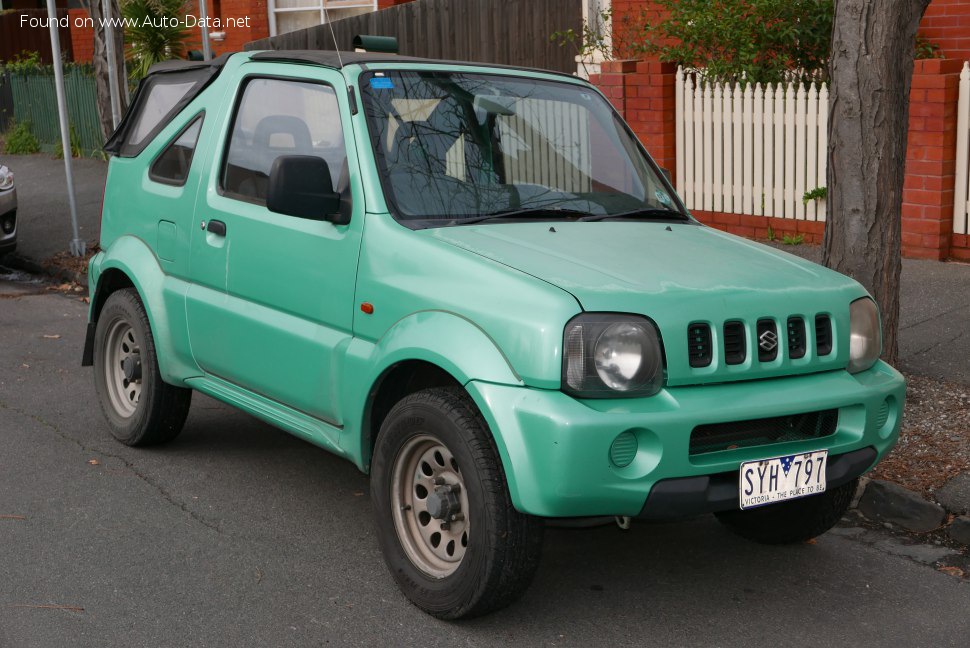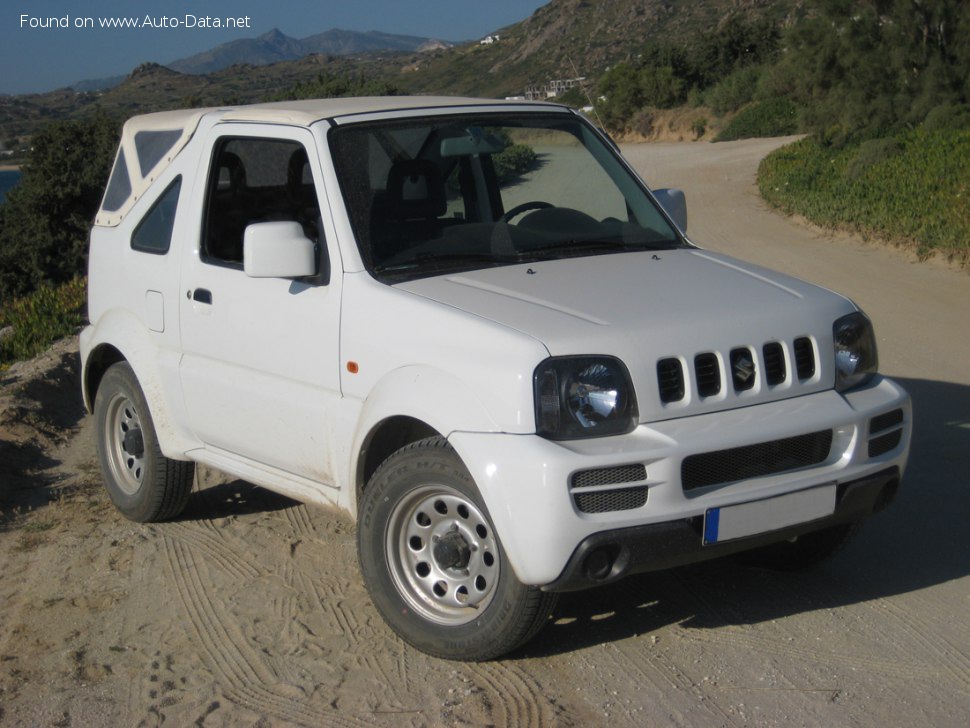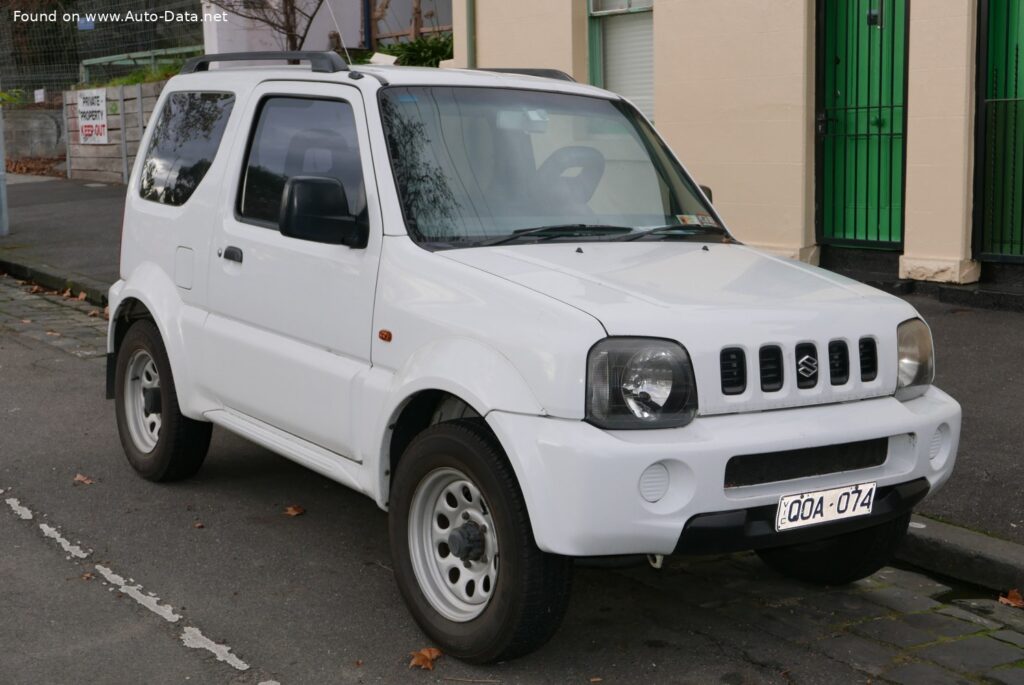
Suzuki Jimny III: A Compact Off-Road Icon (1998-2000)
The Suzuki Jimny III represents the third significant generation of Suzuki’s celebrated compact off-road vehicle lineage, a series renowned globally for its rugged capability, diminutive size, and exceptional value. Introduced in 1998, this iteration of the Jimny quickly cemented its position as a go-anywhere machine, succeeding the highly popular Suzuki SJ series (including models known as Samurai, Sierra, or Katana in various markets). While not a mainstream vehicle in the United States, the Jimny III carved out a formidable niche in Europe, Asia, Australia, and other international markets, appealing to enthusiasts, farmers, and anyone requiring a truly capable, yet compact, 4×4. The specific variant under review, the 1.3 (80 Hp) 4WD Automatic, was produced between 1998 and 2000, offering a blend of robust mechanicals and the convenience of an automatic transmission, making it a surprisingly versatile option for both urban excursions and challenging off-road trails.
The Jimny III continued the brand’s philosophy of building small, lightweight, and incredibly tough off-roaders, a heritage that dates back to the original LJ series. Its design prioritized functionality over mere aesthetics, featuring a body-on-frame construction that provided superior durability and articulation compared to unibody SUVs. This generation evolved the Jimny’s styling, moving towards a slightly more modern and rounded aesthetic while retaining its unmistakable utilitarian charm. Its compact dimensions, paired with genuine four-wheel-drive capability, allowed it to navigate tight trails and congested city streets with equal ease, making it a beloved choice in its primary markets.
Engine and Performance of the Suzuki Jimny III 1.3 (80 Hp)
At the heart of the 1998-2000 Suzuki Jimny III 1.3 (80 Hp) 4WD Automatic model lies Suzuki’s G13BB engine, a naturally aspirated, 1.3-liter (1298 cm³ or 79.21 cu. in.) inline-four gasoline (petrol) unit. This engine was designed for reliability and efficiency within its class, rather than outright speed. It features a Single Overhead Camshaft (SOHC) valvetrain with four valves per cylinder, optimizing airflow for a broad powerband. Fuel delivery is handled by a multi-port manifold injection system, a common and reliable method for its era, ensuring consistent fuel atomization and combustion.
The G13BB engine produces a respectable 80 horsepower (Hp) at 6000 rpm, delivering enough grunt to propel the lightweight Jimny through various terrains. Torque figures stand at 76.71 lb.-ft. (104 Nm) peaking at 4500 rpm. While these numbers might seem modest by contemporary standards, they are well-suited to the Jimny’s intended purpose. Its light curb weight of 2270.76 lbs. (1030 kg) results in a weight-to-power ratio of 12.9 kg/Hp (77.7 Hp/tonne), indicating a lively feel for its size and power output. The engine’s front, longitudinal layout contributes to a balanced weight distribution and allows for the robust drivetrain architecture.
Power is channeled through a 4-speed automatic transmission, offering ease of use, particularly in stop-and-go traffic or during technical off-road maneuvers where precise throttle control is paramount. The drivetrain architecture is a part-time all-wheel-drive (4×4) system, which means the internal combustion engine primarily drives the rear wheels. The front wheels can be engaged through an electrically or mechanically operated clutch when additional traction is required, making it a true off-road performer. This setup is highly regarded for its durability and effectiveness in challenging conditions.
In terms of raw performance, the Jimny III 1.3 (80 Hp) 4WD Automatic has a maximum speed of 83.89 mph (135 km/h), reflecting its design as a utilitarian vehicle rather than a highway cruiser. Fuel economy is a strong suit for a 4×4 of its era, with a combined rating of 28.3 US mpg (8.3 l/100 km). Urban driving yields approximately 23.1 US mpg (10.2 l/100 km), while extra-urban conditions can see up to 32.7 US mpg (7.2 l/100 km). These figures highlight the engine’s efficiency, further enhancing the Jimny’s appeal as an economical adventure vehicle. Its 10.57 US gallon (40 l) fuel tank provides a decent cruising range for its class.
Design and Features
The design of the Suzuki Jimny III is a testament to functional aesthetics, prioritizing capability and durability. It features a classic 3-door off-road vehicle body type, offering seating for four occupants. Its compact dimensions are a key characteristic: measuring 142.72 inches (3625 mm) in length, 62.99 inches (1600 mm) in width, and 67.13 inches (1705 mm) in height. The relatively short wheelbase of 88.58 inches (2250 mm) is crucial for its agility on tight trails, contributing to an impressive minimum turning circle of 32.15 feet (9.8 m).
True to its off-road heritage, the Jimny III boasts significant ground clearance, standing at 7.48 inches (190 mm). This, combined with short front and rear overhangs (25 inches / 635 mm front, 29.13 inches / 740 mm rear), results in outstanding approach (42°), departure (46°), and ramp-over (31°) angles. These angles are critical for navigating steep inclines, declines, and uneven terrain without scraping the vehicle’s underside or bumpers, making it genuinely capable in challenging environments.
The suspension system further emphasizes its off-road prowess. Both the front and rear feature a rigid axle suspension with coil springs. This robust setup is known for its durability, simplicity, and excellent articulation, allowing the wheels to maintain contact with the ground over highly uneven surfaces. While perhaps not offering the most refined on-road ride compared to independent suspension systems, it is ideal for the demanding conditions the Jimny is designed to tackle.
Braking is handled by disc brakes at the front and drum brakes at the rear, a common and effective combination for vehicles of this type and era. The inclusion of ABS (Anti-lock Braking System) as an assisting system enhances safety, especially during emergency braking or on slippery surfaces. Steering is a cone worm with recirculation balls type, paired with hydraulic power steering, providing reliable and sturdy control, particularly off-road where feedback and robustness are valued over absolute precision. The vehicle rides on 205/70 R15 tires mounted on 6J x 15 wheel rims, a size that offers a good balance between on-road comfort and off-road grip.
Technical Specifications
| Category | Specification | Value |
|---|---|---|
General Information |
||
| Brand | Suzuki | |
| Model | Jimny | |
| Generation | Jimny III | |
| Type (Engine) | 1.3 (80 Hp) 4WD Automatic | |
| Start of Production | 1998 year | |
| End of Production | 2000 year | |
| Powertrain Architecture | Internal Combustion engine | |
| Body type | Off-road vehicle | |
| Seats | 4 | |
| Doors | 3 | |
Performance Specs |
||
| Fuel consumption (economy) – urban | 10.2 l/100 km | 23.1 US mpg |
| Fuel consumption (economy) – extra urban | 7.2 l/100 km | 32.7 US mpg |
| Fuel consumption (economy) – combined | 8.3 l/100 km | 28.3 US mpg |
| Fuel Type | Petrol (Gasoline) | |
| Maximum speed | 135 km/h | 83.89 mph |
| Weight-to-power ratio | 12.9 kg/Hp | 77.7 Hp/tonne |
| Weight-to-torque ratio | 9.9 kg/Nm | 101 Nm/tonne |
Engine Specs |
||
| Power | 80 Hp | @ 6000 rpm |
| Power per liter | 61.6 Hp/l | |
| Torque | 104 Nm | 76.71 lb.-ft. @ 4500 rpm |
| Engine layout | Front, Longitudinal | |
| Engine Model/Code | G13BB | |
| Engine displacement | 1298 cm³ | 1.3 l / 79.21 cu. in. |
| Number of cylinders | 4 | |
| Engine configuration | Inline | |
| Cylinder Bore | 74 mm | 2.91 in. |
| Piston Stroke | 75.5 mm | 2.97 in. |
| Compression ratio | 9.5:1 | |
| Number of valves per cylinder | 4 | |
| Fuel injection system | Multi-port manifold injection | |
| Engine aspiration | Naturally aspirated engine | |
| Valvetrain | SOHC | |
| Engine oil capacity | 3.7 l | 3.91 US qt |
| Coolant | 4.5 l | 4.76 US qt |
Space, Volume and Weights |
||
| Kerb Weight | 1030 kg | 2270.76 lbs. |
| Max. weight | 1420 kg | 3130.56 lbs. |
| Max load | 390 kg | 859.8 lbs. |
| Fuel tank capacity | 40 l | 10.57 US gal |
Dimensions |
||
| Length | 3625 mm | 142.72 in. |
| Width | 1600 mm | 62.99 in. |
| Height | 1705 mm | 67.13 in. |
| Wheelbase | 2250 mm | 88.58 in. |
| Front track | 1355 mm | 53.35 in. |
| Rear (Back) track | 1365 mm | 53.74 in. |
| Front overhang | 635 mm | 25 in. |
| Rear overhang | 740 mm | 29.13 in. |
| Ride height (ground clearance) | 190 mm | 7.48 in. |
| Minimum turning circle (turning diameter) | 9.8 m | 32.15 ft. |
| Approach angle | 42° | |
| Departure angle | 46° | |
| Ramp-over (brakeover) angle | 31° | |
Drivetrain, Brakes and Suspension Specs |
||
| Drivetrain Architecture | The Internal combustion engine (ICE) drives the rear wheels permanently, and the front wheels are driven through an electrically or mechanically operated clutch if necessary. | |
| Drive wheel | All wheel drive (4×4) | |
| Number of gears and type of gearbox | 4 gears, automatic transmission | |
| Front suspension | Coil spring, Rigid axle suspension | |
| Rear suspension | Rigid axle suspension, Coil spring | |
| Front brakes | Disc | |
| Rear brakes | Drum | |
| Assisting systems | ABS (Anti-lock braking system) | |
| Steering type | Cone worm with recirculation balls | |
| Power steering | Hydraulic Steering | |
| Tires size | 205/70 R15 | |
| Wheel rims size | 6J x 15 | |
Legacy and Market Impact of the Suzuki Jimny III
The Suzuki Jimny III, particularly the 1.3 (80 Hp) 4WD Automatic variant from 1998-2000, occupies a unique and significant position in the global automotive landscape. Its legacy is built upon a reputation for unwavering reliability, exceptional off-road capability, and remarkable affordability. In many international markets, it earned affectionate nicknames like the “mini G-Wagen” or “baby Land Rover,” a testament to its serious off-road chops packed into an incredibly compact and approachable package.
In its primary markets, which included most of Europe, Asia, Australia, and parts of Latin America, the Jimny III was not just a recreational vehicle; it was a workhorse. Farmers, utility companies, forest rangers, and even emergency services relied on its ability to traverse difficult terrain where larger, more expensive SUVs would struggle or prove impractical. Its relatively simple mechanicals made it easy to maintain and repair, a crucial factor in regions with limited access to specialized service centers. The robust ladder-frame chassis, rigid axle suspension, and part-time 4×4 system were not mere selling points but fundamental design choices that ensured its longevity and performance off the beaten path.
The Jimny III faced competition from a varied field, though few matched its specific blend of size, price, and capability. Competitors might include other compact SUVs like the Daihatsu Terios, certain versions of the Suzuki Vitara (later Grand Vitara), or even more rugged, older models like the Lada Niva in Eastern European markets. However, the Jimny often stood apart due to its genuine body-on-frame construction and superior articulation, which gave it an edge in extreme off-road scenarios compared to some of its car-based SUV rivals. Its lightweight nature also meant it could navigate soft ground with less risk of getting stuck.
Historically, the Jimny III continued the successful lineage of Suzuki’s compact 4x4s, building on the cult following established by the LJ and SJ series. It demonstrated Suzuki’s mastery in creating small, agile, and incredibly tough vehicles that could punch well above their weight class in terms of capability. This generation proved that a true off-roader didn’t need to be massive, fuel-thirsty, or prohibitively expensive. Its enduring appeal led to a long production run for the third generation, eventually being replaced by the highly anticipated fourth-generation Jimny, which itself has garnered immense critical acclaim and demand globally.