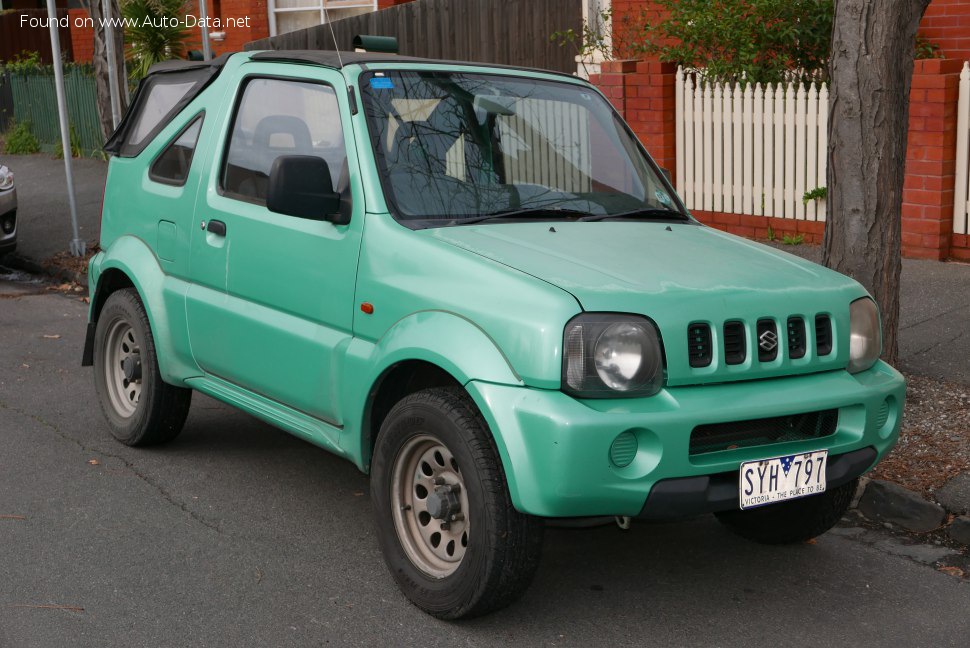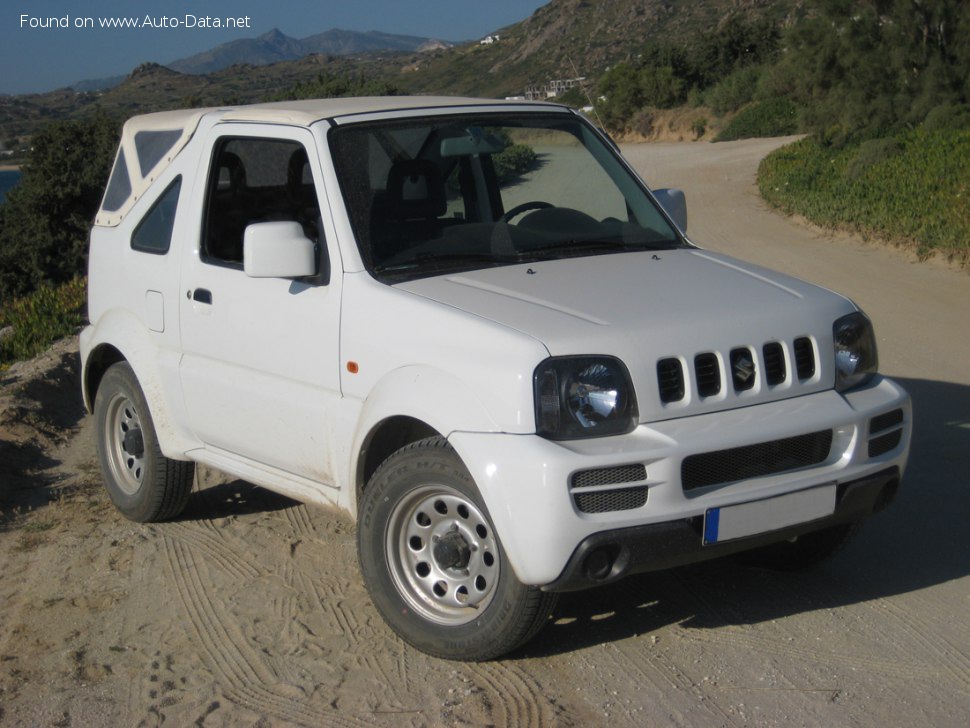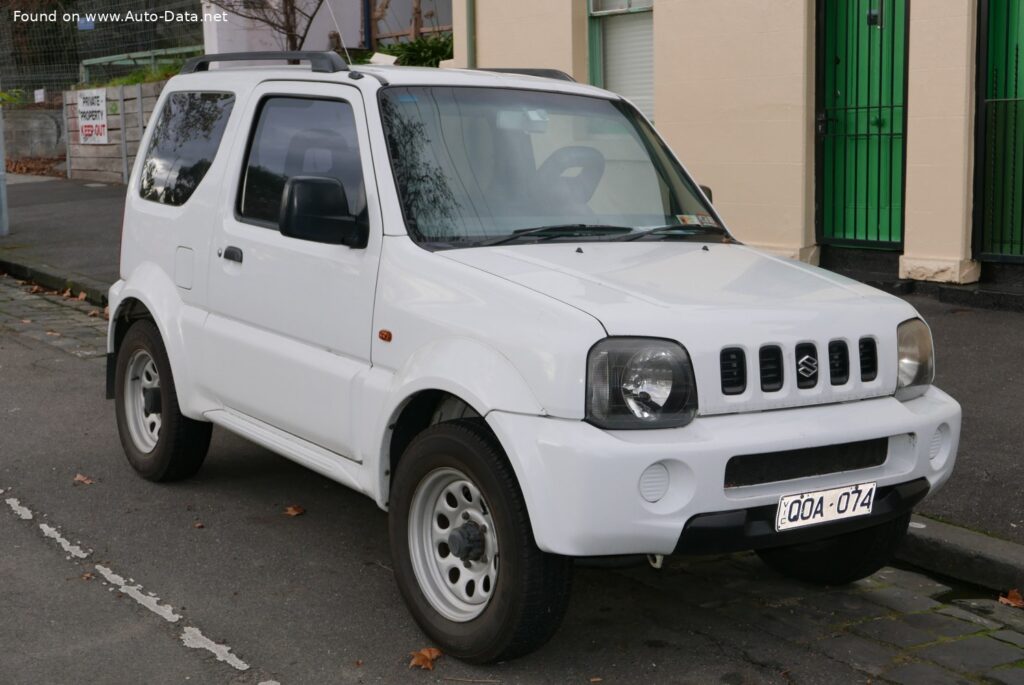
Introduction to the Suzuki Jimny III 1.5 DDiS (65 Hp) 4WD
The Suzuki Jimny, a name synonymous with compact, rugged off-road capability, has carved out a unique niche in the global automotive landscape since its inception. The third generation, known as the Jimny III, continued this legacy from 1998 to 2018, offering a compelling blend of diminutive size and robust four-wheel-drive prowess. This detailed analysis focuses specifically on the Suzuki Jimny III 1.5 DDiS (65 Hp) 4WD variant, produced between 2004 and 2005. This particular model, equipped with a diesel powertrain, was a significant offering in markets outside of North America, where its combination of fuel efficiency and low-end torque proved highly advantageous for both utilitarian and recreational purposes.
Positioned as a compact off-road vehicle, the Jimny III served a diverse clientele ranging from farmers and rural dwellers requiring reliable all-terrain transport to urban adventurers seeking a distinctive and capable weekend warrior. Its design philosophy has always prioritized function over form, emphasizing durability, simplicity, and genuine off-road credentials. In an era where many SUVs were transitioning to unibody constructions and more road-biased dynamics, the Jimny III steadfastly maintained its traditional body-on-frame architecture and solid axles, cementing its reputation as one of the last true mini-SUVs. While never officially sold in the United States, the Jimny III, particularly this diesel iteration, played a crucial role in its primary markets, particularly across Europe and Asia, offering an economical and highly capable alternative to larger, more expensive 4x4s.
Engine and Performance: The Heart of the Suzuki Jimny III 1.5 DDiS (65 Hp) 4WD
At the core of this specific Jimny III variant lies a 1.5-liter DDiS (Direct Diesel Injection System) engine, designated with the K9K 700 code. This inline four-cylinder diesel powerplant, featuring a single overhead camshaft (SOHC) with two valves per cylinder, was engineered for durability and efficiency rather than outright speed. With an engine displacement of 1461 cubic centimeters (89.16 cu. in.), it produced a modest but highly usable 65 horsepower at 4000 rpm. More critically for an off-road vehicle, it delivered a robust 118.01 lb.-ft. of torque at a low 2000 rpm, providing excellent pulling power and crawl capability over challenging terrain.
The engine’s performance was further enhanced by a turbocharger with an intercooler, a setup that improved combustion efficiency and power delivery, especially at lower engine speeds. Fuel was delivered via a common rail diesel injection system, contributing to better fuel economy and reduced emissions for its time. Mated to a 5-speed manual transmission, the powertrain architecture featured a part-time all-wheel-drive (4×4) system. This setup meant the engine permanently drove the rear wheels, with the front wheels engaging via an electrically or mechanically operated clutch when additional traction was required. This traditional 4WD system, coupled with the diesel engine’s torque characteristics, made the Jimny a formidable machine when venturing off the beaten path.
While its acceleration figures might seem leisurely by modern standards—0 to 60 mph in a calculated 19.6 seconds and a top speed of 80.78 mph—these numbers do not tell the full story of the Jimny’s intended purpose. Its strength lay in its ability to navigate challenging conditions with confidence, not to win drag races. Fuel economy was a strong suit, with a combined rating of 38.6 US mpg (6.1 liters per 100 km), making it an economical choice for daily driving and extended trips in an era of fluctuating fuel prices. The engine met the Euro 3 emission standard, reflecting its compliance with environmental regulations of the mid-2000s.
Design and Features: Form Follows Function
The Suzuki Jimny III retained the iconic, boxy, and utilitarian design language that had defined its predecessors. As an off-road vehicle, its compact dimensions and rugged aesthetics were a direct reflection of its capabilities. Measuring just 143.5 inches in length and 62.99 inches in width, with a height of 67.13 inches, the Jimny was designed to be maneuverable in tight spaces, whether it be congested city streets or narrow off-road trails. The 3-door body style provided a robust structure, while the four-seat configuration offered practical utility for a small family or group of adventurers.
Underneath its unassuming exterior, the Jimny III boasted serious off-road hardware. Its ladder frame chassis, rigid front and rear axles with coil springs, and generous ground clearance of 7.48 inches were hallmarks of a true 4×4. The short overhangs resulted in impressive approach (42°), departure (46°), and ramp-over (31°) angles, allowing it to tackle steep inclines, descents, and obstacles without scraping. The steering system, a cone worm with recirculation balls, combined with hydraulic power steering, provided robust control and feedback, essential for off-road driving. Stopping power was provided by front disc brakes and rear drum brakes, assisted by an Anti-lock Braking System (ABS), a crucial safety feature for vehicles of this era.
The interior, while basic by today’s standards, was designed to be functional and hard-wearing. Its focus was on durability and ease of cleaning, rather than luxurious appointments. Trunk space was modest, ranging from 3.99 cu. ft. (113 liters) with all seats in place to 11.44 cu. ft. (324 liters) with the rear seats folded, reflecting its compact nature. Despite its size, the Jimny was capable of towing, with a permitted trailer load of 2866.01 lbs. (1300 kg) with brakes, underscoring its utility as a workhorse. The 205/70 R15 tires mounted on 6J x 15-inch steel wheels provided a good balance of on-road comfort and off-road grip, further enhancing its versatile character.
Technical Specifications
| Category | Specification |
|---|---|
| General Information | |
| Brand | Suzuki |
| Model | Jimny |
| Generation | Jimny III |
| Type (Engine) | 1.5 DDiS (65 Hp) 4WD |
| Start of Production | 2004 year |
| End of Production | 2005 year |
| Powertrain Architecture | Internal Combustion engine |
| Body type | Off-road vehicle |
| Seats | 4 |
| Doors | 3 |
| Performance Specs | |
| Fuel consumption (economy) – urban | 7 l/100 km (33.6 US mpg) |
| Fuel consumption (economy) – extra urban | 5.6 l/100 km (42 US mpg) |
| Fuel consumption (economy) – combined | 6.1 l/100 km (38.6 US mpg) |
| CO2 emissions | 162 g/km |
| Fuel Type | Diesel |
| Acceleration 0 – 60 mph | 19.6 sec |
| Maximum speed | 130 km/h (80.78 mph) |
| Emission standard | Euro 3 |
| Weight-to-power ratio | 17.2 kg/Hp (58 Hp/tonne) |
| Weight-to-torque ratio | 7 kg/Nm (142.9 Nm/tonne) |
| Engine Specs | |
| Power | 65 Hp @ 4000 rpm |
| Power per liter | 44.5 Hp/l |
| Torque | 160 Nm @ 2000 rpm (118.01 lb.-ft. @ 2000 rpm) |
| Engine layout | Front, Longitudinal |
| Engine Model/Code | K9K 700 |
| Engine displacement | 1461 cm3 (89.16 cu. in.) |
| Number of cylinders | 4 |
| Engine configuration | Inline |
| Cylinder Bore | 76 mm (2.99 in.) |
| Piston Stroke | 80.5 mm (3.17 in.) |
| Compression ratio | 18.25:1 |
| Number of valves per cylinder | 2 |
| Fuel injection system | Diesel Commonrail |
| Engine aspiration | Turbocharger, Intercooler |
| Valvetrain | SOHC |
| Engine oil capacity | 4 l (4.23 US qt) |
| Engine oil specification | Not specified |
| Coolant capacity | 7 l (7.4 US qt) |
| Space, Volume and Weights | |
| Kerb Weight | 1120 kg (2469.18 lbs.) |
| Max. weight | 1500 kg (3306.93 lbs.) |
| Max load | 380 kg (837.76 lbs.) |
| Trunk (boot) space – minimum | 113 l (3.99 cu. ft.) |
| Trunk (boot) space – maximum | 324 l (11.44 cu. ft.) |
| Fuel tank capacity | 40 l (10.57 US gal) |
| Permitted trailer load with brakes (12%) | 1300 kg (2866.01 lbs.) |
| Permitted trailer load without brakes | 350 kg (771.62 lbs.) |
| Permitted towbar download | 75 kg (165.35 lbs.) |
| Dimensions | |
| Length | 3645 mm (143.5 in.) |
| Width | 1600 mm (62.99 in.) |
| Width including mirrors | 1780 mm (70.08 in.) |
| Height | 1705 mm (67.13 in.) |
| Wheelbase | 2250 mm (88.58 in.) |
| Front track | 1355 mm (53.35 in.) |
| Rear (Back) track | 1365 mm (53.74 in.) |
| Ride height (ground clearance) | 190 mm (7.48 in.) |
| Minimum turning circle (turning diameter) | 9.8 m (32.15 ft.) |
| Approach angle | 42° |
| Departure angle | 46° |
| Ramp-over (brakeover) angle | 31° |
| Drivetrain, Brakes and Suspension Specs | |
| Drivetrain Architecture | ICE drives rear wheels permanently; front wheels driven through electrically or mechanically operated clutch if necessary. |
| Drive wheel | All wheel drive (4×4) |
| Number of gears and type of gearbox | 5 gears, manual transmission |
| Front suspension | Coil spring, Rigid axle suspension |
| Rear suspension | Rigid axle suspension, Coil spring |
| Front brakes | Disc |
| Rear brakes | Drum |
| Assisting systems | ABS (Anti-lock braking system) |
| Steering type | Cone worm with recirculation balls |
| Power steering | Hydraulic Steering |
| Tires size | 205/70 R15 |
| Wheel rims size | 6J x 15 |
Legacy and Market Impact
The Suzuki Jimny III, particularly its diesel variants like the 1.5 DDiS (65 Hp) 4WD, cultivated a robust reputation in markets where it was sold for its unparalleled blend of compact dimensions and serious off-road capability. In Europe, Asia, Australia, and parts of Africa, the Jimny was revered as a reliable, no-nonsense utility vehicle, often chosen by individuals and businesses that needed a dependable 4×4 without the bulk or expense of larger SUVs. Its relatively low purchase price and excellent fuel economy for a 4×4 made it an attractive proposition, especially for those in rural areas or in countries with higher fuel taxes.
In its primary markets, the Jimny faced competition from a varied set of vehicles. These included other small, rugged SUVs like the Lada Niva (though often seen as more rudimentary), and later, some compact crossovers that attempted to offer SUV styling without the true off-road chops. However, few could match the Jimny’s authentic body-on-frame construction and solid axle setup, which gave it a distinct advantage in extreme off-road conditions. Its closest spiritual competitors were often its own predecessors, the Suzuki SJ series (known as Samurai in the US) and earlier Jimny generations, which had already established Suzuki’s reputation for building durable small 4x4s.
The Suzuki Jimny III 1.5 DDiS (65 Hp) 4WD played a vital role in showcasing how a relatively small diesel engine could provide ample torque for off-road excursions while maintaining commendable fuel efficiency. It demonstrated that a vehicle didn’t need immense power or size to be highly capable in challenging environments. Its impact was felt in its ability to democratize serious off-roading, making it accessible to a broader segment of the population. The Jimny’s enduring legacy is its commitment to a proven, traditional off-road formula, which has seen it maintain a loyal following and even inspire cult status in many regions. This particular diesel model, though a niche offering, highlighted Suzuki’s adaptability to regional market demands, providing an economical and robust solution for those who truly needed a go-anywhere vehicle. Its discontinuation in 2005 for this specific engine variant paved the way for other powertrain options within the long-running Jimny III generation, but its contribution to the model’s overall reputation remains significant.