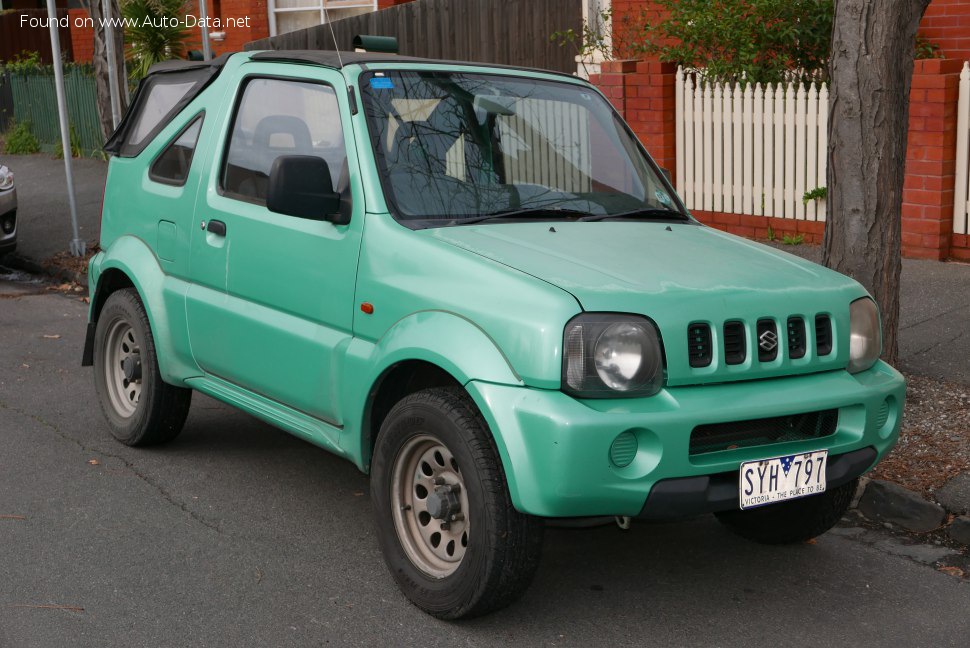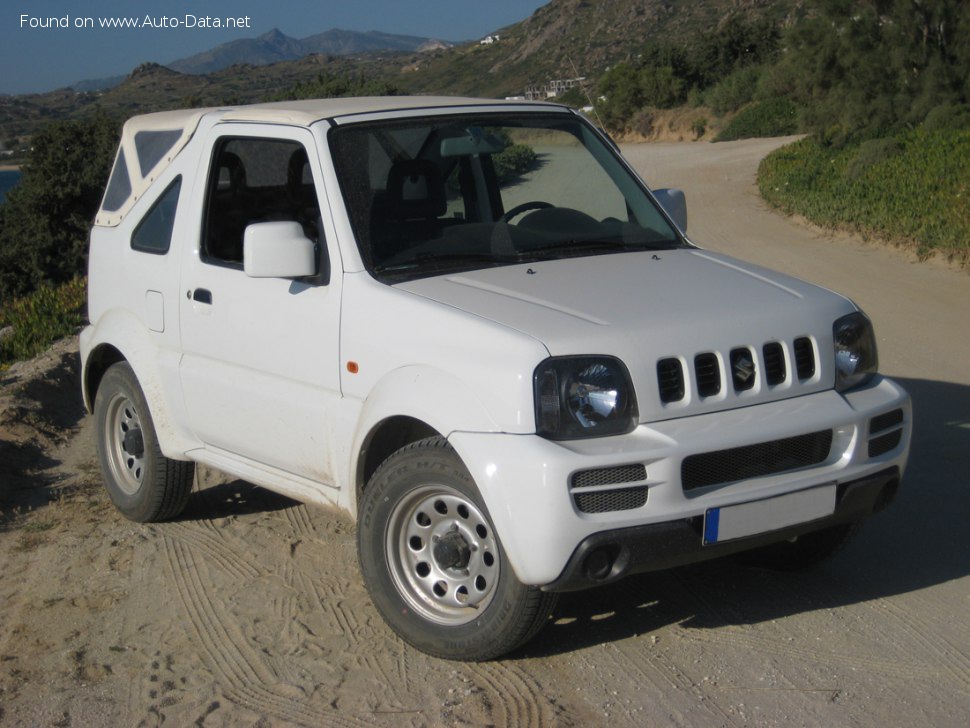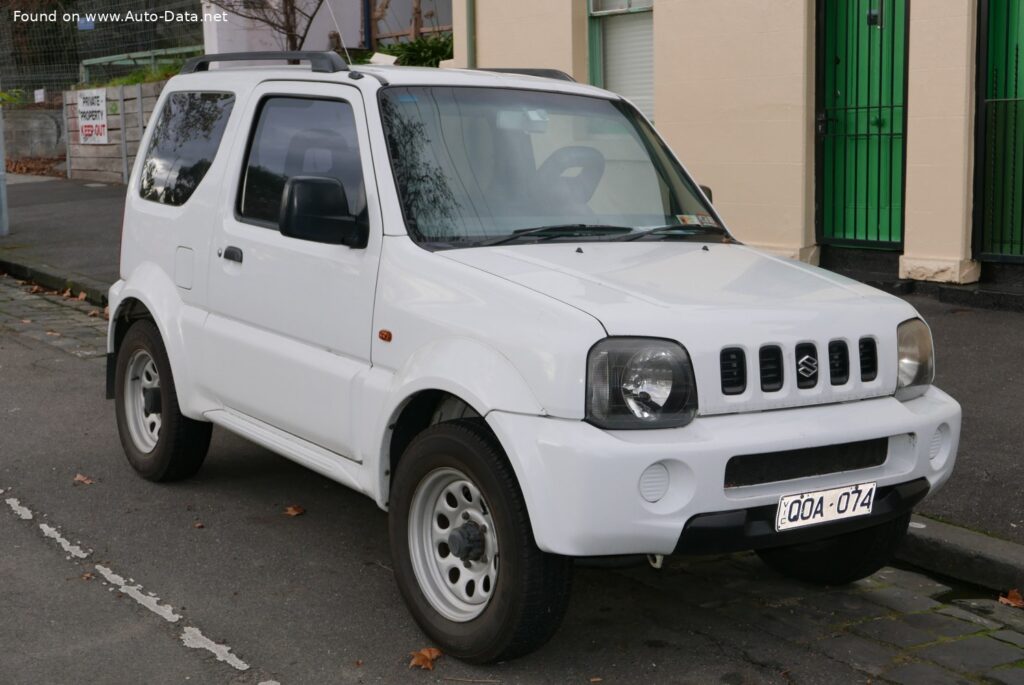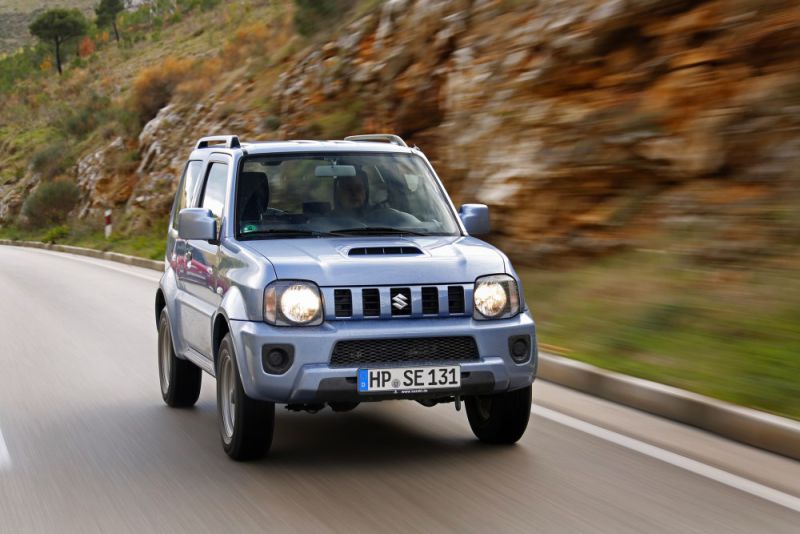
In an automotive landscape increasingly dominated by sleek, car-based crossovers, the Suzuki Jimny stands as a defiant, compact anachronism—a testament to traditional off-road engineering. For North American enthusiasts, the Jimny evokes memories of the beloved Suzuki Samurai, a vehicle that carved its own niche with unparalleled agility and rugged simplicity. While the third-generation Jimny (produced from 1998 to 2018) was not officially sold in the U.S. or Canada, its global significance and unyielding dedication to off-road capability have cemented its status as a cult classic. The 2012 facelift, in particular, brought subtle refinements to this enduring icon, ensuring its continued relevance in markets worldwide.
The Enduring Appeal of the Suzuki Jimny III (facelift 2012) 1.3 VVT (85 Hp) 4WD Automatic
The Suzuki Jimny III (facelift 2012) represents a pivotal point in the model’s long history, showcasing a commitment to its core identity while offering minor aesthetic and functional updates. This particular iteration, equipped with the 1.3 VVT engine and an automatic transmission, continued to champion the Jimny’s philosophy: a lightweight, robust, and highly capable off-road vehicle designed to tackle challenging terrain without compromise. Its significance lies in its refusal to conform to the burgeoning trend of larger, more comfort-oriented SUVs, instead doubling down on its utilitarian, go-anywhere ethos.
Engine and Performance: A Heart for the Wild
Under the hood of the 2012 facelifted Jimny resided Suzuki’s dependable M13A 1.3-liter (1328 cm3) VVT (Variable Valve Timing) inline-four engine. This naturally aspirated powerplant, known for its robustness and reliability, delivered a modest but effective 85 horsepower at 6000 rpm. Torque figures stood at 110 Nm (81.13 lb-ft) at a relatively accessible 4100 rpm, providing the necessary grunt for low-speed crawling and navigating uneven surfaces. The VVT system optimized valve timing for a broader powerband, enhancing both efficiency and responsiveness.
Paired with a 4-speed automatic transmission, this powertrain package was clearly tuned for practicality and off-road prowess rather than outright speed. While the 0 to 60 mph sprint took a leisurely 16.3 seconds, and top speed was capped at 83.89 mph (135 km/h), these figures are secondary to the Jimny’s true purpose. Its lightweight construction, with a kerb weight ranging from 2369.97 to 2436.11 lbs (1075-1105 kg), contributed significantly to its agility and ability to traverse challenging landscapes where heavier vehicles might struggle. Fuel economy, while not segment-leading by modern standards, was reasonable for a dedicated 4×4, achieving an estimated 32.2 US mpg combined (7.3 l/100 km).
Features: Simplicity as a Virtue
For a vehicle designed in the late 1990s and updated in the early 2010s, the Jimny’s feature set reflected its utilitarian focus. Unlike many contemporary vehicles that prioritized advanced infotainment and driver-assistance systems (ADAS), the Jimny offered a straightforward, no-frills experience. Its cabin was designed for durability and ease of cleaning, with hard-wearing plastics and functional controls.
Infotainment typically consisted of a basic radio-CD player, with connectivity limited to what was standard for the era, such as auxiliary input on some trims. Advanced driver-assistance systems were largely absent, adhering to its robust, mechanical philosophy. However, essential safety features were present, including an Anti-lock Braking System (ABS) and a sturdy body-on-frame construction, which provided a strong foundation for occupant protection in a collision. The Jimny’s compact dimensions, short overhangs, and impressive ground clearance (7.48 inches or 190 mm) were arguably its most significant “features,” enabling it to navigate tight trails and steep inclines with remarkable ease. Its design language remained iconic: a boxy, upright silhouette with large windows, emphasizing visibility and practicality over aerodynamic sleekness.
Technical Specifications
| General Information | |
|---|---|
| Brand | Suzuki |
| Model | Jimny |
| Generation | Jimny III (facelift 2012) |
| Type (Engine) | 1.3 VVT (85 Hp) 4WD Automatic |
| Start of Production | 2012 year |
| End of Production | 2015 year |
| Powertrain Architecture | Internal Combustion engine |
| Body type | Off-road vehicle |
| Seats | 4 |
| Doors | 3 |
| Performance Specifications | |
| Fuel Consumption (Urban) | 9 l/100 km (26.1 US mpg) |
| Fuel Consumption (Extra Urban) | 6.3 l/100 km (37.3 US mpg) |
| Fuel Consumption (Combined) | 7.3 l/100 km (32.2 US mpg) |
| CO2 Emissions (NEDC) | 167 g/km |
| Fuel Type | Petrol (Gasoline) |
| Acceleration 0 – 60 mph | 16.3 sec |
| Maximum Speed | 135 km/h (83.89 mph) |
| Emission Standard | Euro 5 |
| Weight-to-power ratio | 12.6 kg/Hp (79.1 Hp/tonne) |
| Weight-to-torque ratio | 9.8 kg/Nm (102.3 Nm/tonne) |
| Engine Specifications | |
| Power | 85 Hp @ 6000 rpm |
| Power per Litre | 64 Hp/l |
| Torque | 110 Nm (81.13 lb-ft) @ 4100 rpm |
| Engine Layout | Front, Longitudinal |
| Engine Model/Code | M13A |
| Engine Displacement | 1328 cm3 (81.04 cu. in.) |
| Number of Cylinders | 4 |
| Engine Configuration | Inline |
| Cylinder Bore | 78 mm (3.07 in.) |
| Piston Stroke | 69.5 mm (2.74 in.) |
| Compression Ratio | 9.5:1 |
| Valves per Cylinder | 4 |
| Fuel Injection System | Multi-port manifold injection |
| Engine Aspiration | |