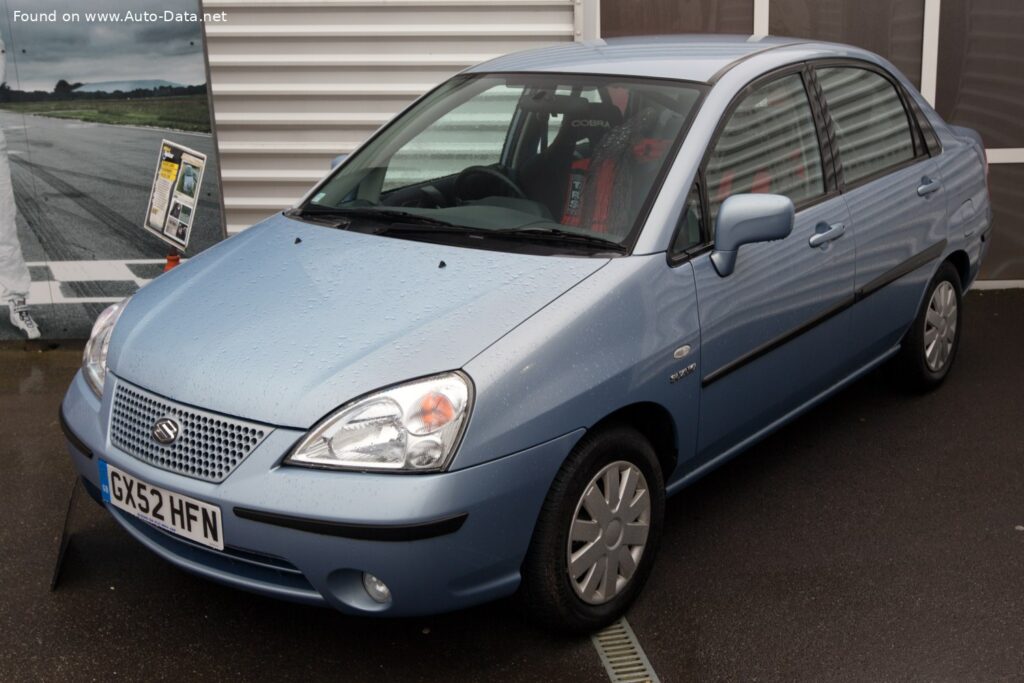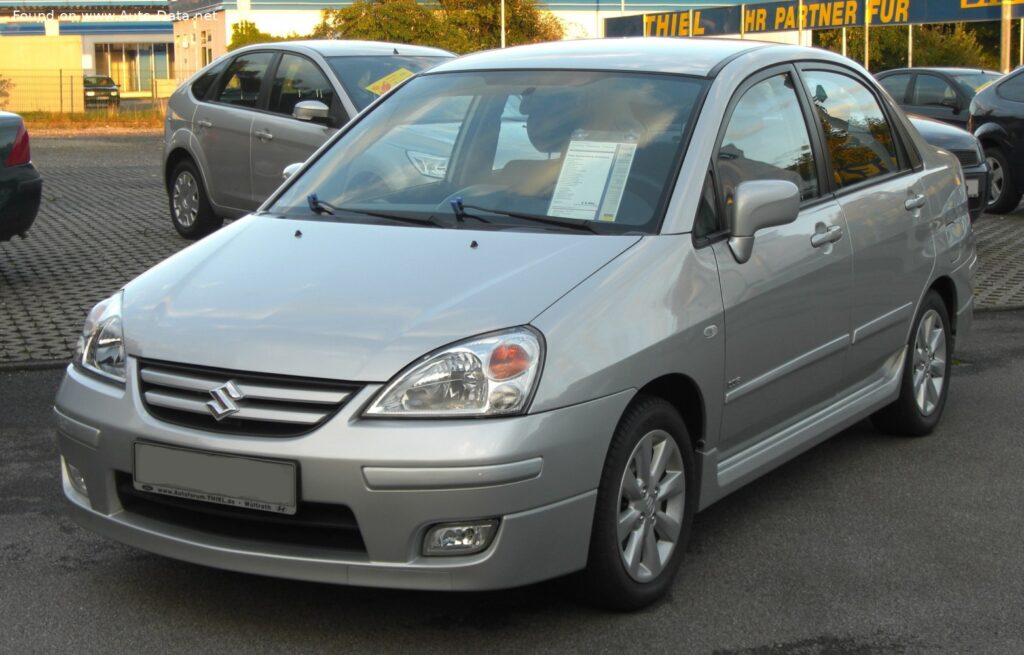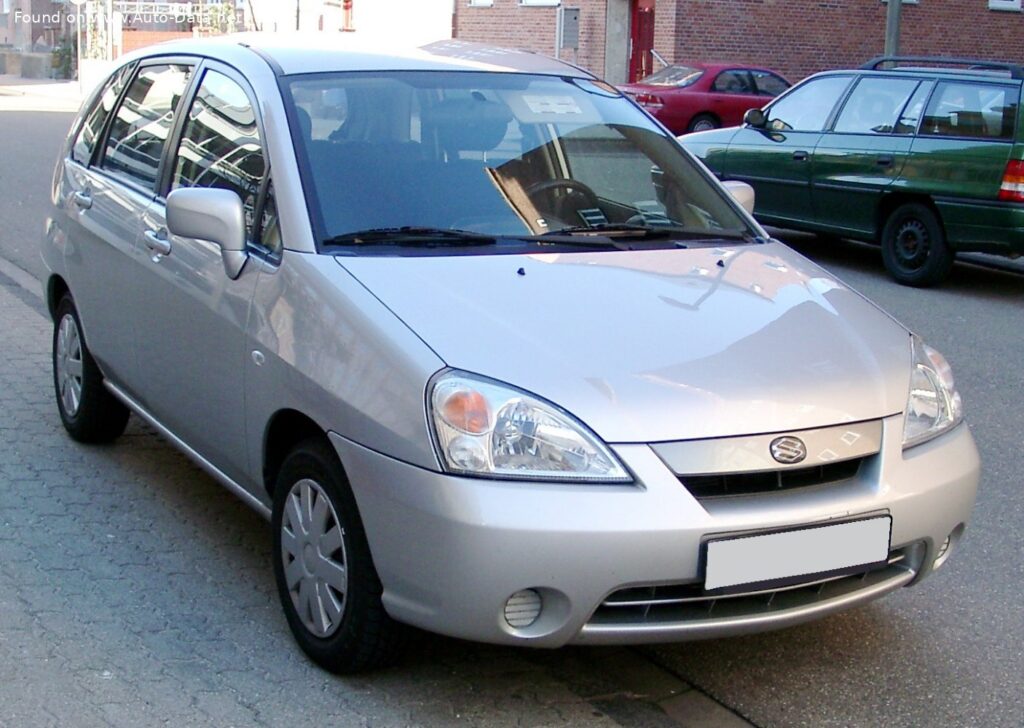
Introduction to the Suzuki Liana Wagon I
The Suzuki Liana Wagon I, specifically the 1.3 i 16V 2WD (90 Hp) Automatic variant, represents a significant offering from the Japanese automaker Suzuki during the early 2000s. Produced from 2001 to 2004, this first-generation Liana Wagon was designed to be a practical, economical, and versatile compact family vehicle. While its sibling, the Suzuki Aerio, found a niche market in North America, this particular 1.3-liter station wagon configuration was primarily targeted at European and Asian markets, where smaller displacement engines and the station wagon body style held considerable appeal for their blend of efficiency and utility. The Liana, an acronym for “Life In A New Age,” aimed to deliver modern sensibilities, reliable performance, and a user-friendly experience in a competitive segment.
Positioned as a straightforward and dependable choice, the Liana Wagon I provided a compelling package for buyers seeking affordability without sacrificing core functionalities. It competed against a broad array of compact cars and wagons, distinguishing itself with Suzuki’s reputation for robust engineering and low running costs. This article delves into the technical specifications, design philosophies, and market impact of this particular variant, offering an expert perspective on its place in the global automotive landscape.
Engine and Performance: The Heart of the Suzuki Liana Wagon I
Under the hood, the Suzuki Liana Wagon I 1.3 i 16V 2WD (90 Hp) Automatic was powered by Suzuki’s M13A engine, a 1.3-liter (1328 cubic centimeters or 81.04 cubic inches) inline four-cylinder unit. This naturally aspirated gasoline engine featured a Double Overhead Camshaft (DOHC) valvetrain with 16 valves, ensuring efficient air intake and exhaust flow. The multi-port manifold injection system precisely managed fuel delivery, contributing to both its performance and fuel economy.
The M13A engine delivered a respectable 90 horsepower at 5750 rpm, providing adequate motivation for daily commuting and light family duties. Torque output stood at 85.56 lb.-ft. (116 Nm) at 4750 rpm, offering sufficient pulling power in urban environments. Paired with a 4-speed automatic transmission, the powertrain architecture was designed for smooth and uncomplicated operation, prioritizing ease of use over outright sporting dynamics. The front-wheel-drive configuration further enhanced its practicality and efficiency.
In terms of acceleration, the Liana Wagon I 1.3 i 16V 2WD (90 Hp) Automatic could reach 60 mph from a standstill in an estimated 12.6 seconds, with a 0-62 mph (0-100 km/h) time of 13.3 seconds. Its top speed was approximately 102.53 mph (165 km/h). While not a performance leader, these figures were competitive for its segment and intended purpose. Fuel efficiency was a strong suit, with a combined consumption rating of 35.1 US mpg (6.7 liters per 100 km), making it an economical choice for families and individuals mindful of running costs. Urban driving yielded about 27.4 US mpg, while extra-urban cruising improved to an impressive 42 US mpg. These figures underscored its design ethos as a practical and economical vehicle.
Design and Features: Practicality and Utility in the Suzuki Liana Wagon I
The design of the Suzuki Liana Wagon I was characterized by its functional and unpretentious styling, reflecting its role as a versatile compact station wagon. With a length of 166.54 inches, a width of 66.54 inches, and a height of 61.02 inches, the Liana Wagon struck a balance between a compact footprint and a spacious interior. The 97.64-inch wheelbase contributed to a stable ride and maximized cabin volume.
The 4-door body style provided easy access for five occupants, and the elevated roofline contributed to generous headroom for all passengers. The station wagon configuration was a key differentiator, offering substantial cargo flexibility. The trunk space started at a useful 12.29 cubic feet (348 liters) with all seats in place, expanding significantly to 37.5 cubic feet (1062 liters) when the rear seats were folded down. This adaptability made the Liana Wagon an ideal choice for families, small businesses, or anyone requiring ample hauling capability for its size.
Key features for the era included a hydraulic power steering system, making maneuvering easier, especially in city driving. The vehicle was equipped with a robust suspension system, featuring wishbones at the front and coil springs at the rear, designed to provide a comfortable ride and dependable handling. Braking performance was managed by ventilated discs at the front and drum brakes at the rear, complemented by an Anti-lock Braking System (ABS) for enhanced safety during emergency stops. The standard tire size was 185/65 R14 T, offering a good balance of grip and ride comfort. The interior, while not luxurious, was ergonomically laid out, with durable materials chosen for longevity and ease of maintenance, appealing to its target demographic of practical-minded consumers.
Technical Specifications
| Category | Specification | Value |
|---|---|---|
| General Information | Brand | Suzuki |
| Model | Liana | |
| Generation | Liana Wagon I | |
| Type (Engine) | 1.3 i 16V 2WD (90 Hp) Automatic | |
| Production Start | 2001 year | |
| Production End | 2004 year | |
| Powertrain Architecture | Internal Combustion Engine | |
| Body type | Station wagon (estate) | |
| Seats | 5 | |
| Doors | 4 | |
| Performance Specs | Fuel consumption (economy) – urban | 8.6 l/100 km (27.4 US mpg) |
| Fuel consumption (economy) – extra urban | 5.6 l/100 km (42 US mpg) | |
| Fuel consumption (economy) – combined | 6.7 l/100 km (35.1 US mpg) | |
| Fuel Type | Petrol (Gasoline) | |
| Acceleration 0 – 60 mph | 12.6 sec | |
| Acceleration 0 – 100 km/h | 13.3 sec | |
| Maximum speed | 102.53 mph (165 km/h) | |
| Weight-to-power ratio | 13.5 kg/Hp, 74.1 Hp/tonne | |
| Weight-to-torque ratio | 10.5 kg/Nm, 95.5 Nm/tonne | |
| Engine Specs | Power | 90 Hp @ 5750 rpm |
| Power per liter | 67.8 Hp/l | |
| Torque | 85.56 lb.-ft. (116 Nm) @ 4750 rpm | |
| Engine layout | Front, Transverse | |
| Engine Model/Code | M13A | |
| Engine displacement | 1.3 liters (1328 cm3 / 81.04 cu. in.) | |
| Number of cylinders | 4 | |
| Engine configuration | Inline | |
| Cylinder Bore | 3.07 in. (78 mm) | |
| Piston Stroke | 2.74 in. (69.5 mm) | |
| Compression ratio | 9.5:1 | |
| Number of valves per cylinder | 4 | |
| Fuel injection system | Multi-port manifold injection | |
| Engine aspiration | Naturally aspirated engine | |
| Valvetrain | DOHC | |
| Engine oil capacity | 4.1 l (4.33 US qt) | |
| Coolant | 6.5 l (6.87 US qt) | |
| Space, Volume and Weights | Kerb Weight | 2678.62 lbs (1215 kg) |
| Max. weight | 3615.58 lbs (1640 kg) | |
| Max load | 936.96 lbs (425 kg) | |
| Trunk (boot) space – minimum | 12.29 cu. ft. (348 l) | |
| Trunk (boot) space – maximum | 37.5 cu. ft. (1062 l) | |
| Fuel tank capacity | 13.21 US gal (50 l) | |
| Dimensions | Length | 166.54 in. (4230 mm) |
| Width | 66.54 in. (1690 mm) | |
| Height | 61.02 in. (1550 mm) | |
| Wheelbase | 97.64 in. (2480 mm) | |
| Front track | 57.09 in. (1450 mm) | |
| Rear (Back) track | 56.89 in. (1445 mm) | |
| Drivetrain, Brakes and Suspension | Drivetrain Architecture | Front-wheel drive, Internal Combustion Engine |
| Drive wheel | Front wheel drive | |
| Number of gears and type of gearbox | 4 gears, automatic transmission | |
| Front suspension | Wishbone | |
| Rear suspension | Coil spring | |
| Front brakes | Ventilated discs | |
| Rear brakes | Drum | |
| Assisting systems | ABS (Anti-lock braking system) | |
| Steering type | Steering rack and pinion | |
| Power steering | Hydraulic Steering | |
| Tires size | 185/65 R14 T |
Legacy and Market Impact of the Suzuki Liana Wagon I
The Suzuki Liana, known as the Aerio in some markets including North America, carved out a reputation as a practical and reliable vehicle, particularly in its wagon form. The Liana Wagon I 1.3 i 16V 2WD (90 Hp) Automatic, with its specific powertrain, cemented Suzuki’s standing as a manufacturer of dependable and economical compact cars in its primary European and Asian markets. It was a no-frills option that prioritized functionality and affordability, appealing to a segment of buyers who valued these attributes above high-performance or luxury features.
In its competitive landscape, the Liana Wagon I faced rivals such as the Toyota Corolla Wagon, Honda Civic Aerodeck, Opel Astra Caravan, and Ford Focus Wagon, among others. While many of these competitors often offered a wider range of engine options or more sophisticated interior appointments, the Liana distinguished itself with its competitive pricing, proven Suzuki reliability, and particularly strong fuel economy for its class, especially with the 1.3-liter engine. Its relatively high seating position and generous interior volume also gave it an edge in terms of passenger comfort and cargo versatility.
The Liana’s legacy is largely one of a steadfast workhorse. It may not have garnered widespread critical acclaim for groundbreaking design or exhilarating performance, but its strength lay in its consistent delivery of practical transportation. For many families and small businesses, it represented a sensible investment, offering years of trouble-free service and low running costs. The automatic transmission further enhanced its appeal in congested urban environments, providing a relaxed driving experience. While the Liana nameplate eventually faded, its underlying principles of efficiency, reliability, and utility continue to influence Suzuki’s compact vehicle offerings globally, making the Suzuki Liana Wagon I a notable, if understated, chapter in the brand’s history.