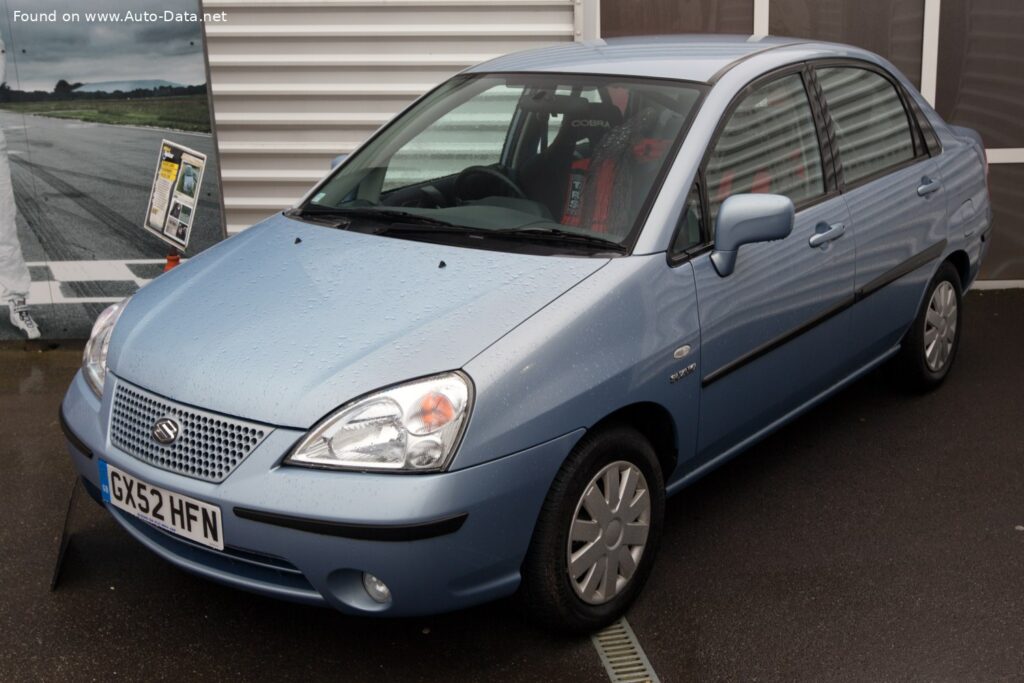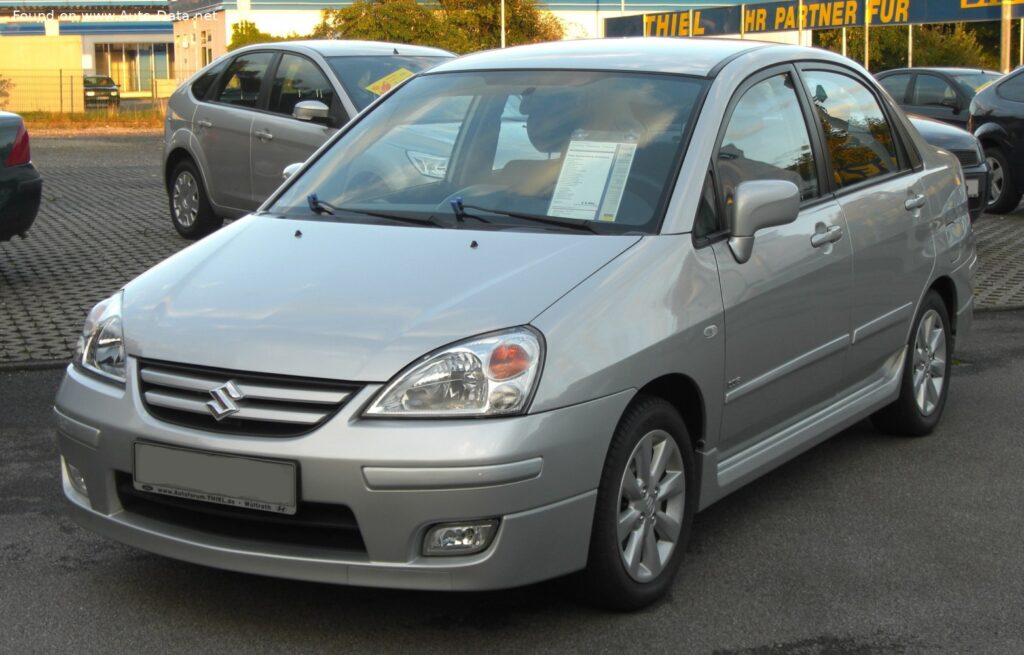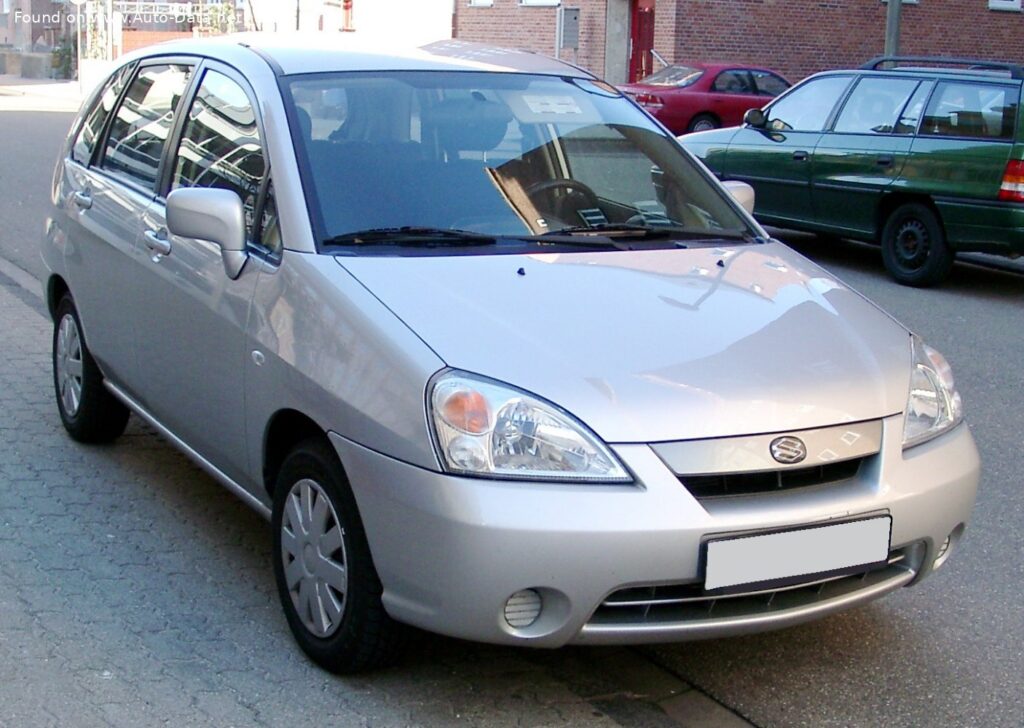
The Suzuki Liana Wagon I 1.6 i 16V (103 Hp) 4WD: A Global Compact Contender
The Suzuki Liana Wagon I 1.6 i 16V (103 Hp) 4WD represents a significant offering from the Japanese automaker Suzuki during the early 2000s. Produced from 2001 to 2004, the Liana, known as the Aerio in North America, was a compact family car designed to offer practicality, affordability, and a surprising level of versatility. This specific variant, equipped with a 1.6-liter engine and a capable all-wheel-drive system, aimed to carve out a niche in markets demanding both space and enhanced traction, particularly in regions with challenging weather conditions or varied terrain. The Liana was Suzuki’s global answer to the burgeoning compact segment, providing a no-nonsense approach to daily commuting and family duties, with the added benefit of Suzuki’s renowned expertise in compact 4×4 systems.
The Suzuki Liana Wagon I: An Overview
Launched as a successor to the Suzuki Baleno, the Liana (an acronym for “Life In A New Age”) aimed to bring a fresh perspective to Suzuki’s compact car lineup. The first generation, designated “Wagon I,” was primarily offered as a four-door sedan and a five-door station wagon (often referred to as an estate car in European markets). Its design prioritized interior space and practicality, catering to families and individuals seeking a functional vehicle without excessive frills. While its styling might have been considered somewhat conventional, its upright stance and relatively tall body contributed directly to its impressive interior volume and ease of access. The Liana was positioned as a sensible and reliable choice, embodying Suzuki’s reputation for building durable and efficient small cars. In markets where the Liana 1.6 i 16V (103 Hp) 4WD was sold, it served as an attractive option for those who required the added confidence and capability of an all-wheel-drive system in a compact, fuel-efficient package, distinguishing it from many front-wheel-drive competitors.
Powertrain and Performance
At the heart of the Suzuki Liana Wagon I 1.6 i 16V (103 Hp) 4WD was Suzuki’s M16A engine, a robust and well-regarded 1.6-liter (1586 cm3 or 96.78 cu. in.) inline four-cylinder unit. This naturally aspirated engine featured a Double Overhead Camshaft (DOHC) valvetrain with 16 valves (four per cylinder), promoting efficient breathing and a responsive power delivery. It utilized a multi-port manifold injection system for precise fuel metering. The engine produced a respectable 103 horsepower at 5500 revolutions per minute (rpm), making it adequately powerful for a vehicle of its size and intended purpose. Torque output stood at 144 Newton-meters (106.21 lb.-ft.) at 4000 rpm, providing sufficient pulling power for city driving and highway cruising.
Power was channeled through a five-speed manual transmission, offering direct engagement and good control over the engine’s output. A defining characteristic of this particular Liana variant was its all-wheel-drive (4×4) system. This setup provided enhanced traction and stability, particularly beneficial in adverse weather conditions like rain or snow, or on unpaved roads. While not designed for serious off-roading, the 4WD system significantly improved the vehicle’s sure-footedness compared to its two-wheel-drive counterparts.
Performance figures for the Liana Wagon I 1.6 i 16V (103 Hp) 4WD were consistent with its family-oriented nature. The car could accelerate from 0 to 60 miles per hour in a computed 11.4 seconds, with a 0-100 km/h sprint taking 12 seconds. Its maximum speed was approximately 99.42 mph (160 km/h). Fuel efficiency was a strong point for the Liana, especially considering its all-wheel-drive system. The combined fuel consumption was rated at 7.4 liters per 100 kilometers, translating to an impressive 31.8 US miles per gallon. Urban driving yielded about 25.3 US mpg, while extra-urban conditions saw consumption drop to 37.3 US mpg, highlighting its economical operation. The 50-liter (13.21 US gallon) fuel tank provided a decent cruising range.
Design, Ergonomics, and Features
The Suzuki Liana Wagon I was designed first and foremost for practicality. Its station wagon body type, with four doors and seating for five occupants, offered a flexible and spacious interior. The overall length of 166.54 inches (4230 mm), width of 66.54 inches (1690 mm), and height of 61.02 inches (1550 mm) contributed to a compact exterior footprint while maximizing internal volume. A wheelbase of 97.64 inches (2480 mm) provided a stable platform and contributed to the comfortable ride.
Inside, the Liana prioritized user-friendliness and durability. While specific trim levels and interior materials varied by market, the general theme was one of straightforward functionality. The elevated seating position offered good visibility for the driver, a common characteristic of compact SUVs and wagons of the era. Cargo capacity was a major selling point for the wagon variant. With the rear seats in place, the trunk offered a respectable 12.29 cubic feet (348 liters) of space. Folding down the rear seats significantly expanded this volume to a substantial 37.5 cubic feet (1062 liters), making the Liana capable of carrying larger items or luggage for extended trips.
In terms of chassis and safety, the Liana Wagon I featured a well-engineered suspension system, with wishbones at the front and coil springs at the rear, providing a balance of comfort and handling. Stopping power came from ventilated disc brakes on the front wheels and drum brakes on the rear, a common setup for compact cars of this period. An Anti-lock Braking System (ABS) was a standard assisting system, enhancing safety by preventing wheel lock-up during hard braking. Steering was handled by a rack and pinion system with hydraulic power steering, offering a direct and communicative feel to the driver. The vehicle rode on 185/65 R14 T tires mounted on 14-inch wheel rims, a practical choice for ride comfort and replacement cost.
Driving Dynamics and Safety
The driving experience in the Suzuki Liana Wagon I 1.6 i 16V (103 Hp) 4WD was characterized by its ease of use and predictable handling. The hydraulic power steering provided decent feedback, making the car feel maneuverable in urban environments and stable at highway speeds. The combination of its compact dimensions and relatively tight turning radius made parking and navigating crowded streets straightforward. The suspension setup, while not performance-oriented, absorbed road imperfections adequately, offering a comfortable ride for daily commutes and longer journeys.
The all-wheel-drive system was a key differentiator for this Liana variant. It operated without driver intervention, automatically distributing power to the wheels with the most grip. This provided a significant advantage in slippery conditions, enhancing stability and driver confidence. Whether facing wet roads, snowy conditions, or gravel paths, the 4WD system ensured better traction than a comparable front-wheel-drive vehicle. Safety features, while not as extensive as modern vehicles, included the essential Anti-lock Braking System (ABS), which was a crucial active safety component for the early 2000s, helping drivers maintain steering control during emergency braking. The Liana’s robust construction also contributed to its passive safety, designed to protect occupants in the event of a collision.
Technical Specifications
| Category | Specification | US Equivalent / Notes |
|---|---|---|
| General Information | ||
| Brand | Suzuki | |
| Model | Liana | |
| Generation | Liana Wagon I | |
| Type (Engine) | 1.6 i 16V (103 Hp) 4WD | |
| Production Start | 2001 year | |
| Production End | 2004 year | |
| Powertrain Architecture | Internal Combustion engine | |
| Body Type | Station wagon (estate) | 4 Doors, 5 Seats |
| Performance Specs | ||
| Fuel Consumption (Urban) | 9.3 l/100 km | 25.3 US mpg |
| Fuel Consumption (Extra Urban) | 6.3 l/100 km | 37.3 US mpg |
| Fuel Consumption (Combined) | 7.4 l/100 km | 31.8 US mpg |
| Fuel Type | Petrol (Gasoline) | |
| Acceleration 0-60 mph | 11.4 sec | Calculated by Auto-Data.net |
| Acceleration 0-100 km/h | 12 sec | |
| Maximum Speed | 160 km/h | 99.42 mph |
| Weight-to-Power Ratio | 12.4 kg/Hp | 80.8 Hp/tonne |
| Weight-to-Torque Ratio | 8.9 kg/Nm | 112.9 Nm/tonne |
| Engine Specs | ||
| Power | 103 Hp @ 5500 rpm | |
| Power per liter | 64.9 Hp/l | |
| Torque | 144 Nm @ 4000 rpm | 106.21 lb.-ft. @ 4000 rpm |
| Engine Layout | Front, Transverse | |
| Engine Model/Code | M16A | |
| Engine Displacement | 1586 cm3 | 96.78 cu. in. |
| Number of Cylinders | 4 | |
| Engine Configuration | Inline | |
| Cylinder Bore | 78 mm | 3.07 in. |
| Piston Stroke | 83 mm | 3.27 in. |
| Compression Ratio | 9.7:1 | |
| Valves per Cylinder | 4 | |
| Fuel Injection System | Multi-port manifold injection | |
| Engine Aspiration | Naturally aspirated engine | |
| Valvetrain | DOHC | |
| Engine Oil Capacity | 4.1 l | 4.33 US qt |
| Coolant Capacity | 6.5 l | 6.87 US qt |
| Space, Volume and Weights | ||
| Kerb Weight | 1275 kg | 2810.89 lbs. |
| Max. Weight | 1670 kg | 3681.72 lbs. |
| Max Load | 395 kg | 870.83 lbs. |
| Trunk (Boot) Space – Minimum | 348 l | 12.29 cu. ft. |
| Trunk (Boot) Space – Maximum | 1062 l | 37.5 cu. ft. |
| Fuel Tank Capacity | 50 l | 13.21 US gal |
| Dimensions | ||
| Length | 4230 mm | 166.54 in. |
| Width | 1690 mm | 66.54 in. |
| Height | 1550 mm | 61.02 in. |
| Wheelbase | 2480 mm | 97.64 in. |
| Front Track | 1450 mm | 57.09 in. |
| Rear (Back) Track | 1445 mm | 56.89 in. |
| Drivetrain, Brakes and Suspension Specs | ||
| Drive Wheel | All-wheel drive (4×4) | |
| Gearbox | 5 gears, manual transmission | |
| Front Suspension | Wishbone | |
| Rear Suspension | Coil spring | |
| Front Brakes | Ventilated discs | |
| Rear Brakes | Drum | |
| Assisting Systems | ABS (Anti-lock braking system) | |
| Steering Type | Steering rack and pinion | |
| Power Steering | Hydraulic Steering | |
| Tires Size | 185/65 R14 T | |
| Wheel Rims Size | 14 | |
Legacy and Market Impact
The Suzuki Liana Wagon I 1.6 i 16V (103 Hp) 4WD, and the Liana range as a whole, carved out a reputation as a practical, reliable, and affordable family car in its primary markets, particularly in Europe and Asia. Its relatively upright design and spacious interior made it a popular choice for those prioritizing utility over styling flair. The availability of an all-wheel-drive system in a compact wagon was a significant advantage, differentiating it from many front-wheel-drive competitors and appealing to buyers in regions with demanding climates or a preference for enhanced traction.
In Europe, the Liana competed against a broad array of compact wagons such as the Opel Astra Wagon, Ford Focus Wagon, Toyota Corolla Wagon, and the Skoda Octavia Combi. While it may not have offered the same level of brand prestige or dynamic polish as some European rivals, its competitive pricing, robust engineering, and the unique 4WD option provided a compelling value proposition. It was particularly appreciated for its low running costs and Suzuki’s reputation for mechanical dependability.
In the North American market, the Liana was sold as the Suzuki Aerio, available in both sedan and hatchback/wagon forms, including an AWD option. The Aerio struggled to gain significant market share against established players like the Honda Civic and Toyota Corolla, primarily due to its polarizing styling and Suzuki’s smaller dealer network. However, it did find a loyal following among those seeking an affordable, reliable, and uniquely capable compact car with all-wheel drive, especially in regions with heavy snowfall.
The Suzuki Liana’s historical significance lies in its embodiment of Suzuki’s core philosophy: producing functional, well-engineered, and often overlooked vehicles that excel in specific niches. The 1.6 i 16V (103 Hp) 4WD wagon variant, in particular, showcased Suzuki’s ability to integrate its SUV and 4×4 expertise into a more conventional passenger car, offering a blend of compact efficiency and all-weather capability that was rare in its segment. While not a groundbreaking design, its practicality and mechanical integrity ensured its place as a dependable workhorse for many families across the globe during its production run. It laid some groundwork for future Suzuki models that continued to blend compact dimensions with crossover-like capabilities.