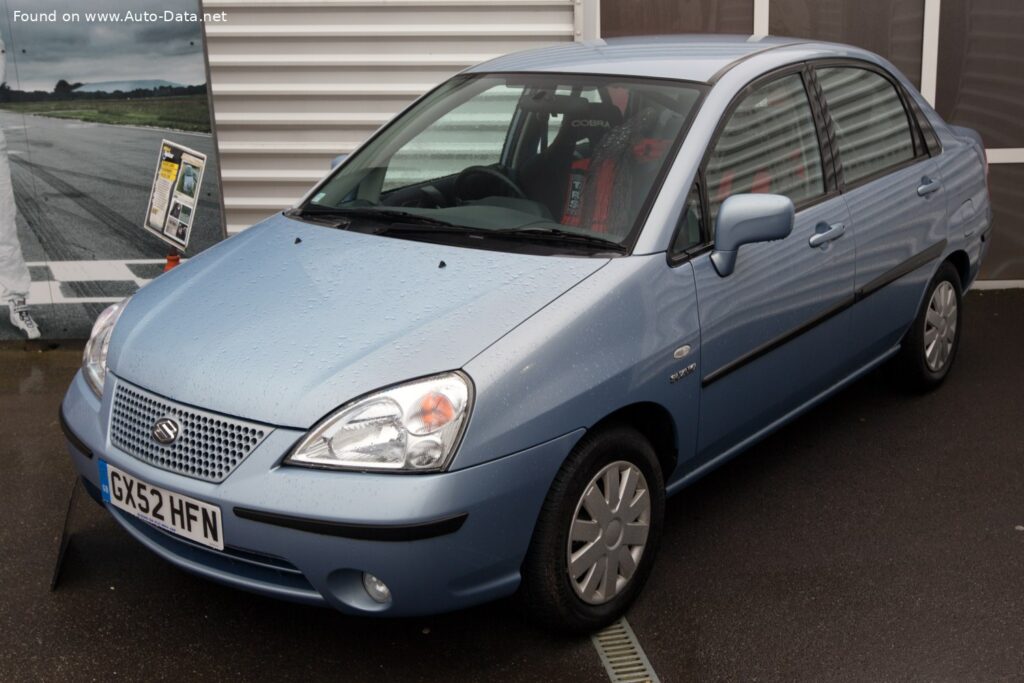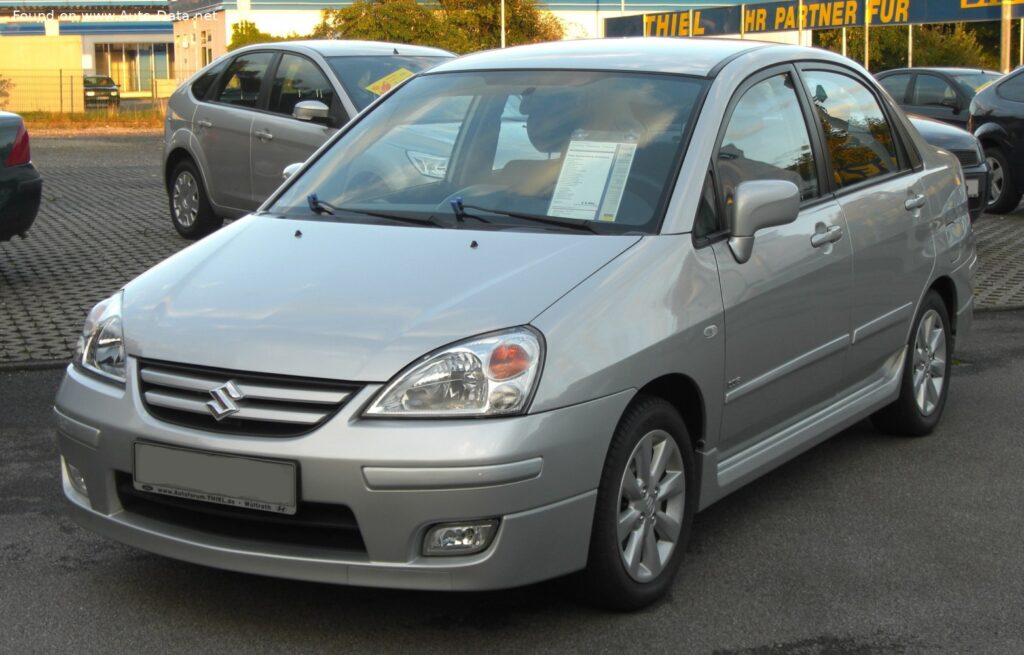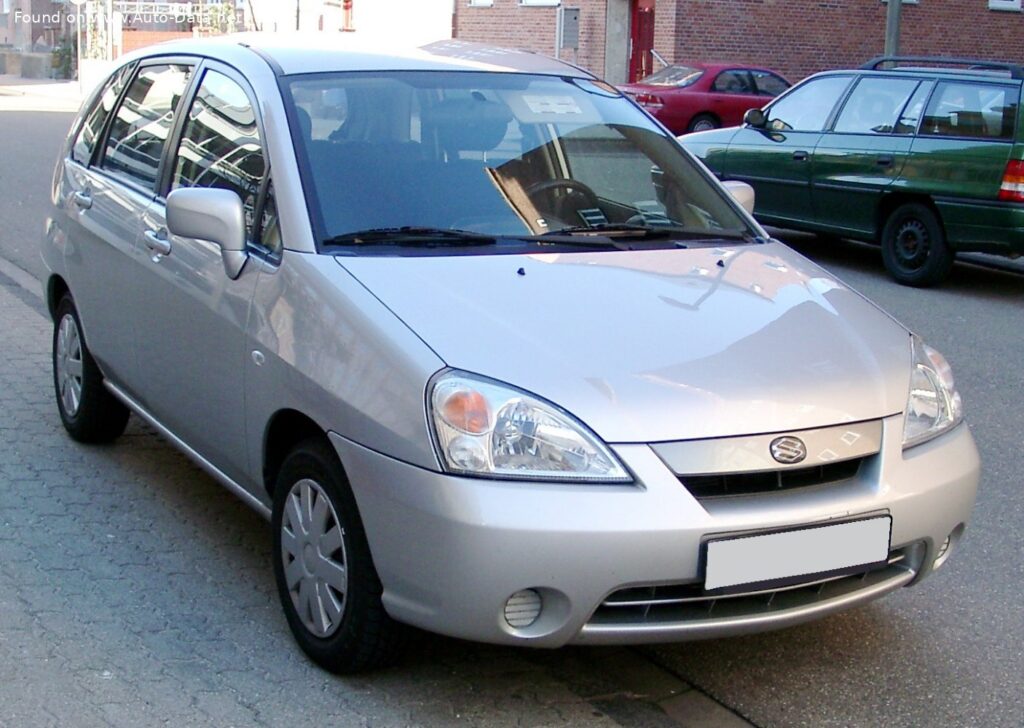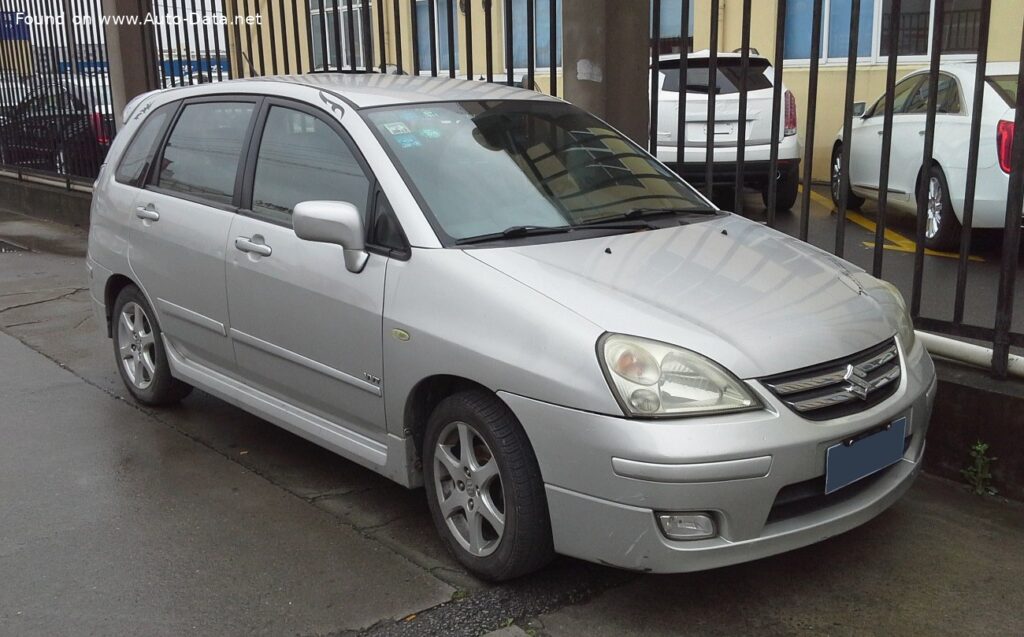
The Suzuki Liana Wagon I (facelift 2004) 1.6i (107 Hp) 4WD Automatic: A Global Compact Workhorse
The Suzuki Liana, an acronym for “Life In A New Age,” represented Suzuki’s foray into the global compact car segment, succeeding the Esteem/Cultus. Introduced in 2001, the Liana aimed to offer a practical, no-frills, and often all-wheel-drive alternative in markets primarily across Europe, Asia, and Oceania. The focus of this detailed analysis is the facelifted first-generation model, specifically the Suzuki Liana Wagon I (facelift 2004) 1.6i (107 Hp) 4WD Automatic, produced from 2004 to 2007. This particular variant highlighted Suzuki’s commitment to versatility, combining a fuel-efficient engine with the added traction of all-wheel drive and the convenience of an automatic transmission, all within a practical station wagon body style. While not a mainstream offering in the United States, the Liana carved out a niche globally for buyers seeking reliability, economy, and enhanced capability for diverse driving conditions, without the bulk or expense of a full-fledged SUV.
Engine and Performance of the Suzuki Liana Wagon I (facelift 2004) 1.6i (107 Hp) 4WD Automatic
At the heart of the 2004 Suzuki Liana Wagon I lies the M16A engine, a naturally aspirated 1.6-liter (1586 cm3 or 96.78 cubic inches) inline four-cylinder gasoline powerplant. This engine, known for its robust and straightforward design, features a Double Overhead Camshaft (DOHC) valvetrain with four valves per cylinder, optimizing airflow for a balance of power and efficiency. Fuel is delivered via a multi-port manifold injection system, ensuring precise fuel metering. With a compression ratio of 9.7:1, the engine produces a respectable 107 horsepower at 5500 rpm and 106.21 lb.-ft. of torque at 4000 rpm. This power output, while not class-leading, was more than adequate for the Liana’s intended purpose as a practical family vehicle, offering sufficient acceleration for urban driving and maintaining cruising speeds on highways.
The powertrain architecture is a front, transverse-mounted internal combustion engine, driving all four wheels through a 4-speed automatic transmission. The inclusion of a 4WD system was a significant differentiator for the Liana in its segment, providing enhanced grip and stability, particularly beneficial in adverse weather conditions or on unpaved roads. The automatic transmission, while a conventional 4-speed unit, offered smooth and predictable shifts, contributing to a relaxed driving experience. Performance figures for this setup included a top speed of 102.53 mph (165 km/h). Fuel economy was rated at 22.8 US mpg in urban settings and 28.7 US mpg for extra-urban driving, which was competitive for an all-wheel-drive compact wagon of its era. The vehicle also met the Euro 4 emission standard, reflecting its compliance with contemporary environmental regulations.
Design and Features: Practicality Meets Compact Versatility
The Suzuki Liana Wagon I (facelift 2004) maintains the practical and functional design ethos of its initial release, with subtle updates characteristic of a mid-cycle refresh. As a 5-door station wagon, it prioritizes interior space and cargo versatility, making it an appealing option for families or individuals needing more utility than a traditional sedan. The exterior dimensions underscore its compact nature: a length of 166.54 inches (4230 mm), a width of 66.54 inches (1690 mm), and a height of 61.02 inches (1550 mm). These dimensions, coupled with a wheelbase of 97.64 inches (2480 mm), contribute to its maneuverability in city environments while still providing a stable ride.
Inside, the Liana Wagon offers seating for five occupants. The station wagon body style naturally translates to a generous cargo area, making it ideal for hauling groceries, luggage, or sporting equipment. While specific interior features beyond the seating capacity are not detailed, a vehicle of this segment and era would typically include essential comforts such as air conditioning, power windows, and a basic audio system. Safety was addressed with the inclusion of an Anti-lock Braking System (ABS), a crucial active safety feature that helps drivers maintain steering control during emergency braking maneuvers. The Liana’s design philosophy was clearly centered on providing reliable, unpretentious transportation with an emphasis on utility and practicality over flamboyant styling or luxury appointments.
Technical Specifications of the Suzuki Liana Wagon I (facelift 2004) 1.6i (107 Hp) 4WD Automatic
| Category | Specification |
|---|---|
| General Information | |
| Brand | Suzuki |
| Model | Liana |
| Generation | Liana Wagon I (facelift 2004) |
| Type (Engine) | 1.6i (107 Hp) 4WD Automatic |
| Start of Production | 2004 year |
| End of Production | 2007 year |
| Powertrain Architecture | Internal Combustion engine |
| Body type | Station wagon (estate) |
| Seats | 5 |
| Doors | 5 |
| Performance Specs | |
| Fuel Consumption (urban) | 10.3 l/100 km (22.8 US mpg) |
| Fuel Consumption (extra urban) | 8.2 l/100 km (28.7 US mpg) |
| Fuel Type | Gasoline (Petrol) |
| Maximum Speed | 165 km/h (102.53 mph) |
| Emission Standard | Euro 4 |
| Weight-to-Power Ratio | 11.5 kg/Hp (87 Hp/tonne) |
| Weight-to-Torque Ratio | 8.5 kg/Nm (117.1 Nm/tonne) |
| Engine Specs | |
| Power | 107 Hp @ 5500 rpm |
| Power per liter | 67.5 Hp/l |
| Torque | 144 Nm @ 4000 rpm (106.21 lb.-ft. @ 4000 rpm) |
| Engine Layout | Front, Transverse |
| Engine Model/Code | M16A |
| Engine Displacement | 1586 cm3 (96.78 cu. in.) |
| Number of Cylinders | 4 |
| Engine Configuration | Inline |
| Cylinder Bore | 78 mm (3.07 in.) |
| Piston Stroke | 83 mm (3.27 in.) |
| Compression Ratio | 9.7:1 |
| Number of Valves per Cylinder | 4 |
| Fuel Injection System | Multi-port manifold injection |
| Engine Aspiration | Naturally aspirated engine |
| Valvetrain | DOHC |
| Engine Oil Capacity | 4.1 l (4.33 US qt) |
| Coolant Capacity | 6.9 l (7.29 US qt) |
| Space, Volume and Weights | |
| Kerb Weight | 1230 kg (2711.69 lbs.) |
| Dimensions | |
| Length | 4230 mm (166.54 in.) |
| Width | 1690 mm (66.54 in.) |
| Height | 1550 mm (61.02 in.) |
| Wheelbase | 2480 mm (97.64 in.) |
| Drivetrain, Brakes and Suspension Specs | |
| Drive Wheel | All wheel drive (4×4) |
| Number of Gears and Type of Gearbox | 4 gears, automatic transmission |
| Assisting Systems | ABS (Anti-lock braking system) |
Legacy and Market Impact of the Suzuki Liana
The Suzuki Liana, particularly the Wagon I (facelift 2004) 1.6i (107 Hp) 4WD Automatic, occupied a distinct position in the global automotive landscape. While it never achieved significant sales volumes in North America, where Suzuki’s lineup was more focused on SUVs and smaller sedans, it found its stride in markets where practicality, affordability, and the option of all-wheel drive were highly valued. In Europe, Asia, and Oceania, the Liana competed against a broad range of compact cars and wagons, including models like the Toyota Corolla Wagon, Honda Civic Wagon, Opel Astra, Ford Focus, and Skoda Octavia Combi. Its primary appeal lay in offering a compelling package that blended the economy of a compact car with the versatility of a small station wagon and the added security of AWD, often at a more accessible price point than its rivals.
The Liana garnered a reputation for its reliability and straightforward mechanics. The M16A engine, shared with other Suzuki models, was known for its durability and ease of maintenance, contributing to lower running costs for owners. The 4WD system, while not designed for heavy off-roading, provided invaluable traction on snowy roads, muddy tracks, or gravel paths, making it a popular choice in regions with challenging climates or varied terrain. This capability, combined with its spacious interior and decent fuel economy, made it a practical daily driver for families and individuals alike.
Despite its virtues, the Liana’s design was often considered conservative, lacking the stylistic flair of some European competitors. Its relatively short production run for the facelifted model (2004-2007) reflects the rapid evolution of the compact segment, with manufacturers constantly introducing new models and technologies. Suzuki eventually replaced the Liana with the SX4, a model that further emphasized the crossover concept, blending hatchback and SUV attributes. Nevertheless, the Liana Wagon I (facelift 2004) 1.6i (107 Hp) 4WD Automatic remains a testament to Suzuki’s engineering philosophy: building robust, functional, and value-oriented vehicles that cater to specific market needs. Its legacy is that of an understated but highly capable compact wagon that reliably served its owners in diverse environments, proving that practicality and all-weather capability could be delivered in an accessible and unpretentious package.