
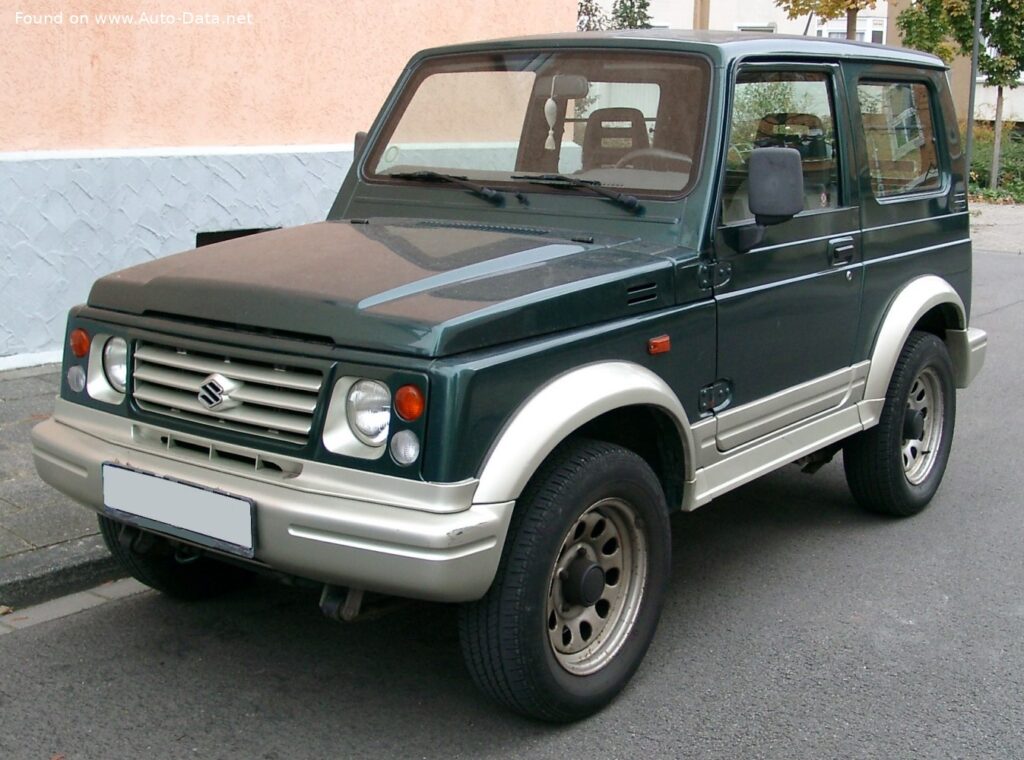
The Suzuki Samurai (SJ), a compact and highly capable off-road vehicle, represents a significant chapter in the history of global utility vehicles. While its gasoline-powered variants achieved iconic status in North America, the 1.9 TD (63 Hp) model, produced between 1998 and 2003, played a crucial role in European and other international markets where diesel engines were favored for their fuel efficiency and low-end torque characteristics. This particular iteration of the Samurai (SJ) continued the vehicle’s legacy as an affordable, rugged, and remarkably agile machine, perfectly suited for both challenging trails and economical daily driving in regions where its compact dimensions and robust construction were highly valued. It maintained the core philosophy of the Samurai line: a no-nonsense, go-anywhere attitude packed into a small footprint, solidifying its reputation as a true workhorse and an enthusiast’s favorite.
The Evolution and Market Niche of the Suzuki Samurai (SJ) 1.9 TD (63 Hp)
The Suzuki Samurai, known as the Jimny in many markets, has a storied history dating back to the early 1970s. The SJ generation, introduced in 1981, further cemented its global appeal, becoming synonymous with robust simplicity and genuine off-road capability. The 1.9 TD (63 Hp) variant, specifically manufactured from 1998 to 2003, emerged during a period when stricter emissions standards and a growing demand for diesel efficiency were influencing the European automotive landscape. This model was a direct response to those market forces, offering a more economical and torque-rich powertrain option compared to its gasoline counterparts, without compromising the Samurai’s legendary off-road prowess. It carved out a niche for itself among farmers, adventurers, and those seeking a low-cost, high-durability utility vehicle in regions where diesel fuel was often more accessible and cheaper.
Unlike its heavily debated North American gasoline siblings, which faced scrutiny over stability concerns, the European diesel Samurai models were largely embraced for their intended purpose. The 1.9 TD (63 Hp) engine provided a sensible balance of power and economy, allowing the lightweight Samurai to navigate rough terrain with surprising ease while keeping running costs down. Its compact size was also a distinct advantage in narrow European country lanes and crowded urban environments, offering a versatility that larger, more conventional SUVs often lacked. This particular generation of the Samurai (SJ) represented a maturation of the platform, integrating a more modern and efficient powertrain while retaining the fundamental design principles that made it so successful.
Engine and Performance: The 1.9 TD (63 Hp) Powertrain
At the heart of the Suzuki Samurai (SJ) 1.9 TD (63 Hp) lies the F8Q engine, a 1.9-liter turbocharged diesel unit. While its output of 63 horsepower might seem modest by modern standards, it was perfectly aligned with the Samurai’s lightweight construction and utilitarian purpose. The key to its performance, especially in off-road scenarios, was the turbocharger, which significantly boosted torque production at lower RPMs compared to naturally aspirated diesel engines of similar displacement. This characteristic is vital for off-road driving, where sustained pulling power and controlled throttle response are often more critical than outright horsepower.
The F8Q engine’s design emphasized durability and simplicity, attributes that align well with the Samurai’s reputation for reliability in harsh conditions. Diesel fuel, known for its higher energy density, contributed to better fuel economy, which was a significant selling point in markets with high fuel prices. The engine’s robust construction meant it could withstand the rigors of off-road use and prolonged periods of heavy labor. For a vehicle weighing around 2,000 to 2,500 pounds, 63 horsepower combined with a healthy dose of torque (though specific torque figures are not provided, turbo diesels of this era typically offered around 90-110 lb-ft) provided ample motivation for climbing steep inclines, traversing muddy tracks, and hauling light loads. The internal combustion engine architecture, coupled with a manual transmission (typical for these models), offered direct control over power delivery, a feature highly valued by off-road enthusiasts.
Design and Features: Form Follows Function
The Suzuki Samurai (SJ) 1.9 TD (63 Hp) maintained the classic, no-frills design language that characterized the entire SJ series. Its body type is unequivocally an off-road vehicle, featuring a robust, boxy silhouette that prioritizes utility and ruggedness over aerodynamic sleekness. This design not only contributed to its iconic appearance but also served a functional purpose, maximizing interior space and offering excellent visibility from the driver’s seat. The vehicle came with three doors, comprising two front doors and a side-hinged rear door for cargo access, and was configured to seat four occupants, albeit with a relatively compact rear seating area typical of a small SUV designed for maneuverability.
Key design elements included its short wheelbase and minimal overhangs, which are crucial for achieving impressive approach, departure, and breakover angles – essential metrics for serious off-road capability. The high ground clearance, combined with a simple yet effective four-wheel-drive system (often a part-time 4×4 with a low-range transfer case), allowed the Samurai to tackle obstacles that would stop larger, more sophisticated SUVs in their tracks. While the interior was spartan by modern standards, it was designed for durability and ease of cleaning, featuring hard-wearing plastics and fabrics capable of withstanding the mud and grime associated with its intended use. Features were kept to a minimum, focusing on the essentials: a robust chassis, reliable powertrain, and effective off-road hardware, reflecting an era when utility and mechanical integrity were prioritized over luxury amenities.
Technical Specifications: Suzuki Samurai (SJ) 1.9 TD (63 Hp)
| Category | Specification |
|---|---|
| Brand | Suzuki |
| Model | Samurai |
| Generation | Samurai (SJ) |
| Type (Engine) | 1.9 TD (63 Hp) |
| Start of production | 1998 year |
| End of production | 2003 year |
| Powertrain Architecture | Internal Combustion engine |
| Body type | Off-road vehicle |
| Seats | 4 |
| Doors | 3 |
| Fuel Type | Diesel |
| Power | 63 Hp |
| Engine Model/Code | F8Q |
| Engine aspiration | Turbocharger |
Legacy and Market Impact of the Suzuki Samurai (SJ) 1.9 TD (63 Hp)
The Suzuki Samurai (SJ) 1.9 TD (63 Hp), much like its gasoline-powered brethren, left an indelible mark on the compact off-road segment, particularly in markets outside North America. Its legacy is one of unparalleled capability in a small package, establishing it as a benchmark for lightweight, affordable off-roaders. In Europe and parts of Asia, where the diesel variant was prevalent, it was revered for its fuel efficiency, robust construction, and legendary reliability. It wasn’t uncommon to find these vehicles serving as farm vehicles, rural utility transporters, or highly customized trail rigs, enduring harsh conditions with minimal fuss.
Competitors in its primary markets during its production run included vehicles like the Lada Niva, another spartan but capable off-roader, and potentially some smaller Daihatsu or Mahindra models. However, the Samurai often stood out due to Suzuki’s reputation for mechanical dependability and a surprisingly sophisticated (for its class) four-wheel-drive system. While it lacked the creature comforts of more mainstream SUVs, its strength lay in its focused design: a body-on-frame construction, solid axles, and a dedicated low-range transfer case made it an unstoppable force on challenging terrain. This mechanical integrity fostered a massive aftermarket industry, with countless modifications available to enhance its off-road prowess even further.
The Samurai’s market impact extended beyond its sales figures. It cultivated a dedicated following of enthusiasts who appreciated its simplicity, ease of maintenance, and the sheer joy of driving a vehicle that felt utterly connected to the road (or lack thereof). Its historical significance lies in proving that serious off-road capability doesn’t require a massive footprint or a prohibitive price tag. It democratized off-roading, making it accessible to a broader audience. Even years after its production ceased in 2003, the Suzuki Samurai (SJ), including the 1.9 TD (63 Hp) variant, continues to be sought after by collectors, off-road enthusiasts, and those who appreciate its timeless design and unpretentious functionality. It serves as a testament to Suzuki’s engineering philosophy of building small, capable, and durable vehicles that punch well above their weight class.
