
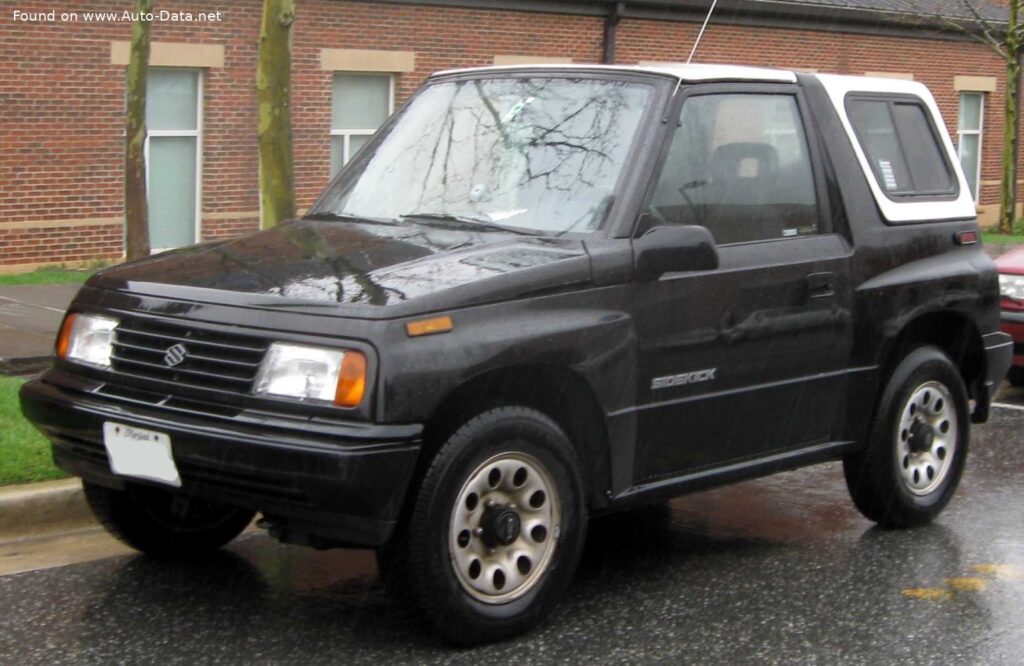
The Suzuki Sidekick 1.3 (64 Hp) represents a pivotal model in the emergence of the compact sport utility vehicle (SUV) segment, particularly in the North American market where it gained significant traction. Launched in 1988, this first-generation Sidekick, known globally as the Suzuki Vitara or Escudo, offered a unique blend of rugged off-road capability and urban maneuverability, packaged in a more accessible and fuel-efficient format than traditional, larger SUVs. Produced until 1998, the Sidekick was instrumental in shaping consumer perceptions of what a utility vehicle could be, moving beyond pure workhorse applications to embrace recreational and lifestyle uses. Its straightforward engineering, coupled with a robust body-on-frame construction, made it a popular choice for buyers seeking an affordable and reliable vehicle capable of handling diverse terrains, from city streets to unpaved trails.
The Suzuki Sidekick 1.3 (64 Hp): A Pioneer in the Compact SUV Segment
The Suzuki Sidekick, particularly in its 1.3-liter iteration with 64 horsepower, carved out a distinct niche in the automotive landscape of the late 1980s and 1990s. Positioned as a versatile and economical alternative to larger, more cumbersome SUVs, it appealed to a broad demographic, from young adventurers to families seeking a practical second vehicle. Its compact dimensions and agile handling made it well-suited for urban environments, while its genuine four-wheel-drive capabilities (where equipped) ensured it could tackle more demanding off-road conditions. The Sidekick’s market entry coincided with a growing consumer interest in vehicles that offered both utility and a sense of freedom, a trend that the Sidekick, along with its twin, the Geo Tracker, significantly capitalized on and helped to popularize.
Engine and Performance
At the heart of the Suzuki Sidekick 1.3 (64 Hp) was the reliable G13A engine, a naturally aspirated inline-four gasoline unit known for its simplicity and durability. With a displacement of 1.3 liters (approximately 79 cubic inches), this powerplant delivered a modest but effective 64 horsepower. While this figure might seem low by contemporary standards, it was entirely adequate for the Sidekick’s lightweight chassis and intended applications. The engine was engineered for practical, everyday performance, offering respectable fuel economy for its time and sufficient torque for urban driving and light off-road excursions. Its naturally aspirated design contributed to its reliability and ease of maintenance, appealing to owners who valued straightforward mechanics over high-tech complexity. The power delivery was smooth and predictable, making the Sidekick an accessible vehicle for drivers of varying experience levels, whether navigating city traffic or traversing rough terrain. The engine’s robust nature was a key factor in the Sidekick’s reputation for longevity and dependability, allowing many units to remain on the road for decades after their initial production.
Design and Features
The design philosophy of the Suzuki Sidekick was rooted in functionality and rugged charm. As an SUV, its body-on-frame construction provided a sturdy foundation, offering excellent durability and torsional rigidity, crucial for off-road performance. This architecture, more common in full-size trucks and SUVs, differentiated the Sidekick from many car-based vehicles and contributed to its robust feel. The exterior styling was characterized by its boxy, no-nonsense aesthetic, embodying the utilitarian spirit of a true off-roader. Depending on the market and specific trim level, the Sidekick was available in various configurations, including two-door soft-tops, two-door hard-tops, and four-door models, offering versatility to suit different consumer needs and preferences. The two-door soft-top, in particular, became an iconic variant, evoking a sense of adventure and open-air freedom.
Inside, the Sidekick’s cabin prioritized practicality and ease of use. While not luxurious, the interior was thoughtfully laid out, with durable materials designed to withstand the rigors of active lifestyles. Features typically included basic instrumentation, manual windows, and straightforward climate controls, reflecting the vehicle’s emphasis on affordability and functionality. Seating was comfortable for its class, and despite its compact exterior, the Sidekick offered reasonable cargo space, especially with the rear seats folded down. Safety features, typical for vehicles of its era, included standard seatbelts. The inherent strength of its body-on-frame design also offered a degree of passive safety. The Sidekick’s high driving position provided excellent visibility, a desirable trait for both city driving and navigating challenging trails. Its design struck a balance between a rugged utility vehicle and a compact, approachable daily driver, a formula that proved highly successful for Suzuki.
Technical Specifications
| Specification | Detail |
|---|---|
| Brand | Suzuki |
| Model | Sidekick |
| Generation | Sidekick |
| Type (Engine) | 1.3 (64 Hp) |
| Start of production | 1988 year |
| End of production | 1998 year |
| Powertrain Architecture | Internal Combustion engine |
| Body type | SUV |
| Fuel Type | Petrol (Gasoline) |
| Power | 64 Hp |
| Engine Model/Code | G13A |
| Engine aspiration | Naturally aspirated engine |
| Drivetrain | Internal Combustion engine |
Legacy and Market Impact
The Suzuki Sidekick 1.3 (64 Hp), alongside its Geo Tracker twin, left an indelible mark on the automotive market, particularly in North America. It quickly earned a reputation for its exceptional reliability, affordability, and surprising off-road prowess, especially in its four-wheel-drive configurations. Its compact size and nimble handling made it an ideal choice for navigating tight urban spaces, while its robust chassis and available low-range gearing allowed it to confidently tackle trails and unpaved roads where larger vehicles might struggle. This dual capability was a key differentiator, setting it apart from more car-like compacts and more unwieldy traditional SUVs.
During its production run, the Sidekick faced competition from a growing array of compact SUVs and crossovers. Early competitors included vehicles like the Ford Bronco II and Jeep Wrangler (YJ generation), though the Sidekick typically offered a more car-like driving experience and better fuel economy than the Wrangler, while being more off-road capable than the Bronco II. As the 1990s progressed, newer rivals such as the Toyota RAV4 and Honda CR-V emerged, offering more refined, car-based platforms. However, the Sidekick maintained its appeal for buyers prioritizing traditional SUV ruggedness and affordability. Its body-on-frame construction and simpler mechanics often made it a preferred choice for those planning significant off-road modifications or seeking a vehicle known for its ease of maintenance and repair.
The Sidekick’s historical significance lies in its role as a trailblazer in the compact SUV segment. It demonstrated that consumers desired smaller, more fuel-efficient utility vehicles that didn’t compromise on capability or fun. It helped to popularize the “cute ute” phenomenon, paving the way for the explosion of crossovers and smaller SUVs that dominate today’s market. Its legacy is also evident in its enduring popularity among enthusiasts. Even decades after its production ceased, many Suzuki Sidekicks remain in active use, cherished by owners for their classic styling, robust engineering, and continued utility. The Sidekick cemented Suzuki’s reputation as a manufacturer of capable, reliable, and characterful compact four-wheel-drive vehicles, building a foundation for future successful models in its lineup like the later generations of the Vitara and Grand Vitara.
