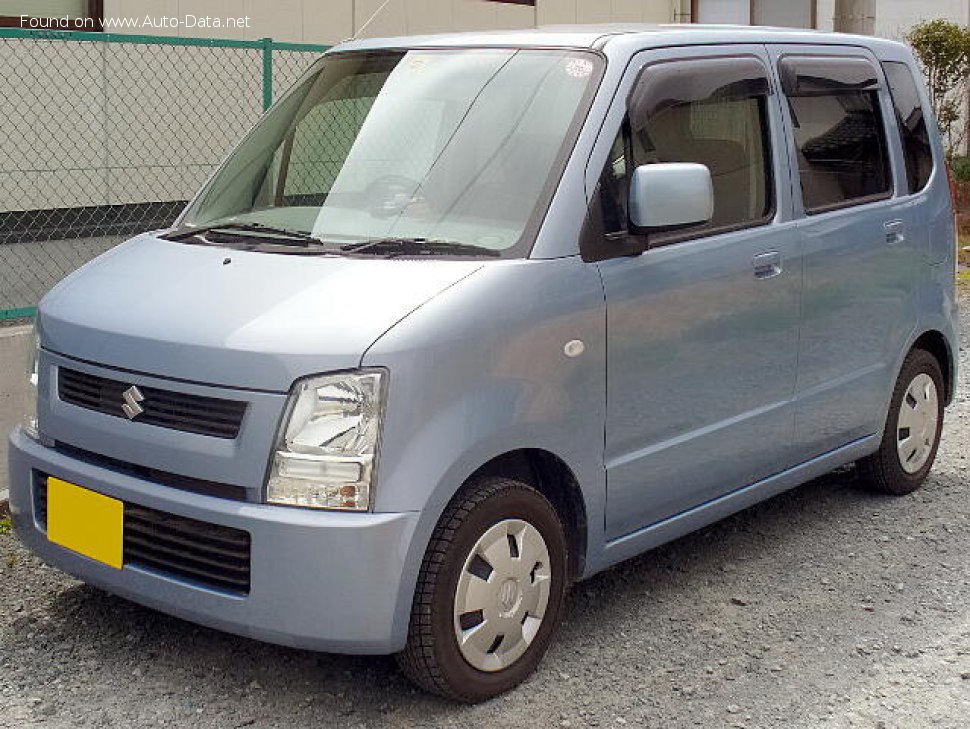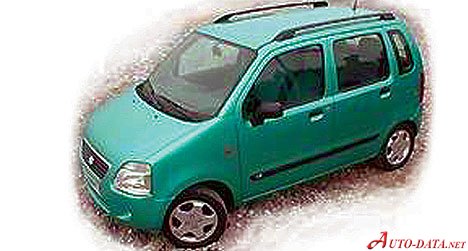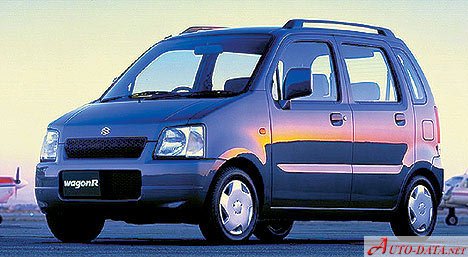
The Suzuki Wagon R+ II 1.3 i 16V (76 Hp), produced between 2000 and 2008, represented a significant iteration of Suzuki’s popular compact minivan, or microvan, concept. Primarily aimed at the demanding European and Asian markets, where urban maneuverability, efficient packaging, and fuel economy are paramount, the Wagon R+ II built upon the success of its predecessor by offering enhanced practicality and refined performance. While not a common sight on American roads, its design philosophy and technical specifications provide a fascinating insight into automotive engineering focused on maximizing utility within a remarkably small footprint. This generation of the Wagon R+ continued Suzuki’s tradition of offering versatile, space-efficient vehicles that catered to a diverse range of urban dwellers and small families, setting a benchmark for compact vehicle design in its segment.
The Suzuki Wagon R+ II: A Compact Innovator
The Suzuki Wagon R+ II, particularly the 1.3 i 16V (76 Hp) variant, embodied a pragmatic approach to automotive design, prioritizing interior volume and user-friendliness over conventional styling cues. Its “tall boy” architecture, characterized by a relatively short length and width but an impressive height, was a direct response to the need for spaciousness in congested urban environments. This design ensured easy ingress and egress, along with a commanding driving position, which significantly enhanced visibility – a crucial safety aspect in busy city traffic. The second generation introduced a more contemporary aesthetic, with smoother lines and updated lighting, yet retained the fundamental boxy silhouette that defined its identity and functionality.
In markets across Europe and Asia, the Wagon R+ II quickly established itself as a go-to option for those seeking a highly adaptable and economical vehicle. Its compact dimensions, measuring just 137.8 inches in length and 62.99 inches in width, made it exceptionally agile and easy to park, attributes highly valued in densely populated areas. Despite its diminutive exterior, the clever packaging allowed for a surprisingly spacious cabin, capable of comfortably accommodating five adults. This ingenious use of space, coupled with its robust and reliable mechanicals, cemented its reputation as a practical and dependable workhorse, whether for daily commutes, family errands, or even light commercial duties.
Engine and Performance of the Suzuki Wagon R+ II 1.3 i 16V (76 Hp)
At the heart of the Suzuki Wagon R+ II 1.3 i 16V (76 Hp) was a naturally aspirated 1.3-liter (1298 cm3 or 79.21 cu. in.) inline-four gasoline engine, designated with the code G13BB. This powerplant was engineered for efficiency and reliability, perfectly suited to the vehicle’s urban-centric role. Featuring a Single Overhead Camshaft (OHC) valvetrain and a multi-port manifold injection fuel system, the engine delivered a respectable 76 horsepower at 5500 revolutions per minute (rpm). This power output, combined with a compression ratio of 9.5:1, allowed for a smooth and responsive driving experience within city limits.
Torque figures further underscored the engine’s practical design, peaking at 84.82 lb.-ft. (115 Nm) at 4250 rpm. This ample low-to-mid-range torque was crucial for navigating stop-and-go traffic and ensuring sufficient pulling power without constantly needing to rev the engine excessively. Paired with a precise 5-speed manual transmission, the front-wheel-drive (FWD) architecture provided a direct and engaging driving feel, making the Wagon R+ II a surprisingly enjoyable vehicle to pilot. The FWD configuration also contributed to better traction in adverse conditions and optimized interior space by eliminating the need for a bulky transmission tunnel.
Performance metrics for the 1.3 i 16V (76 Hp) model were entirely adequate for its segment. The vehicle could accelerate from 0 to 60 miles per hour in a calculated 12.2 seconds, with a maximum speed reaching 96.31 mph (155 km/h). While not designed for high-speed thrills, these figures demonstrated its capability to handle highway speeds when necessary. More importantly, fuel economy was a strong selling point. The Wagon R+ II delivered an impressive 26.1 US mpg in urban driving conditions and an even better 33.6 US mpg on the highway, making it an economical choice for budget-conscious consumers. Its 10.83 US gallon fuel tank provided a decent range, reducing the frequency of fuel stops. The engine’s modest 3.8 US quarts oil capacity and 4.65 US quarts coolant capacity further highlighted its compact and efficient design.
Design and Features of the Suzuki Wagon R+ II
The design of the Suzuki Wagon R+ II was an exercise in functional aesthetics. Its five-door minivan body type was a masterclass in maximizing internal volume. With a height of 65.35 inches (1660 mm) and a wheelbase of 92.91 inches (2360 mm), the vehicle offered exceptional headroom and legroom for its class, making it comfortable for all five occupants. The large windows and upright seating position provided excellent all-around visibility, a significant advantage in crowded urban settings.
Practicality extended to its cargo capabilities. The rear hatch opened wide, revealing a minimum trunk space of 7.7 cubic feet (218 liters). However, the true versatility became apparent when the rear seats were folded, expanding the cargo area to a cavernous 44.14 cubic feet (1250 liters). This flexibility allowed the Wagon R+ II to easily switch between passenger transport and hauling duties, catering to a wide array of needs. The maximum payload capacity of 903.9 lbs (410 kg) further underscored its utility.
Underneath its practical exterior, the Wagon R+ II featured a robust and reliable chassis. The front suspension utilized a spring strut setup, a common and effective design for providing a balance of comfort and handling. The rear suspension employed coil springs, contributing to a stable and compliant ride quality, even when the vehicle was fully loaded. Braking performance was handled by disc brakes at the front and drum brakes at the rear, a standard configuration for vehicles in this segment during its production era. Crucially, the inclusion of an Anti-lock Braking System (ABS) as an assisting system enhanced safety by preventing wheel lock-up during hard braking, allowing the driver to maintain steering control.
Steering was managed by a rack and pinion system, further enhanced by electric power steering (EPS). This feature significantly reduced the effort required to turn the wheel, making parking and low-speed maneuvers effortless – a major benefit in tight urban environments. The vehicle rode on 165/65 R14 tires mounted on 4.5J x 14 wheel rims, a practical choice that offered a good balance of grip, ride comfort, and affordability for replacement. Overall, the Suzuki Wagon R+ II was a testament to thoughtful engineering, blending compact dimensions with impressive interior space, practical features, and reliable performance, making it a highly successful model in its intended markets.
Technical Specifications
| Brand | Suzuki |
| Model | Wagon R+ |
| Generation | Wagon R+ II |
| Type (Engine) | 1.3 i 16V (76 Hp) |
| Start of production | 2000 year |
| End of production | 2008 year |
| Powertrain Architecture | Internal Combustion engine |
| Body type | Minivan |
| Seats | 5 |
| Doors | 5 |
| Fuel consumption (economy) – urban | 26.1 US mpg (9 l/100 km) |
| Fuel consumption (economy) – extra urban | 33.6 US mpg (7 l/100 km) |
| Fuel Type | Petrol (Gasoline) |
| Acceleration 0 – 60 mph | 12.2 sec |
| Maximum speed | 96.31 mph (155 km/h) |
| Weight-to-power ratio | 12.4 kg/Hp |
| Power | 76 Hp @ 5500 rpm |
| Power per liter | 58.6 Hp/l |
| Torque | 84.82 lb.-ft. @ 4250 rpm (115 Nm) |
| Engine layout | Front, Transverse |
| Engine Model/Code | G13BB |
| Engine displacement | 1.3 l (1298 cm3, 79.21 cu. in.) |
| Number of cylinders | 4 |
| Engine configuration | Inline |
| Cylinder Bore | 2.91 in. (74 mm) |
| Piston Stroke | 2.97 in. (75.5 mm) |
| Compression ratio | 9.5:1 |
| Number of valves per cylinder | 4 |
| Fuel injection system | Multi-port manifold injection |
| Engine aspiration | Naturally aspirated engine |
| Valvetrain | OHC |
| Engine oil capacity | 3.8 US qt (3.6 l) |
| Coolant | 4.65 US qt (4.4 l) |
| Kerb Weight | 2083.37 lbs. (945 kg) |
| Max. weight | 2987.26 lbs. (1355 kg) |
| Max load | 903.9 lbs. (410 kg) |
| Trunk (boot) space – minimum | 7.7 cu. ft. (218 l) |
| Trunk (boot) space – maximum | 44.14 cu. ft. (1250 l) |
| Fuel tank capacity | 10.83 US gal (41 l) |
| Length | 137.8 in. (3500 mm) |
| Width | 62.99 in. (1600 mm) |
| Height | 65.35 in. (1660 mm) |
| Wheelbase | 92.91 in. (2360 mm) |
| Front track | 55.91 in. (1420 mm) |
| Rear (Back) track | 54.53 in. (1385 mm) |
| Drivetrain Architecture | The Internal combustion engine (ICE) drives the front wheels of the vehicle. |
| Drive wheel | Front wheel drive |
| Number of gears and type of gearbox | 5 gears, manual transmission |
| Front suspension | Spring Strut |
| Rear suspension | Coil spring |
| Front brakes | Disc |
| Rear brakes | Drum |
| Assisting systems | ABS (Anti-lock braking system) |
| Steering type | Steering rack and pinion |
| Power steering | Electric Steering |
| Tires size | 165/65 R14 |
| Wheel rims size | 4.5J x 14 |