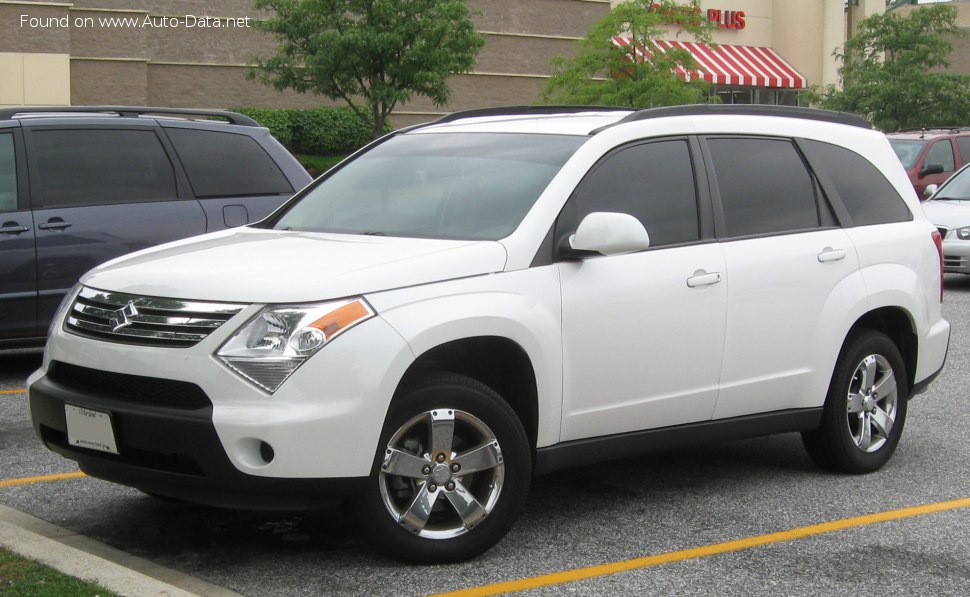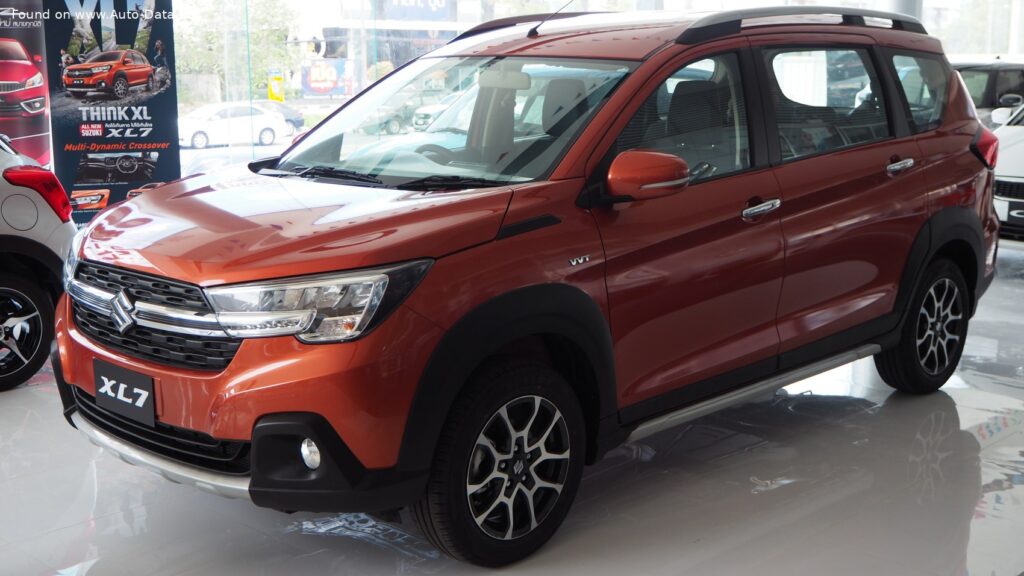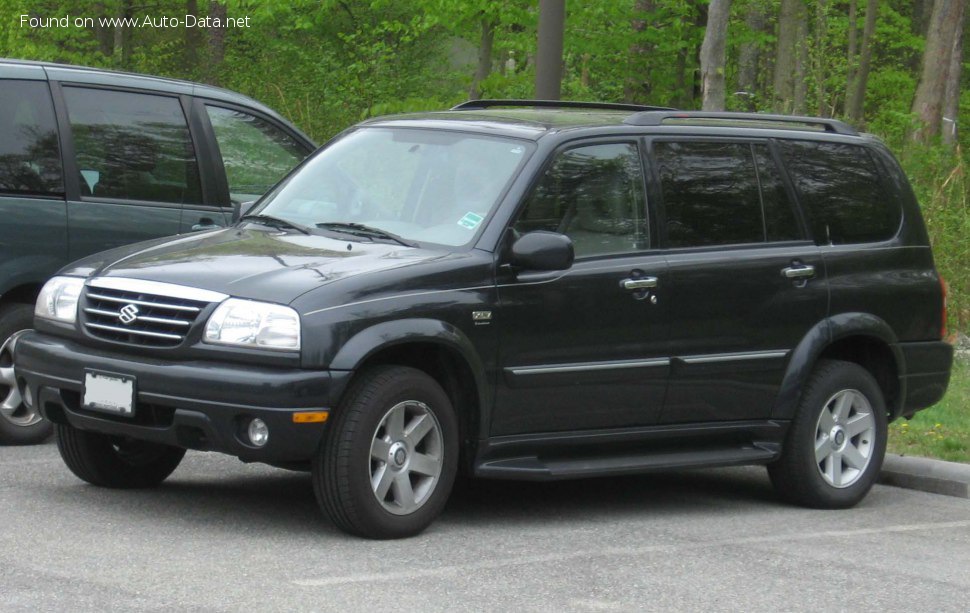
The Suzuki XL7 I 2.7 (185 Hp) represents the first generation of Suzuki’s extended-length compact SUV, a vehicle designed to bridge the gap between traditional compact SUVs and larger, more family-oriented vehicles. Launched in 1998 and produced through 2006, the XL7, an abbreviation for “Xtra Large 7-seater,” was fundamentally an elongated version of the popular Suzuki Grand Vitara. This strategic expansion aimed to cater to a growing demand for more passenger and cargo capacity within a relatively compact and off-road capable package. While not a direct competitor to full-size SUVs, the XL7 carved a niche for itself in markets like North America and Europe, offering an attractive proposition for families or adventurers seeking seven-passenger seating and the versatility of all-wheel drive without the bulk and fuel consumption of a larger vehicle. Its robust construction and reputable Suzuki 4×4 heritage positioned it as a practical choice for varied driving conditions, from urban commutes to light off-road excursions.
Powertrain and Performance of the Suzuki XL7 I
At the heart of the Suzuki XL7 I’s capability was its sophisticated 2.7-liter V6 engine, a powerplant meticulously engineered to deliver a balance of power, refinement, and durability. Coded as the H27, this naturally aspirated, multi-port manifold injected engine utilized a Dual Overhead Camshaft (DOHC) valvetrain with four valves per cylinder, a configuration that optimized airflow for efficient combustion and responsive power delivery. With a bore of 3.46 inches and a stroke of 2.95 inches, the engine achieved a total displacement of 166.96 cubic inches (2736 cm3), yielding a compression ratio of 9.5:1. This setup enabled the XL7 to produce a commendable 185 horsepower at 6000 rpm, providing ample thrust for highway merging and mountainous terrains. Torque output was equally impressive, peaking at 184.39 lb.-ft. at a relatively low 3300 rpm, which was crucial for off-the-line acceleration and maintaining momentum under load, characteristic of an SUV designed for versatility.
The performance metrics of the XL7 I 2.7 (185 Hp) underscored its capable nature. The vehicle could accelerate from 0 to 60 mph in a respectable 9.5 seconds, while reaching 0 to 62 mph (100 km/h) in 10 seconds, making it competitive within its segment for its era. Its maximum speed was rated at 113.71 mph (183 km/h), demonstrating its suitability for sustained highway cruising. Power was routed through a robust 5-speed manual transmission, offering drivers direct control over the engine’s output and enhancing the vehicle’s engaging driving dynamics. The standard all-wheel-drive (4×4) system further augmented its versatility, providing enhanced traction and stability across various surfaces, from paved roads to gravel paths. This combination of a powerful V6 engine and a capable 4×4 drivetrain ensured that the Suzuki XL7 I was well-equipped to handle the demands of its target audience.
Despite its V6 engine and 4×4 capabilities, the XL7 I offered reasonable fuel economy for its class and time. The combined fuel consumption was rated at 20.5 US mpg, with urban driving yielding 15.4 US mpg and extra-urban (highway) driving achieving 25.3 US mpg. These figures, while not class-leading by modern standards, were competitive for a seven-passenger, all-wheel-drive SUV in the late 1990s and early 2000s, reflecting a balance between performance and practicality. The engine’s oil capacity was 5.81 US quarts, and the coolant system held 8.45 US quarts, indicating a robust design for thermal management.
Design, Utility, and Features of the Suzuki XL7 I
Body and Interior
The Suzuki XL7 I was unmistakably an SUV, characterized by its rugged yet practical five-door body type. Its design language was an evolution of the Grand Vitara, featuring a slightly more elongated profile to accommodate the additional seating. Measuring 187.4 inches in length, 70.08 inches in width, and 68.5 inches in height, the XL7 possessed a substantial road presence without being overly cumbersome. A generous wheelbase of 110.24 inches contributed significantly to interior space and ride stability, particularly important for a seven-seater vehicle. The front and rear tracks, both at 59.06 inches, provided a stable stance and confident handling.
The primary distinguishing feature of the XL7 was its seven-seat configuration, a rarity in the compact SUV segment at the time. This allowed for greater passenger flexibility, making it an ideal choice for larger families or those who frequently transported extra passengers. When the third-row seats were not in use, they could be folded or removed to expand cargo capacity. The trunk space was highly adaptable, ranging from a minimum of 31.78 cubic feet with all seats in place to a maximum of 59.58 cubic feet with the rear seats stowed, offering ample room for luggage, groceries, or recreational gear. The vehicle’s kerb weight stood at 3825.02 lbs, with a maximum permissible weight of 5070.63 lbs, allowing for a substantial maximum load of 1245.61 lbs, underscoring its utility as a workhorse or a family hauler.
Chassis, Safety, and Practicality
The XL7 I was built on a sturdy platform designed to handle diverse driving conditions. Its suspension system featured an independent MacPherson type in the front, which provided a comfortable ride and precise steering, while the rear utilized a robust spring-loaded rack setup, engineered to manage the vehicle’s load-carrying capabilities effectively. This combination ensured a good balance between on-road comfort and off-road resilience. Braking duties were handled by disc brakes at the front, offering strong stopping power, complemented by drum brakes at the rear. For enhanced safety, the XL7 I was equipped with an Anti-lock Braking System (ABS), a crucial feature for maintaining steering control during emergency braking maneuvers, especially on slippery surfaces.
The vehicle rode on 16-inch wheel rims, fitted with 235/60 R16 tires, a common size for SUVs of its era, providing a good balance of grip, ride comfort, and durability. The fuel tank capacity of 16.91 US gallons (64 liters) offered a decent driving range, reducing the frequency of fuel stops on longer journeys. Overall, the Suzuki XL7 I 2.7 (185 Hp) combined the practicality of a seven-seater, the capability of an all-wheel-drive SUV, and the reliability inherent in Suzuki engineering, making it a compelling option for consumers seeking a versatile and robust vehicle during its production run.
Comprehensive Technical Specifications
Below is a detailed table outlining the key technical specifications for the Suzuki XL7 I 2.7 (185 Hp), providing a clear overview of its engineering and capabilities.
| Brand | Suzuki |
| Model | XL7 |
| Generation | XL7 I |
| Type (Engine) | 2.7 (185 Hp) |
| Start of production | 1998 year |
| End of production | 2006 year |
| Powertrain Architecture | Internal Combustion engine |
| Body type | SUV |
| Seats | 7 |
| Doors | 5 |
| Fuel consumption (economy) – urban | 15.4 US mpg |
| Fuel consumption (economy) – extra urban | 25.3 US mpg |
| Fuel consumption (economy) – combined | 20.5 US mpg |
| Fuel Type | Petrol (Gasoline) |
| Acceleration 0 – 60 mph | 9.5 sec |
| Maximum speed | 113.71 mph |
| Weight-to-power ratio | 9.4 kg/Hp |
| Weight-to-torque ratio | 6.9 kg/Nm |
| Power | 185 Hp @ 6000 rpm. |
| Power per liter | 67.6 Hp/l |
| Torque | 184.39 lb.-ft. @ 3300 rpm. |
| Engine layout | Front, Longitudinal |
| Engine Model/Code | H27 |
| Engine displacement | 166.96 cu. in. (2.7 liters) |
| Number of cylinders | 6 |
| Engine configuration | V-engine |
| Cylinder Bore | 3.46 in. |
| Piston Stroke | 2.95 in. |
| Compression ratio | 9.5:1 |
| Number of valves per cylinder | 4 |
| Fuel injection system | Multi-port manifold injection |
| Engine aspiration | Naturally aspirated engine |
| Valvetrain | DOHC |
| Engine oil capacity | 5.81 US qt |
| Coolant | 8.45 US qt |
| Kerb Weight | 3825.02 lbs. |
| Max. weight | 5070.63 lbs. |
| Max load | 1245.61 lbs. |
| Trunk (boot) space – minimum | 31.78 cu. ft. |
| Trunk (boot) space – maximum | 59.58 cu. ft. |
| Fuel tank capacity | 16.91 US gal |
| Length | 187.4 in. |
| Width | 70.08 in. |
| Height | 68.5 in. |
| Wheelbase | 110.24 in. |
| Front track | 59.06 in. |
| Rear (Back) track | 59.06 in. |
| Drive wheel | All wheel drive (4×4) |
| Number of gears and type of gearbox | 5 gears, manual transmission |
| Front suspension | Independent type McPherson |
| Rear suspension | Spring-loaded rack |
| Front brakes | Disc |
| Rear brakes | Drum |
| Assisting systems | ABS (Anti-lock braking system) |
| Tires size | 235/60 R16 |
| Wheel rims size | 16 |