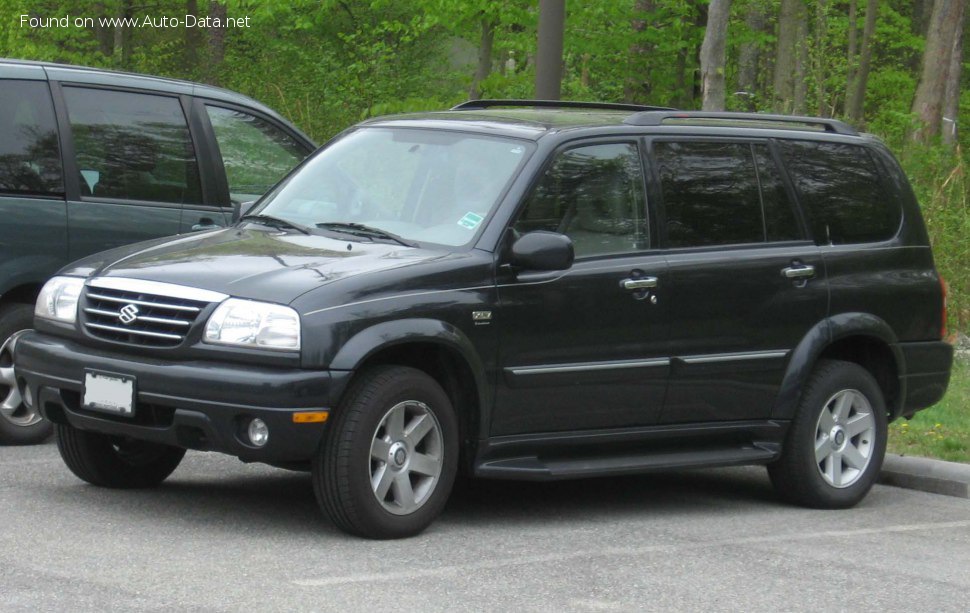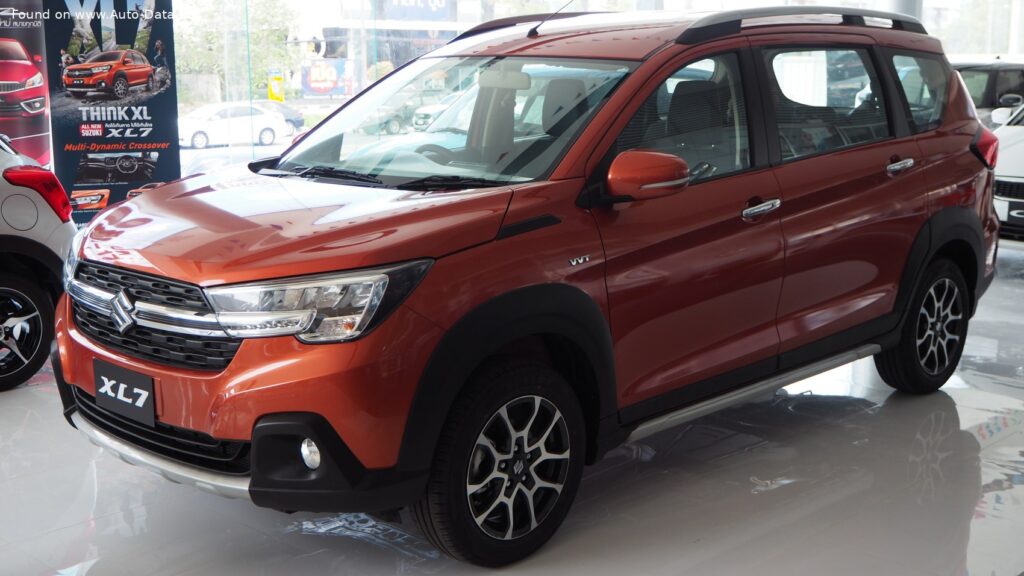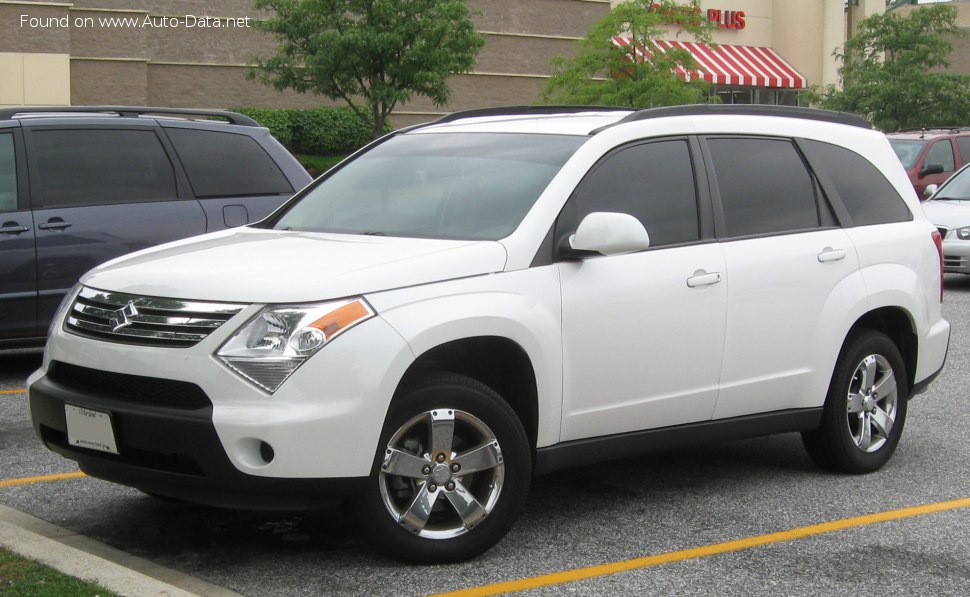
The Suzuki XL7 II 3.6i (252 Hp) 4WD Automatic represents a significant evolution for Suzuki in the mid-size SUV segment, marking a departure from its truck-based predecessor. Introduced in 2006 and produced through 2009, this second-generation XL7 was a concerted effort by Suzuki to offer a more competitive, car-like crossover utility vehicle (CUV) with increased refinement, passenger capacity, and a powerful V6 engine. Unlike many of Suzuki’s historically smaller, off-road-focused SUVs, the XL7 II was specifically designed to appeal to the North American market, where larger, family-oriented vehicles dominated. It shared its platform with General Motors’ Theta architecture, underpinning vehicles like the Chevrolet Equinox and Pontiac Torrent, allowing Suzuki to leverage economies of scale and offer a more sophisticated package. This strategic move aimed to position the XL7 as a versatile, seven-passenger option for families seeking a blend of utility, comfort, and all-weather capability, embodying Suzuki’s commitment to providing diverse automotive solutions to a global audience, particularly in markets demanding spacious and capable SUVs.
Engine and Performance: The Power Behind the Suzuki XL7 II 3.6i (252 Hp) 4WD Automatic
At the heart of the Suzuki XL7 II 3.6i (252 Hp) 4WD Automatic lies a robust 3.6-liter (3564 cm3 or 217.49 cu. in.) N36A V6 engine. This naturally aspirated, multi-port manifold injected gasoline powerplant was a key differentiator for the second-generation XL7, providing a substantial increase in power and torque compared to its predecessor. The engine features a Double Overhead Camshaft (DOHC) valvetrain, contributing to its efficiency and performance characteristics. It delivers a peak output of 252 horsepower at 6000 revolutions per minute (rpm), translating to an impressive 70.7 horsepower per liter. Torque production is equally significant, reaching 242.66 lb.-ft. (329 Nm) at a relatively low 2300 rpm. This low-end torque is crucial for a vehicle of this size, ensuring responsive acceleration and ample pulling power, whether navigating city streets or cruising on the highway.
Mated to this potent V6 engine is a smooth-shifting 5-speed automatic transmission. This gearbox was engineered to provide a balance of performance and fuel economy, optimizing power delivery across various driving conditions. The XL7 II also features an All-Wheel Drive (4×4) system, enhancing traction and stability in diverse weather conditions and light off-road scenarios. This combination of engine and drivetrain allows the XL7 II 3.6i to accelerate from 0 to 60 miles per hour in a respectable 9 seconds, with a 0-100 km/h sprint also taking 9.5 seconds. The vehicle’s top speed is electronically limited to 118.06 mph (190 km/h), a practical limit for a family-oriented SUV. Despite its size and power, the XL7 II attempts to manage fuel consumption, with a combined economy rating of 17.8 US miles per gallon (13.2 liters per 100 km). With a curb weight of 4098.39 lbs (1859 kg), the XL7 II achieves a weight-to-power ratio of 7.4 kg/Hp, or 135.6 Hp per tonne, underscoring its capable performance for its class.
Design and Features: Versatility and Comfort in the Suzuki XL7 II
The design philosophy behind the Suzuki XL7 II was centered on offering enhanced versatility, comfort, and a contemporary aesthetic to meet the demands of the modern SUV market. As an SUV body type with five doors, the XL7 II provides easy access to its spacious interior, which is configured to accommodate seven passengers across three rows. This 7-seat layout was a significant draw for families, offering flexibility for passenger and cargo needs. The exterior dimensions reflect its mid-size SUV classification: a length of 197.2 inches (5009 mm), a width of 72.2 inches (1834 mm), and a height of 68.9 inches (1750 mm). A generous wheelbase of 112.4 inches (2855 mm) contributes directly to the vehicle’s stable ride quality and the ample legroom afforded to occupants in all three rows.
Beyond its generous dimensions, the XL7 II incorporates practical features designed for everyday utility. The cargo area is highly adaptable, offering a minimum trunk space of 13.98 cubic feet (396 liters) with all seats in place. When the second and third rows are folded down, the cargo capacity expands dramatically to an impressive 95 cubic feet (2690 liters), demonstrating its capability to haul substantial loads, from groceries to camping gear. The vehicle rides on 17-inch wheel rims fitted with 235/60 R17 tires, providing a balance of comfort and road grip. For safety, the Suzuki XL7 II is equipped with ventilated disc brakes on both the front and rear axles, complemented by an Anti-lock Braking System (ABS), a standard feature for vehicles of this era that significantly enhances control during emergency braking maneuvers. The 18.49 US gallon (70-liter) fuel tank capacity ensures a decent range between fill-ups, supporting its role as a capable family travel vehicle. The overall design emphasizes a clean, contemporary look, moving away from the more rugged, utilitarian styling of its predecessor towards a more refined and family-friendly aesthetic.
Technical Specifications
| Brand | Suzuki |
| Model | XL7 |
| Generation | XL7 II |
| Type (Engine) | 3.6i (252 Hp) 4WD Automatic |
| Start of production | 2006 year |
| End of production | 2009 year |
| Powertrain Architecture | Internal Combustion engine |
| Body type | SUV |
| Seats | 7 |
| Doors | 5 |
| Fuel consumption (economy) – combined | 17.8 US mpg (13.2 l/100 km) |
| Fuel Type | Petrol (Gasoline) |
| Acceleration 0 – 60 mph | 9 sec |
| Acceleration 0 – 100 km/h | 9.5 sec |
| Maximum speed | 118.06 mph (190 km/h) |
| Weight-to-power ratio | 7.4 kg/Hp (135.6 Hp/tonne) |
| Weight-to-torque ratio | 5.7 kg/Nm (177 Nm/tonne) |
| Power | 252 Hp @ 6000 rpm |
| Power per liter | 70.7 Hp/l |
| Torque | 242.66 lb.-ft. @ 2300 rpm (329 Nm @ 2300 rpm) |
| Engine Model/Code | N36A |
| Engine displacement | 217.49 cu. in. (3564 cm3) |
| Number of cylinders | 6 |
| Engine configuration | V-engine |
| Fuel injection system | Multi-port manifold injection |
| Engine aspiration | Naturally aspirated engine |
| Valvetrain | DOHC |
| Engine oil capacity | 5.49 US qt (5.2 l) |
| Coolant | 12.68 US qt (12 l) |
| Kerb Weight | 4098.39 lbs (1859 kg) |
| Trunk (boot) space – minimum | 13.98 cu. ft. (396 l) |
| Trunk (boot) space – maximum | 95 cu. ft. (2690 l) |
| Fuel tank capacity | 18.49 US gal (70 l) |
| Length | 197.2 in. (5009 mm) |
| Width | 72.2 in. (1834 mm) |
| Height | 68.9 in. (1750 mm) |
| Wheelbase | 112.4 in. (2855 mm) |
| Drive wheel | All wheel drive (4×4) |
| Number of gears and type of gearbox | 5 gears, automatic transmission |
| Front brakes | Ventilated discs |
| Rear brakes | Ventilated discs |
| Assisting systems | ABS (Anti-lock braking system) |
| Tires size | 235/60 R17 |
| Wheel rims size | 17 |