
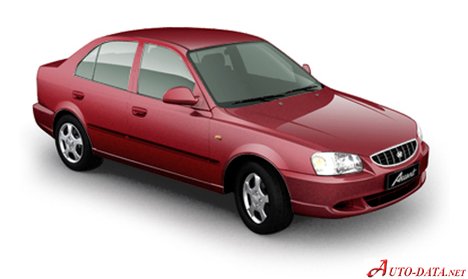
The TagAz Accent II 1.5 (102 Hp) Automatic represents a significant chapter in the automotive landscape of its primary markets, particularly Russia and other CIS countries. Produced by the Taganrog Automobile Plant (TagAZ) in Russia from 2001 to 2012, this model was a licensed iteration of the second-generation Hyundai Accent (LC generation). While not officially sold in the United States, its role in providing accessible, reliable transportation to a broad consumer base in its region was paramount. The vehicle was positioned as a compact sedan, appealing to buyers seeking a practical, economical, and durable car for daily commuting and family use. Its prolonged production run underscores its market relevance and the sustained demand for an unpretentious, mechanically straightforward vehicle.
Engineering and Performance of the TagAz Accent II 1.5 (102 Hp) Automatic
At the heart of the TagAz Accent II 1.5 (102 Hp) Automatic lies a robust and proven powertrain designed for efficiency and longevity. The vehicle is propelled by a 1.5-liter, naturally aspirated inline four-cylinder engine, a configuration widely recognized for its balance of power delivery and fuel economy in the compact segment. This engine generates a respectable 102 horsepower at 5800 revolutions per minute (rpm), providing adequate thrust for city driving and highway cruising. The engine’s layout is front, transverse, a common arrangement for front-wheel-drive vehicles, optimizing space and weight distribution for improved handling and interior room. With a cylinder bore of 75 mm (2.95 inches) and a piston stroke of 83 mm (3.27 inches), the engine benefits from a slightly undersquare design, typically favoring torque output at lower RPMs, contributing to a responsive feel in urban settings.
Further enhancing the engine’s efficiency and performance is a compression ratio of 10:1, allowing for optimal combustion of the petrol (gasoline) fuel. The engine employs a Double Overhead Camshaft (DOHC) valvetrain with four valves per cylinder, a sophisticated setup for its era that improves airflow into and out of the combustion chambers, leading to better power and fuel efficiency. Fuel is delivered via a direct injection system, ensuring precise fuel metering and atomization, which further contributes to the engine’s overall performance and adherence to emission standards. As a naturally aspirated engine, it delivers power smoothly and predictably without the complexity or lag associated with forced induction systems.
Power is transmitted to the front wheels through a 4-speed automatic transmission. While modern vehicles often feature more gears, this 4-speed unit was a common and reliable choice for compact cars during the early 2000s, offering smooth shifts and ease of driving, particularly in congested traffic. This drivetrain architecture, where the internal combustion engine drives the front wheels, is a hallmark of economical and practical sedans, providing good traction in various conditions and minimizing drivetrain losses. The TagAz Accent II 1.5 (102 Hp) Automatic achieves a 0-60 mph acceleration time of 12.2 seconds, with a maximum speed of 112.47 mph (181 km/h). These figures position it as a competent performer within its class, capable of keeping pace with everyday driving demands.
In terms of fuel economy, the TagAz Accent II demonstrated competitive figures for its segment and time. The combined fuel consumption is rated at 8.6 liters per 100 kilometers, which translates to approximately 27.4 US miles per gallon. Urban driving yields about 21.4 US mpg, while extra-urban (highway) driving improves to 32.2 US mpg. These figures highlight its economical operation, a crucial factor for buyers in its target markets. The vehicle met Euro 3 emission standards, reflecting its compliance with European environmental regulations prevalent during its production years, a testament to its engineering for broader market acceptance.
Design and Features
The TagAz Accent II, being a sedan, embodies a classic and functional design aesthetic that prioritizes practicality and interior space. With four doors and seating for five occupants, it served as a versatile family car. Its dimensions – a length of 166.73 inches (4235 mm), a width of 65.75 inches (1670 mm), and a height of 54.92 inches (1395 mm) – place it firmly in the compact sedan category. These measurements contribute to its maneuverability in urban environments while still offering a reasonably spacious cabin for its class.
The design of the Accent II is characterized by clean lines and a straightforward profile, eschewing elaborate styling in favor of durability and ease of maintenance. The wheelbase of 96.06 inches (2440 mm) is instrumental in providing a stable ride and contributing to the interior volume. The front track of 56.5 inches (1435 mm) and a rear track of 56.1 inches (1425 mm) further enhance the car’s stability and handling characteristics.
Underneath its practical exterior, the TagAz Accent II features a well-engineered suspension system designed to deliver a comfortable ride and predictable handling. The front suspension consists of an independent McPherson strut setup with coil springs and an anti-roll bar, a widely used and effective design for front-wheel-drive vehicles, known for its ability to absorb road imperfections and maintain tire contact. The rear suspension is an independent multi-link spring suspension, also equipped with a stabilizer bar, which is a more sophisticated arrangement than a simple torsion beam, contributing to improved ride comfort and better handling dynamics, especially over uneven surfaces.
Braking performance is handled by disc brakes at the front, offering strong and consistent stopping power, complemented by drum brakes at the rear. This combination was standard for many compact cars of the period, providing reliable braking performance for everyday driving. Steering is managed by a rack and pinion system, enhanced with hydraulic power steering, which provides good feedback to the driver and reduces effort during low-speed maneuvers and parking. The vehicle rides on 175/70 R13 tires mounted on 5.0J x 13 wheel rims, a practical choice that balances ride comfort, grip, and affordability for tire replacement.
With a kerb weight of 2592.64 lbs (1176 kg) and a maximum permissible weight of 3428.19 lbs (1555 kg), the Accent II offers a decent payload capacity of 835.55 lbs (379 kg), making it suitable for carrying passengers and luggage. The fuel tank capacity of 11.89 US gallons (45 liters) provides a respectable cruising range, aligning with its role as an economical and practical daily driver. The TagAz Accent II, therefore, stands as a testament to functional design and robust engineering, tailored to meet the specific demands of its target market by offering reliability, economy, and practicality in a compact sedan package.
Technical Specifications
| Brand | TagAz |
| Model | Accent |
| Generation | Accent II |
| Type (Engine) | 1.5 (102 Hp) Automatic |
| Start of production | 2001 year |
| End of production | 2012 year |
| Powertrain Architecture | Internal Combustion engine |
| Body type | Sedan |
| Seats | 5 |
| Doors | 4 |
| Fuel consumption (economy) – urban | 11 l/100 km (21.4 US mpg / 25.7 UK mpg) |
| Fuel consumption (economy) – extra urban | 7.3 l/100 km (32.2 US mpg / 38.7 UK mpg) |
| Fuel consumption (economy) – combined | 8.6 l/100 km (27.4 US mpg / 32.8 UK mpg) |
| Fuel Type | Petrol (Gasoline) |
| Acceleration 0 – 100 km/h | 12.8 sec |
| Acceleration 0 – 62 mph | 12.8 sec |
| Acceleration 0 – 60 mph (Calculated by Auto-Data.net) | 12.2 sec |
| Maximum speed | 181 km/h (112.47 mph) |
| Emission standard | Euro 3 |
| Weight-to-power ratio | 11.5 kg/Hp (86.7 Hp/tonne) |
| Power | 102 Hp @ 5800 rpm. |
| Engine layout | Front, Transverse |
| Number of cylinders | 4 |
| Engine configuration | Inline |
| Cylinder Bore | 75 mm (2.95 in.) |
| Piston Stroke | 83 mm (3.27 in.) |
| Compression ratio | 10:1 |
| Number of valves per cylinder | 4 |
| Fuel injection system | Direct injection |
| Engine aspiration | Naturally aspirated engine |
| Valvetrain | DOHC |
| Engine oil capacity | 3.3 l (3.49 US qt / 2.9 UK qt) |
| Kerb Weight | 1176 kg (2592.64 lbs.) |
| Max. weight | 1555 kg (3428.19 lbs.) |
| Max load | 379 kg (835.55 lbs.) |
| Fuel tank capacity | 45 l (11.89 US gal / 9.9 UK gal) |
| Length | 4235 mm (166.73 in.) |
| Width | 1670 mm (65.75 in.) |
| Height | 1395 mm (54.92 in.) |
| Wheelbase | 2440 mm (96.06 in.) |
| Front track | 1435 mm (56.5 in.) |
| Rear (Back) track | 1425 mm (56.1 in.) |
| Drivetrain Architecture | Front wheel drive. Internal Combustion engine. The Internal combustion engine (ICE) drives the front wheels of the vehicle. |
| Drive wheel | Front wheel drive |
| Number of gears and type of gearbox | 4 gears, automatic transmission |
| Front suspension | Independent, type McPherson with coil spring and anti-roll bar |
| Rear suspension | Independent multi-link spring suspension with stabilizer |
| Front brakes | Disc |
| Rear brakes | Drum |
| Steering type | Steering rack and pinion |
| Power steering | Hydraulic Steering |
| Tires size | 175/70 R13 |
| Wheel rims size | 5.0J x 13 |
