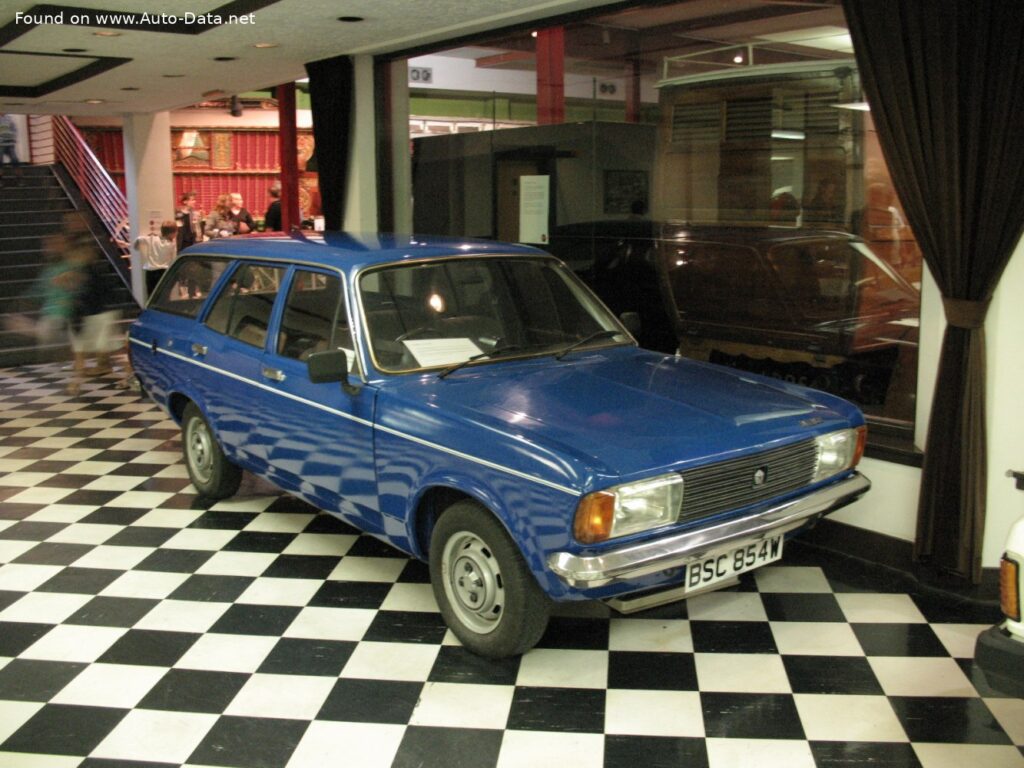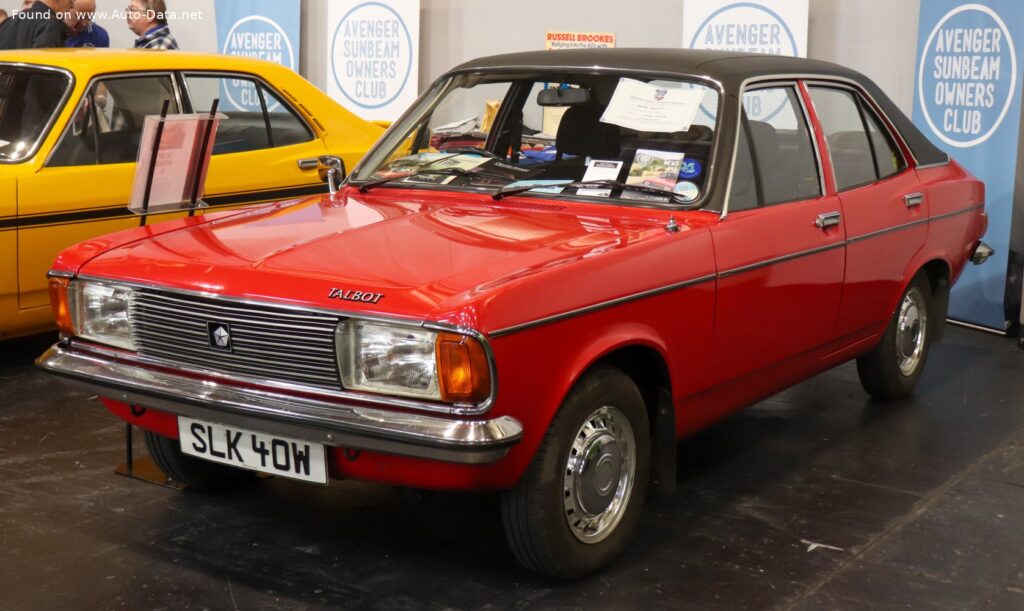
The Talbot Avenger 1.6 (70 Hp), produced between 1979 and 1981, represents a late-stage iteration of a venerable and popular family car in the European market. Originating as the Hillman Avenger in 1970, this model underwent a series of rebrandings due to the turbulent corporate landscape of the British automotive industry. By the time it bore the Talbot badge, the Avenger was a well-established, no-nonsense compact sedan, known for its robust construction, straightforward mechanics, and commendable practicality. While never a high-performance vehicle, this 1.6-liter variant with 70 horsepower offered a reliable and economical mode of transport, catering to families and individuals seeking affordability and durability during an era of significant economic shifts and rising fuel costs. Its primary market was Europe, particularly the United Kingdom, where it carved out a niche as a dependable workhorse, far removed from the more luxurious or technologically advanced offerings of its time.
The Enduring Legacy of the Talbot Avenger 1.6 (70 Hp)
Roots and Rebranding: A Journey Through Automotive History
To fully appreciate the Talbot Avenger 1.6 (70 Hp), one must delve into its complex lineage. The Avenger was initially conceived and launched as the Hillman Avenger by the Rootes Group in 1970. The Rootes Group, a significant British automobile manufacturer, had itself been acquired by Chrysler in the mid-1960s, forming Chrysler Europe. The Avenger was a crucial model for Chrysler Europe, designed to compete directly with segment leaders like the Ford Escort and Vauxhall Viva. It quickly gained a reputation for its conventional yet appealing styling, comfortable ride, and reliable performance. Throughout the 1970s, it was sold under various Chrysler badges across different markets, including the Plymouth Cricket in North America for a brief period in the early 1970s, though it was never a significant seller there in its later iterations.
The transition to the Talbot marque occurred following another major corporate upheaval. In 1978, the French automotive giant PSA Peugeot Citroën acquired Chrysler Europe, primarily to gain access to its manufacturing facilities and distribution networks. As part of this acquisition, PSA decided to resurrect the dormant Talbot brand, which had a rich but sporadic history in both French and British automotive manufacturing. Consequently, the Chrysler Avenger, along with other models like the Chrysler Sunbeam and Alpine, were rebadged as Talbots starting in 1979. The Talbot Avenger 1.6 (70 Hp) thus represents the final chapter of this long-running model, a testament to its fundamental soundness and continued market relevance even under a new corporate umbrella. This period, from 1979 to 1981, marked its swansong before being replaced by newer PSA-designed vehicles.
Market Positioning and Enduring Appeal
In its primary European markets, the Talbot Avenger 1.6 (70 Hp) continued to fulfill its role as an accessible and practical family car. It was positioned below more aspirational models, appealing to buyers who prioritized economy, ease of maintenance, and straightforward motoring. Its conventional rear-wheel-drive layout, a characteristic inherited from its Hillman days, offered predictable handling and robustness, qualities often appreciated in the typical driving conditions of the era. Despite its age by the late 1970s, the Avenger’s proven design meant that parts were readily available and mechanics were familiar with its workings, contributing to its low running costs. Its unpretentious nature and solid build quality ensured a loyal following among those who valued reliability over cutting-edge technology or luxury appointments. For many, the Avenger, in all its guises, was simply a dependable part of everyday life.
Powertrain: The 1.6-liter Heart of the Talbot Avenger 1.6 (70 Hp)
The engine powering the Talbot Avenger 1.6 (70 Hp) was a naturally aspirated 1.6-liter (1598 cc) inline-four gasoline (petrol) unit, producing a modest 70 horsepower. This engine was a development of the original Avenger powerplants, which were known for their robust design and relative simplicity. It featured an overhead valve (OHV) configuration, a common and cost-effective design for mass-produced engines of the period. While 70 horsepower might seem underwhelming by modern standards, it was entirely adequate for the Avenger’s intended purpose and segment in the late 1970s. The engine delivered sufficient power for city driving and comfortable cruising on motorways, albeit without any pretensions of sportiness.
The naturally aspirated design meant that power delivery was linear and predictable, without the complexities or potential lag associated with turbocharging. This contributed to the engine’s reputation for reliability and ease of maintenance. Fuel economy, while not exceptional compared to today’s highly efficient engines, was considered competitive for its time, especially given the car’s weight and design. The engine was typically mated to a four-speed manual transmission, providing a direct and engaging driving experience, characteristic of many European cars of the era. The combination of the 1.6-liter engine and its conventional powertrain architecture underscored the Avenger’s mission: to provide dependable, no-frills transportation that was easy to own and operate.
Design, Ergonomics, and Features
Classic Sedan Form and Practicality
The Talbot Avenger 1.6 (70 Hp) retained the classic three-box sedan body style that had defined the model since its inception. Its design was clean, understated, and functional, characterized by relatively sharp lines and a conventional grille. The sedan body offered excellent passenger space for four adults, with a usable trunk (boot) for luggage, making it a practical choice for families. Visibility from the driver’s seat was generally good, thanks to its large glass areas and upright pillars, contributing to ease of maneuvering in urban environments. While not a design icon, its straightforward aesthetics have given it a timeless quality in the eyes of classic car enthusiasts, representing a distinct period of automotive design.
Interior and Driver-Focused Ergonomics
Inside, the Talbot Avenger prioritized functionality and durability. The cabin was designed with hard-wearing materials, capable of withstanding the rigors of family life. Ergonomics were straightforward, with all essential controls easily accessible. The instrument cluster provided clear, analog readouts for speed, fuel level, and engine temperature, reflecting the no-nonsense approach to motoring. Features were modest by modern standards, typically including basic heating and ventilation systems, manual wind-up windows, and perhaps a simple AM/FM radio as an optional extra. Air conditioning was a rarity, if available at all. The seats were designed for comfort on longer journeys, providing adequate support without being overly plush. The overall interior ambiance was one of robustness and utility, a reflection of the car’s honest character.
Driving Dynamics and Safety of its Era
The driving dynamics of the Talbot Avenger 1.6 (70 Hp) were characterized by a comfortable ride and predictable handling. Its rear-wheel-drive configuration, combined with a relatively simple suspension setup (typically independent front suspension and a live axle at the rear), offered a balanced feel. While it was not engineered for spirited driving, it provided a stable and reassuring experience for everyday commutes and family trips. In terms of safety, the Avenger adhered to the standards of the late 1970s. This meant basic seatbelts, a rigid passenger cell, and perhaps some energy-absorbing elements in the steering column. Advanced safety features like anti-lock brakes (ABS), airbags, or sophisticated crumple zones were decades away from becoming standard in this segment. Its safety performance was considered adequate for its time, but would naturally fall short of contemporary expectations.
Technical Specifications: Talbot Avenger 1.6 (70 Hp)
| Brand | Talbot |
| Model | Avenger |
| Generation | Avenger |
| Type (Engine) | 1.6 (70 Hp) |
| Start of production | 1979 year |
| End of production | 1981 year |
| Powertrain Architecture | Internal Combustion engine |
| Body type | Sedan |
| Fuel Type | Petrol (Gasoline) |
| Power | 70 Hp |
| Engine aspiration | Naturally aspirated engine |