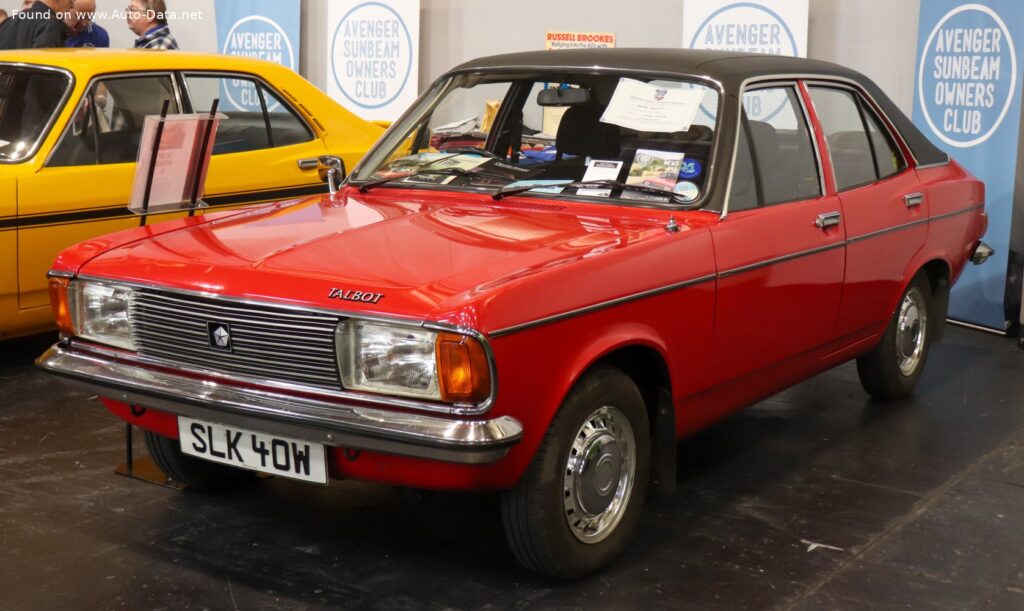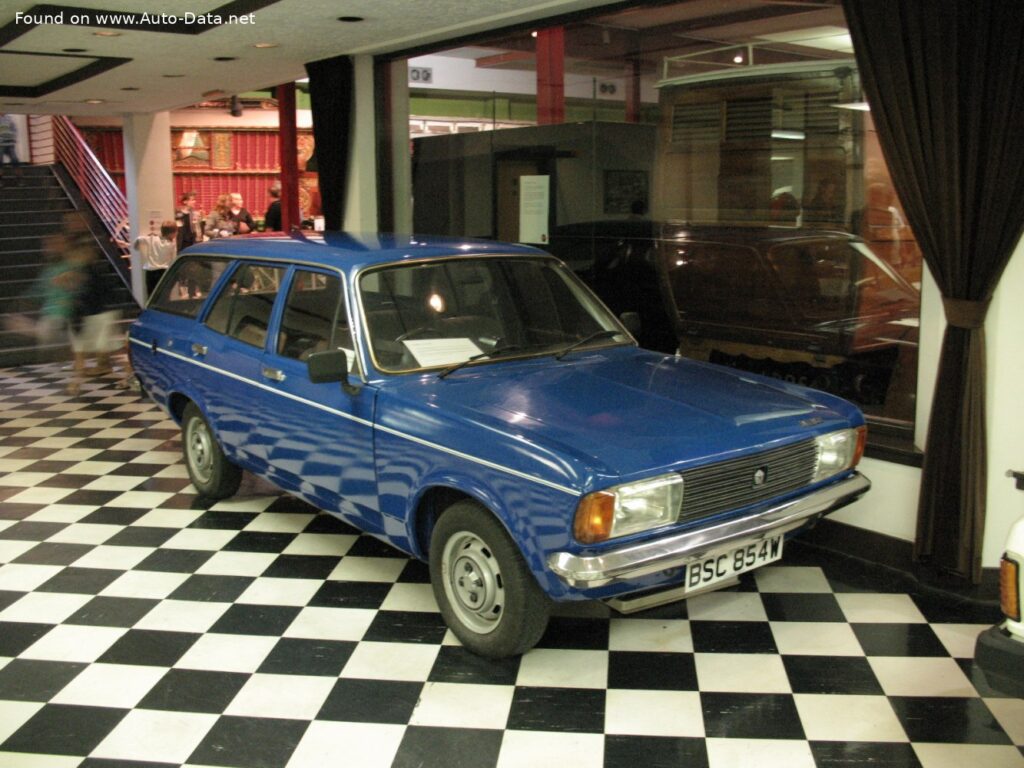
The Talbot Avenger Estate 1.3 (60 Hp), produced between 1979 and 1981, represents a significant, albeit transitional, chapter in European automotive history. Emerging from the complex lineage of the Rootes Group, Chrysler Europe, and ultimately the PSA Group’s Talbot brand, this particular iteration of the Avenger station wagon was a practical and unpretentious family vehicle designed for the mass market. While never officially sold in the United States, its role in the European and UK markets was crucial, serving as reliable transport during a period of considerable economic and industrial flux. The Avenger, originally launched by Hillman in 1970, had evolved through several ownership changes, culminating in its rebadging as a Talbot. The Estate variant, with its emphasis on utility and spaciousness, provided a compelling option for families and small businesses seeking an economical and functional automobile in its segment.
The Heritage and Engineering of the Talbot Avenger Estate 1.3 (60 Hp)
The Avenger’s journey from a Hillman to a Talbot is a story steeped in the shifting landscape of the European automotive industry. Originally conceived by the Rootes Group as a “world car” to compete with models like the Ford Escort and Vauxhall Viva, the Avenger was praised for its modern styling, comfortable ride, and respectable handling upon its initial launch. However, by the late 1970s, under the Chrysler Europe umbrella, and subsequently as part of PSA’s acquisition, the vehicle faced increasing competition and the challenges of an aging platform. The 1979-1981 Talbot Avenger Estate 1.3 (60 Hp) was essentially a continuation of this established design, re-branded to fit the new corporate identity. Its modest power output and conventional design reflected a focus on cost-effectiveness and durability, traits highly valued by its target demographic. This model, therefore, stands as a testament to the enduring appeal of straightforward, dependable motoring in an era where technological complexity was still relatively limited in budget-friendly vehicles.
Powertrain and Performance Characteristics
At the heart of the Talbot Avenger Estate 1.3 (60 Hp) lay a naturally aspirated, 1.3-liter (approximately 79 cubic inches) internal combustion engine. This powerplant delivered a modest 60 horsepower, a figure that, by contemporary standards, underscored the vehicle’s primary role as a practical family hauler rather than a performance machine. For its time, and within its market segment, 60 Hp was adequate for daily driving, offering sufficient power for urban commutes and moderate highway speeds, especially when considering the lighter overall weight of vehicles from that era compared to modern counterparts. The engine was designed for reliability and fuel economy, crucial considerations during the late 1970s and early 1980s, a period marked by fluctuating fuel prices and a growing awareness of running costs. Its naturally aspirated design meant a simpler, less maintenance-intensive system compared to turbocharged alternatives, which were then still largely confined to higher-performance or commercial applications. The engine’s architecture, being an internal combustion unit, was entirely conventional, relying on tried-and-tested principles to deliver consistent, if not exhilarating, performance. Power was transmitted to the wheels via a traditional drivetrain, characteristic of rear-wheel-drive platforms common during that period, although specific transmission details are not provided in the core data. The use of gasoline (petrol) as fuel was standard, and the vehicle would have been engineered for readily available grades of fuel in its primary markets.
Design, Utility, and Features of the Avenger Estate
The Talbot Avenger Estate 1.3 (60 Hp) was defined by its body type: a station wagon. This configuration was central to its appeal, offering significantly more cargo space and versatility than its sedan counterparts. For families in Europe and the UK, a station wagon was often the default choice for practicality, accommodating luggage, groceries, and even small furniture with ease. The design of the Avenger Estate was characteristic of late 1970s automotive aesthetics: functional, relatively unadorned, and with clean, if somewhat boxy, lines. While it lacked the aerodynamic sophistication of later decades, its straightforward shape maximized interior volume and visibility. The emphasis was on utility, with a large rear tailgate providing convenient access to a capacious load area, often expandable by folding down the rear seats. Interior features, while basic by today’s standards, would have focused on durability and ease of use. Expect utilitarian fabrics, simple instrumentation, and manual controls for heating, ventilation, and windows. Safety features of the era typically included three-point seatbelts for front occupants and perhaps rudimentary lap belts for rear passengers. The vehicle’s enduring presence on European roads well into the 1980s attests to its robust construction and the practicality it offered, cementing its status as a workhorse of its time and a significant contributor to family mobility in its primary markets.
Technical Specifications: Talbot Avenger Estate 1.3 (60 Hp)
| Brand | Talbot |
| Model | Avenger |
| Generation | Avenger Estate |
| Type (Engine) | 1.3 (60 Hp) |
| Start of production | 1979 year |
| End of production | 1981 year |
| Powertrain Architecture | Internal Combustion engine |
| Body type | Station wagon (estate) |
| Fuel Type | Petrol (Gasoline) |
| Power | 60 Hp |
| Engine aspiration | Naturally aspirated engine |