
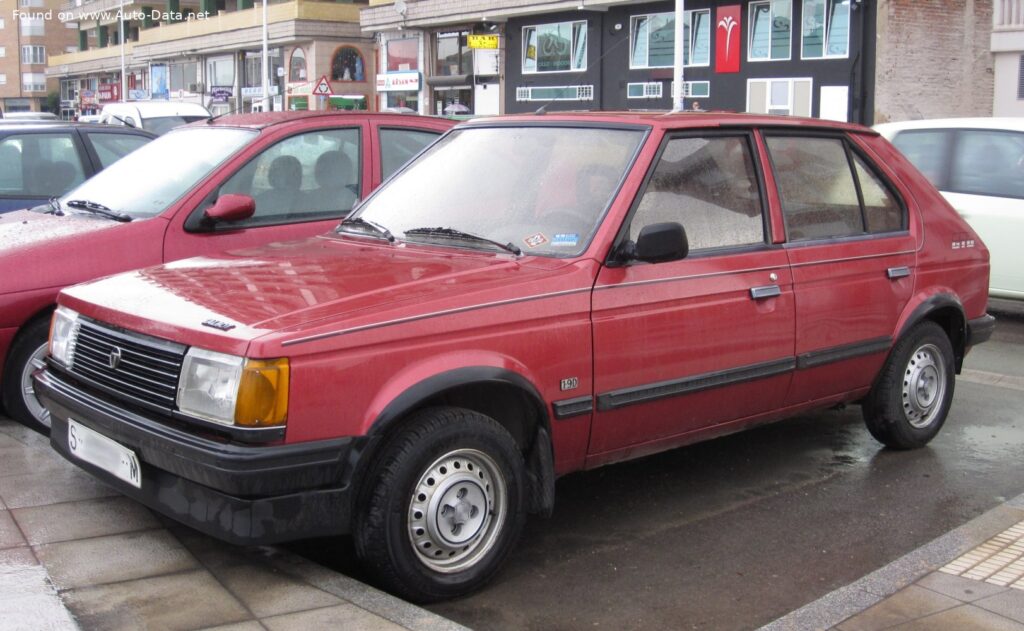
The Talbot Horizon, specifically the 1.3 (58 Hp) variant, represents a significant chapter in European automotive history, marking a pivotal moment for the Chrysler Europe organization and its eventual transition to the PSA Group. Launched in 1978, the Horizon was conceived as a modern, compact front-wheel-drive hatchback designed to compete fiercely in the burgeoning European C-segment, a market dominated by practical, fuel-efficient family cars. This generation of the Talbot Horizon was produced from 1978 to 1984, embodying the design and engineering philosophies prevalent during that era, prioritizing utility, economy, and accessible technology for the mass market. Its introduction was a bold statement in a highly competitive landscape, aiming to offer a compelling blend of space, comfort, and modest performance, a formula that resonated with many European consumers seeking an affordable and versatile daily driver.
The Talbot Horizon: A Transatlantic Compact Pioneer
The development of the Talbot Horizon was an ambitious undertaking, initially conceived under the Chrysler Europe banner as Project C2. Its primary objective was to create a successor to the aging Simca 1100 and Chrysler Alpine (also known as Simca 1307/1308), offering a more contemporary package to rival stalwarts like the Volkswagen Golf, Ford Escort, and Renault 14. The Horizon was designed from the outset as a five-door hatchback, a configuration rapidly gaining popularity for its practicality and flexibility, effectively blending the utility of a station wagon with the compact footprint of a sedan. The vehicle’s architecture was rooted in the pragmatic engineering principles of its time, featuring a transverse-mounted internal combustion engine driving the front wheels, a layout that maximized interior space and offered predictable handling characteristics, particularly beneficial in urban environments.
While the specific 1.3-liter European model was not directly sold in the United States, the Horizon platform did indeed find its way across the Atlantic. Re-engineered and rebadged as the Plymouth Horizon and Dodge Omni, these American counterparts shared the fundamental architecture but featured different powertrains and styling cues to suit North American market preferences and regulations. This transatlantic connection underscored the Horizon’s global aspirations and the ambition of its original creators. In Europe, however, the Talbot Horizon, particularly in its more modest engine configurations like the 1.3 (58 Hp), carved out its niche as a sensible, economical family car. Its significance was further cemented when it was crowned European Car of the Year in 1979, a testament to its innovative design, practicality, and overall market appeal at the time of its launch.
Engineering and Powertrain of the Talbot Horizon 1.3
At the heart of the Talbot Horizon 1.3 (58 Hp) lay a straightforward yet robust internal combustion engine, designed for reliability and fuel efficiency rather than exhilarating performance. This particular variant was equipped with a 1.3-liter (approximately 79 cubic inches) naturally aspirated gasoline engine, producing a modest 58 horsepower. In an era where rising fuel costs were a significant concern, especially following the oil crises of the 1970s, an engine of this specification was perfectly aligned with consumer demand for economical transportation. The naturally aspirated design meant that the engine relied solely on atmospheric pressure to draw air into its cylinders, a simpler and less costly approach compared to forced induction systems like turbochargers, which were still relatively uncommon in mainstream compact cars.
The power output of 58 Hp, while seemingly low by today’s standards, was entirely adequate for the Horizon’s intended purpose as a practical family hatchback. It provided sufficient propulsion for city driving and comfortable cruising on European highways, albeit without much in the way of rapid acceleration. The focus was on smooth, predictable power delivery and ease of maintenance. This powertrain architecture contributed to the Horizon’s reputation as a dependable and cost-effective vehicle to own and operate. Its front-wheel-drive layout, combined with the compact engine, allowed for a spacious passenger compartment and a relatively flat floor, enhancing the car’s utilitarian appeal. The engineering ethos behind the 1.3-liter engine was one of proven technology, ensuring accessibility and broad appeal across various European markets.
Design Philosophy and Features of the Talbot Horizon
The design of the Talbot Horizon was a hallmark of late 1970s automotive aesthetics, characterized by a clean, functional, and somewhat boxy profile that maximized interior volume within a relatively small footprint. As a five-door hatchback, it epitomized the growing trend towards versatile vehicles that could serve multiple roles, from daily commuting to family excursions. The Horizon’s body type was a direct response to consumer demand for practical cargo access and flexible seating arrangements, features that made it an attractive proposition for young families and individuals seeking utility without the bulk of larger vehicles. Its design, while not overtly flamboyant, was considered modern and aerodynamic for its time, contributing to its fuel efficiency and stable road manners.
Inside, the Talbot Horizon emphasized practicality and user-friendliness. The cabin was designed to be spacious for its class, offering comfortable seating for five adults and a decent amount of luggage space, expandable by folding down the rear seats. Features, typical for a mainstream compact car of the late 1970s and early 1980s, were straightforward and focused on essential functionality. These would have included basic instrumentation, manual windows, and perhaps an AM/FM radio as an optional extra. Safety features of the era were also rudimentary compared to modern vehicles, primarily consisting of three-point seatbelts, a sturdy passenger cell, and basic crumple zones designed to absorb impact energy. The Horizon’s design philosophy was clearly centered on delivering a robust, no-nonsense vehicle that offered excellent value for money and reliable service, making it a popular choice in its target markets.
Market Impact and Legacy of the Talbot Horizon
The Talbot Horizon made a considerable splash upon its debut, quickly establishing itself as a strong contender in the fiercely competitive European compact car segment. Its recognition as European Car of the Year in 1979 provided a significant boost to its image and sales, confirming its status as an innovative and well-rounded product. The Horizon successfully filled the void left by its predecessors, offering a modern, front-wheel-drive package that was both practical and economical. It appealed to a wide demographic, from single individuals to small families, who valued its versatility, spacious interior, and cost-effective operation. Its competitive pricing further enhanced its appeal, positioning it as an accessible option for many consumers.
However, the Horizon’s journey was also intertwined with the turbulent history of the Talbot brand itself. Following Chrysler Europe’s acquisition by PSA Peugeot Citroën in 1978, the Horizon was rebadged as a Talbot, a marque that PSA attempted to revive. While initially successful, the brand struggled to establish a consistent identity and market presence under PSA ownership. The Horizon faced increasing competition from newer, more technologically advanced rivals throughout its production run, and by the mid-1980s, its design and technology began to show their age. Despite its eventual discontinuation in 1984, coinciding with the gradual phasing out of the Talbot brand, the Horizon’s legacy endures as a significant example of European automotive engineering during a period of considerable change. It represented a valiant effort to create a truly international compact car and remains a testament to the practical and economical design principles that defined a generation of vehicles.
Technical Specifications: Talbot Horizon 1.3 (58 Hp)
| Brand | Talbot |
| Model | Horizon |
| Generation | Horizon |
| Type (Engine) | 1.3 (58 Hp) |
| Start of production | 1978 year |
| End of production | 1984 year |
| Powertrain Architecture | Internal Combustion engine |
| Body type | Hatchback |
| Fuel Type | Petrol (Gasoline) |
| Power | 58 Hp |
| Engine aspiration | Naturally aspirated engine |
