
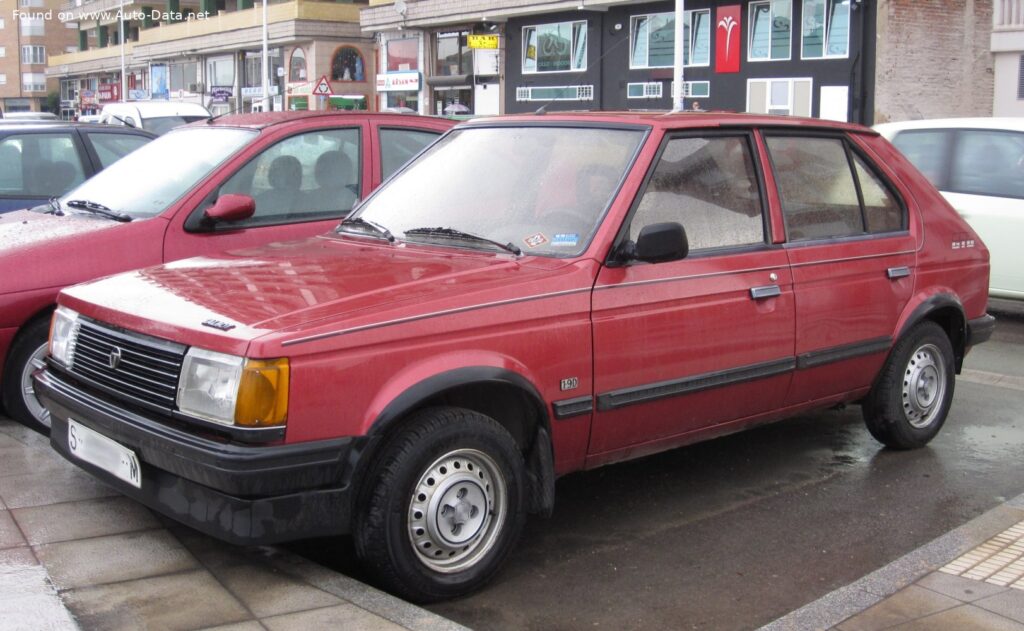
The Talbot Horizon, a compact family car developed by Chrysler Europe and later produced under the PSA Group’s Talbot brand, represented a significant contender in the competitive European automotive landscape of the late 1970s and early 1980s. Launched in 1978, the {original_title} was engineered as a successor to the Simca 1100 and a rival to popular hatchbacks like the Volkswagen Golf. Its design ethos focused on practicality, economy, and a modern, space-efficient hatchback body style, which was gaining immense popularity across the continent. The Horizon was notable for being one of the first truly global cars, albeit with distinct versions for different markets, including a North American variant known as the Plymouth Horizon and Dodge Omni. This article delves into the specifications and heritage of the European Talbot Horizon 1.4 (83 Hp), a model that underscored the brand’s commitment to delivering accessible and capable family transportation during a period of considerable economic and technological change in the automotive industry.
The Talbot Horizon: A Transatlantic Legacy and European Market Impact
While the Talbot Horizon found a niche in the North American market under different badging, its primary design and development were rooted in Europe, where it garnered critical acclaim, including the prestigious European Car of the Year award in 1979. This recognition highlighted its innovative packaging and overall competence as a compact family car. The Horizon was a product of the complex acquisition of Chrysler Europe by PSA Peugeot Citroën in 1978, which led to the rebranding of Chrysler’s European models under the resurrected Talbot marque. The Talbot Horizon was therefore tasked with carrying the torch for the new brand, aiming to combine French design sensibilities with a robust, if conventional, mechanical package.
The car’s market positioning was clear: to offer an affordable, spacious, and fuel-efficient vehicle for the average European family. Its hatchback configuration was a key selling point, offering superior versatility compared to traditional sedans. Production of the European model commenced in 1979 and continued until 1986, reflecting its seven-year run as a core offering for Talbot. During this period, the Horizon faced stiff competition from established players, but its combination of practicality and value ensured its presence on European roads, serving as a testament to its fundamental design soundness.
Powertrain and Performance: The Horizon’s Heart
Engine Characteristics of the Talbot Horizon 1.4 (83 Hp)
The specific model under examination, the Talbot Horizon 1.4 (83 Hp), was equipped with an internal combustion engine designed to deliver a balance of power and economy suitable for its segment. This naturally aspirated gasoline engine, typical of the era, produced a respectable 83 horsepower. While this figure might seem modest by today’s standards, it was entirely adequate for a compact family car in the late 1970s and early 1980s, providing sufficient acceleration for city driving and comfortable cruising on highways. The engine’s naturally aspirated design meant it relied on atmospheric pressure to draw air into the cylinders, a simpler and more reliable setup compared to forced induction systems that were less common in mass-market vehicles at the time.
The 1.4-liter displacement struck a good balance between fuel consumption and performance, a critical factor during a period marked by oil crises and increasing environmental awareness. The engine was known for its robustness and ease of maintenance, qualities that endeared it to owners seeking dependable transportation. Its power delivery was linear and predictable, contributing to a driving experience that prioritized comfort and practicality over outright sportiness. The powertrain architecture, centered around this internal combustion engine, reflected the prevailing engineering philosophies of the time, emphasizing durability and cost-effectiveness in design and manufacturing.
Design and Features: Practicality Meets Style
Exterior and Interior Design of the Talbot Horizon
The Talbot Horizon adopted the popular hatchback body type, a design choice that profoundly influenced its practicality and appeal. Its styling was characteristic of late 1970s automotive design, featuring clean lines, a relatively boxy silhouette, and large glass areas that contributed to excellent visibility. The hatchback configuration offered a significant advantage in terms of cargo versatility, allowing for easy loading and unloading of luggage or groceries, and enabling the expansion of cargo space by folding down the rear seats. This flexibility was a major draw for families and individuals who needed a car that could adapt to various needs.
Inside, the Horizon was designed with a focus on ergonomics and passenger comfort, offering a spacious cabin for its class. The interior materials and finishes, while not luxurious, were durable and functional, reflecting the car’s utilitarian purpose. Instrumentation was clear and straightforward, providing drivers with essential information without unnecessary complexity. For its time, features such as effective heating and ventilation systems, comfortable seating, and a practical layout underscored its role as a competent family vehicle. Safety features, common for the era, included standard seatbelts and a robust body structure designed to offer protection in collisions, aligning with evolving safety standards in Europe. The Horizon’s design, therefore, was a pragmatic response to the demands of the European market, blending functional aesthetics with everyday usability.
Technical Specifications of the Talbot Horizon 1.4 (83 Hp)
| Brand | Talbot |
| Model | Horizon |
| Generation | Horizon |
| Type (Engine) | 1.4 (83 Hp) |
| Start of production | 1979 year |
| End of production | 1986 year |
| Powertrain Architecture | Internal Combustion engine |
| Body type | Hatchback |
| Fuel Type | Petrol (Gasoline) |
| Power | 83 Hp |
| Engine aspiration | Naturally aspirated engine |
